


 Tiếng ViệtEnglish
 한국어
한국어 日本語
日本語 简体中文
简体中文 Français
 Deutsch
 Español
 Italiano
 Русский


 Login for Corporates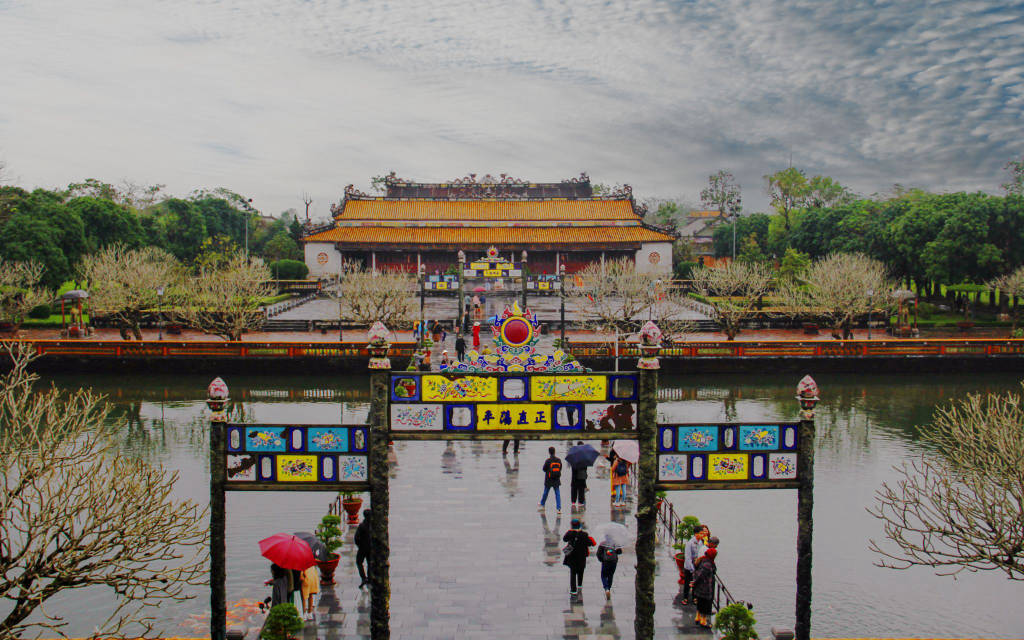
Thai Hoa Palace, Hue
 Twenty-Third August Street, Phu Hau, Hue, Thua Thien Hue, Vietnam
Thai Hoa Temple, located at Twenty-Third Thang Tam Street, Phu Hau, Hue City, is the central palace of the Imperial City. It is the coronation site of 13 Nguyen dynasty kings, from Gia Long to Bao Dai. This is an ideal destination for travelers to freely explore, uncovering the feudal cultural history of Vietnam.
Welcome to Thai Hoa Palace, located within the Imperial City of Hue. This palace, where 13 Nguyen dynasty emperors from Gia Long to Bao Dai were crowned, is one of the most significant architectural works in the Imperial Citadel. It serves as the center for grand ceremonies and court meetings attended by the emperor, royal family, and high-ranking officials, carrying deep historical and cultural values.
Meaning of the Name Thai Hoa Palace
The name ""Thai Hoa"" originates from the I Ching, where ""Hoa"" means harmony. ""Thai Hoa"" signifies the harmony between yin and yang, reflecting the importance of maintaining balance to create a stable foundation for all things. A ruling emperor must maintain this harmony to effectively govern the country.
History of Thai Hoa Palace
Construction of Thai Hoa Palace began on February 21, 1805, and was completed in October of the same year. Initially, it was located about 45 meters northwest of its current location. In March 1833, King Minh Mang reorganized and completed the architectural system of the Imperial City, moving Thai Hoa Palace to the south and making it more magnificent. Since then, the palace has undergone several renovations, affirming its historical and cultural significance.
Unique Architecture of Thai Hoa Palace
Thai Hoa Palace is built in the “double house” style of “overlapping floors and roofs”, covering an area of 1,360m². The palace foundation is 1m higher than the first courtyard and 2.35m above the ground, giving it a grand and majestic appearance. The main hall at the back has five compartments, while the front hall has seven compartments, connected by an overlapping roof.
The entire structure is made of sturdy ironwood, with 80 pillars intricately painted and gilded with dragon motifs. In the front hall, a large lacquered board bearing the name “Thai Hoa Palace” along with information on its construction (1805), reconstruction (1883), and major renovation (1923) is prominently displayed. Inside the main hall, the emperor's throne stands on a three-tiered wooden platform, adorned with a five-colored canopy decorated with nine dragons, creating a splendid and magnificent sight.
The roof is tiled with yellow glazed tiles, divided into three overlapping layers. Decorative bands run around all four sides of the building, adorned with colorful enamel panels featuring drawings and poetry, adding unique and rich architectural elements.
The Courtyard - Venue for Ceremonies
The courtyard, also known as Bai Dinh or Long Tri, is where high-ranking officials line up according to their ranks, facing Thai Hoa Palace to perform the grand court ceremonies. Only the emperor sits on the throne, while the royal family and the four highest-ranking officials (""the Four Pillars"") stand. This arrangement not only symbolizes power but also reflects the cultural traditions of the Nguyen dynasty.
Tourism Value and Discovery Experience
Today, Thai Hoa Palace is one of the most attractive tourist destinations within the Complex of Hue Monuments, recognized by UNESCO as a World Cultural Heritage site on December 11, 1993. When visiting Thai Hoa Palace, you can admire its beautiful architecture and explore its rich history. Take your time to wander and discover the cultural and historical values of Thai Hoa Palace. You can join self-guided tours, deeply understand the architecture and culture of the Nguyen dynasty, and enjoy the serene and magnificent atmosphere of this place. Each step in Thai Hoa Palace offers unforgettable experiences, enriching your discovery journey.