


See all results for ""

 Anytime
 Tiếng ViệtEnglish
 한국어
한국어 日本語
日本語 简体中文
简体中文 Français
 Deutsch
 Español
 Italiano
 Русский


 Login for Corporates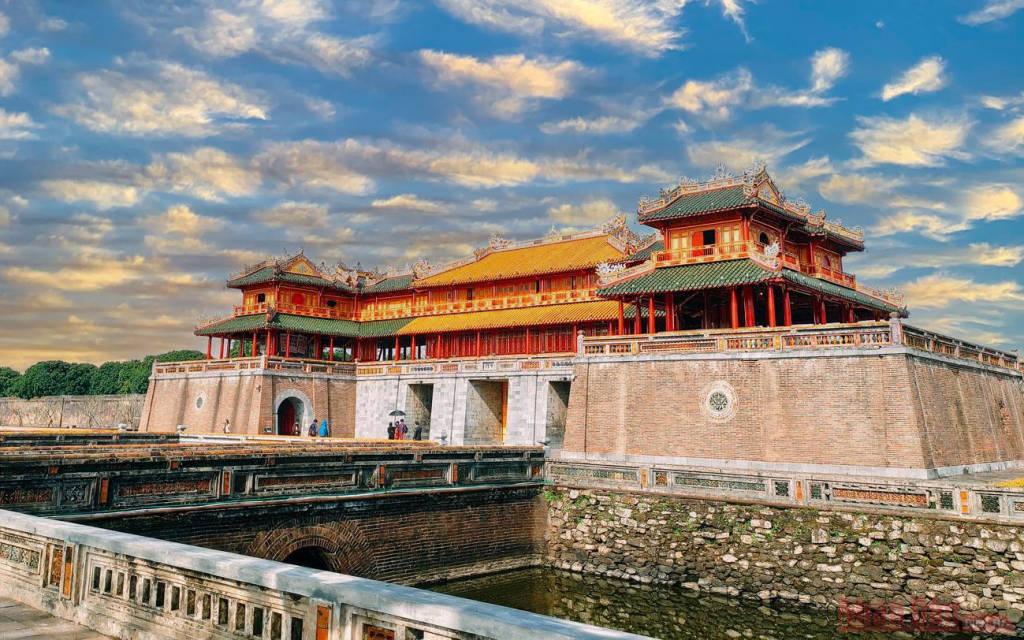
Hue Imperial Citadel
 Hue City, Thua Thien Hue, Vietnam
Hue Imperial City, a UNESCO World Heritage Site, is an ancient citadel in the ancient capital of Hue, where the Nguyen Dynasty was the capital for 143 years (1802-1945). Construction began in 1805 under the reign of King Gia Long, and the citadel was the administrative and political center of the royal court. With its unique architecture, it attracts tourists to freely explore the history and culture of Vietnam.
The Hue Imperial City is a symbol of Vietnamese history and culture, constructed from 1805 under Emperor Gia Long and completed over many years. Located on the northern bank of the Huong River, the Citadel spans over 520 hectares with a system of moats, fortresses, and 10 main gates for protection. Its architecture blends Eastern feng shui with Western military style, creating a majestic and grand ambiance. It's an ideal destination for those who love to explore history freely and according to their own preferences.
Formation History of Hue Imperial City
Emperor Gia Long initiated the construction of the Hue Imperial City to create a solid capital serving the Nguyễn dynasty in both administration and defense. Initially built from earth and later reinforced with bricks under Minh Mang's reign, it took nearly 30 years to complete. As the administrative and military center of the dynasty, the Citadel witnessed many important historical events, from royal ceremonies to territorial defense battles.
Unique Architecture of Hue Imperial City
Built based on Eastern feng shui and design, combined with Western Vauban style, the Citadel is square-shaped, surrounded by moats and the Perfume River, with the 7 km-long Hộ Thành Hà. The citadel holds a prime location with the Perfume River serving as the “bright hall” in feng shui, Mount Ngu Binh to the south as a natural “protective screen,” and two small islets—Ta Thanh Long and Huu Bach Ho—symbolizing the Azure Dragon and White Tiger. Together, these elements enhance the regal and majestic aura of the imperial capital.
Cultural Significance of Hue Imperial City
The Hue Imperial City was not only the administrative center but also the cultural hub of the Nguyễn dynasty. Here, the court held important royal ceremonies, rituals, and festivals, maintaining national customs and traditions. It was also a place where Vietnamese beliefs, faiths, and traditions were preserved. Annual festivals held here attract many visitors to admire and learn about Vietnamese culture.
Preservation and Current Relics
After nearly 200 years, the Hue Imperial City has experienced many changes but still retains many original features. Recognized as a UNESCO World Cultural Heritage in 1993, the Citadel is a testament to architectural and feng shui art. Relics like the Imperial City and the Forbidden Purple City are still open for visitors, helping everyone understand more about the culture and history of the ancient capital.
Travel Information
The Hue Imperial City is open from 7:00 AM to 5:30 PM daily. Visitors can choose various means of transportation such as motorbikes, cars, or bicycles to freely explore every corner of the Citadel. Admission fees are flexible, varying by season and area. If you love exploring culture, take your time to appreciate the ancient architecture and listen to fascinating historical stories from guides.
The Hue Imperial City is not just a grand architectural work but also the soul of Vietnamese culture. Visitors here will have the chance to explore freely and experience a serene poetic space of ancient Vietnamese culture. The Hue Imperial City is a testament to the ingenuity and creativity of our ancestors in building and preserving the nation's unique culture.