


 Tiếng ViệtEnglish
 한국어
한국어 日本語
日本語 简体中文
简体中文 Français
 Deutsch
 Español
 Italiano
 Русский


 Login for Corporates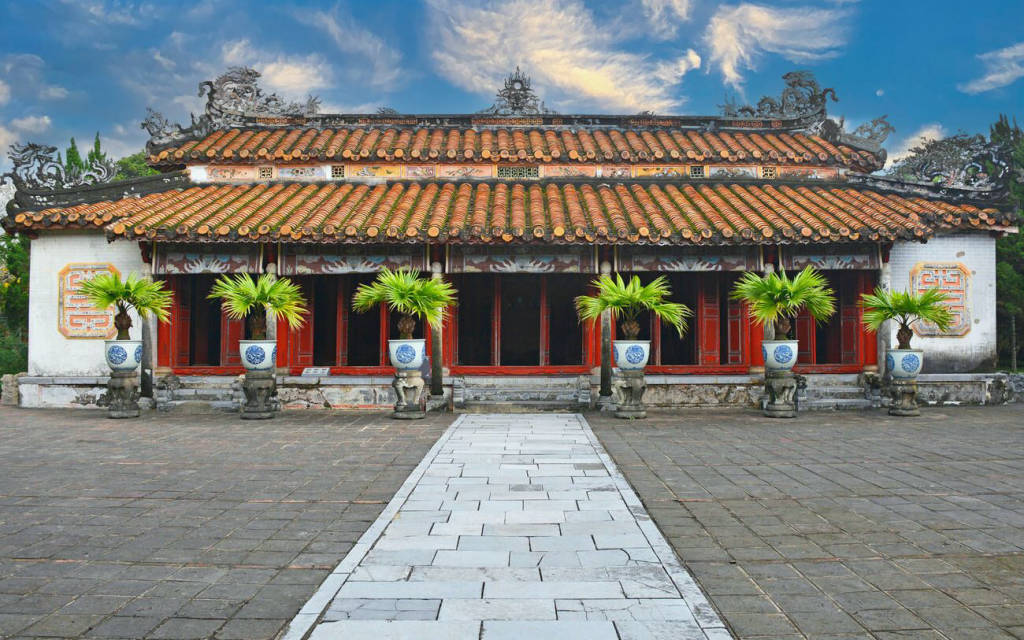
Hung Mieu Temple
 FH8G+VM9, Le Huan, Phu Hau, Hue City, Thua Thien Hue
Hung Mieu, also known as Hung To Mieu, is the temple dedicated to Prince Nguyen Phuc Luan (Nguyen Phuc Con) and Nguyen Thi Hoan, the parents of Emperor Gia Long. Located southwest of Hue's Imperial City, this site is an ideal destination for freely exploring the culture and history of the Nguyen Dynasty.
Hung Mieu, also known as Hung To Mieu, is a site of profound historical significance within the Hue Imperial City. It is an ideal destination for those who love exploring Vietnamese culture and history. Located in the southwest corner of the Imperial City in Hue, Hung Mieu honors Nguyen Phuc Con, the father of Emperor Gia Long, the founding emperor of the Nguyen Dynasty. Although he did not hold the title of lord, he was posthumously honored with the title Hung To Hieu Khang Emperor, reflecting the dynasty's deep respect.
History and Architecture of Hung Mieu
Hung Mieu was built in 1804 during the reign of Emperor Gia Long and was originally located where The Mieu stands today, known then as Hoang Khao Mieu. In 1821, Emperor Minh Mang moved the structure 50 meters north to make space for The Mieu and renamed it Hung To Mieu. The temple now shares a compound with The Mieu but is separated by a brick wall, creating a solemn and private space for worship.
Main Temple Architecture
Hung Mieu showcases the traditional architectural style of the Nguyen Dynasty. The main temple in the center features a three-compartment, two-winged structure for the main hall, and a five-compartment, two-winged structure for the front hall. Inside the shrine are the ancestral tablets of Hung To Hieu Khang Emperor and Empress, exuding grandeur and reverence. Two short walls flank the temple, with two small gates, Duc Khanh (east) and Chuong Khanh (west), connecting to auxiliary structures and the main entrance.
Auxiliary Structures
In addition to the main temple, Hung Mieu includes auxiliary structures that create a harmonious complex and support ritual ceremonies. Through Duc Khanh Gate is Than Kho, the storage area for ceremonial items; Chuong Khanh Gate leads to Than Tru, the kitchen area for the ceremonies. Each area has access to the outside and connects with The Mieu, forming a complex and solemn historical space.
Rituals and Historical Events
Annually, Hung Mieu holds five royal ceremonies similar to those at Thai Mieu and The Mieu. However, in February 1947, during the resistance against the French, Hung Mieu was completely burned down. In 1951, Dowager Empress Doan Huy, mother of Emperor Bao Dai, used a shrine from Kim Long to rebuild Hung Mieu on the old foundation, restoring the structure and preserving its historical significance and the Nguyen Dynasty's respect.
Restoration and Cultural Value
In 1995, Hung Mieu underwent comprehensive restoration and was gilded with gold, restoring its former splendor. The temple's architecture exemplifies the exquisite artistry of Hue royal art, with intricate carvings and decorations. This revival has made Hung Mieu a valuable cultural tourist destination, where visitors can learn about Vietnamese feudal history and traditions.
Visiting Experience at Hung Mieu
Visiting Hung Mieu, tourists can admire the ancient architecture and feel the solemn and majestic atmosphere of the golden era. It is an ideal “custom travel” destination, allowing you to freely explore and immerse yourself in the story of the Nguyen family and the remaining heritage of the Nguyen Dynasty.
Hung Mieu is a cultural symbol and historical testimony of the Nguyen Dynasty's prosperity, offering visitors an emotional experience of Vietnamese culture and traditions.