


 Tiếng ViệtEnglish
 한국어
한국어 日本語
日本語 简体中文
简体中文 Français
 Deutsch
 Español
 Italiano
 Русский


 Login for Corporates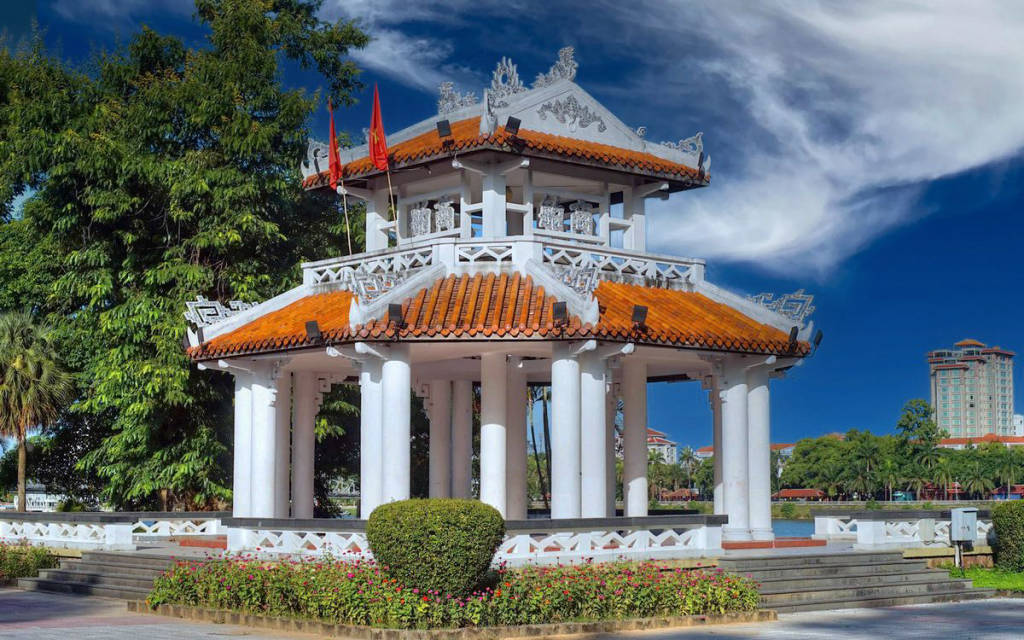
Thuong Bac Communal House
 FH9P+664, Tran Hung Dao, Phu Hoa, Hue, Thua Thien Hue
Thuong Bac Communal House is located on Tran Hung Dao Street, Hue City, is a cultural and historical relic in the complex of Hue Monuments. This was once the place to welcome Nguyen Dynasty envoys and witnessed many important diplomatic events. An ideal destination for tourists to freely travel and explore Vietnamese history.
Located on Tran Hung Dao Street in Hue City, Thuong Bac Pavilion is a valuable cultural and historical relic within the Complex of Hue Monuments. It once served as a reception venue for envoys during the Nguyen Dynasty and witnessed numerous significant diplomatic events in Vietnam's history.
History of Formation and Development of Thuong Bac Pavilion
In 1870, under the reign of King Tu Duc, a building named "Thuong Bac" was constructed at the current location of the City Cultural Center. This building served as a center for commercial exchange and a place to welcome merchants from various places to the Imperial City of Hue, a small pavilion was built by the Huong River to provide a relaxing space for merchants and visitors By 1885, after military upheavals, Thuong Bac was successively used as the residence of Nguyen Van Tuong, Uyen Bac School, and the Academy of Antiquities. However, its original architecture was not preserved when it was transformed into the current City Cultural Center.
King Khai Dinh and the Reconstruction of Thuong Bac Pavilion
In 1921, King Khai Dinh decided to rebuild Thuong Bac Pavilion into an octagonal building using cement and reinforced steel. The entire structure was constructed on a 1.3-meter-high square foundation, surrounded by sturdy railings with the name “Thuong Bac” embossed on it. Inside, there is a spacious courtyard with two cement ponds and four stone dragons flanking either side, creating balance for the structure.
In front of the pavilion are four large pillars adorned with lotuses. Each pillar bears porcelain couplets that capture the scenic beauty of Hue's capital through various dynasties. This unique design enhances the ancient charm of Hue, attracting visitors who appreciate tranquility and nostalgia.
Thuong Bac Pavilion and Historical Treaties
Besides its commercial role, Thuong Bac Pavilion held significant importance in diplomacy. On June 6, 1884, aboard a ship anchored on the Huong River in front of Thuong Bac, Nguyen Van Tuong, Pham Thuan Duat, and Ton That Phan signed the Patenôtre Treaty with the French, marking a pivotal shift in the country's history.
After the fall of the Imperial City in 1885, Thuong Bac no longer served as a reception area for envoys and was repurposed for various uses, such as the French army headquarters, Nguyen Van Tuong's residence, Hau Bo School, Uyen Bac School, and the Academy of Antiquities.
Thuong Bac Pavilion under Emperor Bao Dai
In 1936, Emperor Bao Dai constructed a new pavilion near the old Thuong Bac site to commemorate the historical building. This modern octagonal pavilion features a high foundation, surrounding railings, and characteristic pillars with lotuses, embodying the architectural style of Hue. Thus, Thuong Bac Pavilion became a symbol of permanence and freedom, preserving Hue's cultural heritage.
Thuong Bac Pavilion – A Special Highlight of Hue
Today, visitors to Thuong Bac Pavilion can immerse themselves in the nostalgic atmosphere and feel the slow passage of time through its unique architectural details. Thuong Bac Pavilion is not just an architectural structure but a historical symbol, a cultural milestone, and a unique travel destination, offering unforgettable experiences for each visitor to the ancient capital of Hue.
This is an ideal destination for travelers who love to wander, explore cultural history, and enjoy the picturesque scenery of Hue's ancient capital. The temple is open daily, offering the opportunity to experience and appreciate the solemn and tranquil atmosphere of this monument.
Travel information
Visiting Thuong Bac Pavilion, tourists can admire the unique royal architecture and understand the historical and cultural significance of the monument during the Nguyen Dynasty. It is undoubtedly a perfect place for leisurely exploration, immersing oneself in the serene and peaceful landscape along the poetic Huong River.