


See all results for ""

 Anytime
 Tiếng ViệtEnglish
 한국어
한국어 日本語
日本語 简体中文
简体中文 Français
 Deutsch
 Español
 Italiano
 Русский


 Login for Corporates
Must-Visit Check-in Spots in Cao Bang You Should Not Miss
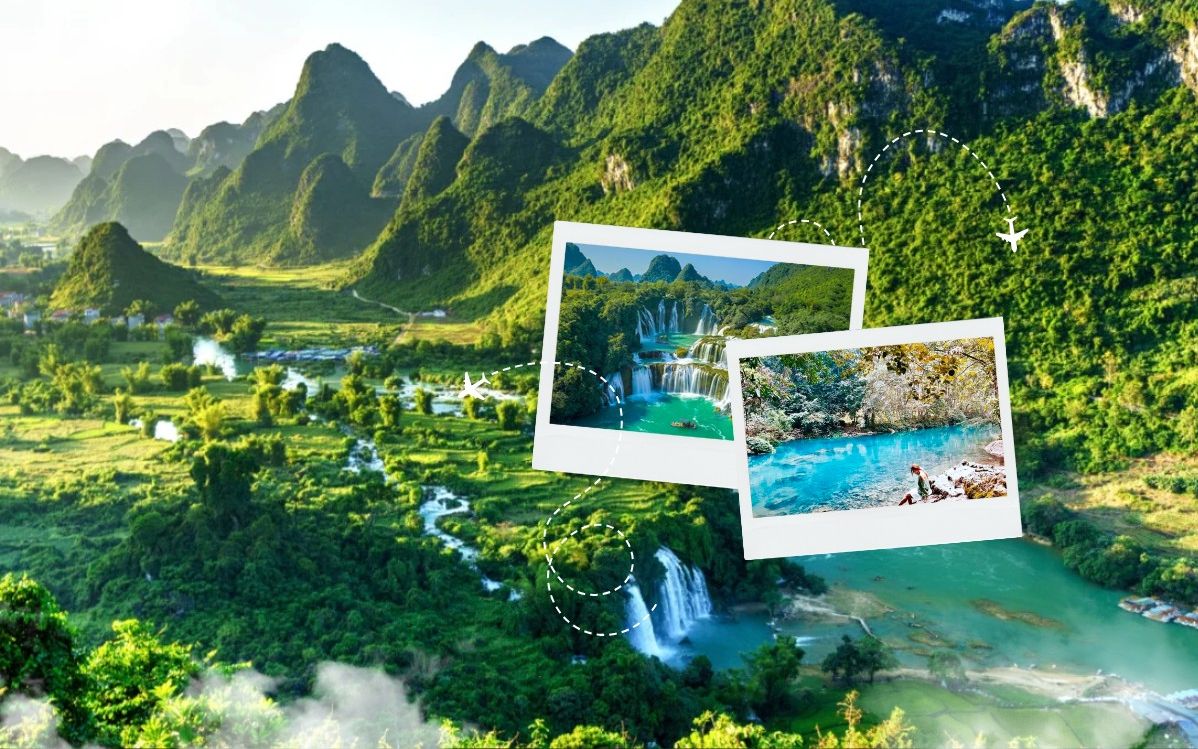
Cao Bang impresses visitors with its pristine mountains, waterfalls, caves, and winding roads stretching across vast natural landscapes. Each destination is not only beautiful for check-in photos but also carries deep historical and cultural significance. Below are the most outstanding check-in locations in Cao Bang, helping you capture stunning images while fully experiencing the spirit of this Northeastern land.
1. Cao Bang – A New Check-in Paradise in Northern Vietnam
Cao Bang is a mountainous province in Northeastern Vietnam, distinguished by its rare untouched beauty despite the rapid development of tourism. Its diverse terrain of limestone mountains, waterfalls, caves, and natural lakes creates a landscape that is both majestic and poetic. The open space and relatively low tourist density allow visitors to truly embrace the tranquility and capture complete frames without heavy commercialization.
Beyond its natural charm, Cao Bang also holds profound cultural and historical values. Revolutionary landmarks and the simple lifestyle of highland ethnic communities turn each trip into more than just a photo journey—it becomes an experience of learning and connection. This harmony between breathtaking scenery and cultural depth has made Cao Bang a rising check-in paradise in Northern Vietnam.
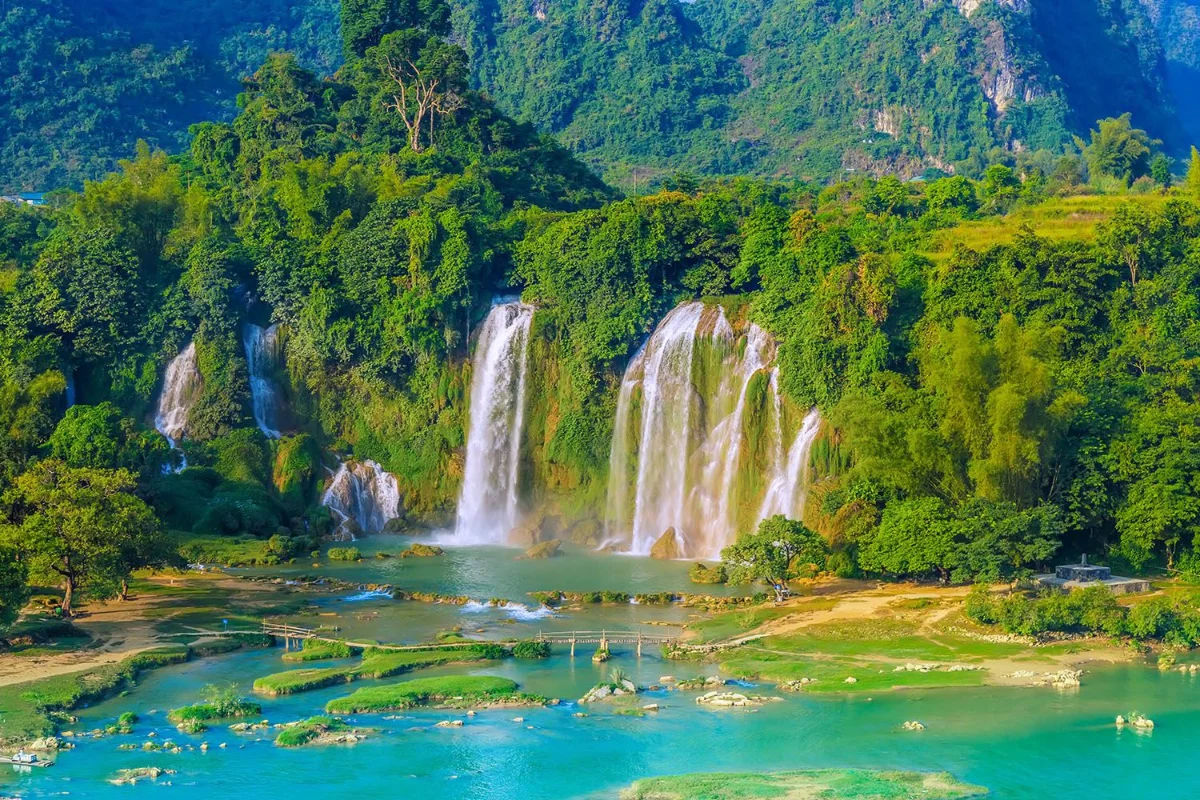
The majestic natural beauty of Cao Bang
2. Top Cao Bang Attractions You Must Visit
2.1. Ban Gioc Waterfall – A Majestic Natural Masterpiece of the Northeast
Ban Gioc Waterfall lies along the Quay Son River, right on the Vietnam–China border, and is considered one of the largest and most beautiful natural waterfalls in Southeast Asia. Its charm comes not only from its scale but also from its multi-tiered structure, wide cascading streams, and the perfect balance between power and elegance.
The ideal time to check in at Ban Gioc Waterfall is in the early morning, when the sunlight is soft and the morning mist still lingers, creating a dreamy and fresh atmosphere. Mornings are also less crowded, allowing for wide, clean shots with better composition control. By midday, the sunlight becomes harsh and the area is often busier, making it less ideal for photography-focused visitors.
Address: Dam Thuy Commune, Trung Khanh District, Cao Bang Province.
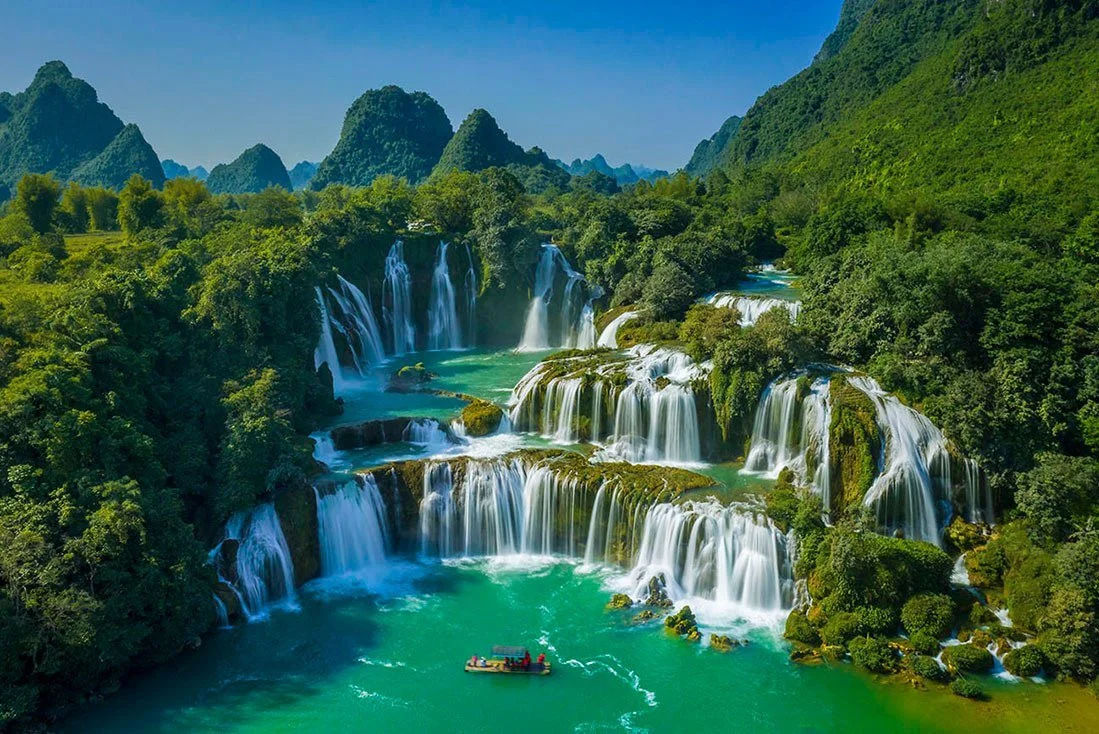
Ban Gioc Waterfall changes beauty with each season
2.2. Pac Bo Historical Site – Le Nin Stream and Karl Marx Mountain
Pac Bo Historical Site holds special historical significance, associated with the early revolutionary activities of President Ho Chi Minh after returning to Vietnam. The area combines historical value with serene natural scenery, creating a solemn yet peaceful atmosphere. Le Nin Stream stands out with its clear turquoise water flowing gently through forest and limestone mountains, while Karl Marx Mountain forms a steady and tranquil backdrop.
Pac Bo is best visited in the morning or early afternoon, when the air is cool and the light is gentle. Morning visits offer a quiet atmosphere, ideal for feeling the harmony between history and nature. Early afternoon sunlight, angled slightly, enhances the colors of the water and forest. This is a place to explore slowly and thoughtfully rather than rushing for quick check-in shots.
Address: Truong Ha Commune, Ha Quang District, Cao Bang Province
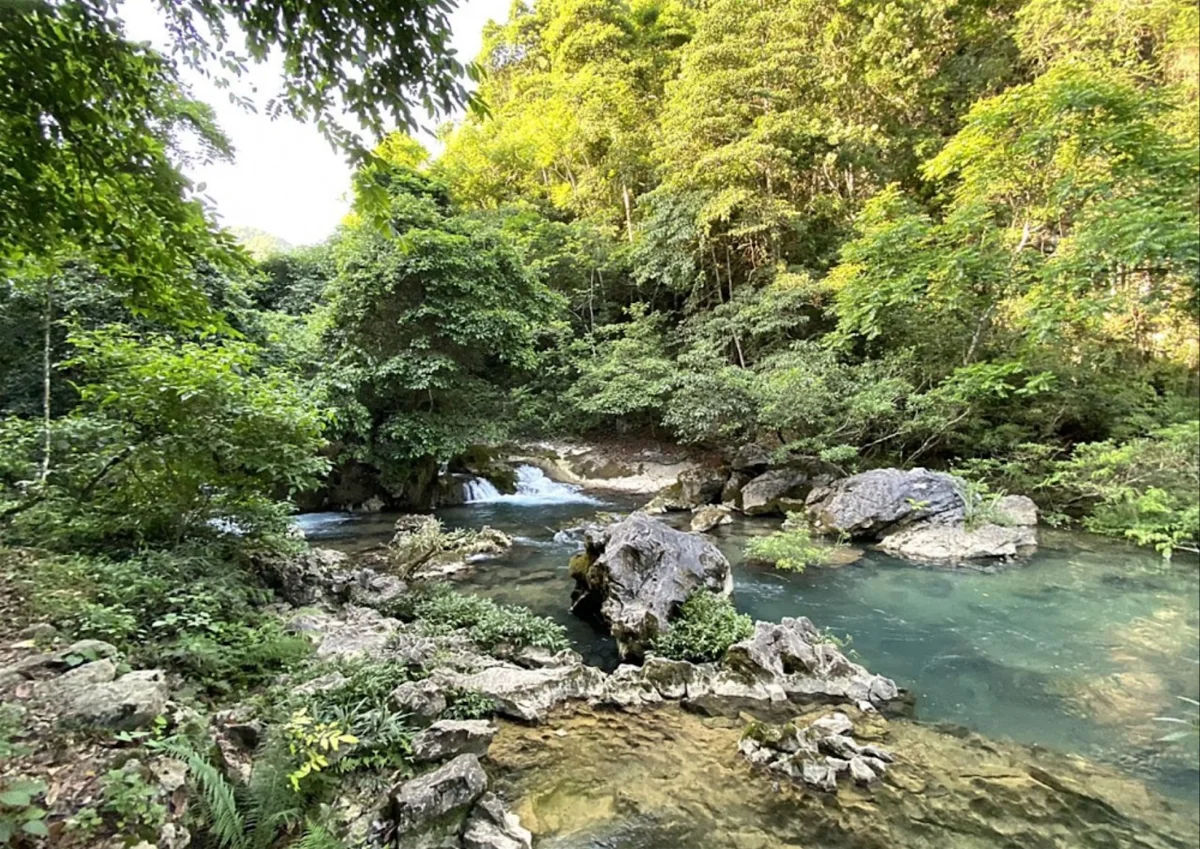
Pac Bo with its poetic scenery
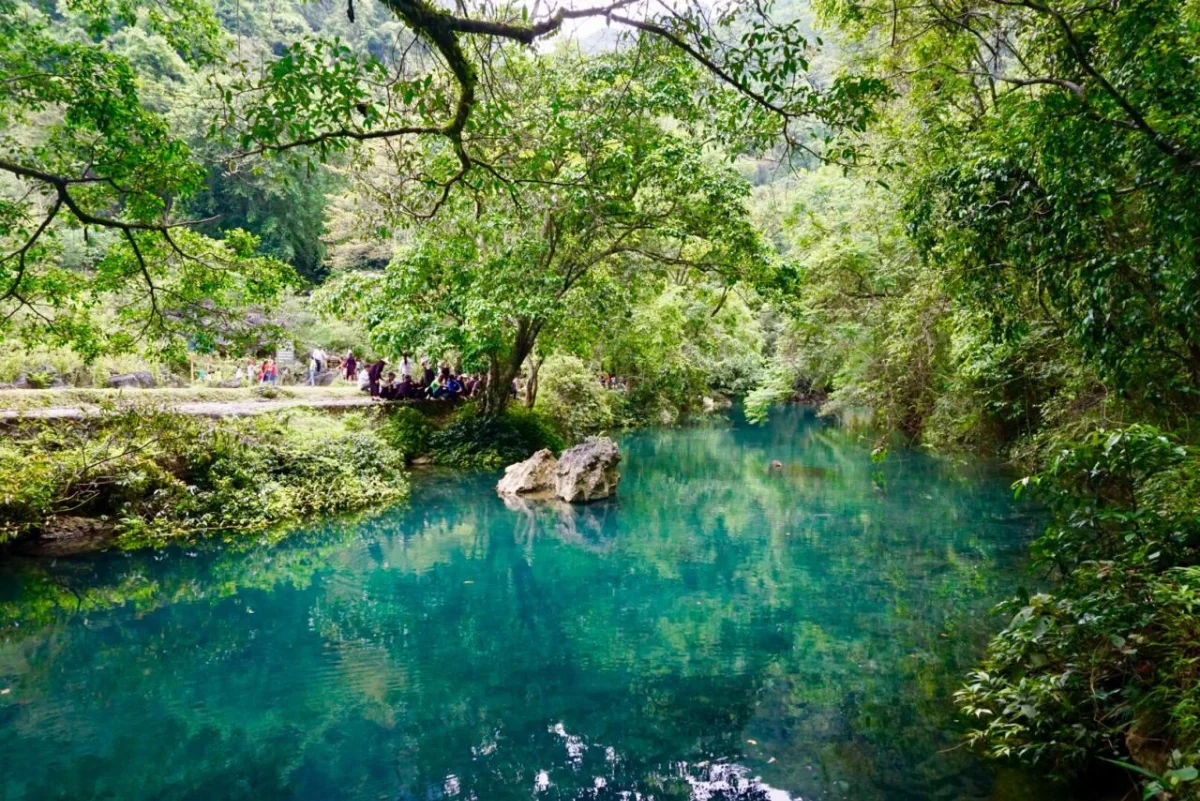
Le Nin Stream with its emerald-green clarity
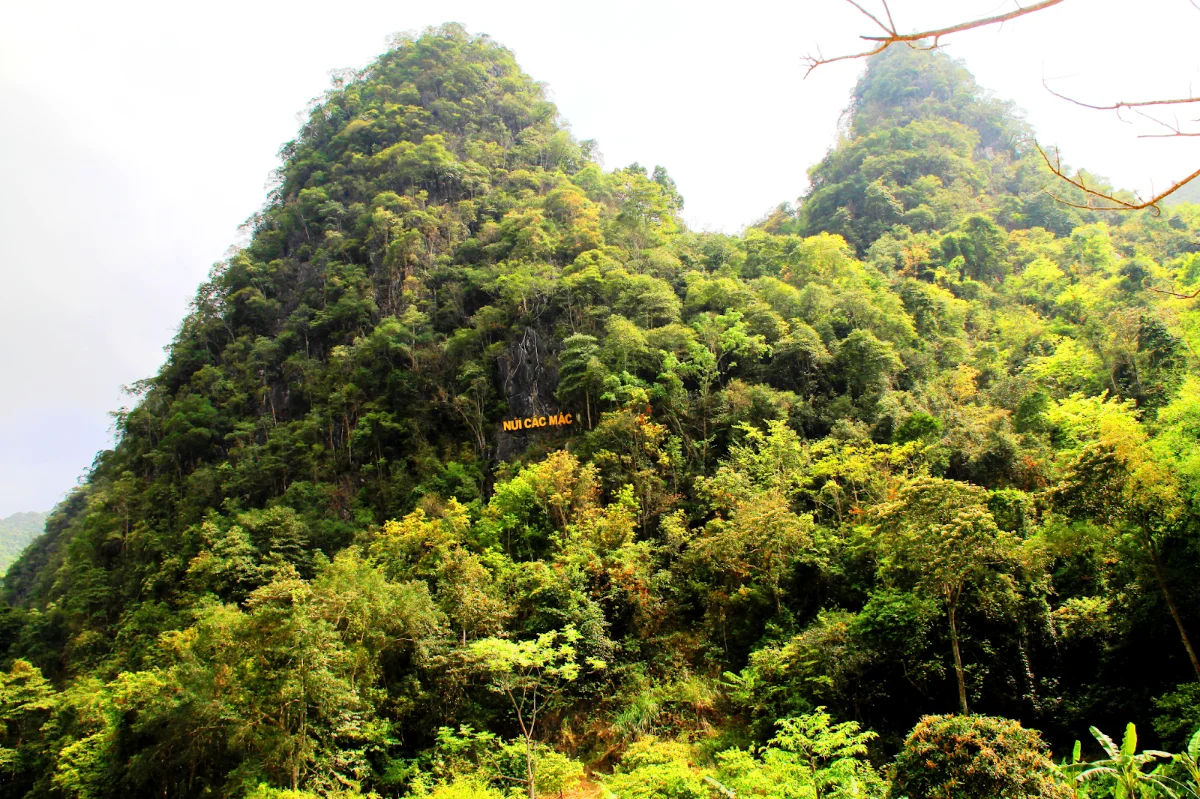
The scenic beauty of Karl Marx Mountain in the Northeast
2.3. Nguom Ngao Cave – The Enchanting World of Stalactites
Nguom Ngao Cave is one of the most beautiful and largest caves in Cao Bang, famous for its diverse stalactite formations, impressive shapes, and natural colors. The cave remains cool year-round, and the pathways are relatively convenient, suitable for independent travelers and families with elderly members. As you venture deeper, the scenery changes noticeably, creating a continuous sense of discovery rather than just a few fixed photo spots.
The best time to explore and photograph inside Nguom Ngao Cave is in the morning or early afternoon, when visitor numbers are lower and the space feels more open. The lighting at this time highlights the textures and natural hues of the stalactites more clearly. Visitors should wear comfortable shoes and be mindful of slightly damp sections of the cave floor to ensure a safe and complete experience.
Address: Dam Thuy Commune, Trung Khanh District, Cao Bang Province.
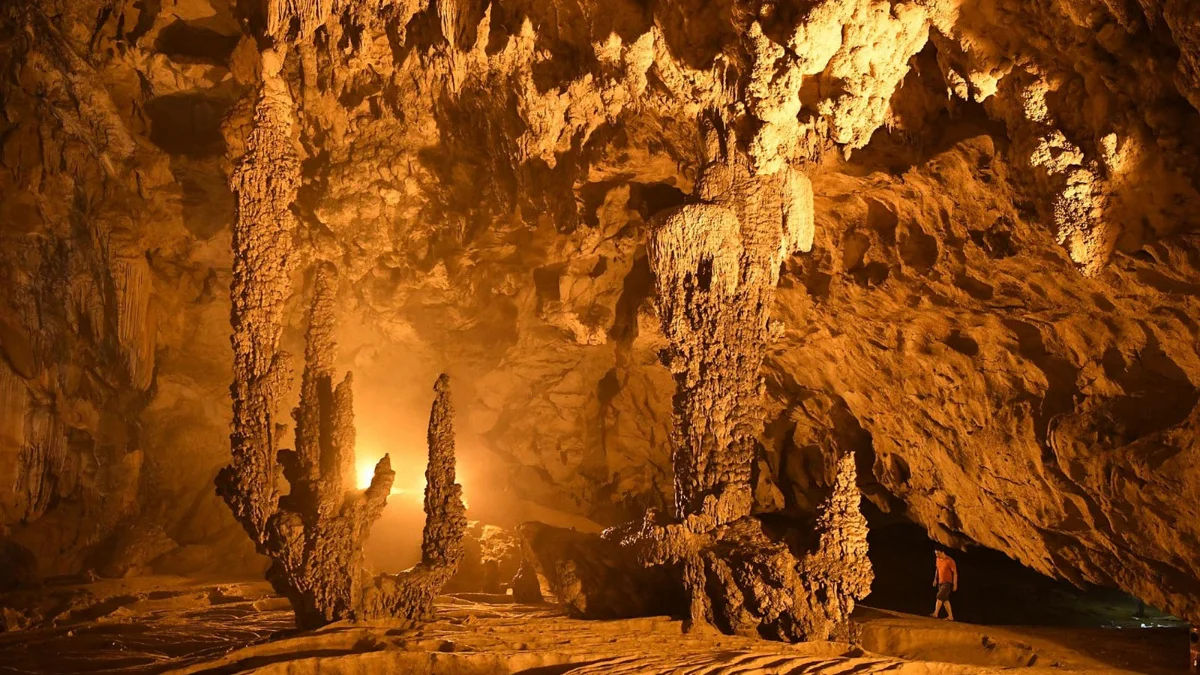
Discover the mystical beauty of Nguom Ngao Cave
2.4. Thang Hen Lake – A Peaceful Green Oasis Amid the Mountains
Thang Hen Lake is a cluster of freshwater lakes nestled within a limestone valley, known for its clear emerald water and calm surface. The scenery here is gentle and serene, ideal for travelers seeking relaxation away from crowds.
The best time to check in at Thang Hen Lake is early morning, when the sunlight is soft and the water appears at its clearest. Light mist often lingers above the surface, adding depth and softness to photographs. Harsh midday sunlight can wash out the lake’s color, while late afternoon may cause backlighting challenges for composition.
Address: Quoc Toan Commune, Tra Linh District, Cao Bang Province
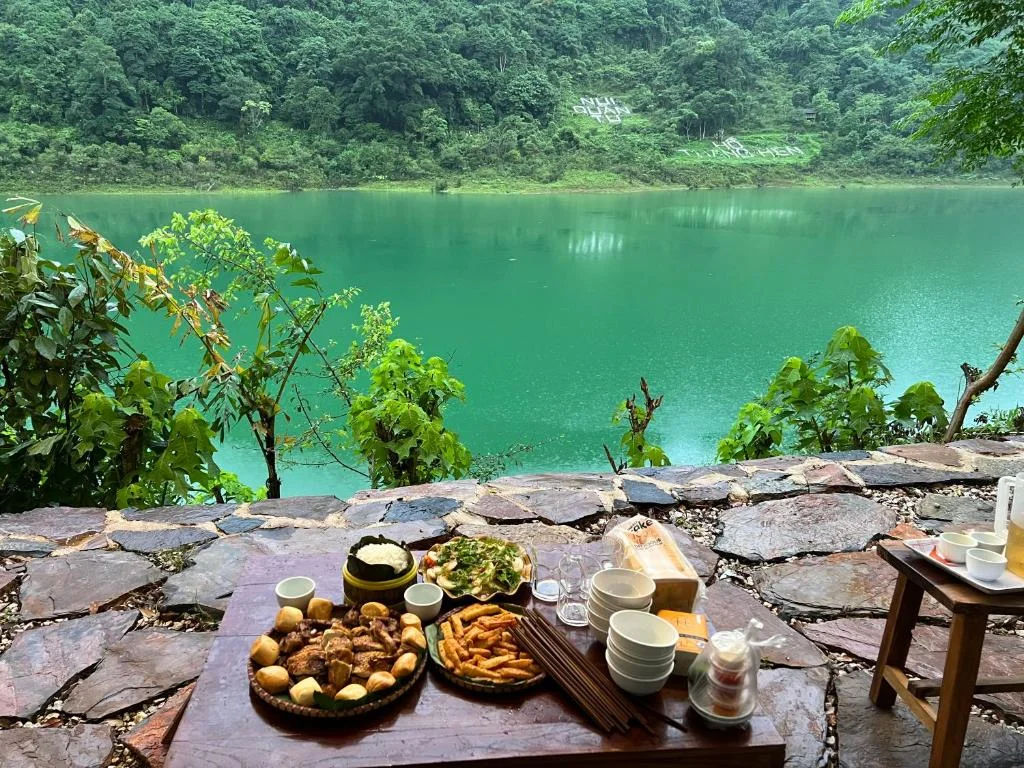
The jade-green water of Thang Hen Lake
2.5. Nui Mat Than – A Unique Check-in Symbol of Cao Bang
Nui Mat Than, also known as Nui Thung, stands out with a large natural hole through its center, creating a rare and striking geological feature in Vietnam. Surrounding it are grassy valleys and seasonal lakes, forming a truly distinctive landscape, especially when viewed from a distance.
The most beautiful time to check in at Nui Mat Than is late afternoon, when the sunlight lowers and shines diagonally across the valley. This lighting accentuates the mountain’s unique shape and casts dramatic shadows over the grasslands. Early morning is also possible, though the light tends to be flatter and less visually striking.
Address: Quoc Toan Commune, Tra Linh District, Cao Bang Province
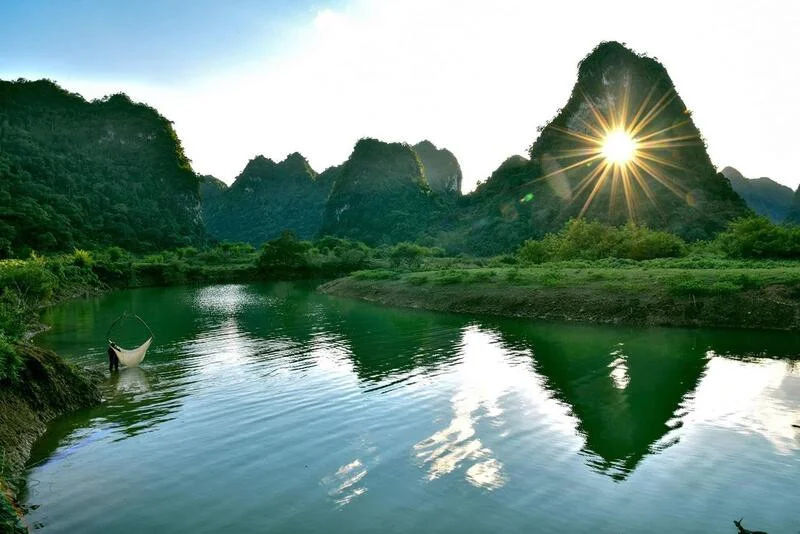
The unique beauty of Nui Mat Than
2.6. Ma Phuc Pass – A Signature Mountain Pass of Cao Bang
Ma Phuc Pass may not be long, but it showcases the distinctive beauty of the Northeast. The winding road curves gracefully between limestone mountains, forming recognizable and photogenic bends. From certain viewpoints, visitors can overlook the valley below, dotted with small houses and terraced fields.
Late morning is the ideal time to check in at Ma Phuc Pass, when the mist has lifted and sunlight clearly illuminates the winding road. Afternoon light can be harsh, casting strong shadows against the cliffs and making photo composition more challenging. For the best shots, choose elevated viewpoints or step back to capture the full curve of the pass.
Address: National Highway 3, Quoc Toan Commune, Tra Linh District, Cao Bang Province
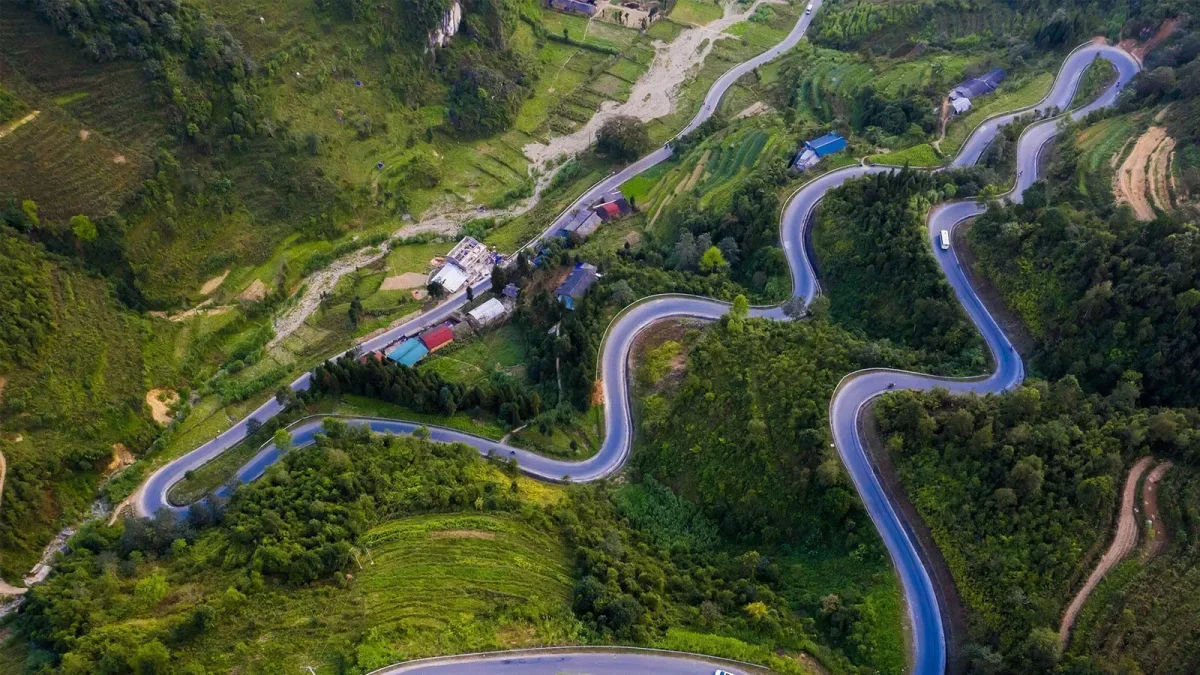
The poetic scenery of Ma Phuc Pass
2.7. Phat Tich Truc Lam Ban Gioc Pagoda – A Spiritual Retreat Amid Nature
Phat Tich Truc Lam Ban Gioc Pagoda is situated on elevated ground overlooking Ban Gioc Waterfall and the surrounding mountains. Its traditional architecture harmonizes beautifully with the natural setting, creating a solemn yet serene spiritual space.
Morning is the best time to check in at the pagoda, when the air is fresh and the soft light enhances the architectural colors naturally. Visitor numbers are also lower, making it easier to capture peaceful, undisturbed shots. In the afternoon, strong angled sunlight may create high contrast between the sky and the structure.
Address: Dam Thuy Commune, Trung Khanh District, Cao Bang Province
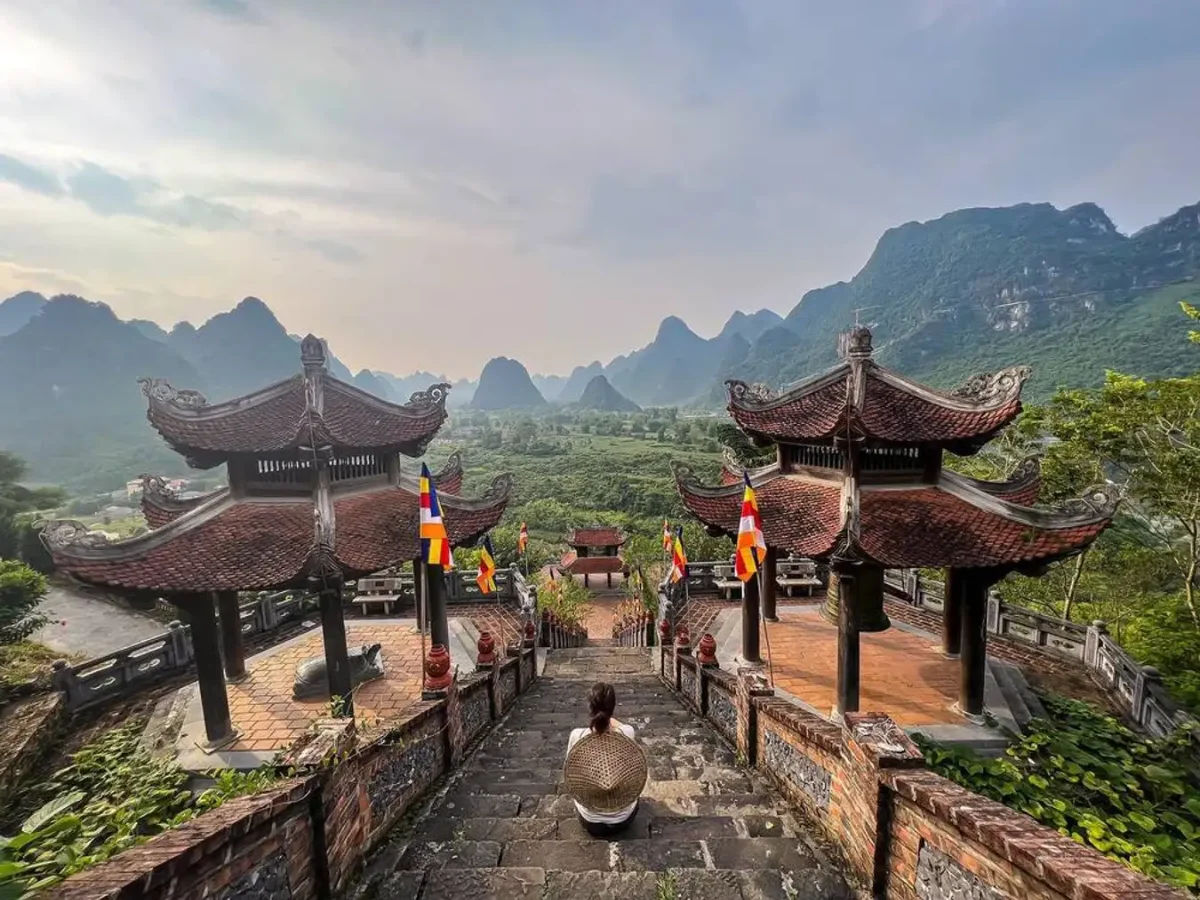
Phat Tich Truc Lam Ban Gioc Pagoda with its long-standing history
2.8. Phja Oac – Phja Den National Park – Experience Untouched Nature
Phja Oac – Phja Den National Park features a cool climate year-round, rich forest ecosystems, and fresh mountain air. Morning mist often blankets the area, creating a characteristic highland atmosphere.
The best time to check in at Phja Oac Phja Den is in the morning, when light mist drifts between the trees and sunlight is not yet harsh. This is ideal for capturing dreamy, nature-focused travel photos. In the afternoon, the weather often becomes colder and cloudier, better suited for leisurely walks than photography.
Address: Nguyen Binh District, Cao Bang Province
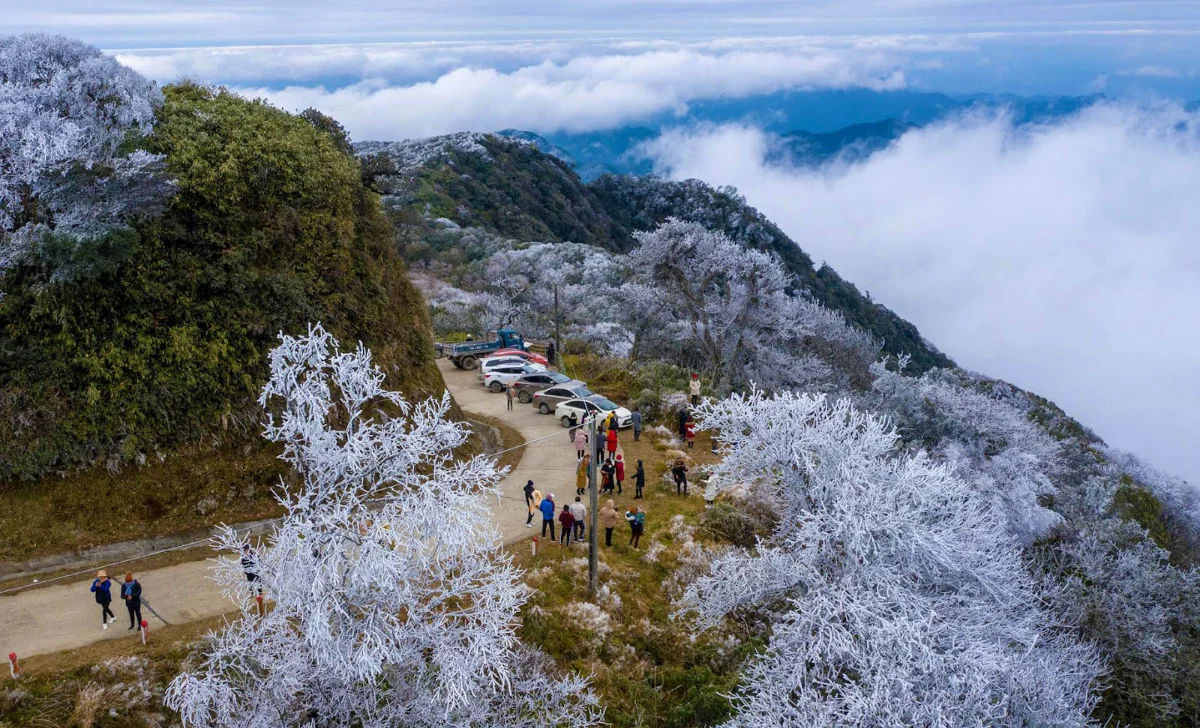
Explore the untouched beauty of Phja Oac – Phja Den National Park
3. Effective Tips for Check-in in Cao Bang
3.1. Choose the Best Time of Day for Photography
For travel check-in photography, lighting is always the key factor determining image quality, composition, and the emotional tone of each frame. In Cao Bang, this becomes even more noticeable due to its mountainous terrain, deep valleys, and many water surfaces. Early morning is the most ideal time for landscape photography, especially at locations such as Ban Gioc Waterfall, Thang Hen Lake, Pac Bo Historical Site, and Nguom Ngao Cave. At this time, the light is soft and not harsh, preserving the natural green tones of trees and the clarity of water while minimizing overexposure. Mornings also tend to be less crowded, making it easier to capture clean, spacious shots without distractions.
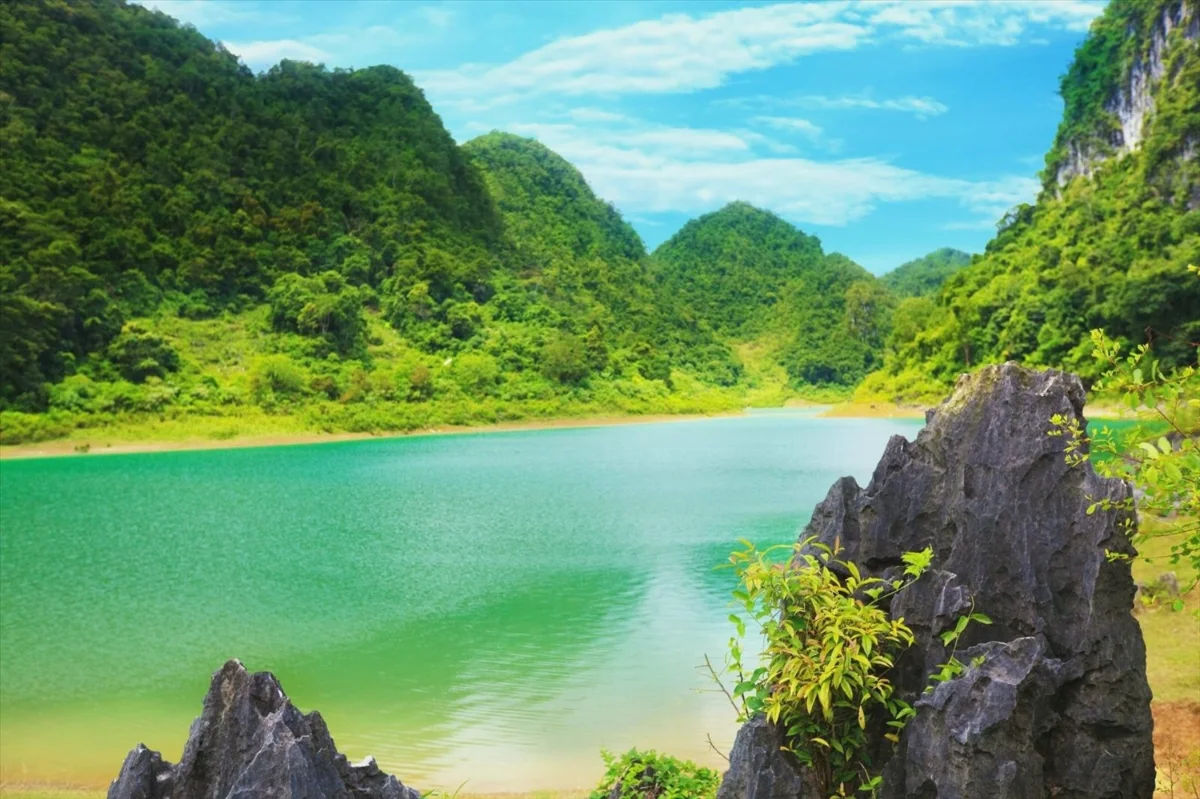
The calm and crystal-clear atmosphere of Thang Hen Lake in the morning
Late afternoon is also suitable for photography, particularly at elevated and open locations such as Nui Mat Than, Ma Phuc Pass, Phat Tich Truc Lam Ban Gioc Pagoda, and Phja Oac – Phja Den National Park. The lower sunlight creates longer shadows, adding depth and softness to the scene. However, visitors should finish their photo sessions before dark, as many areas in Cao Bang have limited street lighting and nighttime travel can be less convenient. It is advisable to avoid shooting at midday when strong sunlight makes colors appear harsh and overall composition harder to control.
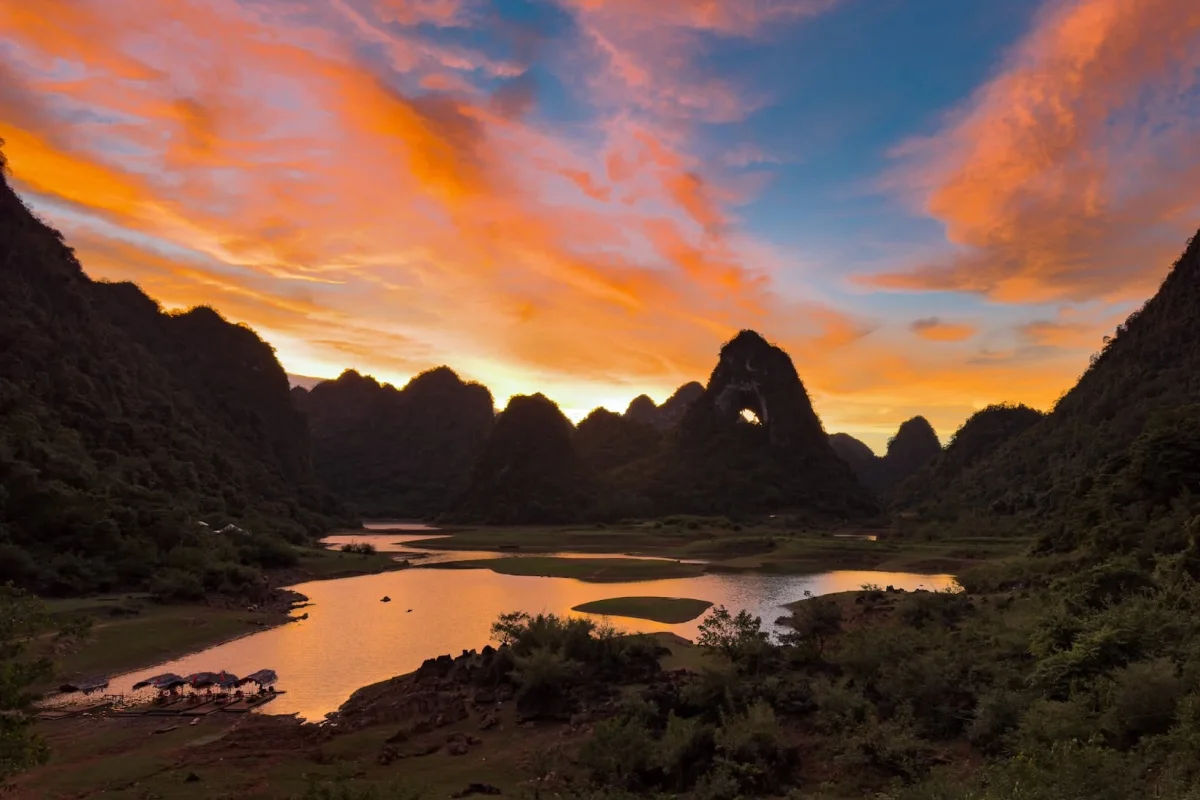
A sunset afternoon at Nui Mat Than in Cao Bang
3.2. Outfit and Pose Suggestions
Outfits: When taking photos in Cao Bang, choose outfits that harmonize with the vast natural scenery while still standing out enough to define the subject. Neutral tones, light colors, or pastel shades often photograph well, preventing the subject from blending into the deep green mountain backdrop. Overly patterned or bold-colored outfits can make the frame look cluttered, especially in wide, detail-rich natural settings.
Poses: Prioritize simple, natural poses that emphasize blending into the landscape rather than elaborate styling. Standing at an angle, facing away, walking slowly, or gazing into the distance often work well in mountainous scenery and create an authentic feel. Utilize pathways, tree lines, railings, or water surfaces to add structure and depth to your composition. At historical or spiritual sites, subtle and respectful poses help maintain the appropriate atmosphere of the location.
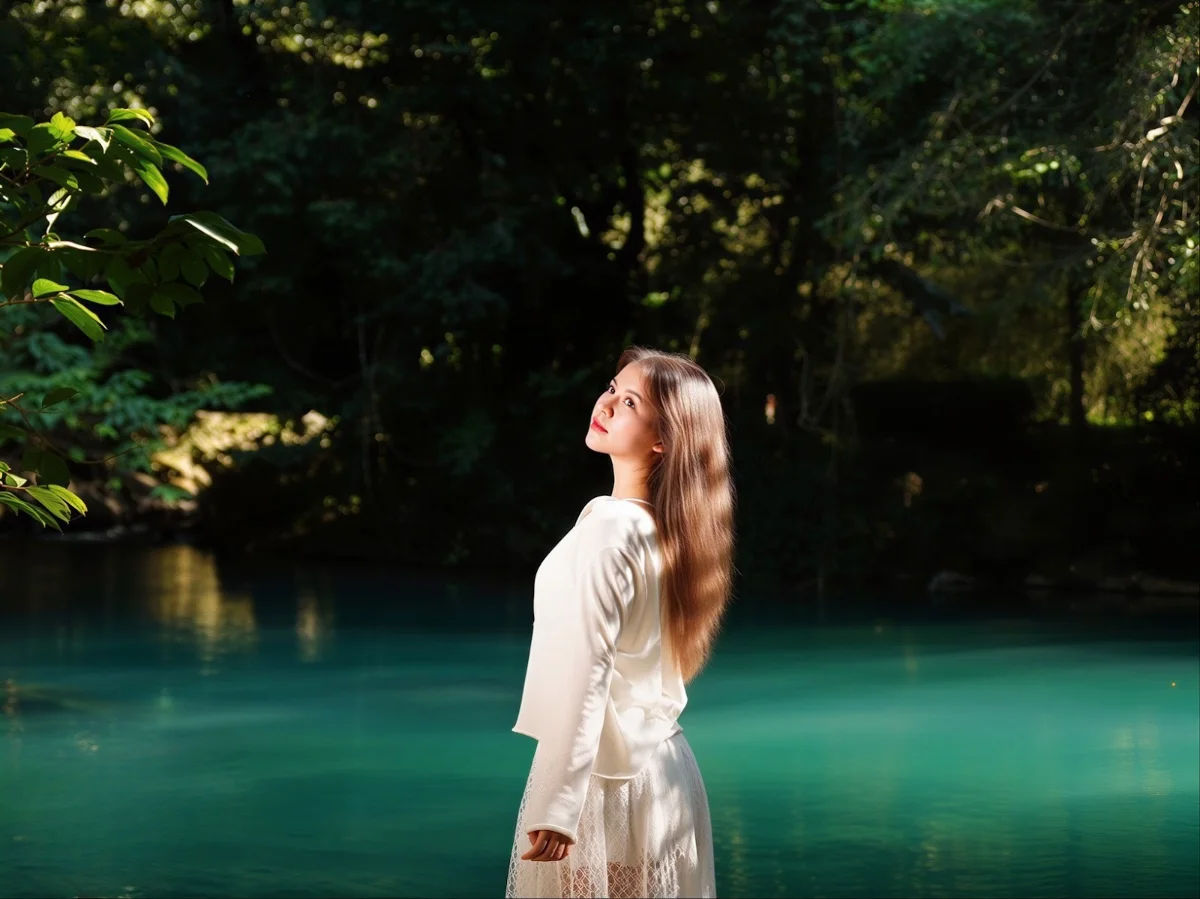
Check-in at Le Nin Stream with light-colored outfits
3.3. Travel Safety Tips
Cao Bang’s terrain is primarily mountainous, with many passes and winding roads, so ensuring travel safety is essential. Before your trip, carefully check your vehicle, especially brakes, tires, and lights. If traveling by motorbike, choose one suitable for mountain roads and avoid carrying excessive weight on long routes.
While on the road, plan your itinerary reasonably to avoid rushing or traveling at night. Many routes in Cao Bang are remote, with limited houses and lighting, so daytime travel is safer and allows for better response to unexpected situations.
At natural check-in spots such as waterfalls, lakes, or grassy hills, be cautious of slippery surfaces, especially after rain. Maintain a moderate speed, stay observant, and prioritize safety to ensure your trip is not only visually rewarding but also complete and secure.
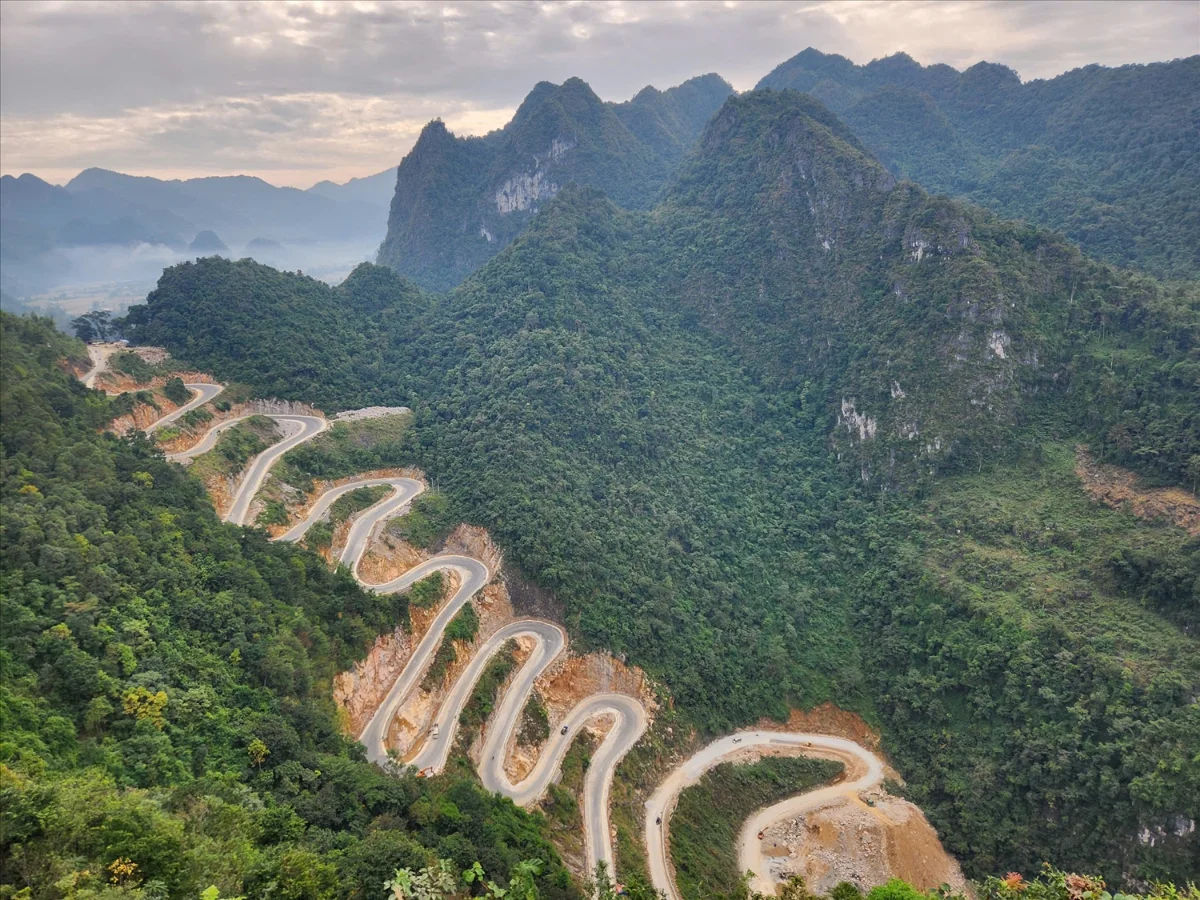
Mountain terrain and winding passes in Cao Bang
4. FAQ – Frequently Asked Questions About Traveling to Cao Bang
1. Which check-in spots in Cao Bang are suitable for families?
Locations such as Ban Gioc Waterfall, Thang Hen Lake, Pac Bo Historical Site, and Phat Tich Truc Lam Ban Gioc Pagoda are relatively easy to access and not overly adventurous, making them suitable for families with elderly members or children.
2. What is the best time of day to check in at Ban Gioc Waterfall?
Early morning is ideal for visiting and photographing Ban Gioc Waterfall due to soft lighting, fewer crowds, and the ability to capture the waterfall’s gentle beauty.
3. Is it more convenient to travel independently or join a tour in Cao Bang?
If you prefer flexibility and deeper exploration, independent travel may suit you better. For first-time visitors unfamiliar with mountain roads, a package tour can save effort and ensure a safer itinerary.
4. What is a reasonable budget for traveling to Cao Bang?
Travel costs in Cao Bang are generally affordable compared to other mountainous destinations. Depending on travel time, transportation, and accommodation choices, a 2–3 day trip can be quite budget-friendly.
5. Are the check-in spots in Cao Bang far from each other?
Yes, distances between attractions can range from 30 to 60 km. It is advisable to plan your itinerary by grouping nearby locations to avoid excessive travel.
6. How many days should I spend in Cao Bang for a complete experience?
Spending 2 to 3 days is reasonable for exploring Cao Bang. If you plan to visit more remote areas like Phja Oac – Phja Den, consider allocating at least 4 days.
7. Are the roads to check-in spots in Cao Bang difficult?
Most roads are winding mountain passes but generally in good condition. However, confident driving skills, slower speeds, and avoiding nighttime travel are recommended.
8. Should I rent a private vehicle when traveling in Cao Bang?
Renting a motorbike or private car provides flexibility when traveling between distant check-in spots, especially suitable for independent travelers and small groups.
9. Is Cao Bang suitable for photography enthusiasts?
Absolutely. The diverse terrain of waterfalls, caves, lakes, and limestone mountains offers a wide range of photographic opportunities, from expansive landscapes to environmental portraits.
10. Is Cao Bang as crowded as other popular destinations?
Compared to many Northern tourist hotspots, Cao Bang still retains a certain level of tranquility. If you avoid major holidays, you can enjoy comfortable space for sightseeing and photography.
New Posts