


See all results for ""

 Anytime
 Tiếng ViệtEnglish
 한국어
한국어 日本語
日本語 简体中文
简体中文 Français
 Deutsch
 Español
 Italiano
 Русский


 Login for Corporates


Temple of the Reclining Buddha (Wat Pho)
 2 Thanon Sanam Chai, Khwaeng Phra Borom Maha Ratchawang, Khet Phra Nakhon, Krung Thep Maha Nakhon 10200, Thailand
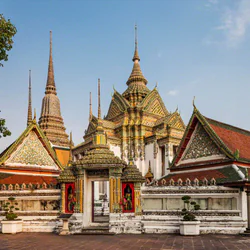
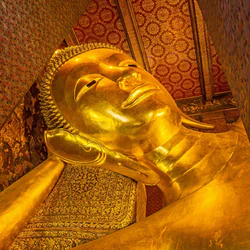
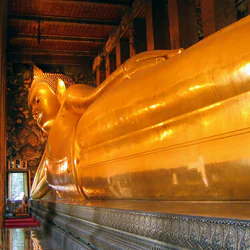
"Temple of the Reclining Buddha (Wat Pho) or Wat Phra Chetuphon, located right behind the Temple of the Emerald Buddha, this is a must-see for any visitor to Bangkok. It is one of the largest temple complexes in the region. The city is famous for its huge 46 m long, gold-plated reclining Buddha."
1. Where is Wat Pho Temple Located
Wat Pho Bangkok is located at 2 Sanamchai Road, Phra Nakhon District, right in the heart of the Thai capital. It sits next to the Temple of the Emerald Buddha Bangkok and the Grand Palace, forming a cluster of outstanding religious and cultural architecture. From the Reclining Buddha Thailand, visitors can easily walk to other attractions such as the National Museum, Pak Khlong Talad Flower Market, or the scenic banks of the Chao Phraya River.
2. Best Time to Visit Wat Pho Temple
The ideal time to visit the Reclining Buddha Temple Bangkok is from November to February, when the weather is cool, dry, and comfortable for sightseeing. This period coincides with Thailand’s peak travel season, offering a lively atmosphere with traditional cultural activities.
If visiting during the low season (May to September), you will encounter fewer crowds, but the weather can be hot and humid with occasional rain showers.
3. How to Get to Wat Pho Temple
There are several ways to reach Wat Pho Bangkok:
Taxi or Grab: Fast and convenient, especially for groups.
Tuk-tuk: A fun experience, but always agree on the price beforehand.
BTS Skytrain + Chao Phraya River boat: Take the BTS to Saphan Taksin Station, then board a riverboat to Tha Tien Pier, which is just a short walk from the temple entrance.
The boat route is particularly scenic, offering views of Bangkok’s riverside landmarks and other temples in Bangkok along the way.
4. Highlights of Visiting Wat Pho Temple
4.1 Admire the Reclining Buddha
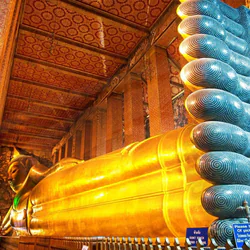
The most iconic feature of Wat Pho Thailand is the massive Reclining Buddha statue, stretching 46 meters long and 15 meters high. The feet, each 5 meters long, are exquisitely inlaid with mother-of-pearl and engraved with 108 auspicious symbols in Buddhist belief.
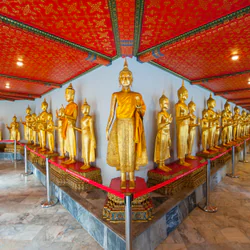
In addition to the Reclining Buddha, the temple houses four chapels containing 394 gilded Buddha images collected from across Thailand. The surrounding corridors are decorated with hundreds of ancient murals depicting Buddhist tales, daily life scenes, and knowledge of astronomy and traditional medicine — a true treasure trove of art and history.
4.2 Capture Authentic Thai-Style Photos
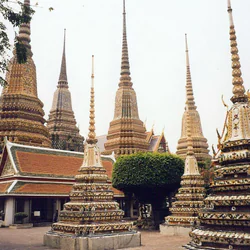
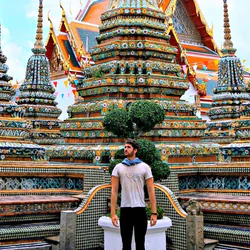
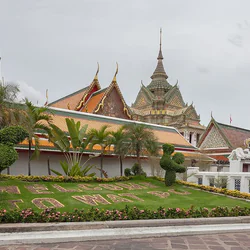
Wat Pho Bangkok features 91 chedis (stupas) of various sizes, adorned with colorful porcelain mosaics that create a striking visual impact. Scattered around the courtyard are unique stone statues once used as ballast on old merchant ships. Every corner offers a picture-perfect backdrop, from the sunlit courtyards to the golden Buddha-lined corridors.
4.3. Enjoy a Relaxing Traditional Thai Massage
Recognized by UNESCO as part of the Memory of the World for the Asia-Pacific region, Wat Pho preserves 1,360 marble inscriptions on medicine, anatomy, and orthopedics. These serve as the foundation for the temple’s traditional Thai massage techniques, which have gained global recognition.
After exploring, visitors can indulge in a rejuvenating massage session right within the temple grounds — an experience that blends relaxation with cultural heritage and remains a major highlight for many returning guests.
5. Useful Tips for Visiting Wat Pho Temple
Wat Pho opening hours: 08:30 – 18:30 daily (massage service until 18:00)
Dress modestly: Avoid shorts, sleeveless shirts, or revealing clothing
Maintain silence and respect religious customs
Bring cash for entrance fees and massage services
Avoid disrespectful poses when taking photos near Buddha statues