


See all results for ""

 Anytime
 Tiếng ViệtEnglish
 日本語
日本語 한국어
한국어 简体中文
简体中文 Français
 Deutsch
 Español
 Italiano
 Русский


 Login for Corporates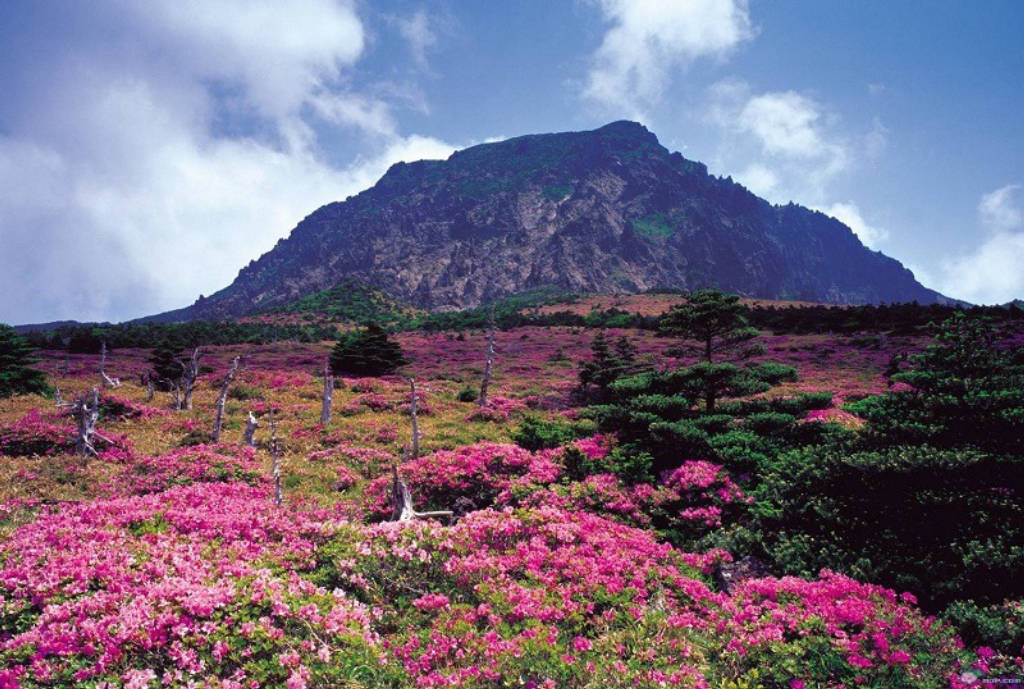
Hallasan National Park
 2070-61 1100(Cheonbaek)-ro, Cheju, Jeju-do, South Korea
In addition to the open entertainment venues, cultural heritage sites are also the top attraction of Jeju Island. Arriving here, visitors can hardly ignore Hallasan National Park, which overlaps with an extremely large biosphere.
In addition to the open entertainment venues, cultural heritage sites are also the top attraction of Jeju Island. Arriving here, visitors can hardly ignore Hallasan National Park, which overlaps with an extremely large biosphere. Guests can enter for free. Parking fees range from 500 won (9,000 VND ) to 3,700 won (67,000 VND ).
Hallasan National Park was Korea's 9th national park in 1970. In 2002, it was officially recognized as a UNESCO Biosphere Reserve because of its rich and diverse vegetation. In 2007, Hallasan National Park became a World Heritage Site, one of the most famous nature reserves in Korea. The Jeju government is allowed to self-govern the place.
Obviously, the star of this place is Mount Hallasan. Hallasan Mountain is also known as Mt. Yeongjusan, which means "high mountain to pull the galaxy." Famous for its immense geological value, any visitor will be surprised to see the mountains and the immense ecosystem of this mountain. The mountain is 1,950 m above sea level, the highest mountain in Korea. The area here is also extremely large, Hallasan Mountain has a total area of up to 153,112 square kilometers.
It is reported that there are about 368 parasitic volcanoes (Oremus) around here, with more than 1,800 species of plants, over 4,000 species of animals, and approximately 3,300 species of insects.
Hallasan National Park opens up to 7 trails for visitors to visit and experience the colorful nature of nature, including Eoseungsaengak Road (탐방); Seokguram Road (탐방 로); Yeongsil Road (탐방); Eorimok Road (탐방 로); Donnaeko Road (탐방 로); Gwaneumsa Road (관음); Seongpanak (탐방) is in order from shortest to longest. Most of the roads lead to the top of the mountain. There is a crater lake named Baekrokdam (백록담/白鹿潭). However, this area is only open during office hours. If you really want to conquer the roads here, visitors should arrive early to make sure they can finish before the area closes.
Among the roads of Hallasan National Park, the most famous is the Yeongsil Road (탐방), also known as the "1,000 Stairs to Heaven." To complete this route, on average, visitors will take about 2.5 hours. Visitors can choose to take a bus or taxi at the first part of the route. In the later parts, this road leads to vast plains, azaleas are the "beauty" of this place in the spring.
Yeongsil Road is often loved for its vast expanse of cliffs and the odd shapes of rock formations. In winter, white snow will cover this place. So one piece of advice for conquerors is to wear spiked shoes. The lowest temperature here is down to -20 degrees Celsius. Unlike the rest of the roads, Yeongsil road does not lead to the top of the mountain. Its stop is Witse Oreum, which is often filled with the rich aroma of a few bowls of hot ramyeon, or a few pre-prepared snacks.
Each street has its own office system to serve and advise visitors most enthusiastically. It also has services such as navigation, making the conquest of visitors easier, more convenient, and more enjoyable.