


See all results for ""

 Anytime
 Tiếng ViệtEnglish
 日本語
日本語 한국어
한국어 简体中文
简体中文 Français
 Deutsch
 Español
 Italiano
 Русский


 Login for Corporates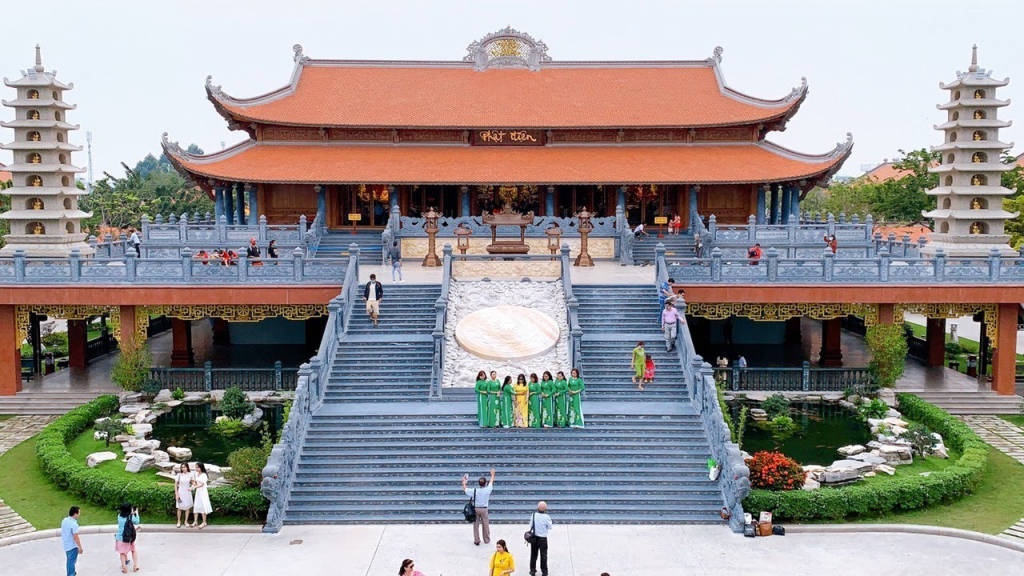
Vinh Nghiem Pagoda
 339 Đ. Nam Kỳ Khởi Nghĩa, Phường 14, Quận 3, Thành phố Hồ Chí Minh, Việt Nam
Going to pagodas and worshiping Buddha is one of the typical cultural features of our Vietnamese people from past to present. Along with Ngoc Hoang Pagoda, Xa Loi Pagoda, Giac Lam Pagoda, Vinh Nghiem Pagoda is one of the four floating temples.
Compared to other temples, Vinh Nghiem Pagoda is quite new, it was built in 1964, when monks Thich Tam Giac and Thich Thanh Kiem from the North to the South spread Buddhism and started construction. The pagoda was designed by architect Nguyen Ba Lang with the cooperation of Mr. Le Tan Chuyen and Co Van Hau, based on the model and name of the ancient wooden Vinh Nghiem pagoda in Bac Giang province dating back to the 11th century. under the reign of King Ly Thai To.
The location of the current temple was formerly a low-lying area by Thi Nghe canal, more than 40,000m3 of land from Bien Hoa highway had to be moved back to leveling with a cost of 98 million VND at that time. entirely contributed by Buddhists. After 7 years, by 1971, it was basically completed with items including Central Building, Avalokitesvara Tower, as the background for social activities. After that, some other works were added such as Xa Loi Community Tower, Vinh Nghiem Stone Tower, guest house...
After completion, the entire temple campus has an area of about 6,000 m2 completely comfortable for worshiping and praying of people as well as visitors. Vinh Nghiem Pagoda was built according to the ancient Northern architecture but used modern construction materials and techniques. Vinh Nghiem Pagoda is one of the typical works of Vietnamese Buddhist architecture in the 20th century. The pagoda consists of 3 main items: Tam Quan Gate, Central Building and towers.
Triple gate
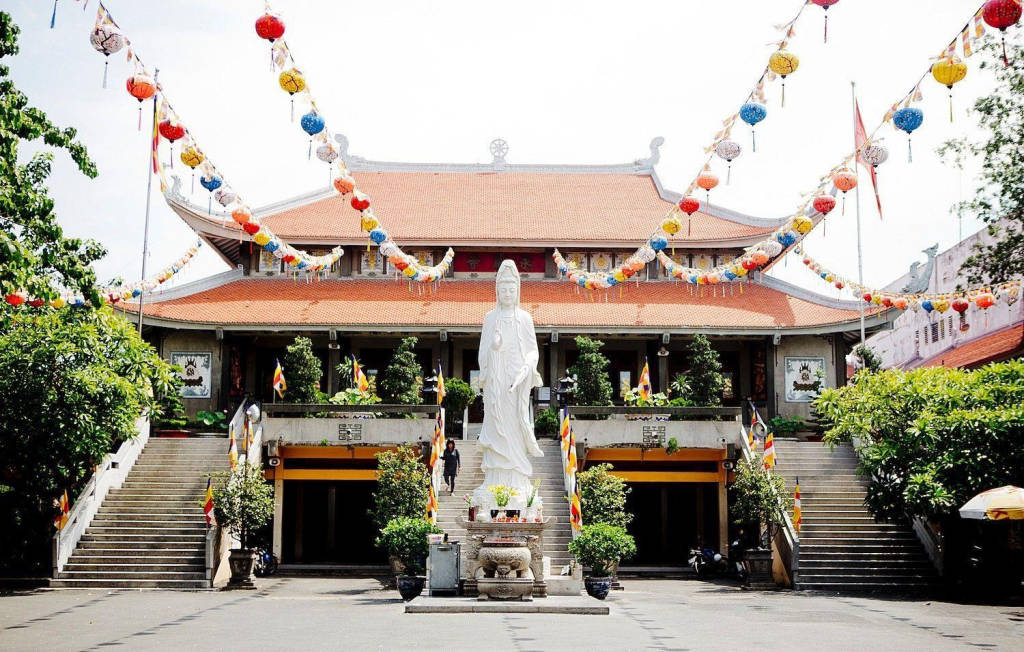
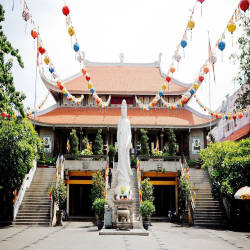
This is a rather massive building with traditional architecture with a curved red tile roof. Previously, when Nam Ky Khoi Nghia Street was not wide open, the gate was about 4m away from the current position and about 30cm lower. In 2005, because the city implemented a project to expand Nam Ky Khoi Nghia street, the Tam Quan gate of the temple was moved inward, to its present position. The relocation ensures that it does not disrupt the architectural landscape of the temple and preserves a building of artistic, cultural and historical value in the city.
Central Building
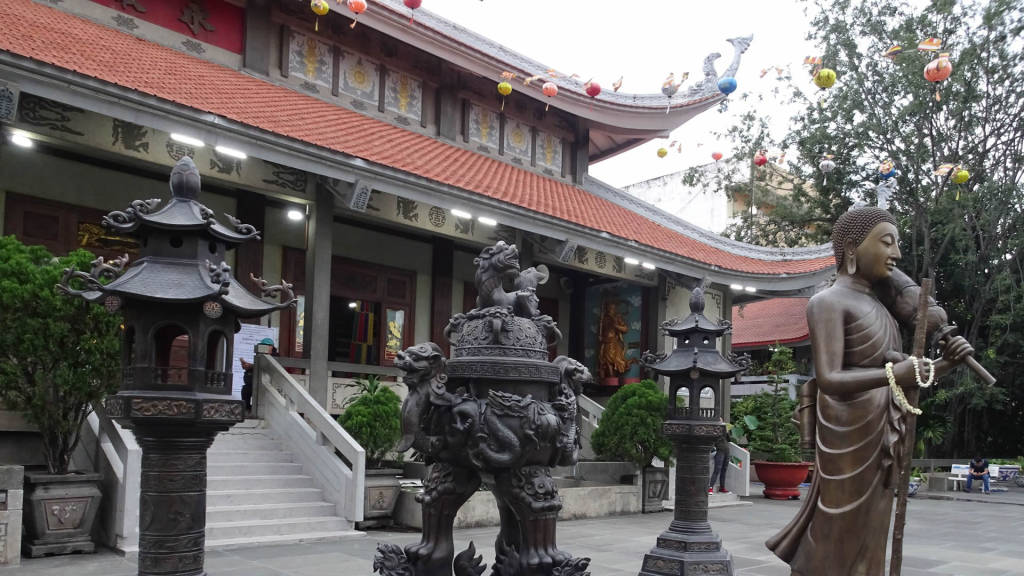
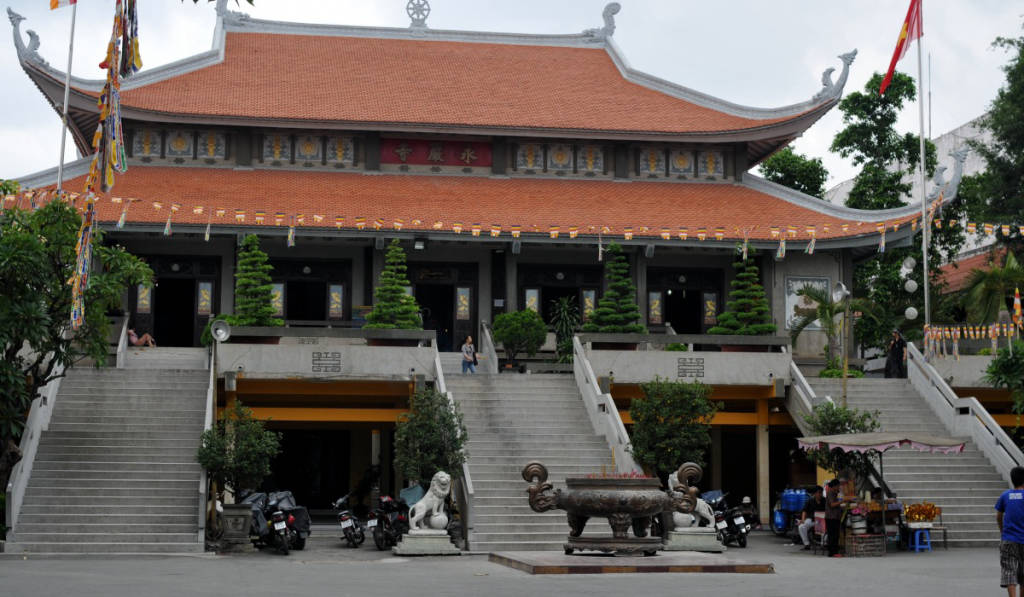
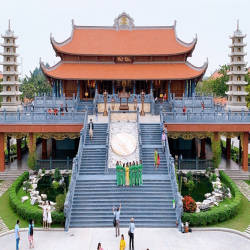
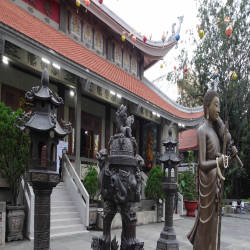
The central building is a large, solid structure consisting of an upper and a ground floor. In front of the central building is the majestic statue of Bodhisattva Avalokitesvara.
The ground floor includes the ancestral church (with the Bodhidharma altar inside), the lecture hall, the office, the library (one of the three libraries of the Ho Chi Minh City Buddhist Association), the monastery and the classrooms ( because the temple is the place where the basic Buddhist school is located).
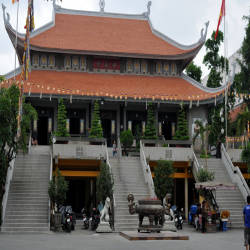
From the yard, there are three wide stairs with 23 steps, leading to the upper floor including the terrace, Buddha hall and Quan The Am tower.
The terrace is about 10 meters wide. On the right is a steeple, hanging a large bell called "Peace Bell", 1.8m in diameter, cast in 1971 by Taoist Buddhists in Japan before 1975 to pray for peace in Vietnam.
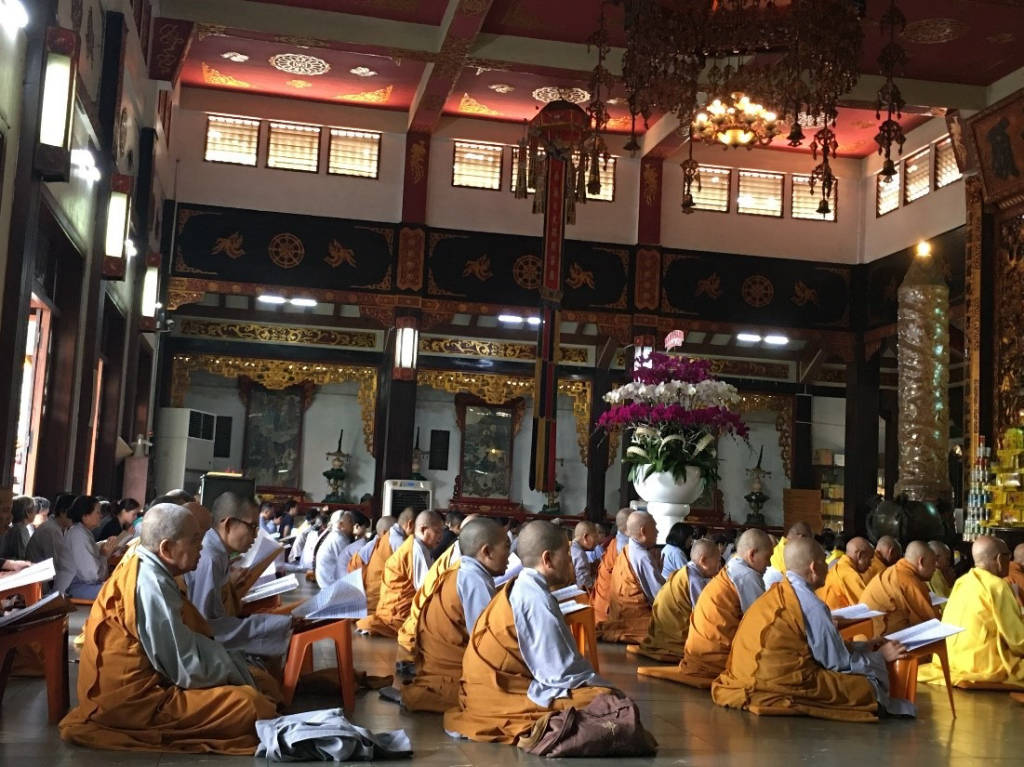
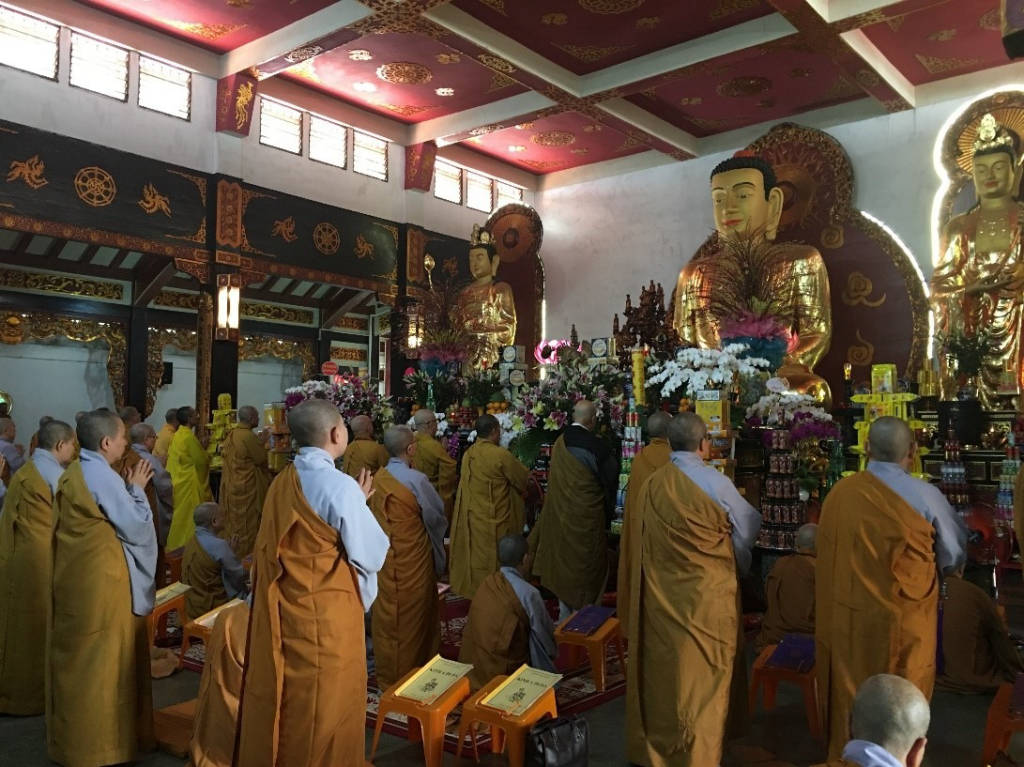
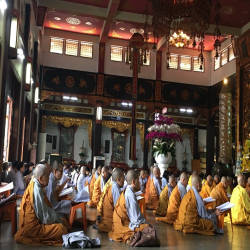
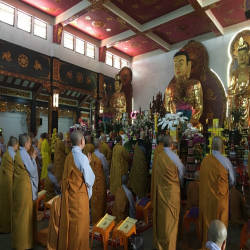
The Buddha hall is built in the style of Gong (Chinese: 工). The corners of the roof are curved in the style of the Northern pagoda. In the center of the roof are the Wheel of Dharma and the corners of the phoenix's head. The Buddha Hall consists of three parts: the Temple of the Temple, the Temple of the Temple, and the Earth Store. In the middle of the shrine is the Buddha altar. The two sides are Manjushri Bodhisattva (left) and Universal Worthy Bodhisattva (right). Along the wall in this area, there are Arhat paintings and wood carvings such as Bao Lam Tu Linh, Bao Lam Cuu Long... On the porch on either side of the entrance, there is a rather large Kim Cang statue on each side. . The altar table worshiping Amitabha Buddha and Jizong Tang worshiping Bodhisattva Jizong have the same architecture as the Bai temple.
Towers
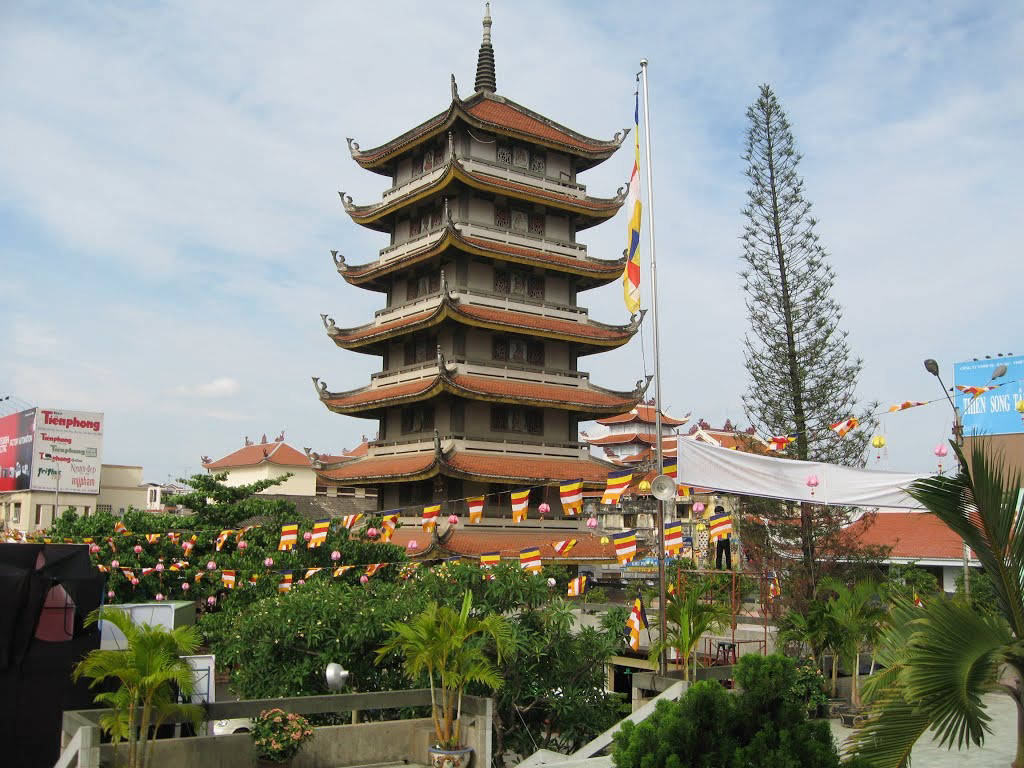
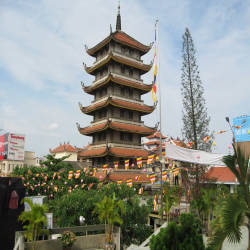
Avalokitesvara Tower is located on the left side of the Buddha hall (in the direction from the gate to the inside), consisting of 7 floors, nearly 40 meters high, built at the same time as the pagoda. The tower has a square shape, each bottom edge is 6 m. The top of the tower has 9 round wheels called Long Xa and Quy Chau. This is the most massive stupa among the stupas of Vietnamese Buddhism.
Xa Loi community tower was built in 1982, has 4 floors, 25 m high and completed in 1984. From the courtyard there are stairs leading up. This is the place to place the remains of Buddhists and their relatives to visit.
Vinh Nghiem stone tower was inaugurated in December 2003, 14 meters high to worship the late Venerable Thich Thanh Kiem, one of the two founders of the pagoda. This is considered the first stone tower in the South, and also the tallest and largest stone tower in Vietnam ever.
In addition, inside the temple, there are a number of other items to meet all the needs of visitors when visiting the temple such as a guest house or a vegetarian restaurant.
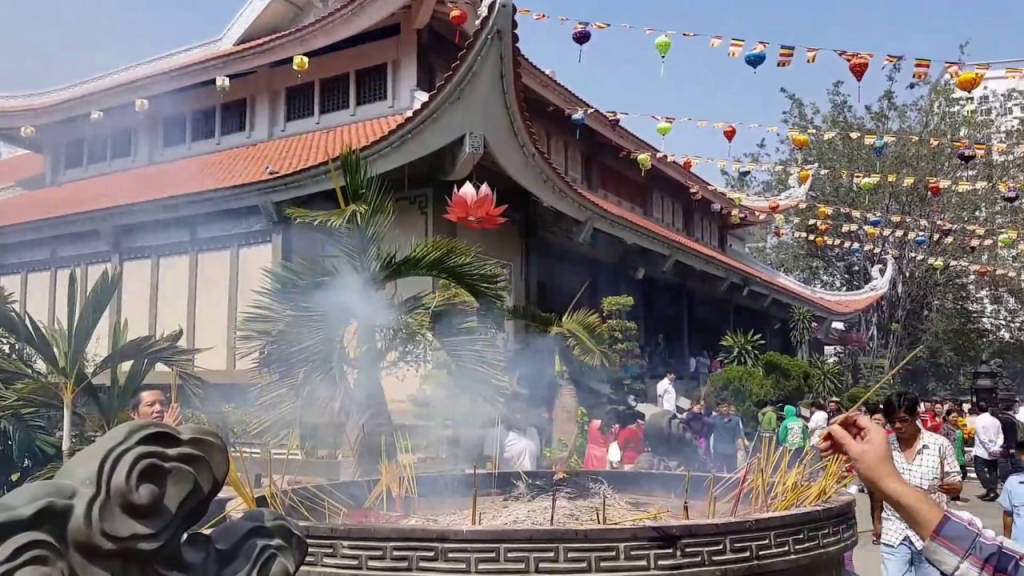
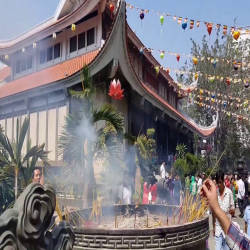
Vinh Nghiem Pagoda is open to visitors and worshipers all year round. For peace and quiet, visitors should visit in the morning and avoid major celebrations and festivals. Visitors often go to the temple to pray for good luck, happiness, safety and other blessings.