


Xem tất cả kết quả cho ""

 Ngày bất kỳ
  Tiếng Việt
 English
 日本語
日本語 한국어
한국어 简体中文
简体中文 Français
 Deutsch
 Español
 Italiano
 Русский


 Đăng nhập cho Doanh nghiệp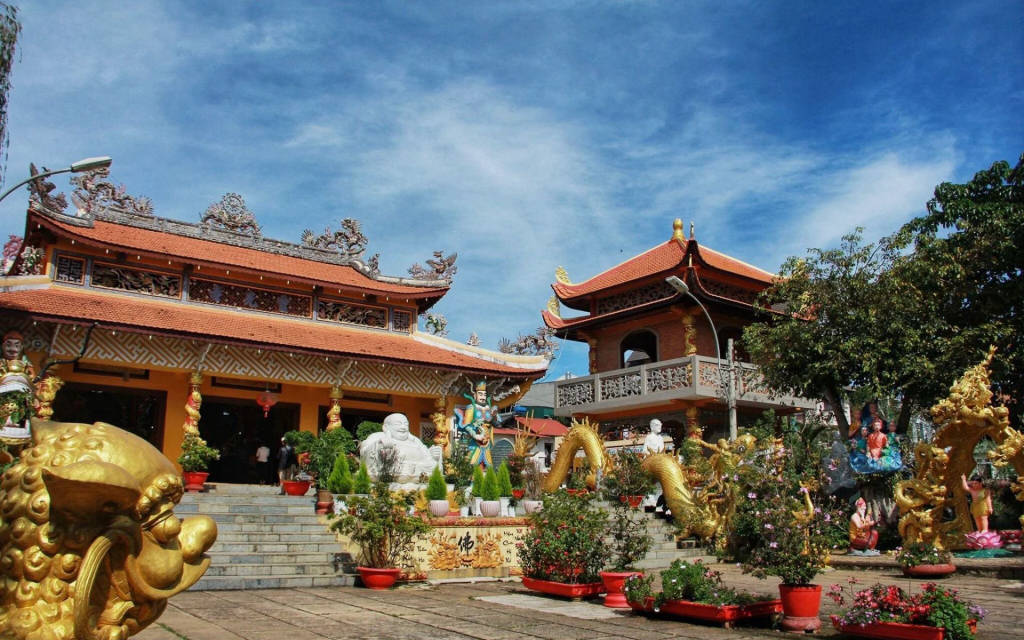
Linh Quang Pagoda in Da Lat – The First Ancient Temple in the City of Flowers
 No. 133 Hai Ba Trung Street, Ward 6, Da Lat City, Lam Dong City, Vietnam
Da Lat is not only famous for its endless pine forests and vibrant flower gardens but also a land that preserves many spiritual and cultural values. In the heart of the city of flowers, Linh Quang Pagoda stands as a solemn ancient temple, marking the origin of Buddhism in this land. With over 90 years of history, the pagoda is not only a sacred pilgrimage site but also a tranquil destination where visitors can find peace and serenity within their souls.
1. Overview
Linh Quang Pagoda, also known as Linh Quang Ancient Temple or To Dinh Linh Quang, is the first Buddhist temple established in Da Lat. It is regarded as the birthplace of Buddhism in Lam Dong Province, carrying deep spiritual, historical, and architectural significance. Beyond being a pilgrimage site for Buddhists, the pagoda offers a peaceful retreat for visitors seeking serenity amid nature’s greenery.
2. Location and How to Get There
2.1. Address and Opening Hours
The pagoda is located at 133 Hai Ba Trung Street, Ward 6, Da Lat City. It is open daily from 5:30 AM to 6:00 PM and welcomes visitors free of charge.
2.2. Transportation Guide
From the city center, it takes only about 10 minutes by car to reach the pagoda. The most convenient route starts from Da Lat Market along Hai Ba Trung Street. Alternatively, visitors can take a taxi or rent a motorbike for greater flexibility in their itinerary.
3. History and Cultural Significance
3.1. Formation and Development
Linh Quang Pagoda was founded in 1931 by Most Venerable Thich Nhan Thu. Initially a simple hermitage, it was officially constructed as a temple in 1933. Notably, in 1938, Emperor Bao Dai granted an imperial decree recognizing it as a spiritual landmark of the newly established land of Da Lat. Despite multiple restorations in 1958, 1972, and 2000, the pagoda has preserved its dignified and ancient appearance.
3.2. Cultural and Religious Values
Linh Quang Pagoda serves not only as a religious center for local Buddhists but also as the first “To Dinh,” playing a pivotal role in the development of Buddhism in Da Lat. It is a sacred destination for praying for peace, seeking mindfulness, and nurturing spiritual connection.
4. Architecture and Landscape
4.1. Overall Architecture
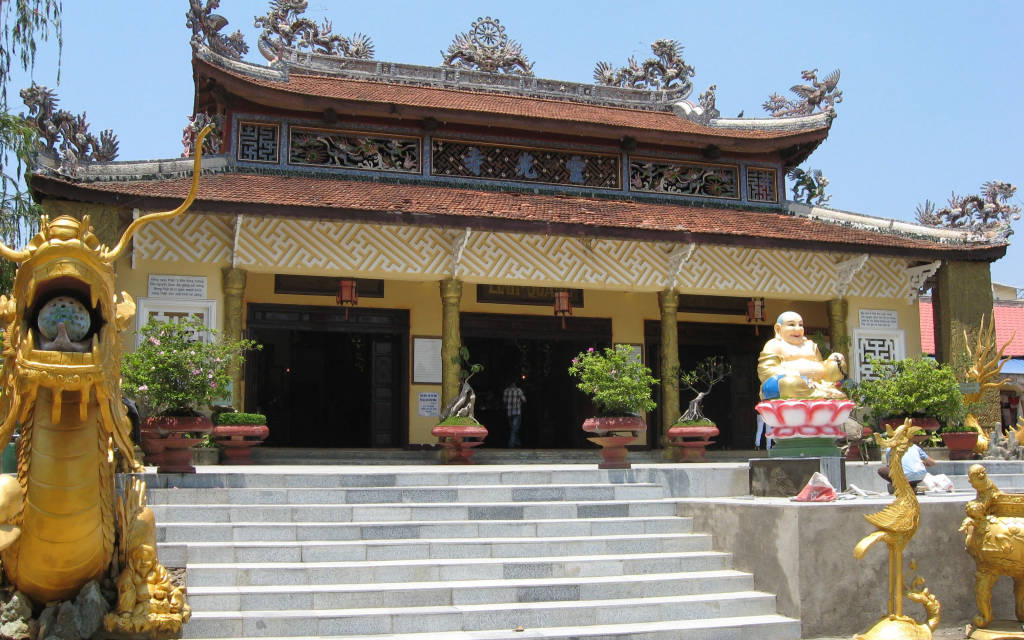
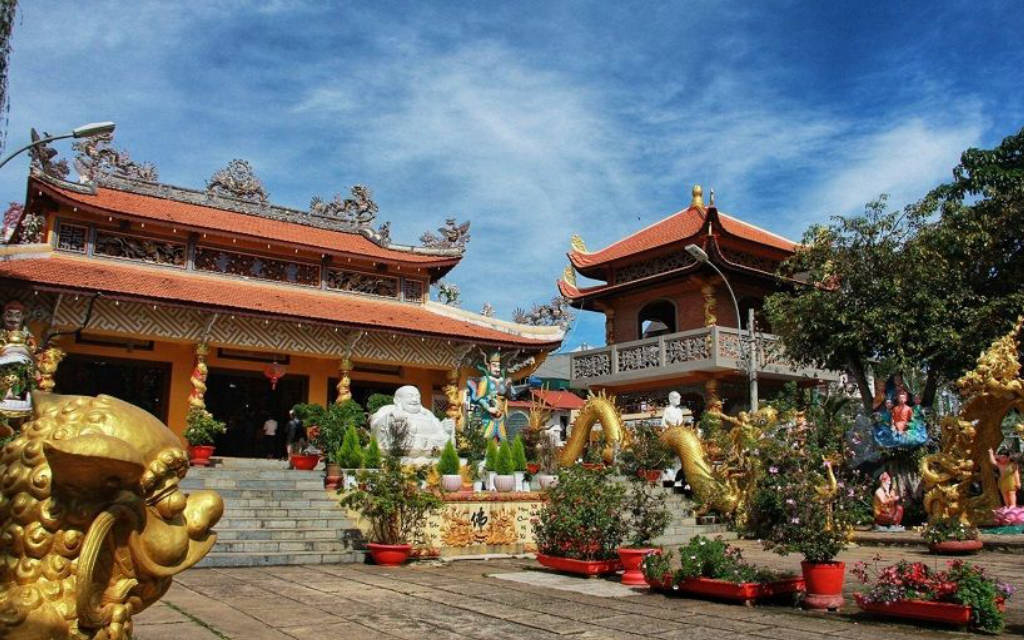
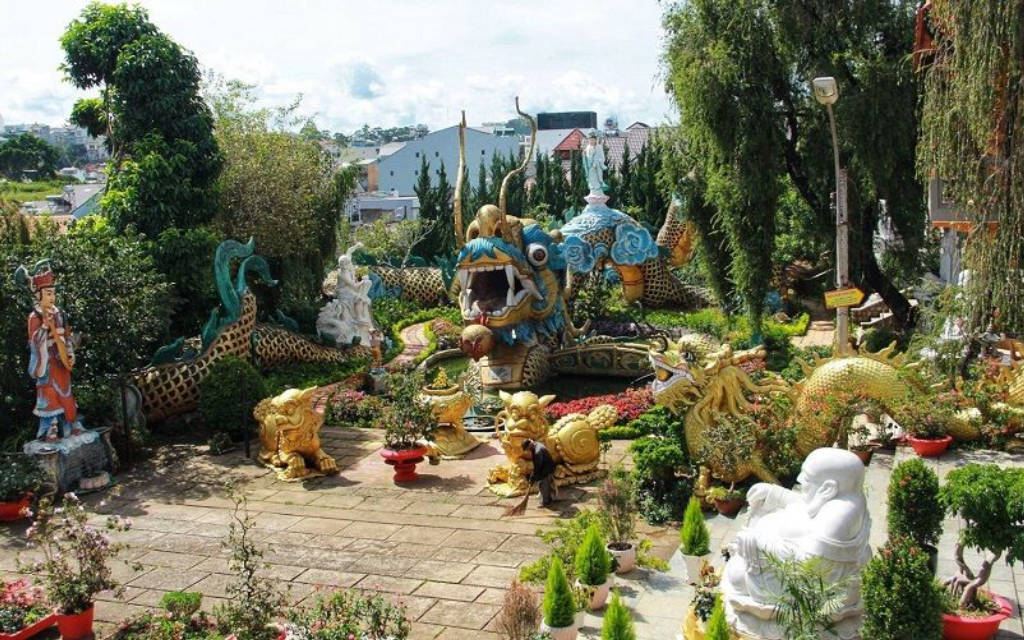
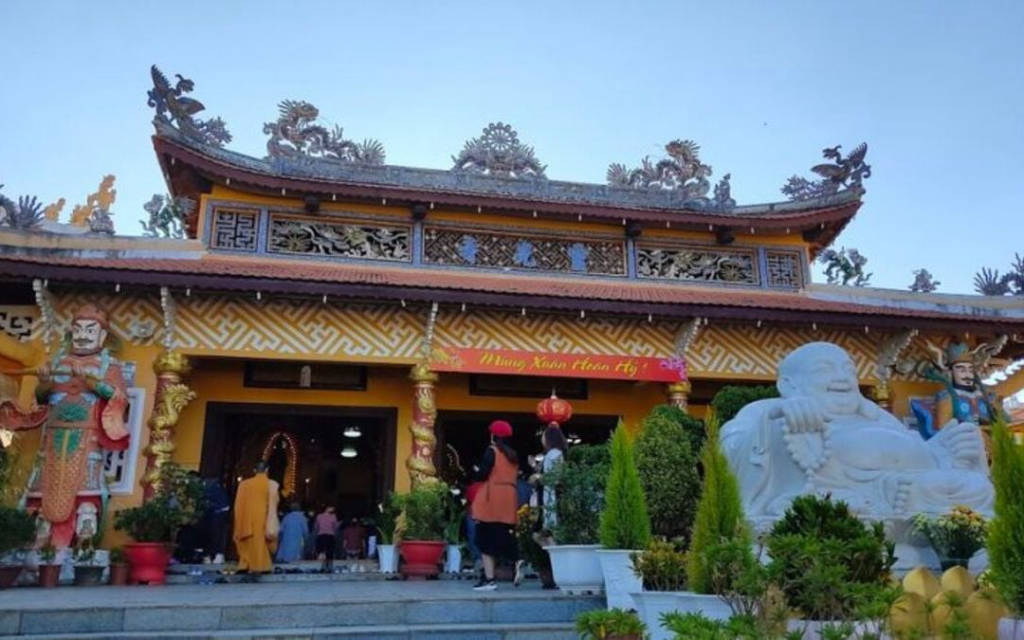
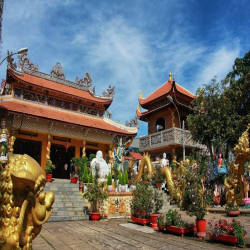
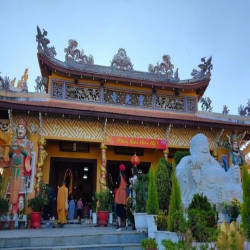
The pagoda reflects a harmonious blend of Vietnamese and Chinese architectural styles. Its layered tiled roofs curve gracefully and are adorned with colorful ceramic depictions of the Four Sacred Creatures: Dragon – Unicorn – Turtle – Phoenix. The main hall is built in the shape of the Chinese character “Dinh” (丁), consisting of three compartments. In front stands the front hall, supported by four intricately carved dragon pillars.
4.2. Highlights
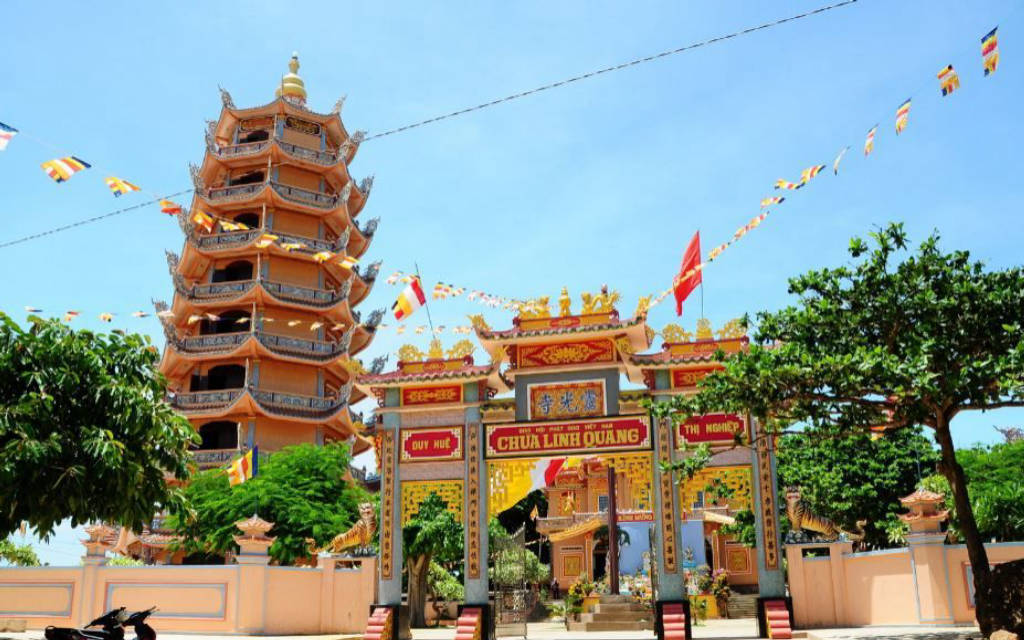
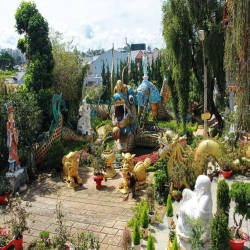
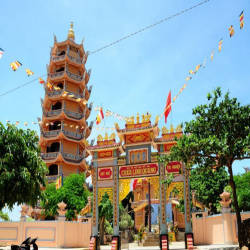
Upon entering the grounds, visitors are impressed by the five-story stupa, the U Minh bell weighing over 135 kg, and the statue of Avalokiteshvara Bodhisattva standing on a long, winding dragon. Each detail reflects the artisans’ craftsmanship and the solemn spirit of Buddhist life.
5. Visiting Experience
5.1. A Tranquil Atmosphere
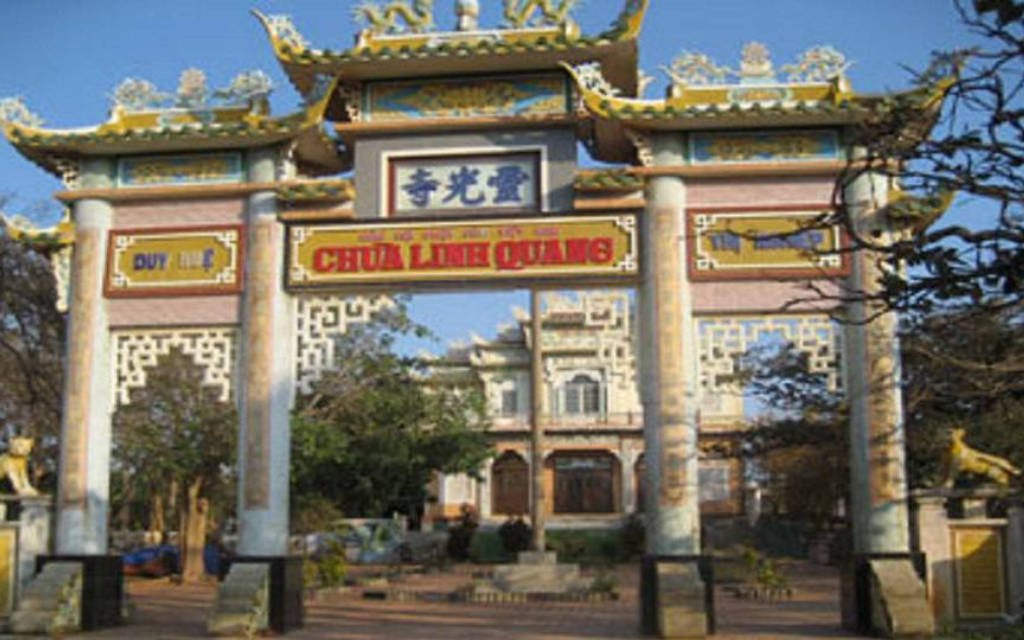
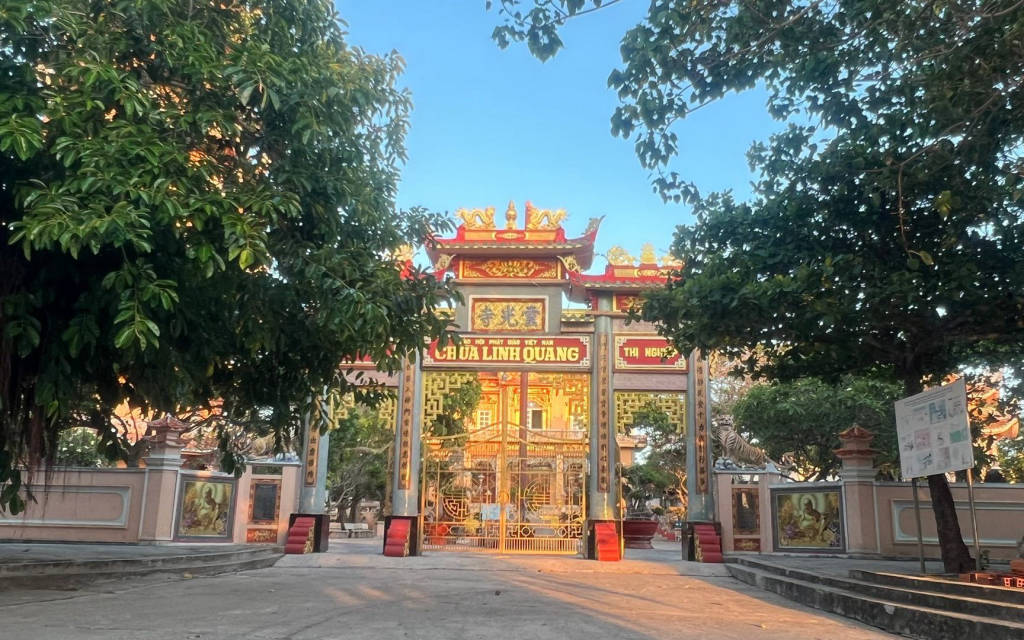
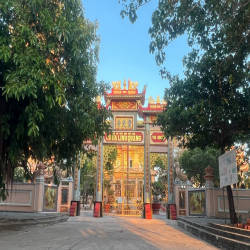
Passing through the three-entrance gate, visitors immediately sense a different atmosphere. The hustle and bustle of the city fades away, replaced by the gentle sounds of wind chimes, birdsong, and the subtle fragrance of incense in the air. The stone-paved path shaded by green trees leads into the pagoda, creating the feeling of stepping into a peaceful world, detached from the hurried pace outside.
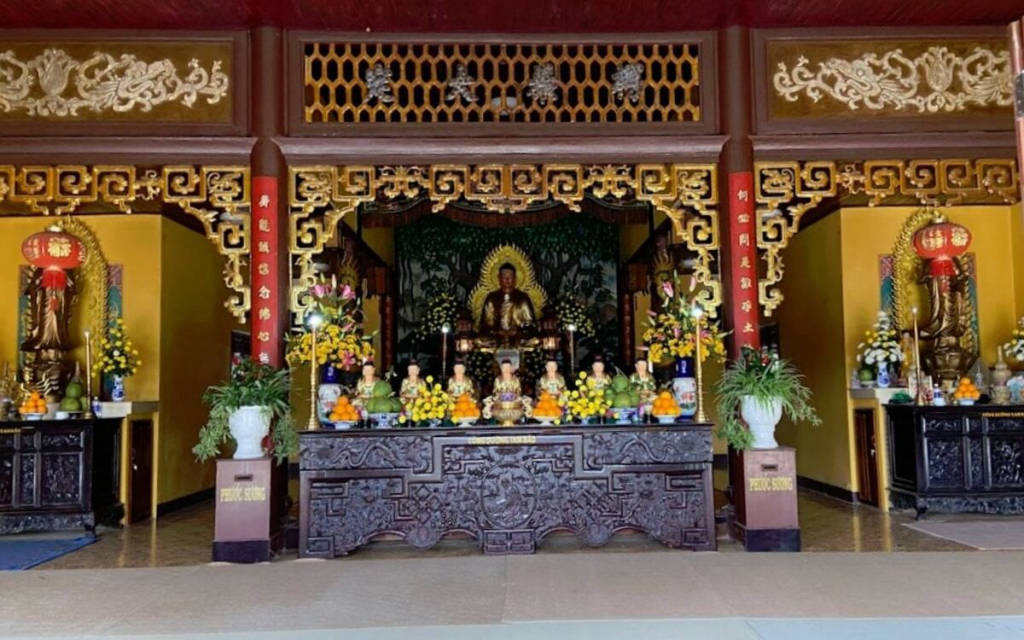
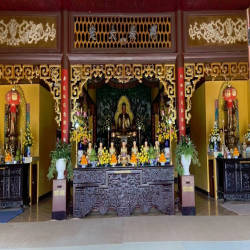
Inside the main hall, one is struck by its solemn and dignified ambiance. The statue of Shakyamuni Buddha sits centrally on a lotus pedestal, radiating compassion and serenity. On either side stand statues of Avalokiteshvara Bodhisattva and the Dharma Protector, forming a balanced composition that enhances the sacred atmosphere. Behind the main hall lies the ancestral hall, dedicated to the patriarchs, reminding visitors of the continuity and transmission of Buddhist teachings through generations of monks and nuns.
Even sitting quietly for a few minutes allows the mind to gradually settle, leaving daily worries behind. This is perhaps the greatest value Linh Quang Pagoda offers—a serene pause for reflection and inner balance.
5.2. Best Time to Visit
At different times of the day, Linh Quang Pagoda reveals distinct charms. In the early morning, pure sunlight filters through the trees, reflecting off moss-covered tiles and statues, creating a shimmering, almost mystical scene. It is an ideal moment to breathe in the fresh air and begin the day with tranquility.
In the late afternoon, as the sun sets behind the mountains, golden hues envelop the pagoda grounds. The statue of Avalokiteshvara atop the dragon stands out in the soft glow, forming a sacred and emotional tableau. Photography enthusiasts should not miss this moment to capture unique and evocative images.
During major Buddhist festivals, the atmosphere at Linh Quang Pagoda becomes both solemn and vibrant. Visitors not only have the opportunity to explore but also to witness traditional Buddhist rituals, offering a profound spiritual and cultural experience.
5.3. Visiting Notes
To ensure a meaningful visit, guests should keep several considerations in mind. First, dress modestly and respectfully, avoiding overly short or revealing clothing, as this is a sacred place. While walking around the grounds, maintain silence or speak softly to preserve the solemn ambiance.
As the pagoda is a place of worship, visitors should refrain from touching Buddha statues or sacred objects inside the main hall. Respect the shared space, dispose of trash properly, and help maintain cleanliness. If taking photographs, kindly ask for permission or avoid using flash to prevent disturbing others.
For a truly immersive experience, consider visiting early in the morning when the pagoda is less crowded. Sitting quietly in the courtyard, listening to the bell echo through the misty air of Da Lat, you will deeply feel the peace spreading with every breath.
6. Suggested Nearby Attractions
Located near the city center, Linh Quang Pagoda can easily be combined with visits to nearby attractions such as Xuan Huong Lake, Bao Dai Palace, the Valley of Love, or the City Flower Garden. This journey offers a harmonious blend of spiritual reflection and exploration of Da Lat’s distinctive landscapes.