


 Tiếng ViệtEnglish
 한국어
한국어 日本語
日本語 简体中文
简体中文 Français
 Deutsch
 Español
 Italiano
 Русский


 Login for Corporates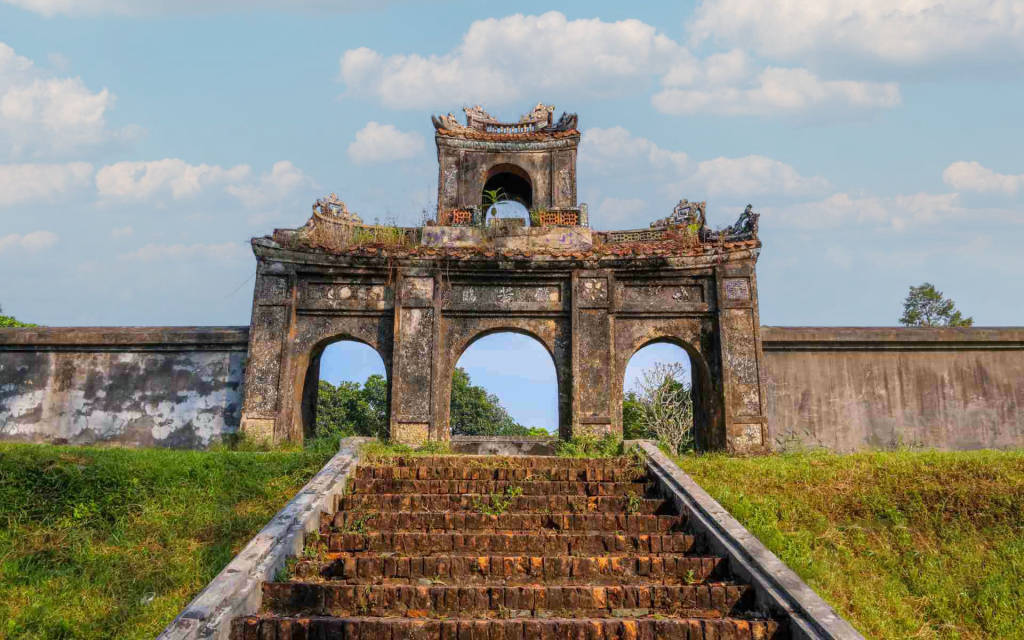
Voi Re Temple
 Alley 26, 373 Bui Thi Xuan, Thuy Bieu, Hue, Thua Thien Hue, Vietnam
Voi Re Temple, officially known as Long Chau Mieu, is located about 5 km west of Hue's city center and 400 m from Ho Quyen in Thuy Bieu ward. This unique monument marks the legacy of the Nguyen Dynasty's Kinh Tuong team, perfect for travelers to explore freely and discover the heritage of Hue.
Approximately 5km southwest of Hue city center, Voi Re Temple, also known as Long Chau Mieu, is located in Thuy Bieu ward. It's one of the rare monuments preserving the culture and history of the Nguyen Dynasty's Kinh Tuong team, symbolizing deep loyalty and national pride. With its convenient location, Voi Re Temple is an ideal destination for those who love to wander, explore culture, and enjoy the freedom of discovering the historical essence of the ancient capital.
History and Legend
Voi Re Temple is linked with a touching story of elephant loyalty. According to legend, during the Trinh-Nguyen conflict, a Southern general died, but his elephant loyally returned to his master's homeland in Phu Xuan before passing away. The locals built a tomb to commemorate this loyal animal, naming it ""Voi Re's Tomb."" When Emperor Gia Long ascended the throne, he constructed Long Chau Temple beside the elephant's tomb to acknowledge the merits of the ""war elephants"" in the Nguyen court and to worship protective deities and the four most meritorious elephants.
Distinctive Architecture
Covering about 2,000m², Voi Re Temple stands out with harmonious architecture with nature, based on Eastern feng shui principles. The 1,000m² temple pond in front of the temple creates the ""water"" element in feng shui and adds the poetic beauty of lotus flowers in season. The pond also has spiritual significance, where elephants drank water before fighting at Ho Quyen, as a good luck ritual.
The entrance to Voi Re Temple passes through an ancient gate with 17 steps, leading to Long Chau Temple—the temple's center. The temple is built in a traditional house style with a tiled roof, decorated with floral motifs and the ""Longevity"" character symbolizing permanence. It is a place to worship elephant-protecting deities and the memorial tablets of four meritorious elephants: Admiral Hung Tuong Re, Admiral Hung Tuong Bich, Admiral Hung Tuong Nhi, and Admiral Hung Tuong Bon. The temple's architecture is majestic yet elegant, reflecting the concept of harmony between humans and nature in Eastern culture.
Cultural and Humanistic
Significance Voi Re Temple is not only architecturally striking but also holds profound humanistic significance. Here, elephants are honored not just as battle tools but as symbols of loyalty. The elephant-tiger fights at Ho Quyen also demonstrates the belief that good always triumphs over evil. For the Vietnamese, elephants represent courage and royal power, being familiar yet majestic images.
The Nguyen court held annual ceremonies at the temple in spring and autumn to honor the elephants that contributed to battles. In 1825, Emperor Minh Mang conferred the title “Supporting the Majestic Martial Arts Statue to Protect the Elephant” to the elephant-protecting deities, showing the court's respect for these loyal companions. This is not only a cultural tradition but also a lesson in loyalty and kinship.
Current Monument
Recognized as a national monument in 1998, Voi Re Temple has preserved several restorations to preserve its pristine beauty and historical value. Today, the Voi Re Temple complex retains its ancient charm, with surrounding relics forming a harmonious and solemn whole.
Travel Guide to Voi Re Temple
Visitors can reach Voi Re Temple by motorbike or car from Hue city center in about 10-15 minutes. The temple is open from 7 AM to 5 PM, with free or very low entrance fees. It's an unmissable destination for those who love to wander and independently explore the unique history and culture of Vietnam.