


See all results for ""

 Anytime
 Tiếng ViệtEnglish
 日本語
日本語 한국어
한국어 简体中文
简体中文 Français
 Deutsch
 Español
 Italiano
 Русский


 Login for Corporates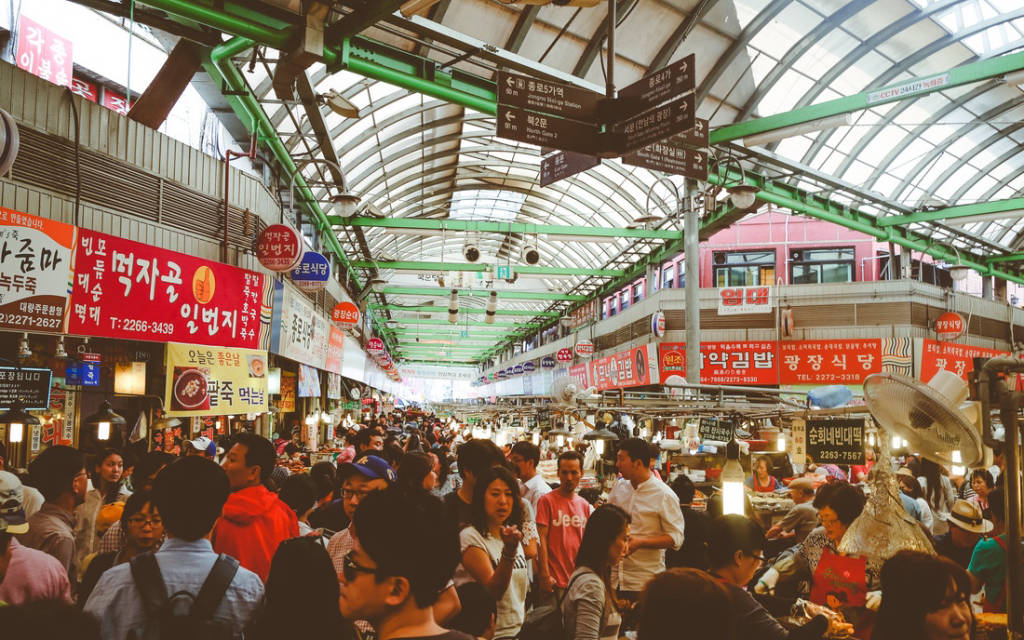
Gwangjang Market
 88 Changgyeonggung-ro, Jongno 1(il).2(i).3(sam).4(sa), Jongno-gu, Seoul, South Korea
“The oldest continuously operating market in Korea, with over 5000 stores, it is also one of the largest in Seoul.”
Gwangjang Market is a traditional market with a long history. When management of Namdaemun market was lost to the Japanese after the Korean-Japan Agreement of August was signed in 1904, to keep the strained economy afloat, the Koreans Quoc established a new market. From there, Gwangjang Market was born in 1905. Originally, it was located between Gwanggyo Bridge and Janggyo Bridge, hence the name Gwangjang. But due to difficulties in maintaining the market's operation when the rain was too heavy, the market was moved to a location near Dongdaemun.
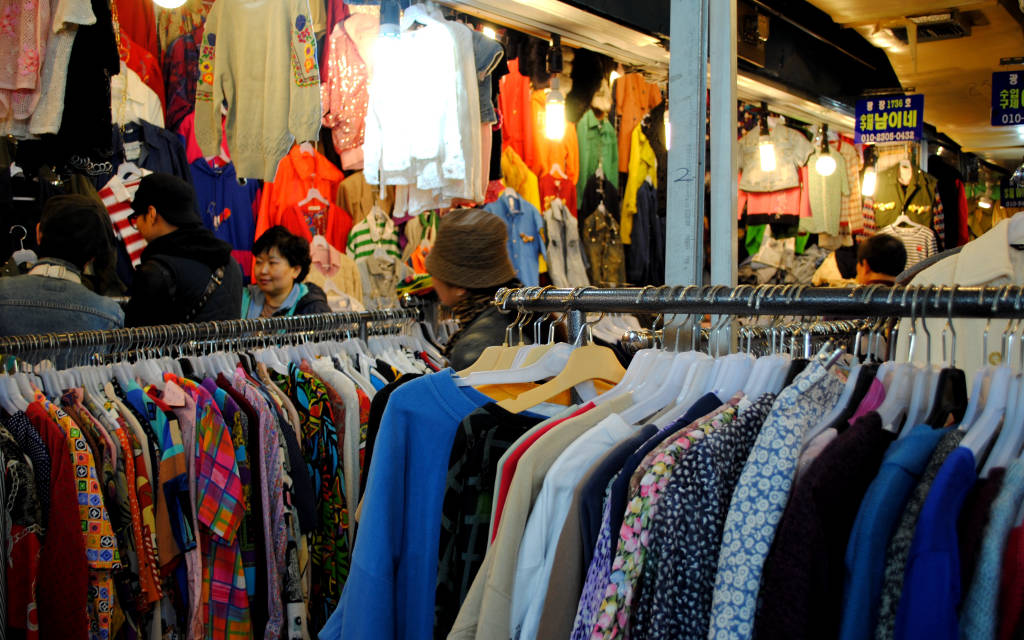
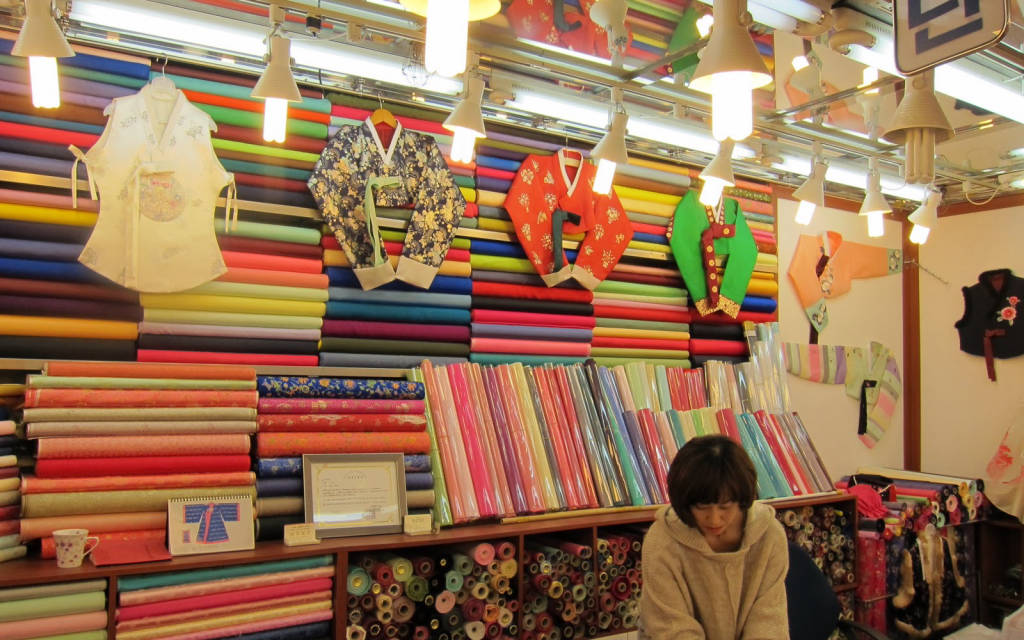
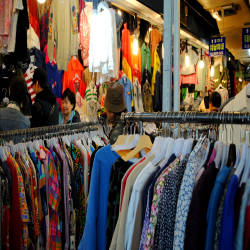
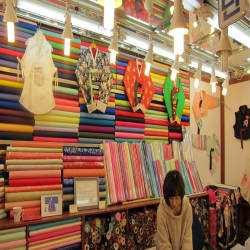
Gwangjang Market is famous for its high-quality silks, linen bedding, and crafts. Today, the bazaars selling vintage clothing in the market, located on the upper floor, have become an attraction for retailers and young people looking for unique vintage fashion. The classic arcade at the market offers a wide range of unusual, unique designs that appeal to many people, including many Korean celebrities and also the popular game channel “Running Man”. Visiting Gwangjang Market is a must for Korean couples who are planning their wedding and building their new home. Couples can buy everything they want at good prices including: home furnishings, bedding, yedan (wedding gifts given to the groom's family by the bride), hanbok (traditional Korean clothing), silk, etc
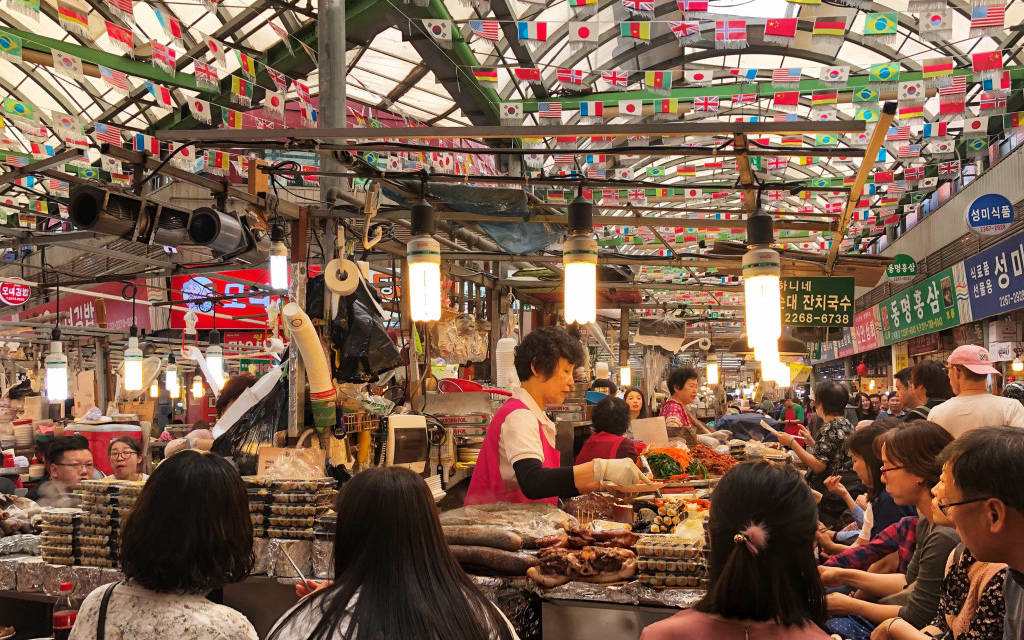
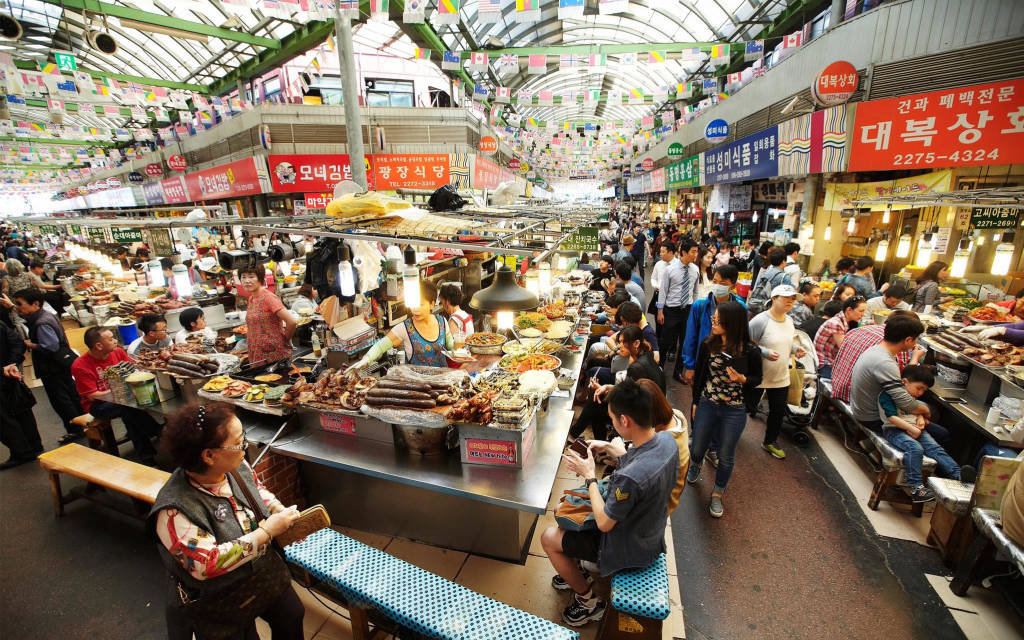
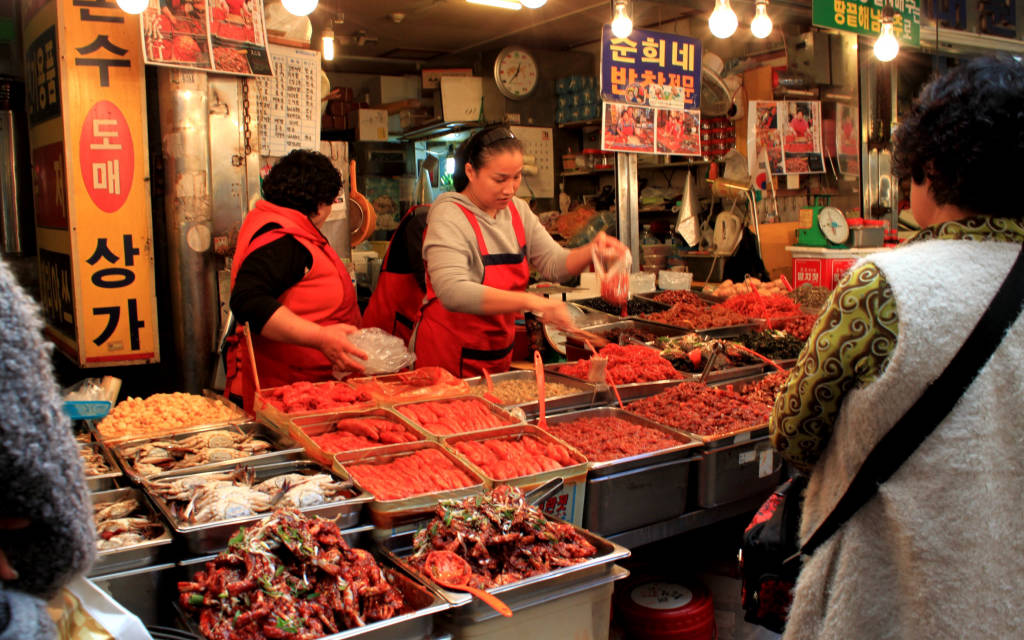
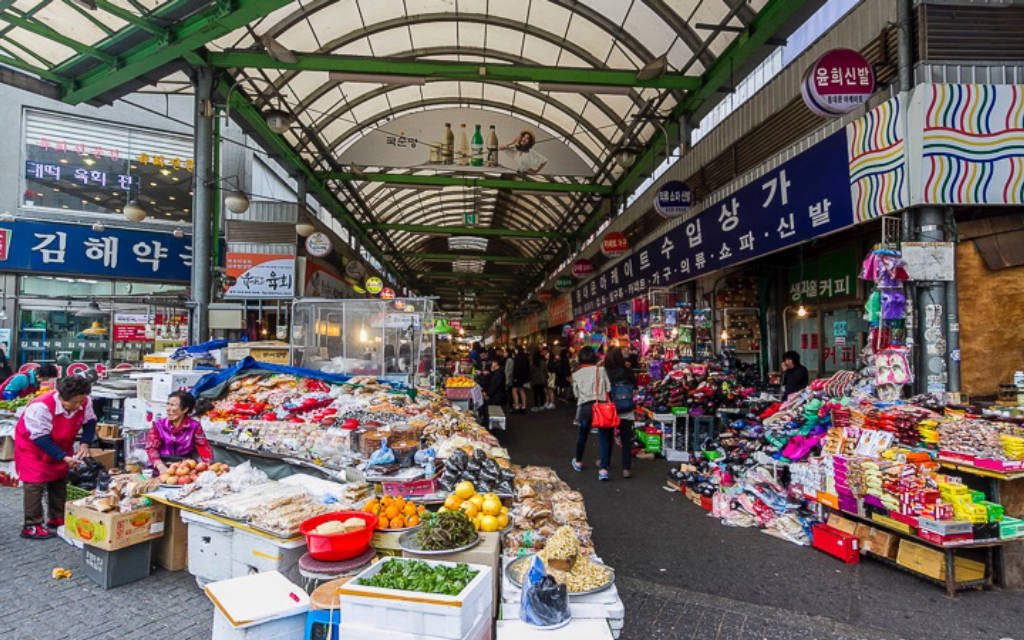
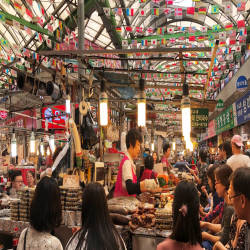
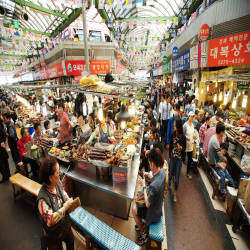
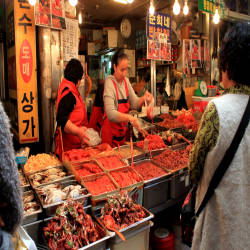
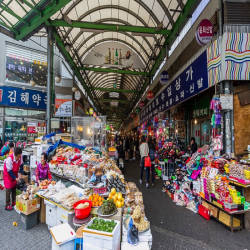
In addition to silk goods, vintage fashion and household goods, Gwangjang Market is also very famous for its food court serving all the traditional dishes and street snacks of Korea. If Namdaemun Market is overcrowded with tourists and Dongdaemun Market is too modernized, Gwangjang Market is more popular with locals because of its longstanding authenticity. As one of the best places to eat in Seoul and one of Seoul's top food markets, visitors are spoiled for choice at Gwangjang Market. A good rule of thumb to avoid surprises from too many food stalls is to follow your sense of smell and those with a lot of queues. Locals usually know the delicious things they eat, although the tastes may not be 100% suitable for tourists, they usually won't go wrong when experimenting with a favorite local dish.
Must-try dishes at Gwangjang Market include:
- Gimbap: ingredients such as cucumber, egg, carrot rolled into seaweed rice roll.
- Tteokbokki: immersed in spicy chili sauce (gochujang), this mildly spicy stir-fried rice cake is a favorite snack of locals, especially students.
- Bindaeteok: a savory Korean pancake made from ground green beans and seasoned with meat, eggs, and vegetables like kimchi and green onions. When fried in a pan at high heat, bindaetteok will be crispy and rich.
- Hotteok: sweet pancakes, handmade from flour kneaded with ingredients like brown sugar, cinnamon, honey and nuts.
- Sundae: a Korean blood sausage, juicy and surprisingly rich in flavor. The variety of sundaes found throughout Gwangjang Market are put in dangmyeon (mung bean vermicelli) and glutinous rice instead of meat.
- Mixed raw beef: Many people come to Gwangjang market to buy raw beef. At first glance, the plate may seem crude with just raw beef, raw egg yolks and sesame, but it's actually a delicacy that's surprisingly sweet, savory, and tender thanks to crispy pear slices and sesame oil mixed with some white pepper and onion.
From the abundance of handicrafts to traditional Korean street food to sample, the vibrant, bustling energy of all the sellers and buyers through the narrow streets narrow, Gwangjang Market is a really great place to explore in Seoul.
Address: 88 Changgyeonggung-ro, Jongno 4(sa)-ga, Jongno-gu, Seoul
Opening hours: daily 08:30 - 18:00 / Food court: 08:30 - 23:00