


Xem tất cả kết quả cho ""

 Ngày bất kỳ
  Tiếng Việt
 English
 한국어
한국어 日本語
日本語 简体中文
简体中文 Français
 Deutsch
 Español
 Italiano
 Русский


 Đăng nhập cho Doanh nghiệp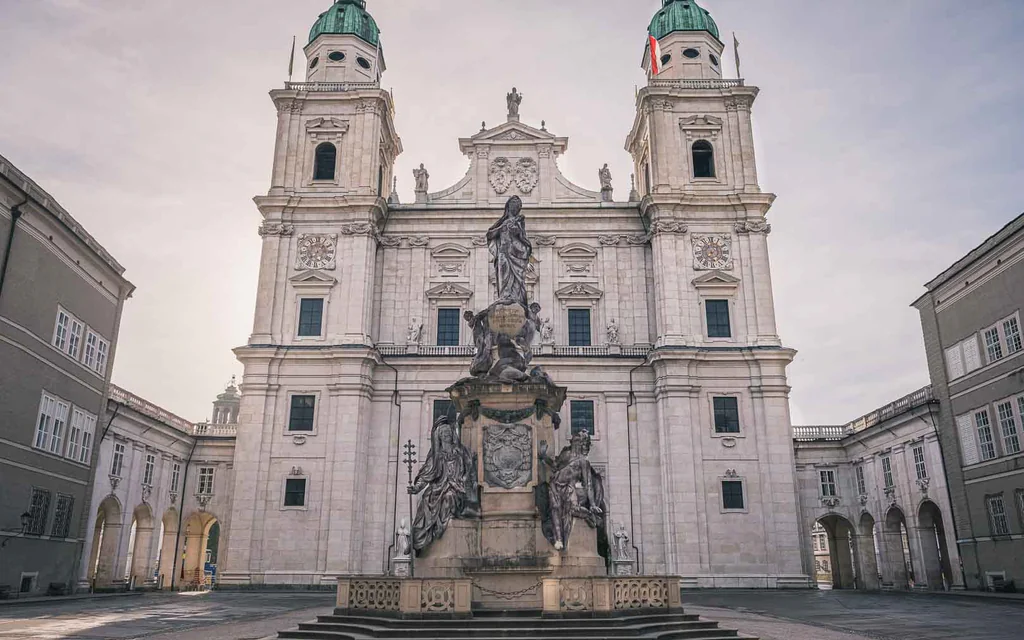
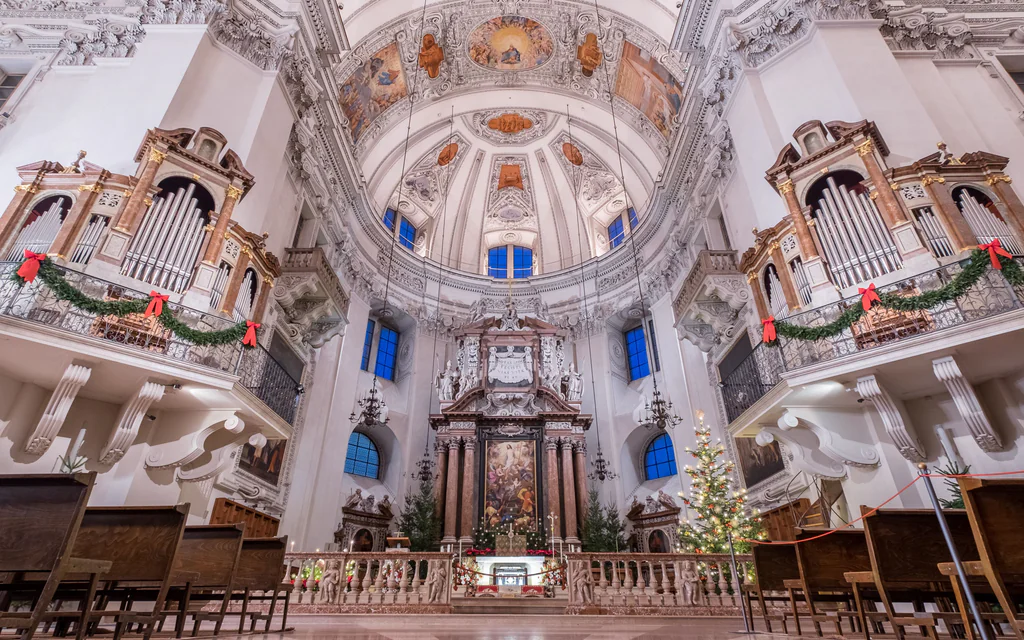
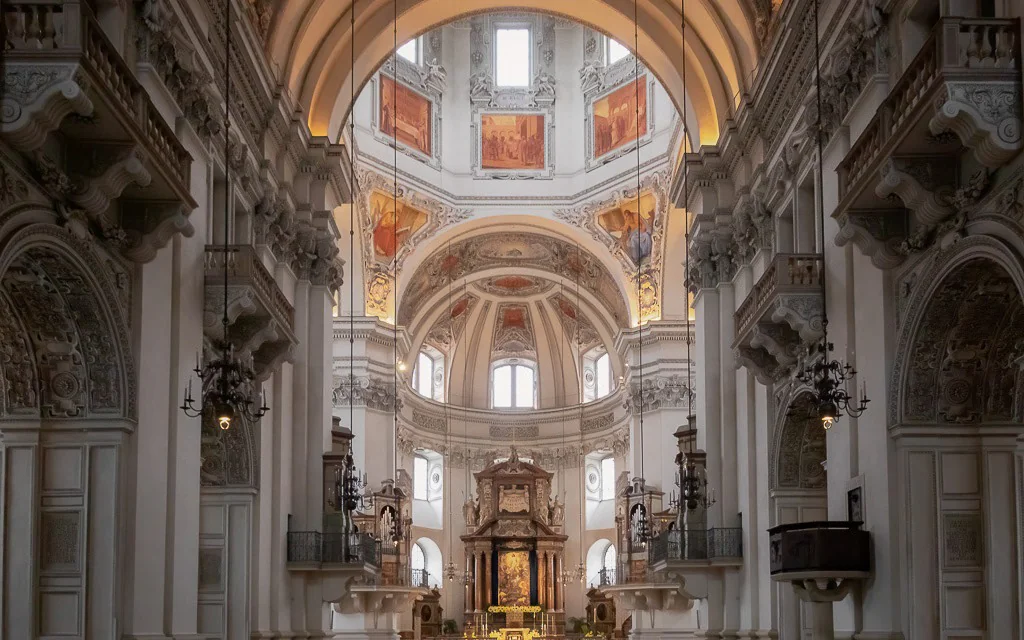
Salzburg Cathedral (big church)
 Domplatz 1A, 5020 Salzburg, Austria
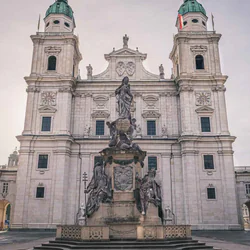
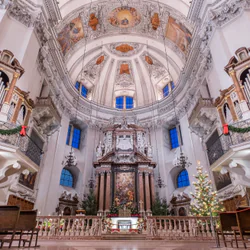
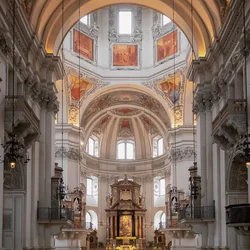
Salzburg Cathedral is a fine example of a Baroque Church, Salzburg Cathedral is located in an enclosed square next to the Salzburg Residenz and St.Peter Abbey Abbey, making for a lovely historic area to visit. This church has been destroyed and rebuilt many times since it was first built in 774 and is now a standout structure; The front facade has double bell towers and outside is the Marian Column in the middle of Domplatz Cathedral. Despite its relatively simple design, it stands out while its interior is magnificent.
Among the many churches, the cathedral is the most important sacred building of the city of Salzburg. With its majestic dome and two towers, it leaves a special and completely impressive mark in the city scene.
Here, there is much to explore: the baptismal font, the cipher, the "Vanitas" art installation, as well as the chest containing the relics of Saints Rupert and Virgil. In addition, many secrets are associated with the seven bells as well as the three doors. If you look closer, you'll even find scratched 370-year-old graffiti right on the marble entrance.
Salzburg Cathedral is a monumental tribute to the early Baroque period. Visitors are greeted by the magnificent facade made of Untersberg marble. Looking down from it are four monumental statues: the Apostles Peter and Paul holding a key and a sword, as well as two of Salzburg's patron saints, Rupert and Virgil, holding a salt vessel and a model of Salzburg. Cathedral. Cathedral Square, with a statue of the Virgin Mary, forms the focal point - serving as the majestic backdrop for Jedermann performances during the Salzburg Festival as well as the annual Christmas Market.
Other highlights include the majestic auditorium, the church gates of Schneider-Manzell, Mataré and Manzú, as well as the seven bells. The three gates represent Faith, Love and Hope, with the middle gate (for Love) being somewhat larger. The seven bells also have names, from Salvator (the largest) to Barbara (the smallest). In the Cathedral Museum you can admire other artistic treasures drawn from 1300 years of church history.
The history of Salzburg Cathedral is closely intertwined with its rulers - the prince-archbishop. The church was destroyed by several fires, then rebuilt and expanded. The years the iron gates were re-forged were - 774, 1628 and 1959 - the church was consecrated three times.
The first church was built in 767 under the supervision of the bishop of Virgil, then consecrated to Saints Peter and Rupert in 774. After a fire in 1167, archbishop Konrad III built it. rebuilt the church, now more magnificent than ever, and became the most powerful Roman church north of the Alps. The remains of two old churches can still be seen in the church's crypt.
During the Christmas holiday season and the festival in the summer, there are tours of the Cathedral at specified times.
Business hours:
January, February, November: Monday-Saturday 8am-5pm, Sunday & public holidays 1pm-5pm
March, April, October, December: Monday-Saturday 8am-6pm, Sunday & public holiday 1pm-6pm
May-September: Monday-Saturday 8am-7pm, Sunday & public holidays 1pm-7pm
Visiting during Mass is not allowed.
Fare:
Free, visitors can donate to restore the church (optional)