


Xem tất cả kết quả cho ""

 Ngày bất kỳ
  Tiếng Việt
 English
 한국어
한국어 日本語
日本語 简体中文
简体中文 Français
 Deutsch
 Español
 Italiano
 Русский


 Đăng nhập cho Doanh nghiệp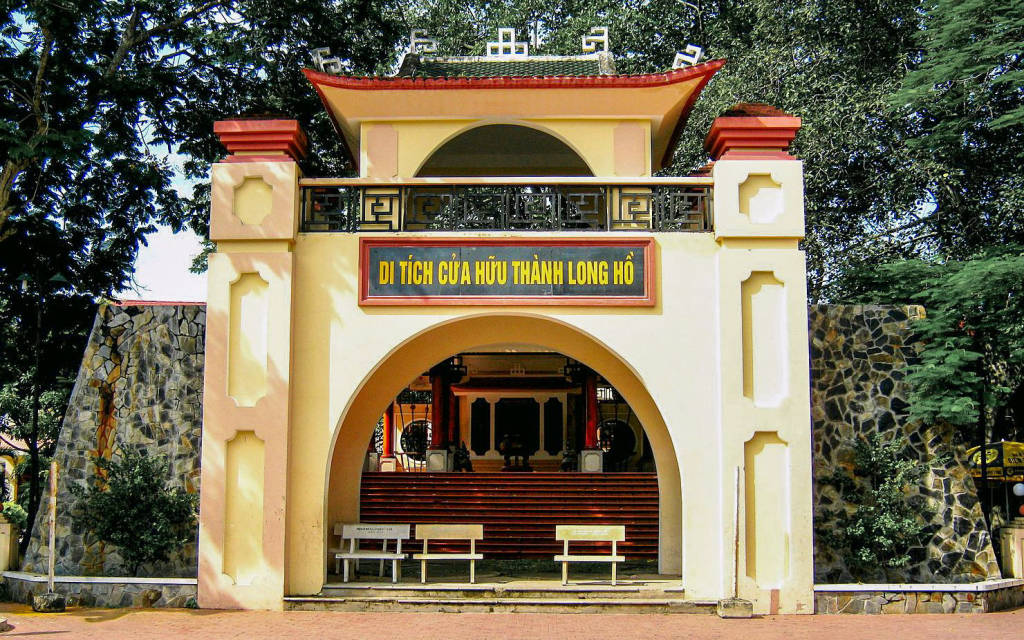
The Relic of The Right Gate Relic of Long Ho Citadel
 Le Van Tam Street, Ward 1, Vinh Long City, Vinh Long Province, Vietnam
The Relic of The Right Gate Relic of Long Ho Citadel, located in Ward 1, Vinh Long City, is one of the important historical heritages of the Southern Six Provinces region. Not only is it a symbol of the ups and downs of history, it is also a living testament to the resilient and indomitable spirit of the people in the struggle against French colonialism. If you are a fan of history and culture, Cua Huu relic is a place not to be missed on your historical journey.
The Relic of The Right Gate Relic of Long Ho Citadel: Discovering the History of Vinh Long Through Unique Architecture
Vinh Long, a land deeply connected with the heroic history of the Vietnamese nation, is not only famous for its scenic landscapes but also for its valuable historical treasures. One of the most important historical sites in Vinh Long is the Vinh Long Citadel, especially the Relic of The Right Gate Relic of Long Ho Citadel, which preserves unique historical and cultural imprints. This is an ideal destination for those passionate about exploring history, culture, and ancient architecture.
Location and Architecture of Vinh Long Citadel
The Vinh Long Citadel is located in Ward 1, Vinh Long City, a strategic position with a solid defense system. The citadel was constructed in the Vauban architectural style, a characteristic military fortress design of Western Europe in the 17th and 18th centuries. The citadel has a circumference of 750 "trượng" (a Vietnamese unit of length), a height of 1 "trượng", and a thickness of 2.5 "trượng". This design turned the citadel into a robust fortress, protecting the vital lands of Đàng Trong during the reign of the Nguyen Lords.
The main gate of the citadel faces southeast, while the back of the citadel faces northwest, creating a solid defensive position. Surrounding the citadel are deep moats and wide rivers, further enhancing its defense against external attacks. These features make the Vinh Long Citadel a unique architectural structure with significant military value in Vietnamese history.
Regarding the transportation layout within the citadel, historical documents indicate that there were two vertical roads and three horizontal roads. The first vertical road today is Trưng Nữ Vương Street, previously known as Saint Enfance Street. The second vertical road was Hưng Đạo Vương Street, formerly Citadelle Road. The three horizontal roads included one connecting the Left Gate to the Right Gate, which is now 3/2 Street. Another horizontal road was Hoàng Thái Hiếu Street, and the third was located near the area of the Còng Garden today.
Historical Role of Vinh Long Citadel
The Vinh Long Citadel was not only an architectural marvel but also an essential part of the development and defense of the country. Built during the time of the Nguyễn Lords, it played a crucial role in protecting the Mekong Delta from external invasions. Vinh Long was, at that time, one of the three main administrative regions and six districts of the Nguyễn Lords, a significant military and administrative center.
Throughout its history, the citadel witnessed many important historical events, including attacks by French colonial forces in 1862 and 1867. Although the citadel was captured and destroyed twice, many parts of it, particularly the Banyan tree at the Right Gate, remain as living historical witnesses.
The Banyan tree at the Right Gate: A Symbol of Resilience
To talk about the Vinh Long Citadel is to mention the Banyan tree at the Right Gate, an essential historical relic. According to historical records in the Dai Nam Unified Gazetteer and Comprehensive History of Gia Dinh Citadel, in February of the Water Rooster Year of 1813, during the reign of Emperor Gia Long, the court in Huế ordered the governor of Vĩnh Thanh to construct the Vinh Thanh Citadel, which became the center of Long Ho Province during the time of the Nguyen Lords.
The Banyan tree at the Right Gate was subjected to two attacks by French colonial forces but has remained a historical symbol of the Nguyễn dynasty. Near the gate stood a large Banyan tree and a small temple called the "Miếu Bảy Bà" (Temple of the Seven Ladies). Even after the citadel fell to the French, the local people continued to fight to preserve the old Banyan tree. Eventually, when the French colonizers cleared land for a new road, they had to compromise by "bending" the road in a semi-circle around the tree to avoid cutting it down.
The resilience of the people in protecting the Banyan tree also reflected their determination to hold onto the Vinh Long Citadel. The citadel was of immense strategic importance during that period: "Vinh Long was the center of the Mekong Delta, serving as a place for settlers to develop economically and culturally. Additionally, it was the location where the new lands were defended against enemy forces, especially the Siamese."
During the French conquest of Southern Vietnam, the citadel was captured twice, in 1862 (the year of the Water Dog) and 1867 (the year of Fire Rabbit). After the second capture, the French destroyed all the fortifications and leveled the citadel, leaving only the Banyan tree and a small temple at the Right Gate.
In the 1950s, the Banyan tree began to wither, but from the trunk of the old tree, a new sapling grew and flourished, symbolizing the continuation of life and the enduring spirit of the Vietnamese people. Local historian Tran Thanh Trung notes: "After the French destroyed the Vinh Long Citadel in 1877, they built a roundabout where the Banyan tree once stood. The road to Sa Dec was not where the current Lo Bridge is but at the intersection of what is now Nguyen Thi Minh Khai Boulevard, extending up to the corner of Nguyen Thai Hoc and the old 19/8 Square, which was named after French Admiral Lagrandee who led the capture of the citadel in 1867."
After the fall of Vinh Long Citadel in 1862, Phan Van Tri, a renowned scholar, wrote the following poem to express the sorrow:
"Seven provinces of Vinh Long weep,
As the to te flute's mournful notes creep,
Piercing hearts with sorrow deep.
The Dragon River, shrouded in mist,
A desolate citadel, kissed
By withered flowers, a mournful sight.
Broken homes, a bitter plight,
As peace treaties tear land apart,
The official, heartbroken, sighs,
Amidst wind and dust, and nature's sighs."
Decline and Preservation of the Relic
After countless upheavals, including two brutal wars against the French and Americans, the Vinh Long Citadel complex deteriorated significantly. In the 1950s, the Banyan tree associated with the citadel also began to decay. This caused much sadness for local writer Son Nam, who expressed his sorrow over the decline of a once-glorious historical relic.
However, life miraculously returned. A new Banyan tree sprouted from the old stump and grew vibrantly to this day. In 2000, the local government recognized the Banyan tree at the Right Gate as a provincial-level historical and cultural monument. By 2008, the Right Gate, including the main and secondary gates of Vinh Long Citadel along with the commemorative stele, was restored as a historical site attracting numerous visitors.
The Right Gate Relic of Long Ho Citadel: An Important Relic of Vinh Long Citadel
The Right Gate is a vital part of the Vinh Long Citadel, built with a unique and robust defense system. This gate is tied to many historical stories and important battles of the past. Today, it remains an attractive tourist destination, drawing visitors who want to learn more about the history of Vinh Long and Vietnam.
The Banyan tree stands near the Right Gate, and over time, both the tree and the gate have become inseparable symbols in the historical narrative of Vinh Long Citadel. The local government has preserved and restored parts of the citadel, including the Banyan tree, so that people can come to admire and understand the citadel’s glorious past.
Exploring The Right Gate Relic of Long Ho Citadel
The Right Gate Relic of Long Hồ Citadel is an ideal destination for those interested in Vietnamese history and ancient architecture. Visitors can experience the historical atmosphere, feel the strength of the citadel through the stories witnessed by the Banyan tree and the citadel itself. Visiting this relic offers an opportunity to not only admire the unique architectural structure but also learn about the history of Vinh Long and the difficult periods in its fight against foreign invaders.
The Right Gate Relic of Long Ho Citadel is where the memories, victories, and sacrifices of the people of Vinh Long in the wars to protect the nation are preserved. It is not just a historical monument but a testament to the patriotism and resilience of the people of Vinh Long. Come and experience the greatness of history and immerse yourself in the unique cultural space of one of Vinh Long’s most important relics, to not only understand the past but also take pride in the indomitable spirit of the Vietnamese people.