


""에 대한 모든 결과 보기

 언제든지
언제든지 
 Tiếng Việt
 English한국어
 日本語
日本語 简体中文
简体中文 Français
 Deutsch
 Español
 Italiano
 Русский


 기업 로그인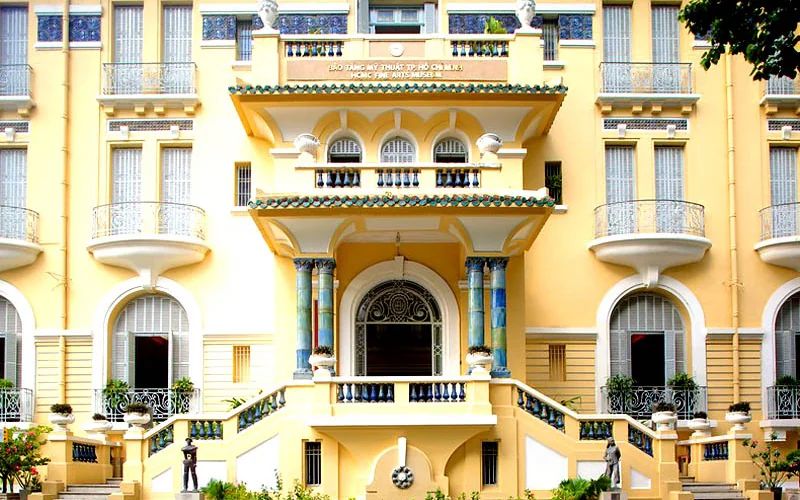
Ho Chi Minh Museum of Fine Arts
 97A P. Đức Chính, Phường Nguyễn Thái Bình, Quận 1, Thành phố Hồ Chí Minh, Việt Nam
“Located in a grand colonial mansion, the Fine Arts museum houses an impressive collection of Vietnamese art including paintings, sculptures, ceramics, lacquerware and more.”
Fine Arts Museum is one of the largest museums in Ho Chi Minh City. This place has witnessed the ups and downs of history as well as the rise of Ho Chi Minh City after the reunification of the country in 1975. The building was built in 1929 and inaugurated in 1934. It is the end of the country. A harmonious combination of Eurasian architecture, designed by Mr. Rivera, a French architect. At that time, this building was the residence of the family of a Chinese businessman named Hua Bon Hoa, one of the richest merchants in colonial South Vietnam. Hua Bon Hoa, also known affectionately as "Uncle Hoa", is the owner of many other projects such as Tu Du Hospital, Majestic Hotel and Ho Chi Minh City's Emergency Center today.
The owner of this museum changed through periods associated with historical events such as the August Revolution in 1945, the division of the North and the South in 1954, the fall of the Republic of Vietnam in 1975 and the renovation in 1986. Up to now, although the city has changed in many aspects, the architecture still retains its ancient appearance, adorning the general development and special features of Ho Chi Minh City.
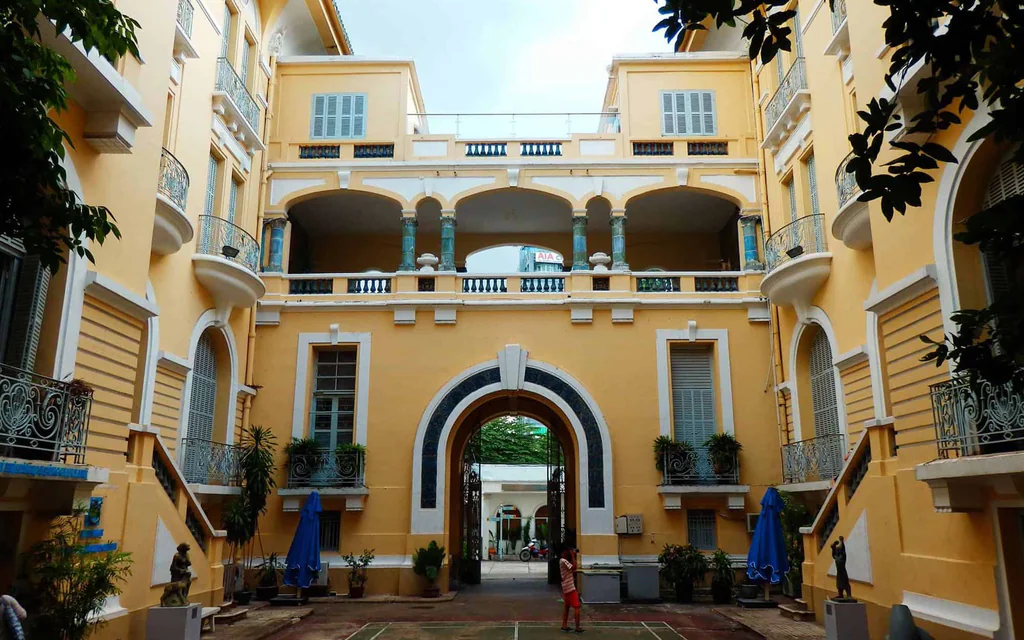
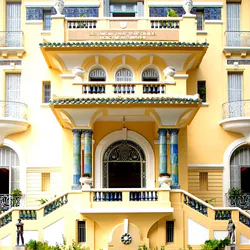
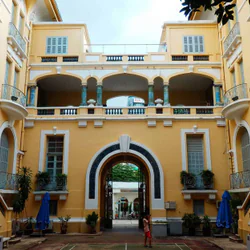
The 3-storey building of the Museum of Fine Arts was built in the Art-deco architectural style, an architecture that harmonizes the most quintessential values from the Eurasian art school. From the outside, visitors will easily recognize a yellow building with arched windows rolling between the green space. The front of this building is located in an archway with two short stairs on either side leading to the main door. There is also a small fountain with two sculptures on either side located right in the center of the front yard. The whole building is a U-shaped house, behind the building is a small outdoor courtyard.
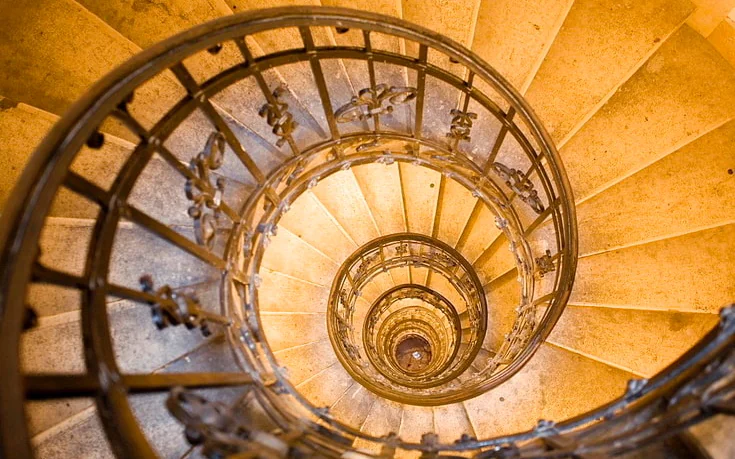
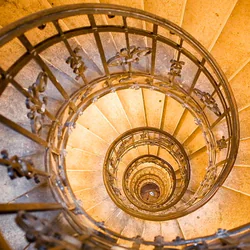
This is the first project in Saigon to put an elevator into design. At that time, the elevator was decorated like an ancient Chinese palanquin. Another Chinese feature of the museum is the yin-yang style red tiled roof. The windows are fitted with colorful glass with a typical European art style. All those details make the architecture an external work of art with striking features of East Asia and France.
Ho Chi Minh City Museum of Fine Arts is located on an area of 3,514m2 and is divided into many separate parts with different roles. The basement is for offices, the first floor is for galleries, exhibitions and commerce, the second floor is for fine art paintings, the third floor is for displaying ancient sculptures and traditional handicrafts of residents. ancient in South Vietnam.
The highlight of the entire architecture lies in the main entrance to the first floor with a high foyer, large columns and stairs on both sides. The main door is designed in the shape of an arch, above is the stylized steel letter HBH, the abbreviation for "Uncle Hoa". Behind the museum is a stele engraved with the names of the owners of this building, most of whom belong to the family of Mr.
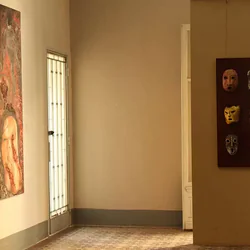
Long corridors inside the museum lead to galleries, all connected by side doors. In front of each room is a green wooden door leading to a small balcony. Thanks to the system of doors and windows, the inside of the Fine Arts Museum is filled with natural light and wind, creating an airy space inside. The main corridor is painted yellow, when walking along the corridor, the yellow color will gradually disappear, giving way to gray walls and windows. All colors blend harmoniously to paint a vivid architectural picture inside the museum.
The Museum of Fine Arts is also a place to research, collect, preserve and display documents and artifacts typical of fine arts and reflect the unique features of ancient Vietnamese handicrafts, especially fine art works. typical art in the South. Some artifacts on display at the Ho Chi Minh City Museum of Fine Arts:
- Ancient bronze sculptures in the South, Vietnam: exhibiting sculptures of Hindu and Buddhist gods from the fourth to eleventh centuries. Hindu Gods include statues of Vishnu, Surya, Lakshmi, Uma and Ganesa made of fine sandstone, dating from the 5th to 11th centuries. Buddha statues from the fourth to tenth centuries are made of giant crape-myrtle wood and fine sandstone.
- Champa ancient sculpture: is one of the unique arts in the treasure of Vietnam's fine art heritage, contributing to the multi-religious and multi-ethnic culture. In addition to the influence of Indian religion, the Cham people also absorb the culture, customs and especially the art of architecture and sculpture of India, then quickly localize and create unique features. Unique, attractive Champa style on each sculpture. On display at the Ho Chi Minh City Museum of Fine Arts are statues, reliefs and semi-reliefs of Hindu gods such as Kinnara, Dvarapala and Colossus reliefs, Kala statue - the monster guarding the temple, fairies. , dancers, architectural artifacts such as altars, columns..., all of them are made of raw sandstone or terracotta, dating from the 7th to 14th centuries.
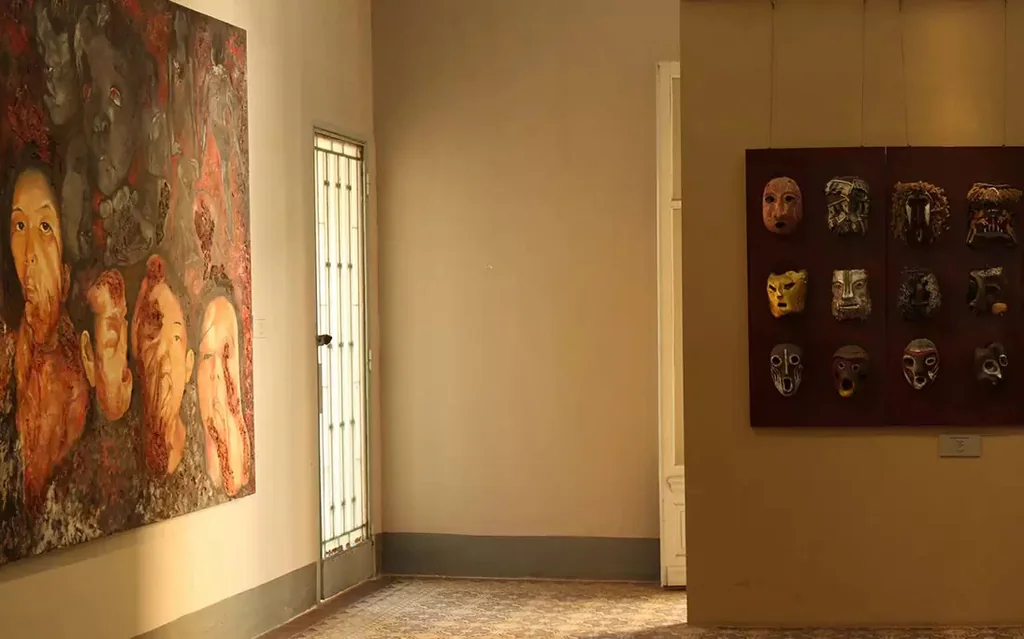
- Statues in the Mausoleum of the Central Highlands: Sculptures and statues in the tombs of the Central Highlands are a unique part of Vietnamese sculpture in general. This custom has been attached to the people of the Central Highlands since primitive society, partly due to the ancient belief concept. It is also because the original art is always unrestricted in terms of function, so the statues in the tombs are quite diverse and unique. Unlike other sculptures, the tools used to make these statues are also very simple: axes and knives, the most common production tools. According to the concept of local people, statues help replace people, so the statues in the mausoleum do nothing but serve the material and spiritual life of the dead. Popular sculptures are people crying, mother and child, naked man or woman, etc.
- Vietnamese ceramics (11th to 20th century): Under the Ly dynasty (1010-1225), Tran dynasty (1226-1400) and Le dynasty (1428-1527), pottery profession developed strongly and achieved reached the pinnacle of both art and technology, produced many beautiful ceramics and precious ceramic products, then followed the boats of foreign merchants to many countries around the world. Until the end of the 19th century and the beginning of the 20th century, famous ceramic centers in Vietnam such as Bat Trang, Phu Lang, Huong Canh, Thanh Hoa, Binh Dinh, and Bien Hoa produced many types of ceramic products. model form. , materials and patterns shown on ceramic vases, and the meticulousness and harmony in the art of making.
- Southern Fine Arts (18th - 20th century): At the end of the 17th century, South Vietnam was discovered, becoming a rendezvous for Chinese migrants and Vietnamese and Khmer people. It is also the meeting of farmers, craftsmen, who had to leave their homeland because of conflict and come to this new land to start a new life. Among the classes of people who migrated to the South, besides merchants, there were many craftsmen who contributed to the expansion and development of handicraft activities. With their creative minds and skillful hands, they soon took advantage of the abundant clay to make ceramic products suitable for the needs of local residents at that time.
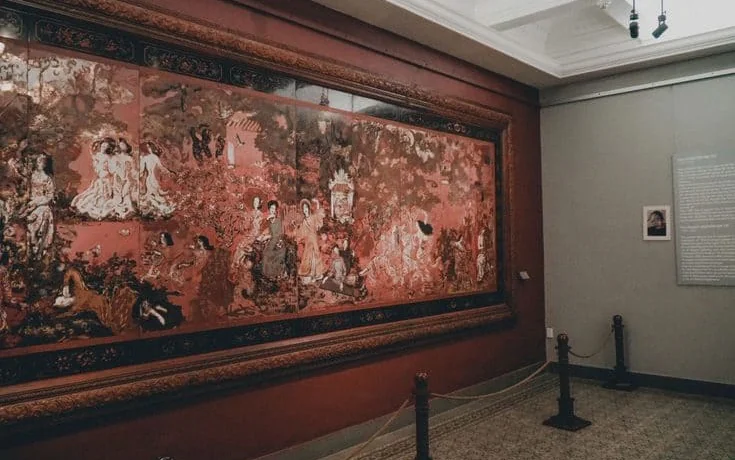
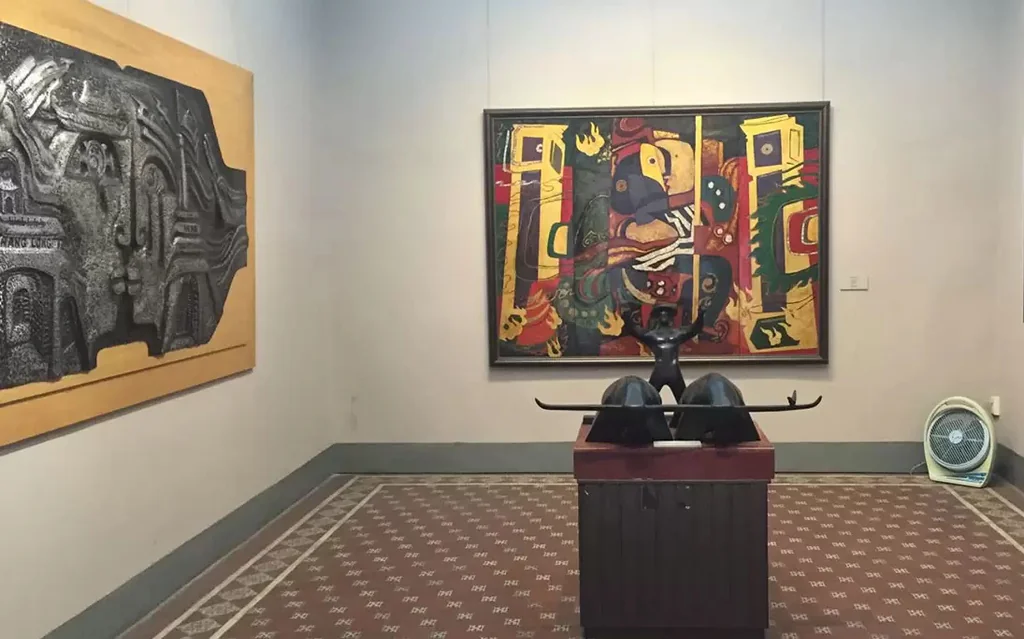
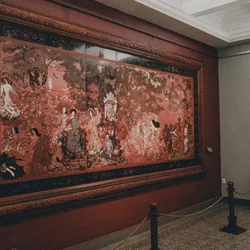
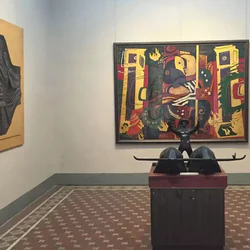
- Contemporary art: Many modern painting works of Vietnamese and international artists are displayed, such as works by Nguyen Gia Tri, Diep Minh Chau, Do Quang Em, Trinh Cung. All paintings and sculptures are inspired by the daily life of Vietnamese people as well as the beauty of Vietnam's famous scenic spots. These works of art are divided into two periods: from the beginning of the twentieth century to 1975 and from 1975 to the present, with many creative trends and themes of Vietnam and the world. The Museum of Fine Arts is becoming an ideal place for those who want to explore art and find creative inspiration.
The Ho Chi Minh City Fine Arts Museum is the ideal place to discover artifacts, a part of Vietnamese culture.
Address: 97A Pho Duc Chinh, Nguyen Thai Binh Ward, District 1
Opening hours: daily 08:00 - 17:00
Entrance ticket: 30,000 VND / ticket