


Xem tất cả kết quả cho ""

 Ngày bất kỳ
  Tiếng Việt
 English
 한국어
한국어 日本語
日本語 简体中文
简体中文 Français
 Deutsch
 Español
 Italiano
 Русский


 Đăng nhập cho Doanh nghiệp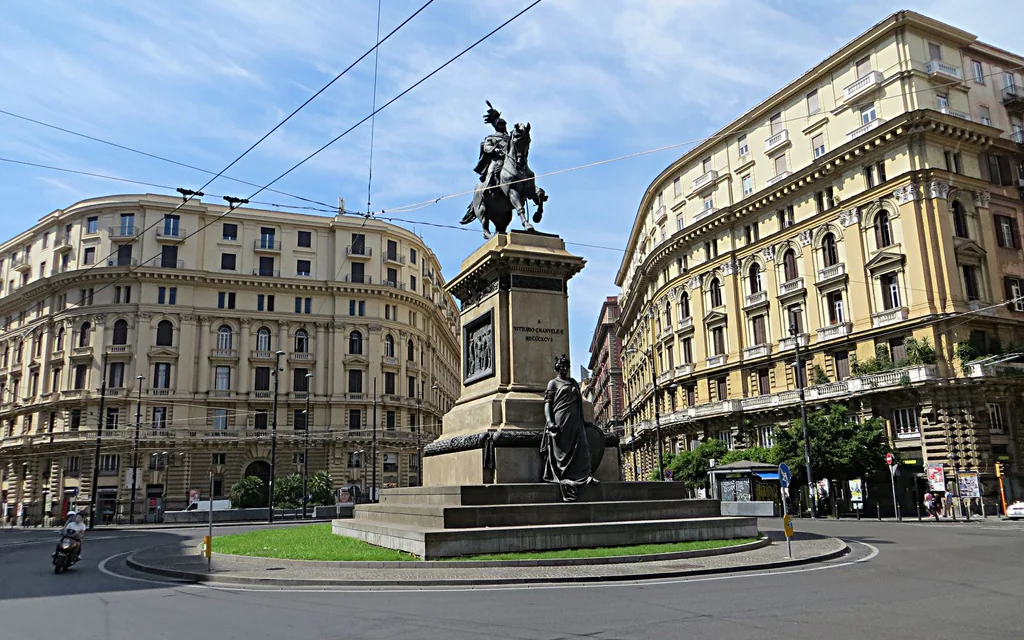
Bovio Square
 Piazza Giovanni Bovio, 80133 Napoli NA, Ý
Piazza Bovio, one of the most beautiful and important squares of Naples, Italy. This square is located in the historic center of the city, at the intersection of Corso Umberto I and Via Mezzocannone.
Piazza Bovio, one of the most beautiful and important squares of Naples, Italy. This square is located in the historic center of the city, at the intersection of Corso Umberto I and Via Mezzocannone.
Piazza Bovio is located in the historic center of Naples, at the intersection of Corso Umberto I and Via Mezzocannone. This square is located in the north of the old town, close to famous attractions such as Castel Nuovo, Duomo di Napoli and Galleria Umberto I.
Piazza Bovio was designed by Italian architect Giuseppe Pisanelli in the late 19th century. The square is rectangular, with dimensions of about 100 x 200 meters. The square's facade is lined with historic buildings, including:
- Palazzo della Borsa (Stock Exchange Building): This building was built in 1899 in the Neo-Renaissance style.
- Palazzo dell'Università (University Building): This building was built in 1837 in Neo-Classical style.
- Palazzo degli Studi (University Building): This building was built in 1817 in Neo-Classical style.
History Piazza Bovio was formed at the end of the 19th century, during the Risanamento, a major urban planning project aimed at modernizing the city of Naples. Before this project, the area around the square was a poor and crowded area, with many epidemics. The square is named Piazza Borsa, after the Stock Exchange building. However, in 1907, the square's name was changed to Piazza Bovio, in honor of poet and politician Giuseppe Bovio.
Popular Nearby Attractions In addition to the historical buildings mentioned above, Piazza Bovio is close to other popular Naples attractions, including:
- Immacolatella Palace
- Portosalvo Monument
- Via Toledo: Naples' main shopping street.
Piazza Bovio is where many important historical events of the city of Naples took place. One of the most interesting stories related to the square is the story of the statue of Vittorio Emanuele II. This statue was placed in the center of the square in 1888. However, soon after, it was destroyed by a group of Neapolitans. The reason is that the people of Naples protested the construction of a statue of this king, who played an important role in unifying Italy, but was also considered the man who suppressed the Neapolitan national liberation movement. . The statue was restored and placed back in its original position in 1904. However, it remains one of the most controversial symbols of the city of Naples.
This square is a convergence of history, architecture and culture. This is a must-see attraction for anyone visiting Naples.