


Xem tất cả kết quả cho ""

 Ngày bất kỳ
  Tiếng Việt
 English
 한국어
한국어 日本語
日本語 简体中文
简体中文 Français
 Deutsch
 Español
 Italiano
 Русский


 Đăng nhập cho Doanh nghiệp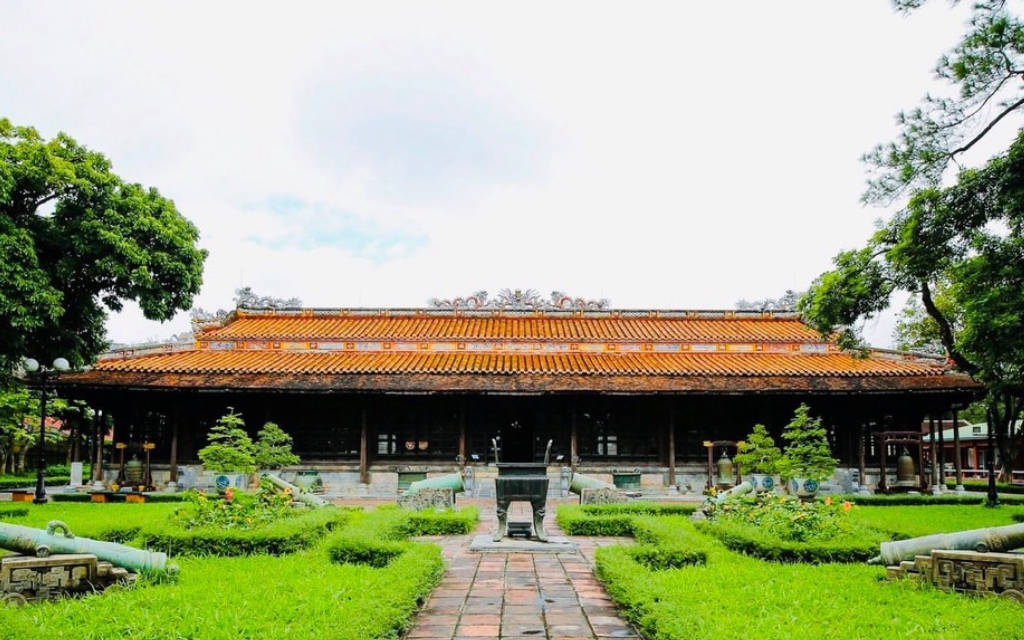
Bảo tàng Cổ vật Cung đình Huế
 Bảo tàng Cổ vật Cung đình, Lê Trực, Thuận Thành, Huế, Thừa Thiên Huế, Việt Nam
Bảo tàng Cổ vật Cung đình Huế nằm tại số 3, đường Lê Trực, Huế, với diện tích khuôn viên lên đến 6.330 m². Tại đây còn có một nhà kho lưu trữ hơn 80 hiện vật Chàm, những báu vật quý hiếm được sưu tầm từ châu Ô, châu Lý và khai quật tại Trà Kiệu năm 1927, phản ánh văn hóa độc đáo của dân tộc Chăm.
Bảo tàng ra đời vào năm 1923 dưới tên gọi đầu tiên là Musée Khải Định, là một trong những bảo tàng lâu đời nhất Việt Nam. Với nhiều lần đổi tên qua các thời kỳ, cuối cùng vào năm 1995, bảo tàng được đặt tên là Bảo tàng Cổ vật Cung đình Huế, giữ vững vai trò lưu giữ di sản và bảo tồn những nét đặc sắc của lịch sử cung đình nhà Nguyễn.
Bảo tàng hiện lưu trữ bộ sưu tập đồ sứ, pháp lam, trang phục cung đình, ấn triện, nhạc khí, tranh gương và đồ gỗ sơn son thếp vàng. Nơi đây còn sở hữu bộ sưu tập súng thần công, tác phẩm điêu khắc Champa phong phú, và nhiều cổ vật có giá trị văn hóa khác từ thời Nguyễn. Đặc biệt, bộ sưu tập gốm sứ men lam – được biết đến với tên gọi “Bleu de Hue” – là điểm nhấn đặc biệt, mang nét đẹp tinh tế của nghệ thuật truyền thống.
Điện Long An, điểm trưng bày chính, là một kiến trúc gỗ “trùng thiềm điệp ốc” tuyệt mỹ được xây dựng từ thời vua Thiệu Trị (1845), nổi bật với 128 cột và những nét chạm khắc tinh xảo, phô bày sự thanh nhã và độc đáo của nghệ thuật kiến trúc cung đình Việt Nam. UNESCO đã công nhận nơi đây là di sản văn hóa thế giới từ năm 1993. Với hơn 300 hiện vật bằng vàng, sành, sứ, và pháp lam, Điện Long An mở ra không gian cổ kính, giúp du khách dễ dàng ngao du theo gu riêng và cảm nhận sâu sắc lịch sử Huế.
Nhờ lưu giữ và bảo tồn những dấu ấn quý báu, Bảo tàng Cổ vật Cung đình Huế không chỉ là điểm đến lý tưởng cho người yêu thích lịch sử và nghệ thuật mà còn là không gian ngập tràn tự do để ngao du, khám phá theo phong cách riêng."