


Xem tất cả kết quả cho ""

 Ngày bất kỳ
  Tiếng Việt
 English
 한국어
한국어 日本語
日本語 简体中文
简体中文 Français
 Deutsch
 Español
 Italiano
 Русский


 Đăng nhập cho Doanh nghiệp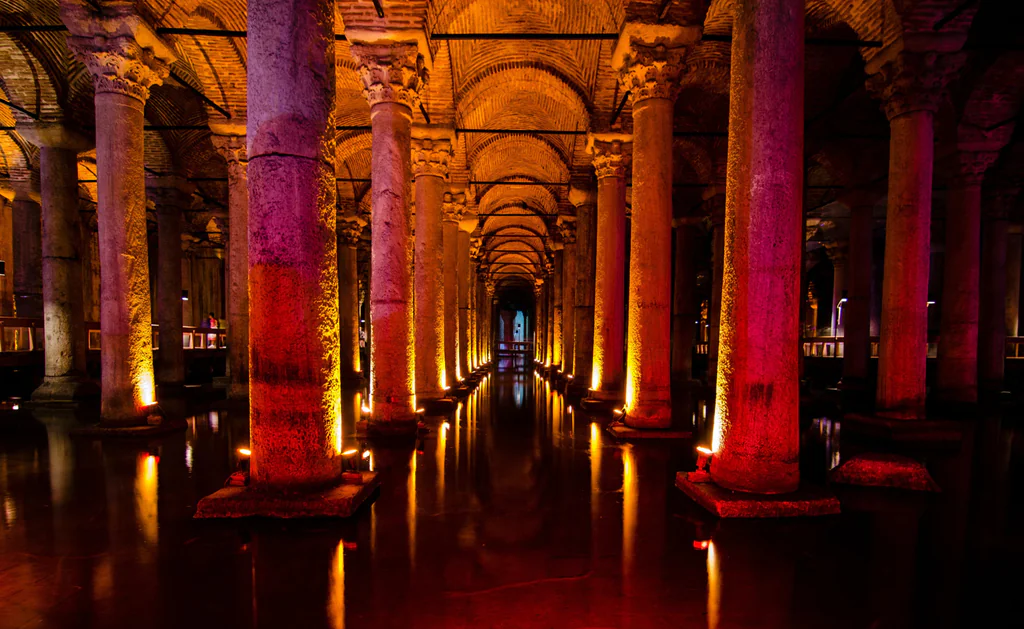
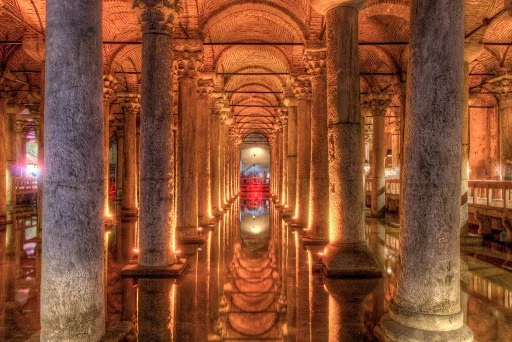
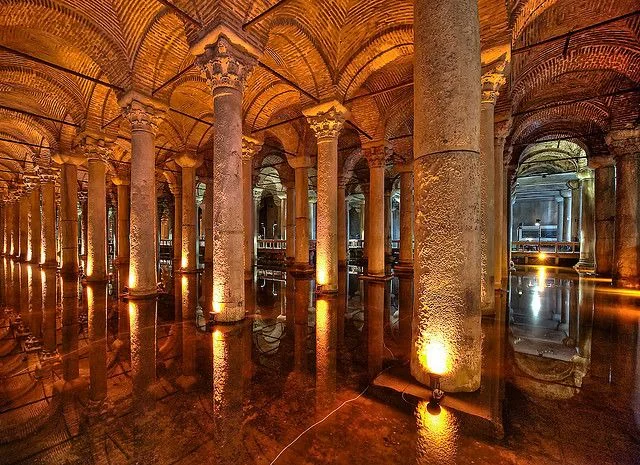
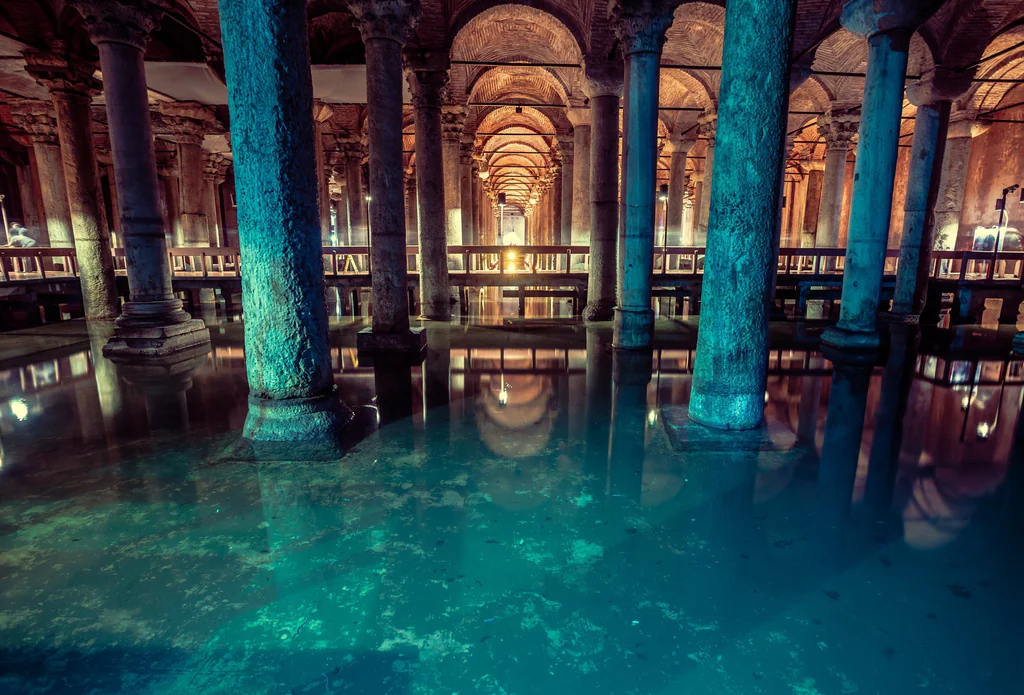
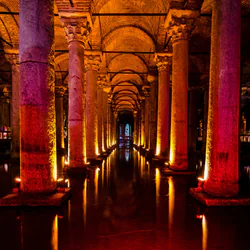
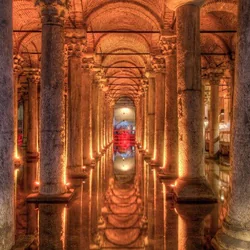
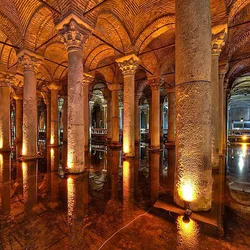
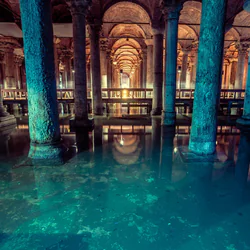
Basilica Cistern underground water tank
 Alemdar, Yerebatan Cd. No:13, 34110 Fatih/İstanbul, Turkey
Istanbul not only attracts tourists by its beautiful architecture above ground but also its architectural masterpieces underground, of which the Basilica Cistern (Yerebtan) underground water tank is a typical example. This delicate Byzantine structure is a spectacular underground cistern that once carried drinking water by means of aqueducts from Bulgaria to Istanbul.
The Basilica Cistern Underground Reservoir is one of the most interesting places in Istanbul.
There are hundreds of ancient cisterns hidden beneath the streets and houses of Istanbul, but only two are open to the public and visitors. One of them is the Basilica Cistern (Yerebtan Sarnıcı) underground aquifer, which is also Istanbul's biggest and most unusual tourist attraction.
Contrary to the image of James Bond, who had to row through an underground water tank in Istanbul in the blockbuster "Love from Russia" of the 007 spy series, visitors can stroll among hundreds of columns. marble and enjoy the cool underground on a hot summer day.
The entrance to the Basilica Cistern is across from the Hagia Sophia museum. This huge underground water tank was built during the reign of Emperor Justinian I in 532 to meet the water needs of the Grand Palace. This piece of engineering marvel is a testament to the architectural masterpiece of the Byzantine Empire's heyday.
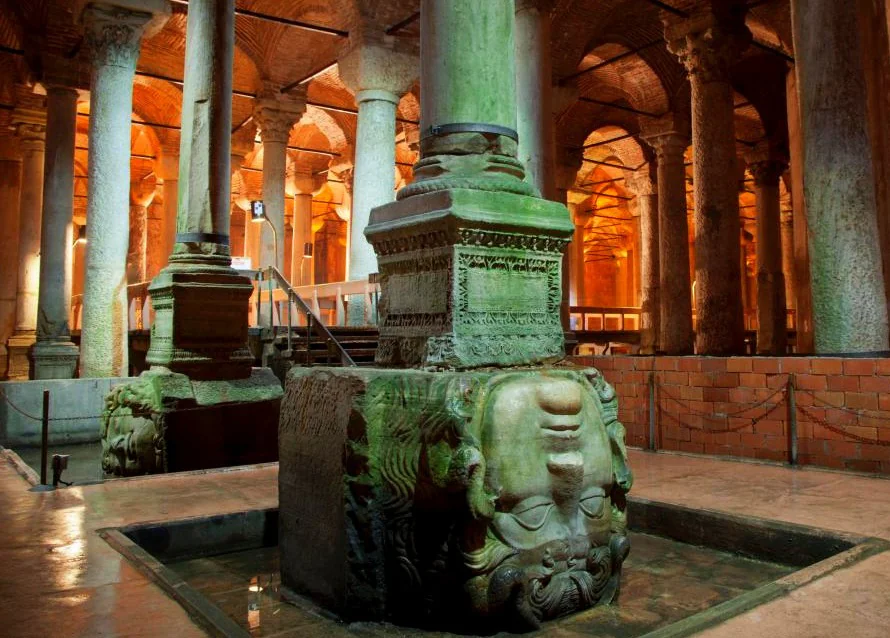
The Basilica Cistern, which borrows its name from the Basilica of Ilius, is 143 meters long and 65 meters wide. The roof is supported by 336 marble columns, most in Ionic or Corinthian style, each 9 meters long, four meters apart and arranged in 12 rows of 28 columns each.
The tank, which can hold 80,000 cubic meters of water, comes from the Eğrikapı Water Distribution Center in the Belgrade Forest, 19 km from the city. Water is transported to the city center via the 971-meter Valens Viaduct and the 11,545-meter Mağlova Viaduct, built by Emperor Justinian I.
The cistern had been forgotten for centuries and was only discovered by chance by the Frenchman Peter Gyllius in 1545. While researching Byzantine antiquities in the city, he noticed that people in the vicinity did not only get water by lowering buckets through holes in their basement, They even miraculously catch fish this way.
After the cleaning and restoration of the Basilica Cistern cistern, the Istanbul City Government opened it to the public in 1987. After descending this underground structure via a staircase, visitors can stroll the paths. walk by concrete, enjoy the soft light and cool air.
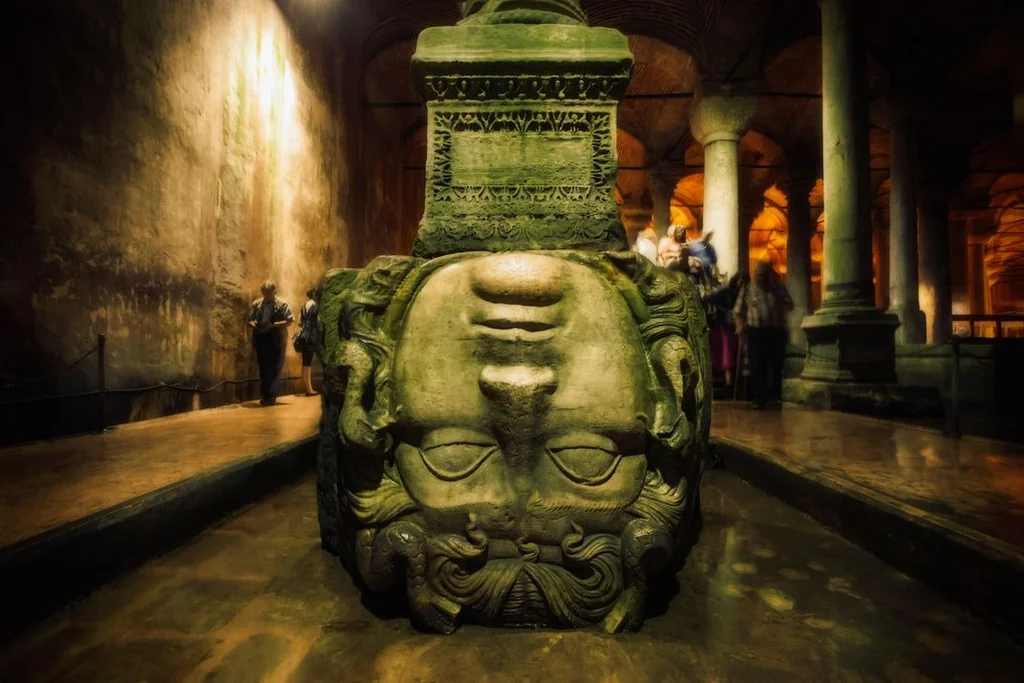
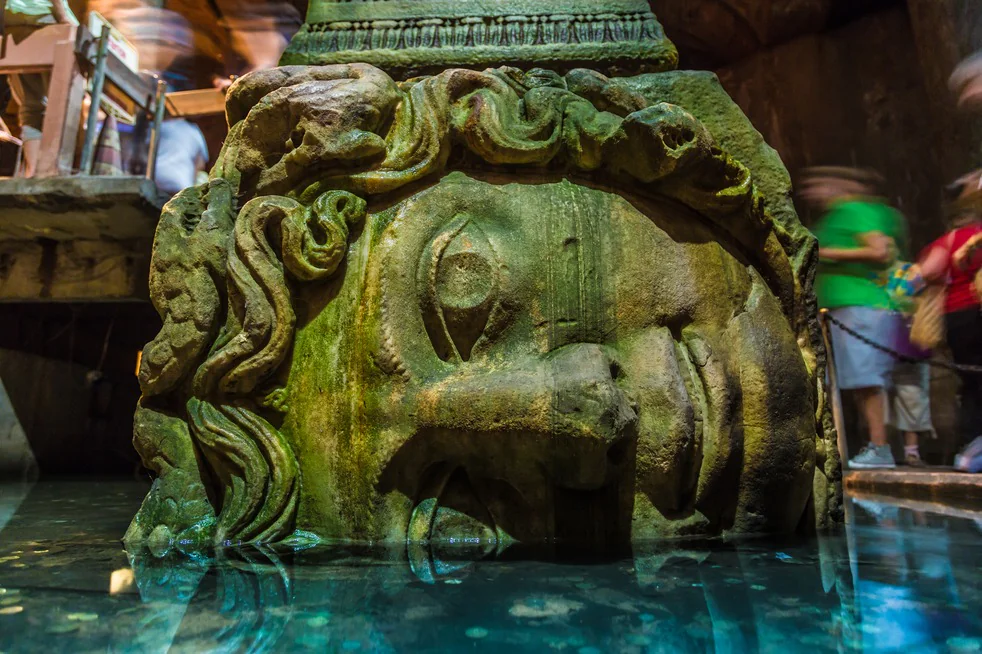
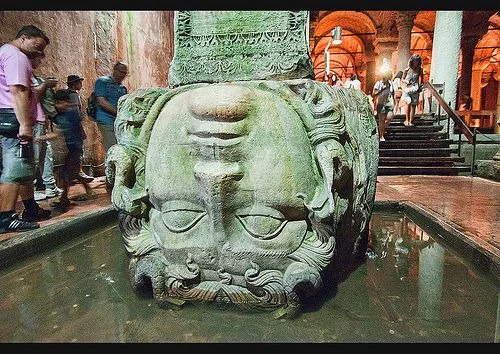
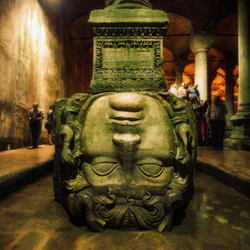
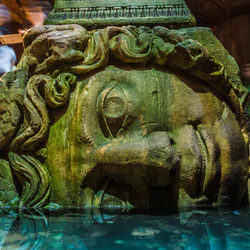
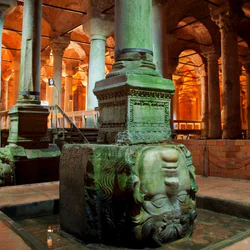
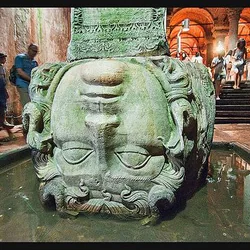
One of the highlights of the underground cistern is the two Medusa ends located in the far left corner of the cistern. Both ends are commonly used as column bases; one lying upside down, the other leaning to the side. The location and origin of both remains a mystery to this day, although it is rumored that they were recycled to form an ancient building of the late Roman period.
Medusa, a sea nymph, is the most beautiful of the three gorgon sisters. She was courted by Poseidon in a temple of Athena. Enraged, Athena turned Medusa into a monstrous monster with snakes instead of hair, with a scary face that could turn the viewer into stone. She was beheaded in her sleep by the hero Perseus, who later used her head as a weapon until giving it to the goddess Athena to place on her shield.
In classical antiquity and today, the head image of Medusa is represented in the device to ward off evil spirits.
With dim lights and classical music along with the background sound of dripping water, visiting the Basilica Cistern underground cistern is romantic but also a little spooky.
Stroll the paths and watch the fish swim among the 336 ceiling pillars. Go all the way to the end to see the head of Medusa, which is placed upside down as the foot of one of the pillars will give visitors unforgettable feelings.
Fare
Adults: 30 lira/pax – buy at the ticket counter
Regular tour price with guide: 12 EUR/pax
Ticket sales hours
The counters close one hour before closing time
Business hours
Open daily from 09:00-18:30
Special Day
The cistern opens at 13:00 on the first day of religious holidays (Ramadan and Sacrifice).
Basilica Cistern (Yerebtan Sarnıcı)
Yerebatan Caddesi 13, Sultanahmet – Istanbul
Tel: +90 212 522 12 59
https://www.yerebatan.com/