


 Tiếng ViệtEnglish
 한국어
 日本語
 简体中文
 Français
 Deutsch
 Español
 Italiano
 Русский


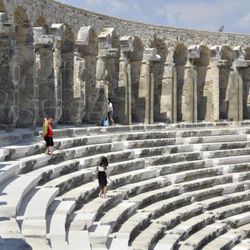
Aspendos . Ancient Theater
 Serik, Antalya Province, Turkey
Aspendos or Aspendus was a theater located in the ancient Greco-Roman city in the Antalya province of Turkey. The site is located 7 km northeast of central Serik. The city was built on a hilltop near the Eurymedon River (now Köprüçay) and over the course of 800 years saw Lydian, Persian, Greek, Ptolemaic, Seleucid, Roman, Byzantine and Seljuk rule.
According to ancient legend, the city was founded by Mopsus in the 13th century BC. In 6 BC, King Croesus of Lydian captured Aspendos. After Cyrus' victory over Croesus in the same century, the city became Persian territory. In the 5th century BC, Aspendos minted his own silver coins. Alexander the Great took over the city in the 4th century BC. During the Roman period, Aspendos was an important port city.
Although the hilltop ruins have not been systematically excavated, part of an Agora remains (in ancient Greek cities, an Agora was an open space used as a meeting place for various activities of the people), a basilica, a hall with shops and a statue of a goddess. Water was brought to the city through a well-built ancient aqueduct. Remnants of two water towers belonging to the aqueduct can still be seen to this day.
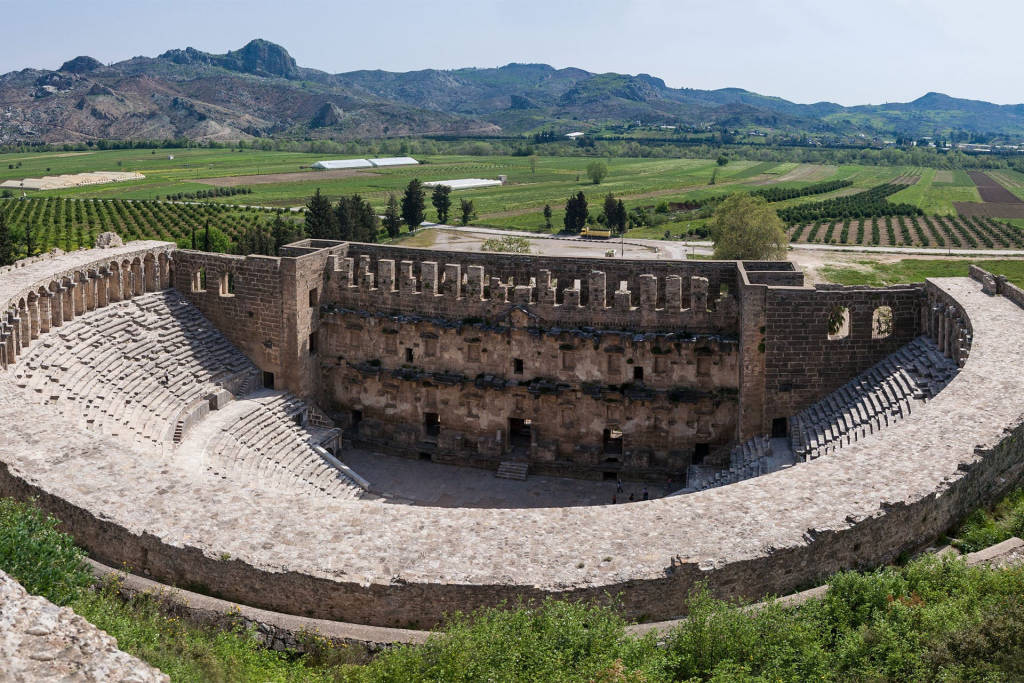
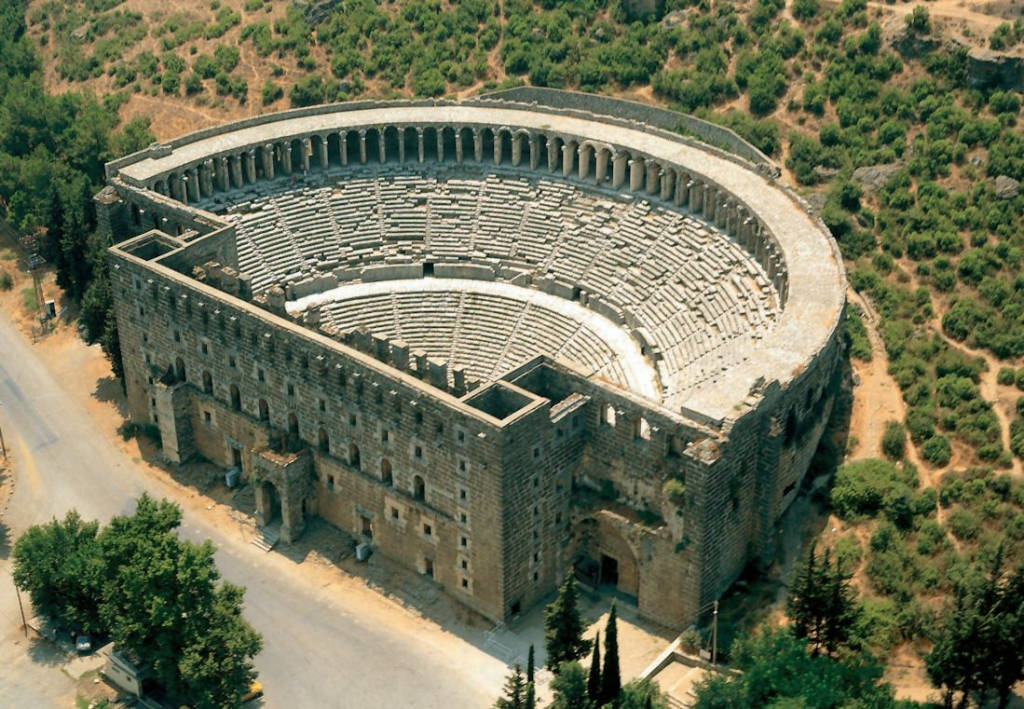
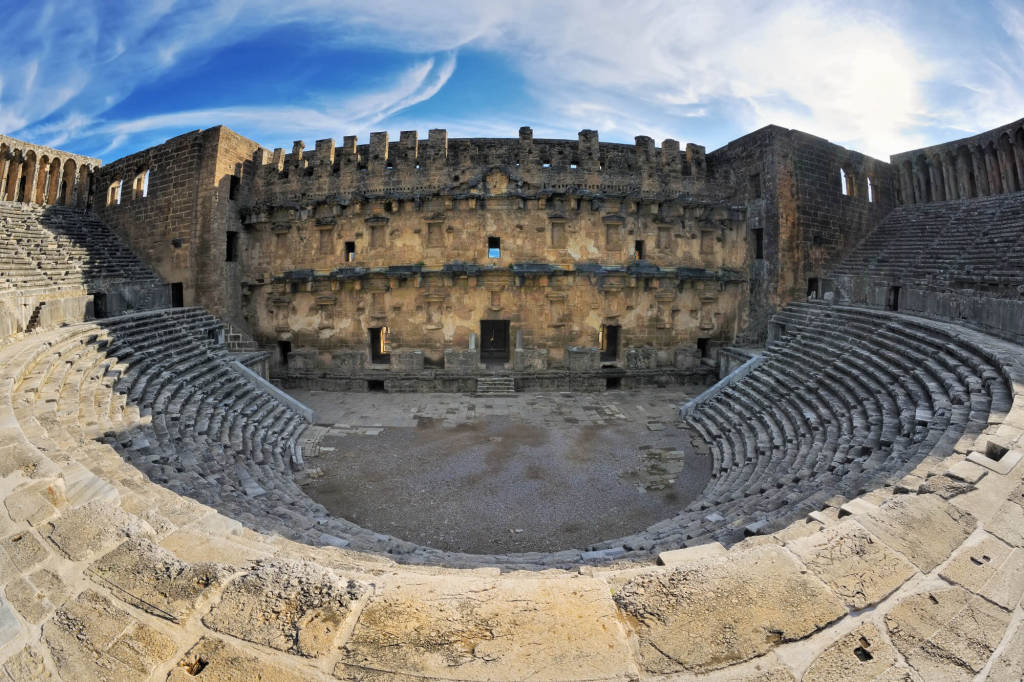
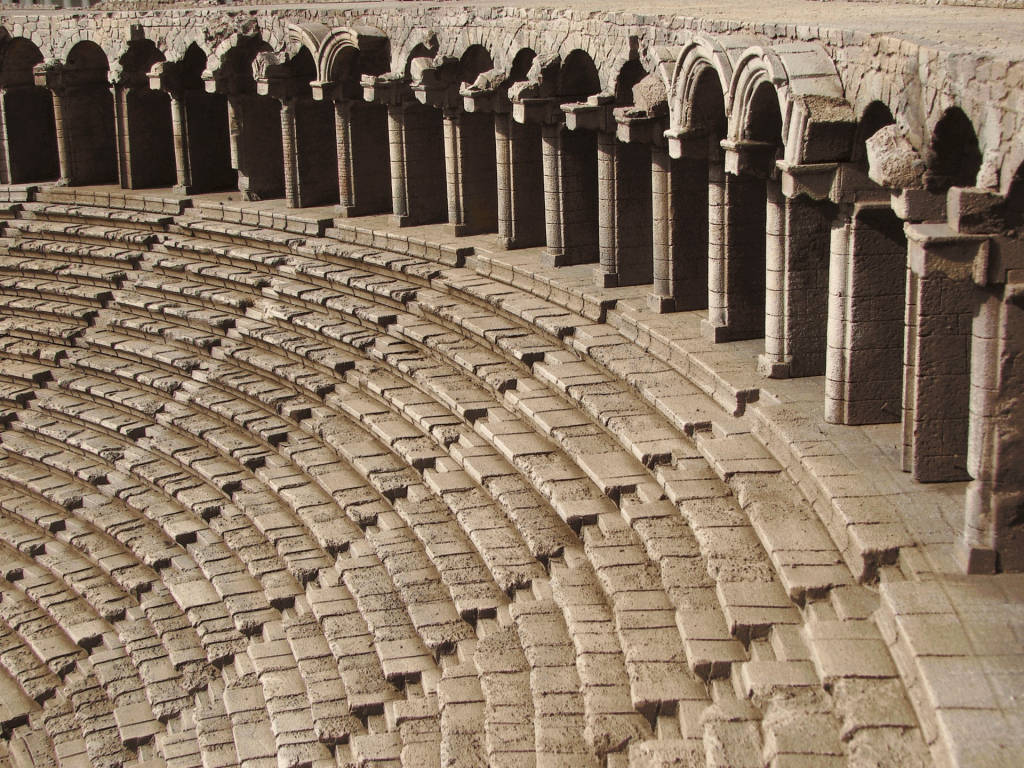
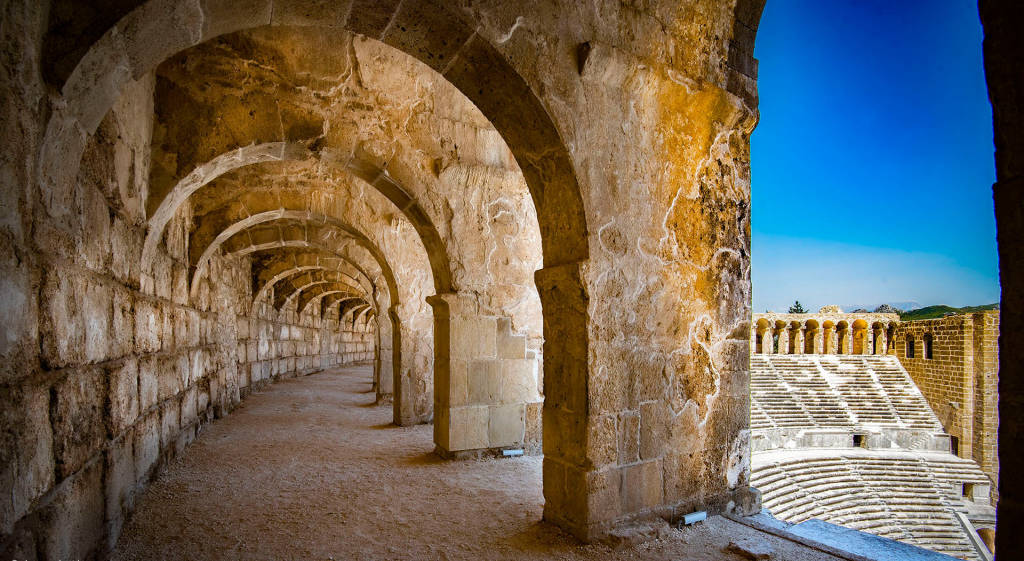
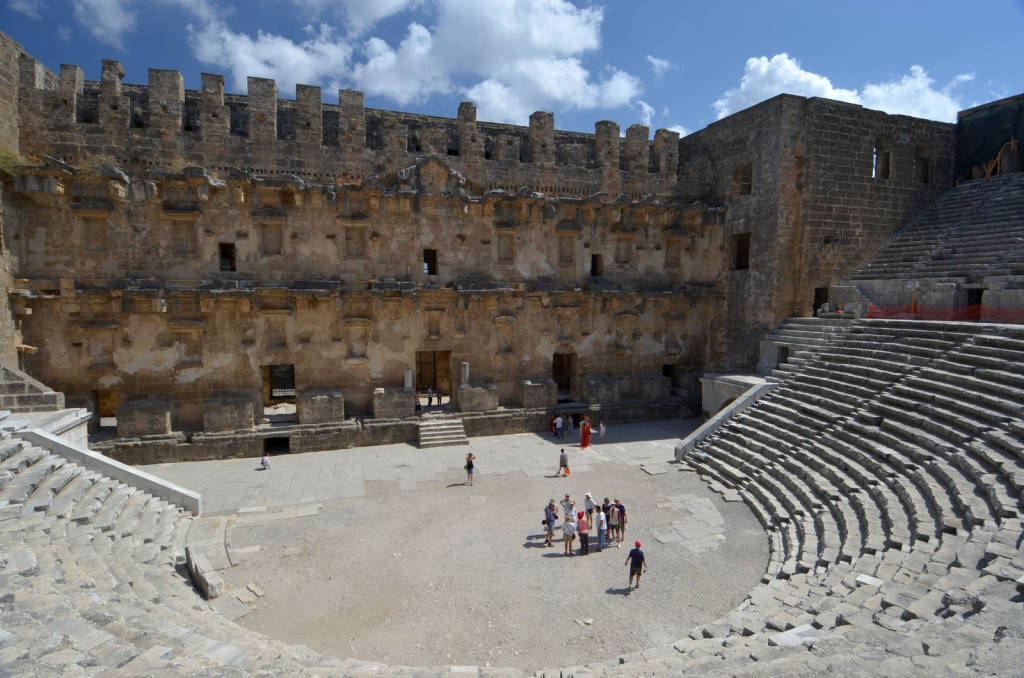
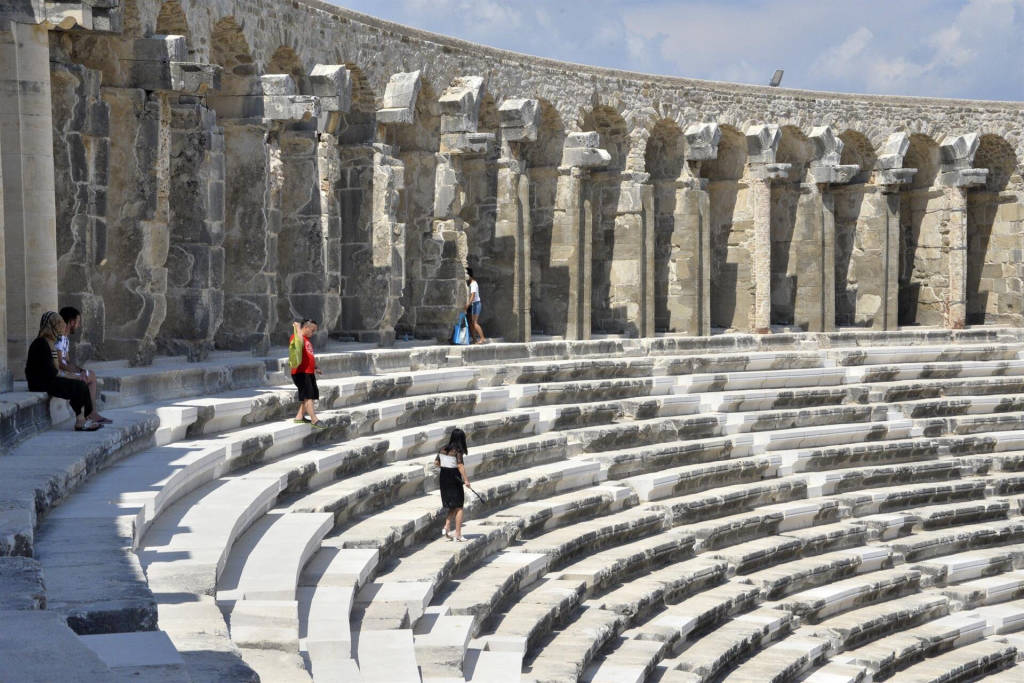
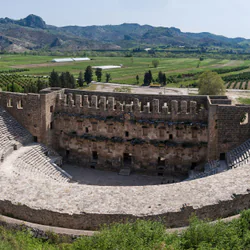
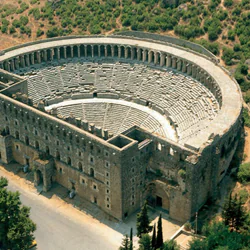
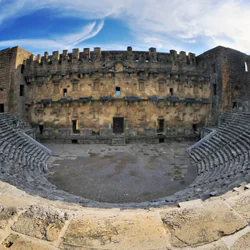
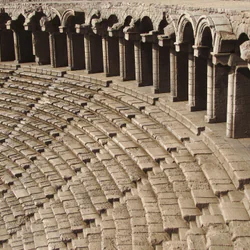
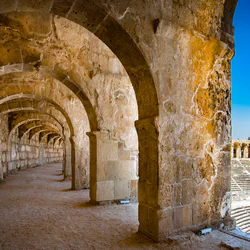
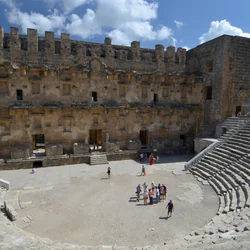
The city's other important archaeological site is the theater of Aspendos, one of the largest archaeological structures in Anatolia, and arguably the best-preserved ancient theatre. It was built by a local architect Xenon during the reign of Macus Aurelius (2nd century AD). According to an inscription found in the rock, it was a gift from the brothers Curtius Crispinus and Curtius Auspicatus, who dedicated the work to the gods of the country and to the Royal Family. With a diameter of 96 meters, the theater's capacity is estimated at 20,000 people including the three-story high stage building. The top façade is used to support a canopy-like porch that extends out towards the stage, erected for its acoustic effect rather than for the shade it provides. The lower levels of the facade are decorated with a double row of columns with ten pairs of columns on each level. The four central columns on the upper level are surrounded by a pedestal embossed with Dionysus. Other panels are also decorated with various statues, portrait busts and reliefs.
The fact that the stage building was as tall as the end of the covered block with colonnades across the auditorium proves that it was a Roman theatre; The oblique and the auditorium are one of the more complex and unsettling constructions as in the ancient Greek style. In the 13th century, during the Seljuk period, the theater was restored to serve as a royal caravan for the monarchs who resided there on their way to their winter residence in Alanya.
In spring and early summer, the Aspendos International Opera and Ballet Festival, organized by the Turkish State Opera and Ballet Theater since 1994, is performed in this ancient theatre.