


See all results for ""

 Anytime
 Tiếng ViệtEnglish
 한국어
한국어 日本語
日本語 简体中文
简体中文 Français
 Deutsch
 Español
 Italiano
 Русский


 Login for Corporates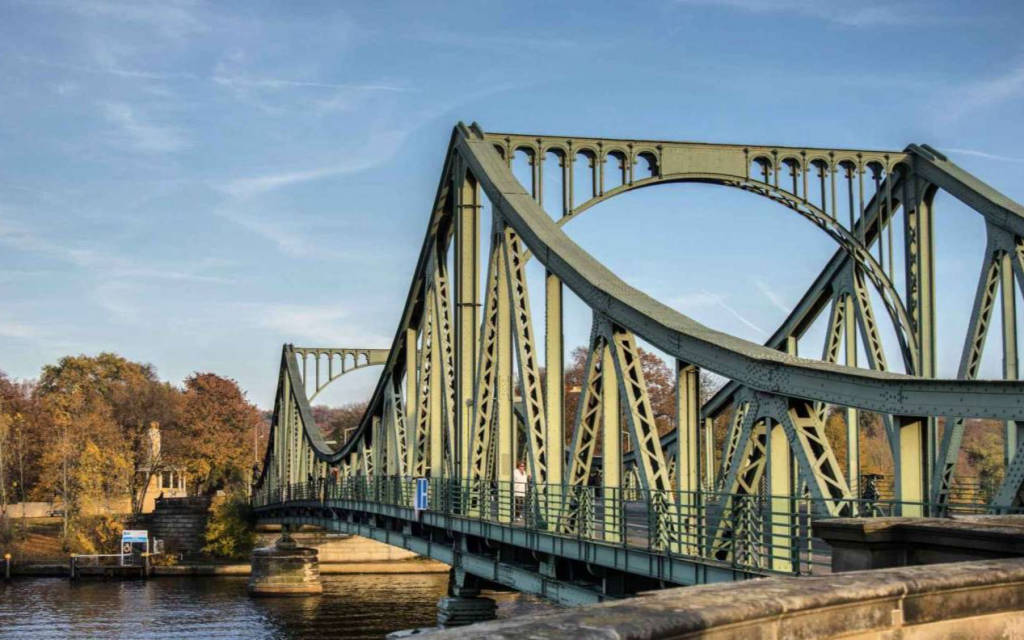
Glienicke Bridge
 Königstraße, 14109 Berlin, Germany
Glienicker Bridge, spans the waters of the River Havel, connecting Potsdam with Berlin.
Glienicker Bridge, spans the waters of the River Havel, connecting Potsdam with Berlin. Beyond its picturesque setting, this bridge carries a weighty historical legacy. During the Cold War, Glienicker Bridge gained international fame as the site of spy exchanges between the United States and the Soviet Union.
The bridge's association with espionage earned it the nickname "Bridge of Spies," a title immortalized in the eponymous film directed by Steven Spielberg. The carefully orchestrated swaps of captured spies on the Glienicke Bridge became symbolic moments in the geopolitical struggles of the mid-20th century.
A first wooden bridge across the Havel River at this location was built about 1660, in order to reach the hunting grounds around Stolpe. By the early 1800s, a new, non-wooden bridge was needed to accommodate the massive increase in traffic on the chaussee between the Prussian capital Berlin and the Hohenzollern residence in Potsdam. The architect Karl Friedrich Schinkel designed a brick and wood bascule bridge, which was finished in 1834. By the early 20th century, Schinkel's bridge was no longer able to handle the increased volume in traffic, and operating the moveable sections of the bridge caused delays in steamer traffic on the Havel River.
In 1904, the Prussian government held a design competition to replace Schinkel's bridge with a modern, iron bridge. The Johann Caspar Harkort Company of Duisburg submitted the winning design, and the present-day bridge was inaugurated on 16 November 1907.
The German film studio UFA shot the film Unter den Brücken (Under the Bridges) at the Glienicke Bridge in 1944 and 1945. At the end of April 1945, an unexploded shell severely damaged the bridge. The reconstruction of the steel bridge was not completed until 1949, after the establishment of West Germany and East Germany. The East German government named it the “Bridge of Unity" as the border between East Germany and Western Allied-occupied West Berlin ran across the middle of the bridge.