


See all results for ""

 Anytime
 Tiếng ViệtEnglish
 日本語
日本語 한국어
한국어 简体中文
简体中文 Français
 Deutsch
 Español
 Italiano
 Русский


 Login for Corporates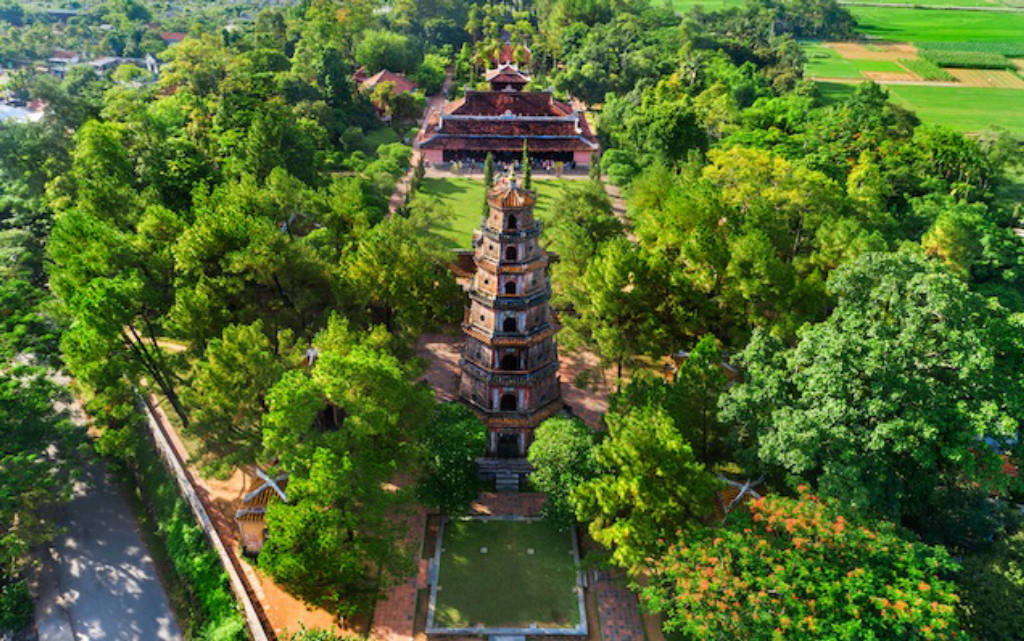
Thien Mu Pagoda
 Thien Mu Pagoda, Huế, Hương Long, Huế, Thừa Thiên Huế, Việt Nam
Thien Mu Pagoda, also known as Linh Mu Pagoda, is located on Ha Khe Hill by the Huong River, about 5 kilometers west of the center of Hue City. This pagoda was built in the year of the Metal Ox (1601) during the reign of Lord Nguyen Hoang, the founder of the Nguyen dynasty in the Central Vietnam region.
Before Thien Mu Pagoda was established, Ha Khe Hill was home to another pagoda named Thien Mo, built by the Cham people. According to legend, when Lord Nguyen Hoang arrived in Thuan Hoa, he discovered a hill shaped like a dragon turning its head, where an old woman in a red robe often appeared, predicting that a true emperor would establish a pagoda here to gather the spiritual essence for the country.
Lord Nguyen Hoang decided to build Thien Mu Pagoda with the meaning of "heaven" in its name, expressing his aspiration for a strong future for the nation. However, in 1862, Emperor Tu Duc renamed it Linh Mu to avoid negative connotations. Since then, the people of Hue have been accustomed to referring to both names: Thien Mu and Linh Mu.
History and Architecture
Thien Mu Pagoda has gone through many developmental phases. During the reign of Lord Quoc – Nguyen Phuc Chu, the pagoda was expanded with structures such as the Heavenly King Hall and the Great Hero Hall. In 1710, Lord Quoc commissioned the casting of the Đại Hồng Chung, a large bell weighing over two tons, accompanied by an inscription recording the contributions to the development of Buddhism in Central Vietnam.
In 1844, Emperor Thieu Tri constructed the Phuoc Duyen Octagonal Tower, a famous symbol of the pagoda. The tower stands 21 meters tall, consisting of seven tiers, each housing a statue of the Buddha. However, Thien Mu Pagoda also could not escape the ravages of nature; a storm in 1904 caused significant damage to many structures.
Cultural and Spiritual Value
Today, Thien Mu Pagoda is not only a historical monument but also a place that preserves many valuable artifacts. The Buddha statues and worship objects are meticulously cared for, marking important historical periods. The pagoda's grounds also feature a meticulously maintained garden, along with historical relics such as the vehicle of the late Venerable Thich Quang Duc, who self-immolated to protest the repression of Buddhism.
Thien Mu Pagoda is regarded as one of the 20 outstanding scenic spots of the Thuan Hoa region, with the poem “Thien Mu Chung Thanh” composed by Emperor Thieu Tri, reflecting the spiritual beauty and nature of this place. The poem not only praises the beauty of the pagoda but also conveys profound meanings about the connection between humanity and spirituality.
Thien Mu Pagoda is an essential destination in the journey to explore the history and culture of Vietnam. With its natural beauty, unique architecture, and spiritual values, Thien Mu Pagoda offers visitors unforgettable experiences in their journey of "personalized travel."