


See all results for ""

 Anytime
 Tiếng ViệtEnglish
 한국어
한국어 日本語
日本語 简体中文
简体中文 Français
 Deutsch
 Español
 Italiano
 Русский


 Login for Corporates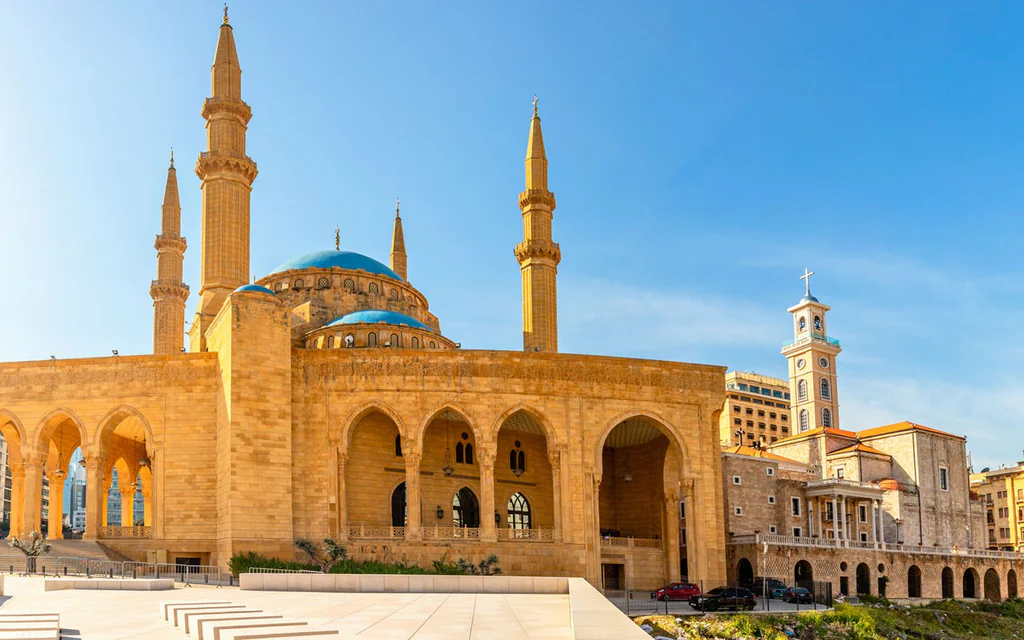
Al Amin Mosque Beirut
 El Amir Bachir, Bayrut, Li-băng
Nestled in the heart of Beirut, Lebanon, Al Amin Mosque, often referred to as the "Blue Mosque," is a mesmerizing blend of faith, history, and architectural splendor.
Nestled in the heart of Beirut, Lebanon, Al Amin Mosque, often referred to as the "Blue Mosque," is a mesmerizing blend of faith, history, and architectural splendor. Its significance reaches beyond religious worship, standing as a testament to Lebanon's rich history and its commitment to religious diversity and unity.
Al Amin Mosque's history may be relatively short, having been inaugurated in 2008, but it carries the weight of centuries of religious and cultural heritage. Its strategic location adjacent to the Saint George Maronite Cathedral symbolizes Lebanon's dedication to religious coexistence, highlighting that different faiths can harmoniously share the same space.
Architecturally, the mosque is a breathtaking fusion of contemporary design and traditional Islamic elements. Its twin blue domes, adorned with intricate mosaics and verses from the Quran, are particularly striking. The exterior of the mosque is a work of art, embellished with geometric patterns and graceful Arabic calligraphy. The minaret, which gracefully towers above, is an exquisite piece of architecture, especially when illuminated at night.
Beyond being a place of worship, Al Amin Mosque is a cultural and educational hub. It opens its doors to visitors from all backgrounds who are eager to explore Islam, its customs, and its teachings. Guided tours often provide insights into the mosque's history and the principles of Islam, promoting interfaith dialogue and understanding.
One of the mosque's central objectives is the promotion of interfaith harmony. Its proximity to the Saint George Maronite Cathedral is a visual representation of unity amid diversity. Lebanon's history is marked by various religious communities coexisting, and Al Amin Mosque celebrates this unity in the face of religious differences.
The mosque also actively engages with the community. It provides support to those in need, hosts cultural events, and contributes to local initiatives aimed at improving the lives of Beirut's residents. This active participation reflects the essence of compassion and aligns with the Islamic principle of assisting those less fortunate.
Cultural events hosted at the mosque, including lectures, exhibitions, and artistic performances, enrich the local community and celebrate Lebanon's diverse cultural heritage. These events serve as a platform for locals and tourists alike to explore and appreciate the nation's traditions and customs.
Al Amin Mosque has transcended its role as a place of worship to become a significant tourist attraction. Its architectural grandeur, welcoming atmosphere, and unique location next to the Saint George Maronite Cathedral make it a must-visit landmark for those exploring Beirut's vibrant city.