


 Tiếng ViệtEnglish
 한국어
한국어 日本語
日本語 简体中文
简体中文 Français
 Deutsch
 Español
 Italiano
 Русский


 Login for Corporates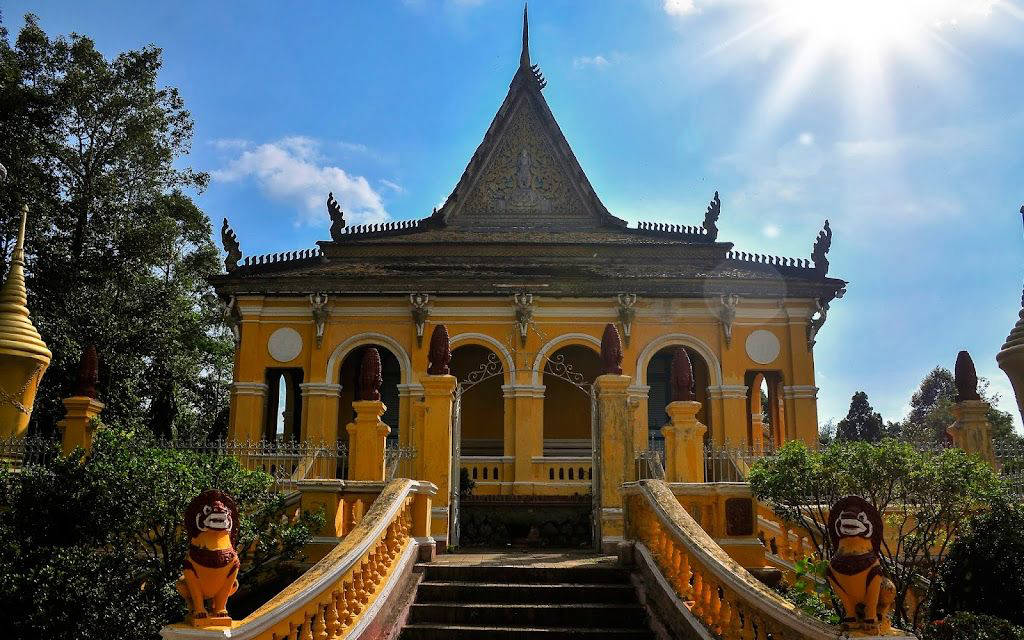
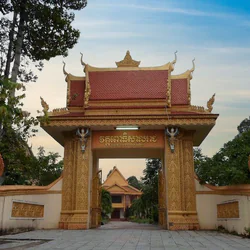
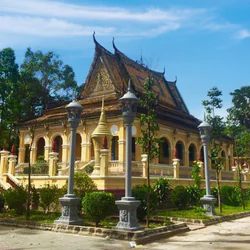
Ong Met Pagoda (Kom Pong Pagoda)
 Chùa Ông Mẹt, Lê Lợi, phường 4, Trà Vinh, Việt Nam
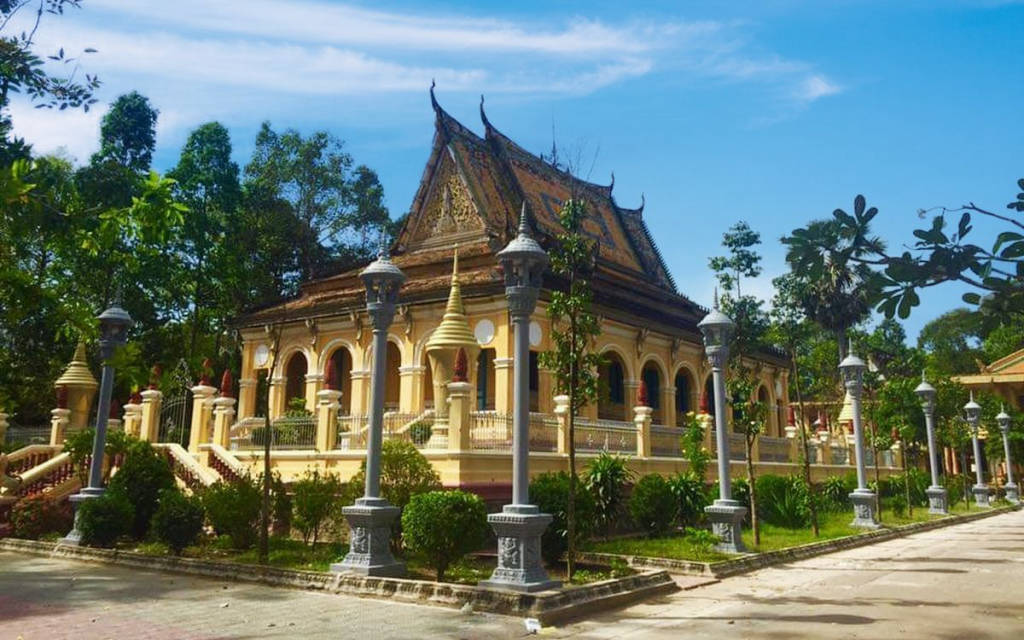
Ong Met Pagoda (Kom Pong Pagoda) is located at 50/1 Le Loi, Hamlet 2, Ward 1, Tra Vinh City, Tra Vinh Province. The pagoda was built in 642 and is a national architectural and artistic relic. Covering an area of 12,900m², the pagoda has a unique Khmer style with a main hall, sala, library, monks' quarters and stupa. The main hall stands out with a large Buddha statue and a multi-level roof with intricate carvings. This is the cultural, religious and educational center of Khmer Theravada Buddhism.
Ong Met Pagoda (Kom Pong Pagoda) - National Artistic Architecture Monument in Tra Vinh
Ong Met Pagoda, officially named Bodhisálaràja in Khmer, is also known as Kom Pong Pagoda. It is located at 50/1 Le Loi, hamlet 2, ward 1, Tra Vinh city, Tra Vinh province. This is an ancient and particularly important site in the Khmer Theravada Buddhist sect. The temple is currently home to the Khmer Theravada Buddhist Intermediate School.
Formation History
Ong Met Pagoda has a history spanning nearly 1,400 years. The temple was first constructed around the year 642 and was relocated to its current position in 711 (1315 Buddhist calendar). Despite several renovations, the temple has maintained its original beauty combined with new values, reflecting the continuous development of the Khmer community. Notably, on March 3, 2009, Ong Met Pagoda was recognized by the Ministry of Culture, Sports, and Tourism as a national artistic architectural monument – a great pride for Tra Vinh province.
Architecture
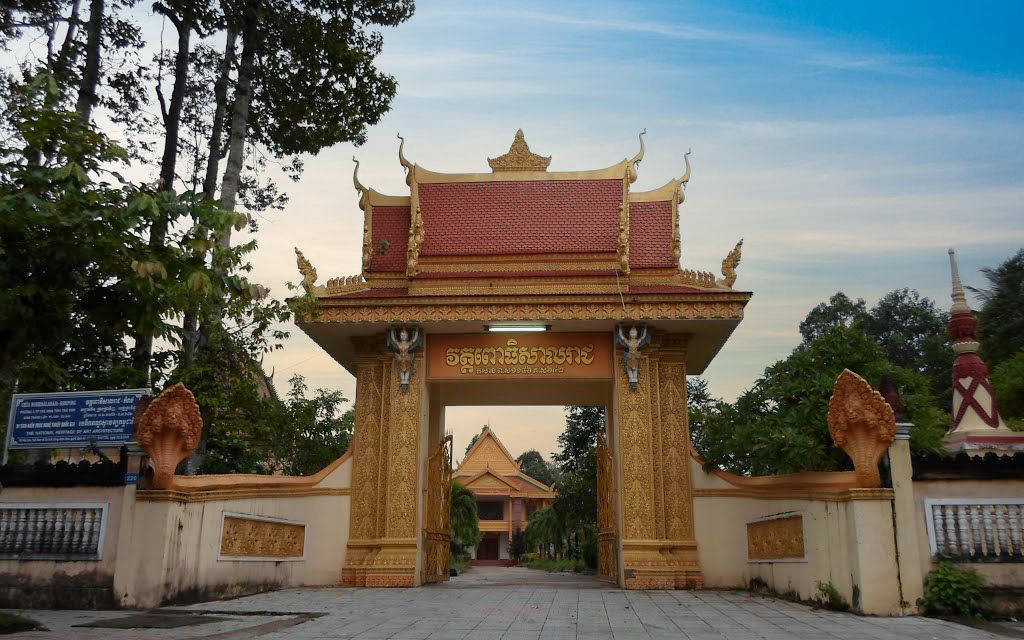
Ong Met Pagoda covers an area of approximately 12,900 square meters. Similar to many other Khmer temples, Kom Pong Pagoda includes several architectural structures such as: the main hall, sa la, monks' residence, stupa, and gate fence.
Main Hall
The main hall of Ong MetOng Met Pagoda is rectangular, built in an East-West orientation, with the front facing East, and located on a 3.18-meter-high terrace. The four corners inside the fence are marked by distinctive kôte towers. Both the front and back faces of the main hall have entrances, with numerous stairs leading up and down.
Inside, on the west side of the main hall, is a large altar where the giant meditating Buddha Preas-Chi sits on a lotus pedestal, along with other Buddha statues such as the Enlightened Buddha, the Alms-giving Buddha, the Preaching Buddha, and the Nirvana Buddha.
The entire frame of the main hall, including columns, beams, and rafters, are made from precious wood, with intricately carved floral motifs on the column heads and crossbars, continuing into chains of designs, all lavishly gilded. The ceiling inside the main hall is also made from quality wood, with meticulously and sharply carved details, such as the wheel of dharma, sunflowers, and lotus flowers.
The four walls around the altar are adorned with paintings depicting various stages of Buddha's life, from his childhood, becoming a prince, to his renunciation, enlightenment, and ultimate nirvana. In front of the altar are two thrones made from precious wood, featuring the lion king (reach-say) figures, used for high-ranking monks during sermons.
The corridor surrounding the main hall is decorated with Kaynor statues, and at the column corners are Krud statues, symbolizing strength and protection. The temple roof is tiled and designed in a multi-level style with several eaves. Between the roof levels are vertical wooden curtains with intricate carvings.
The roof ridges are adorned with long dragon-shaped decorations. The gable ends of the roof are made from wood, with carvings of the Garuda holding two crossed swords supporting the god Ay-sô in front, and the standing figure of Vis Nu with one foot on the sun at the back.
Library
The library was built in the stilt house style with a precious wood frame, completed in 1916. To protect the structure from termites, the temple built brick column bases and isolated the wooden columns from the cement walls. The column heads and crossbars in the library are intricately carved and gilded, with the western gable carved with sunflower patterns, while the eastern gable features two lions holding umbrellas shading the tray of scriptures.
The library has three sections: the main section for displaying books, and two side sections for reading. The library roof consists of two tiers, with the upper tier having two eaves and the lower tier having four eaves, connected and decorated with dragon motifs.
Cultural and Spiritual Values
More than just a unique architectural structure, Ong Met Pagoda is a spiritual symbol of the Khmer community in the South. This is where festivals, sermons, and cultural preservation activities take place. Notably, the temple is currently the headquarters of the Khmer Theravada Buddhist Intermediate School, contributing to the preservation and teaching of Buddhist knowledge to the younger generation.
Conclusion
Ong Met Pagoda is not merely a historical monument but a vivid testimony to the intersection of belief, art, and the life of the Khmer community. Visitors standing before the temple can not only feel the solemnity but also gain a deeper understanding of the long-standing cultural beauty of the Khmer people.
Take some time to visit this place to appreciate the beauty not just of the architecture but also of the soul and hospitality of the people of Tra Vinh.