


See all results for ""

 Anytime
 Tiếng ViệtEnglish
 한국어
한국어 日本語
日本語 简体中文
简体中文 Français
 Deutsch
 Español
 Italiano
 Русский


 Login for Corporates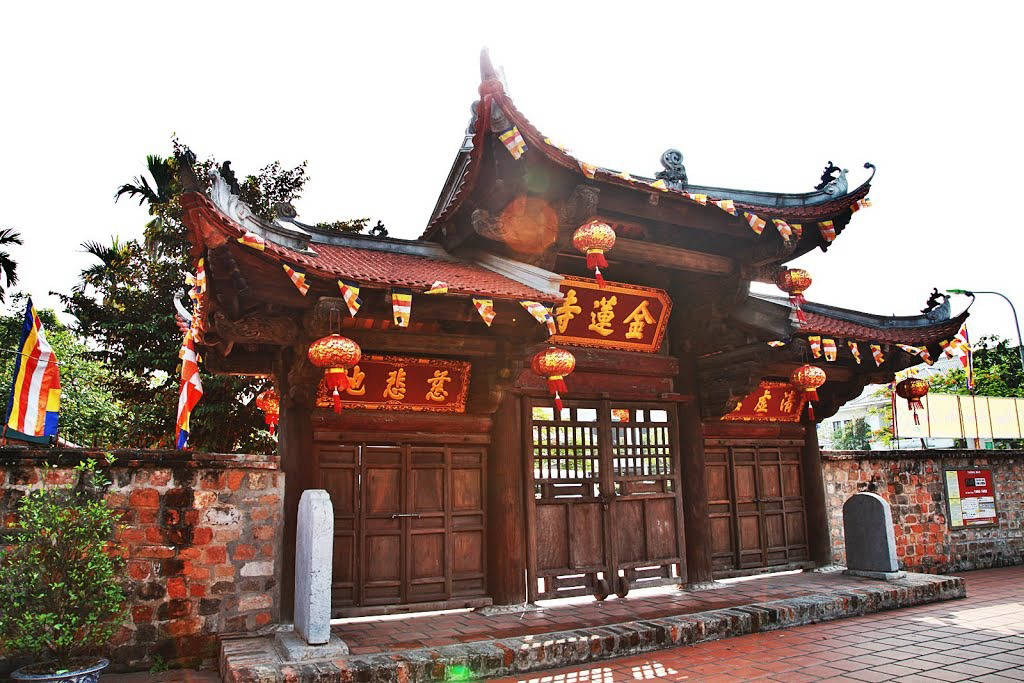
Kim Lien Temple
 Nghi Tàm, Quảng An, Tây Hồ, Hà Nội 100000
Located on a flat strip of land in Nghi Tam village, Quang An commune, Tay Ho district, Kim Lien pagoda is considered one of the 10 most ancient architectural monuments in Vietnam. Experiencing the ups and downs of history, this ancient temple still exists like a lotus on the banks of the romantic West Lake.
Under the Ly Dynasty, Princess Tu Hoa and her court ladies often grew mulberry, raised silkworms, and weaved cloth at the Tam Tang farm near West Lake. Therefore, King Ly Than Tong (1128 - 1138) ordered the construction of Tu Hoa palace nearby so that the princess could rest. After the princess died, a temple was built on the foundation of the ancient Tu Hoa palace.
Under the Tran dynasty, the silkworm farm was renamed Tich Lien Hoi and the pagoda was renamed Dong Long, then Dai Bi under the Le dynasty. The stele erected under King Le Nhan Tong's reign reads: "In the first year of Thai Hoa (ie 1443), the pagoda was built, called Dai Bi".
In 1771, under King Le Canh Hung, the pagoda was restored on a large scale and renamed Kim Lien pagoda. From 1792 to 1793, during the reign of King Quang Trung, the pagoda was expanded and has the present appearance.
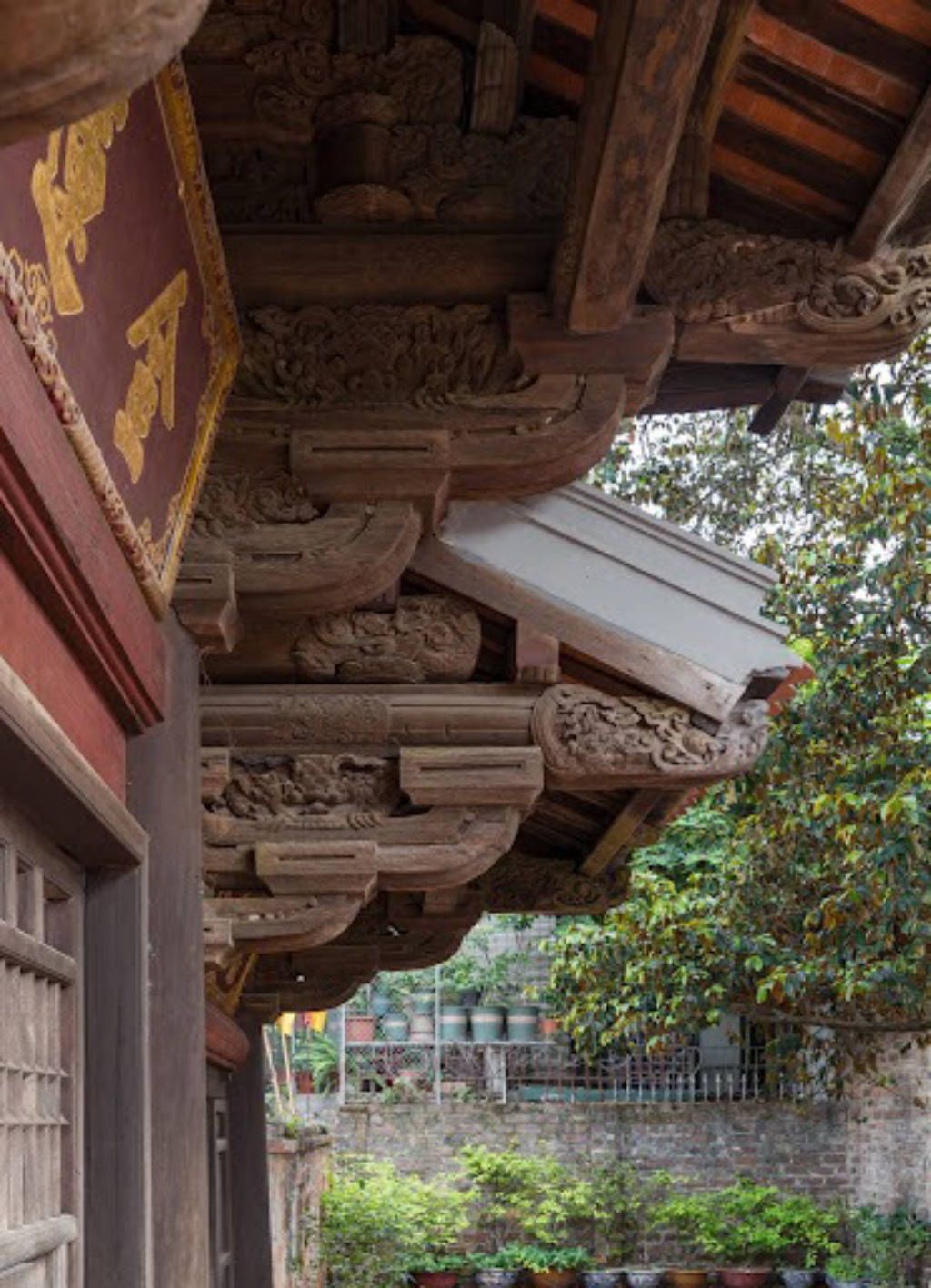
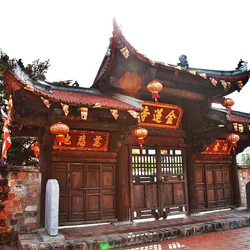
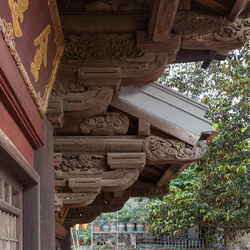
From a distance, the three-door gate of Kim Lien Pagoda exudes a proud beauty with its unique wooden architecture: a row of four round wooden columns in the shape of a curved blade. The two huge main columns in the middle support the two gable roofs, forming the main arch that is higher and wider than the two arches on either side. The temple's three-door gate also has exquisite carvings on the wooden surface with dragon and flower motifs.
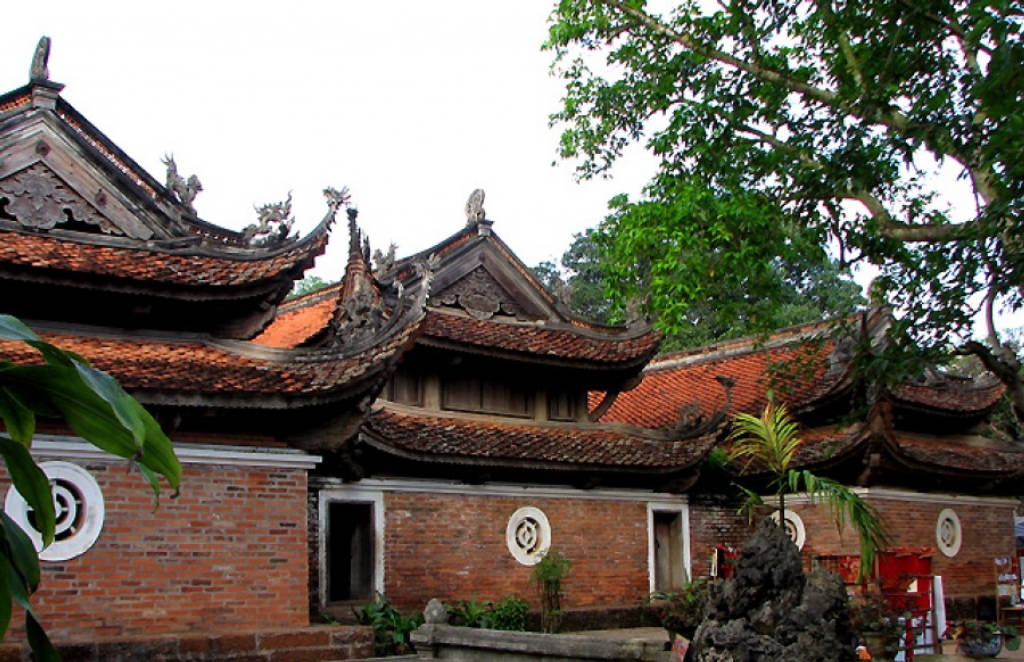
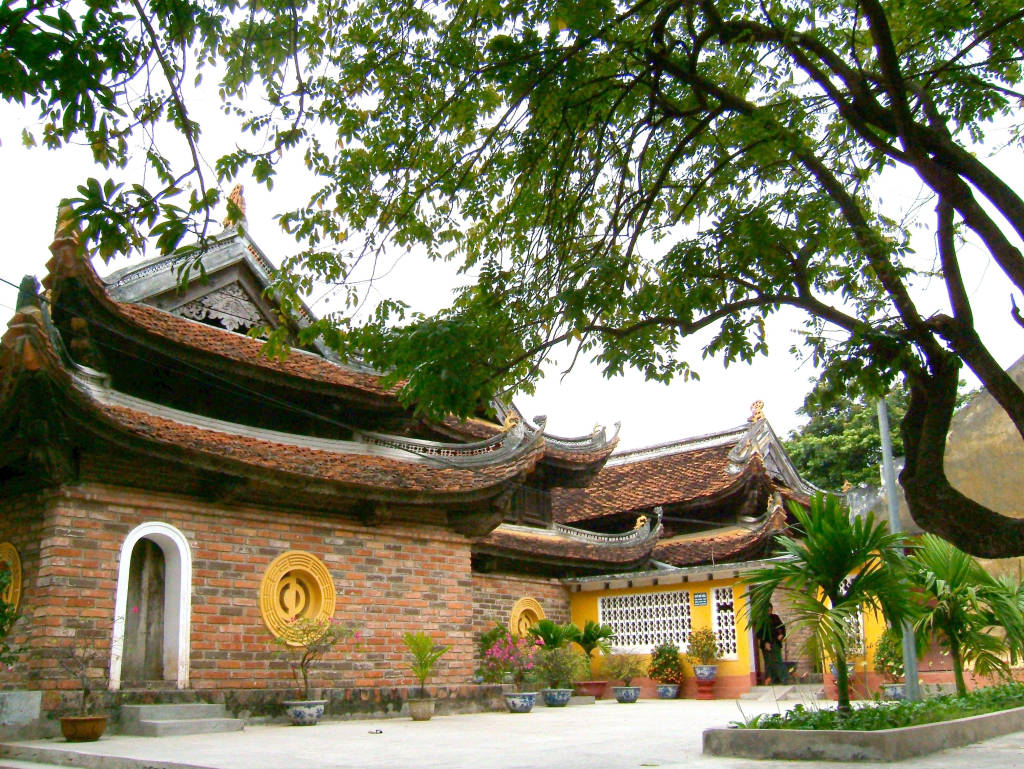
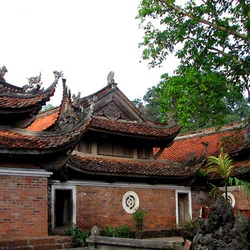
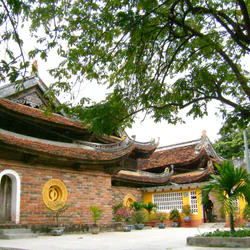
The architecture of Kim Lien Pagoda is probably influenced by royal architecture because it was built on the foundation of the Tu Hoa palace and worshiped a royal citadel of the Ly dynasty. The layout of the temple consists of a symmetrical axis from the gate to the main hall. Behind the gate is a courtyard leading to three houses arranged in three parallel lines in the shape of the letter Tam 三. The back nave and nave face west while the front nave faces east. The three walls of the house are built of thick ancient bricks, not plastered. The round windows on the wall are decorated with Buddhist works.
The temple has a double roof covered with giant fish scale tiles. Its pillars rest on the rocks, carved stylized in the shape of a lotus.
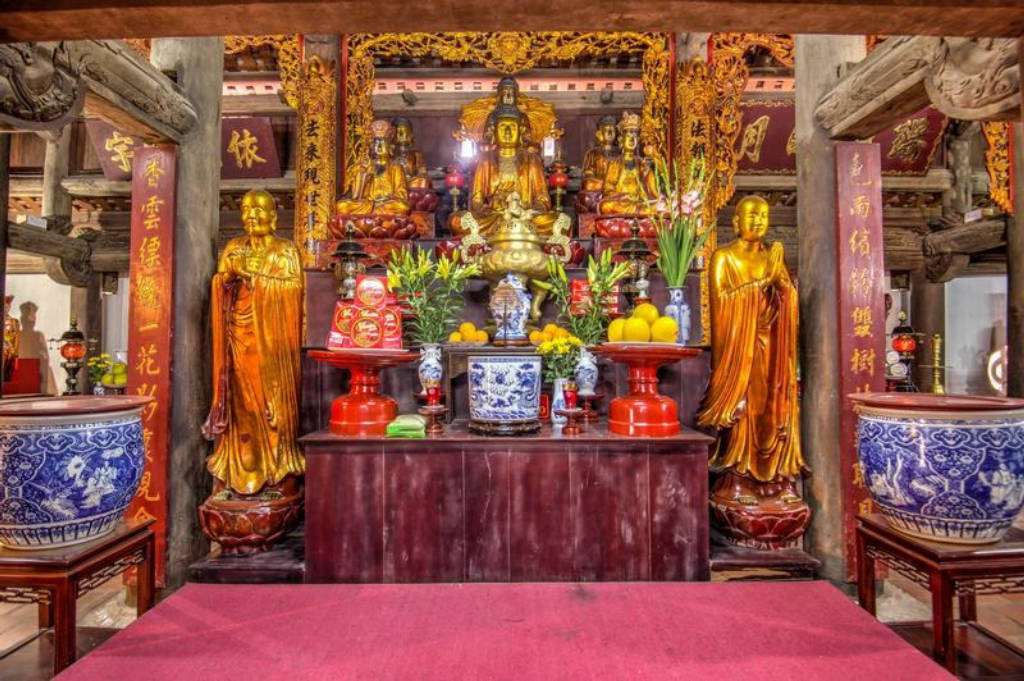
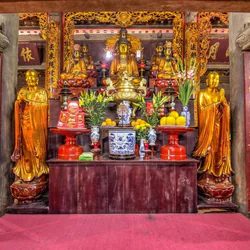
At present, in Kim Lien pagoda, there are still preserved exquisitely carved Buddha statues. Buddha statues are arranged in two layers, in which the upper layer has the set of "Three Worlds" (three Buddha statues representing the past, present and future), followed by the statue of Amitabha, Bodhisattva Avalokitesvara, The statue of Great World Chi Bodhisattva on both sides, along with Ananda and Kassapa are two great disciples of the Buddha. The lower layer is the standard Quan Yin title, the Jade Emperor statue, the bottom is the Cuu Long building. In addition, Kim Lien Pagoda also has a statue of Tinh Do King Trinh Sam, who provided money for the construction of the pagoda in the 32nd year of Canh Hung (1771). The statues are in the typical sculptural style of the 18-19 century. There is also an ancient stele displayed on the right side of the pagoda on a square stone pedestal. Although time has faded many inscriptions on the stone, the date can be seen: "The 3rd year of Thai Hoa, the year of At Suu, ie 1445 of the reign of King Le Nhan Tong".
If you have the opportunity to stroll West Lake, visit Kim Lien Pagoda to admire the secret beauty of one of the 10 most beautiful temples in Thang Long.
Opening hours: 05:30 - 16:30