


See all results for ""

 Anytime
 Tiếng ViệtEnglish
 한국어
한국어 日本語
日本語 简体中文
简体中文 Français
 Deutsch
 Español
 Italiano
 Русский


 Login for Corporates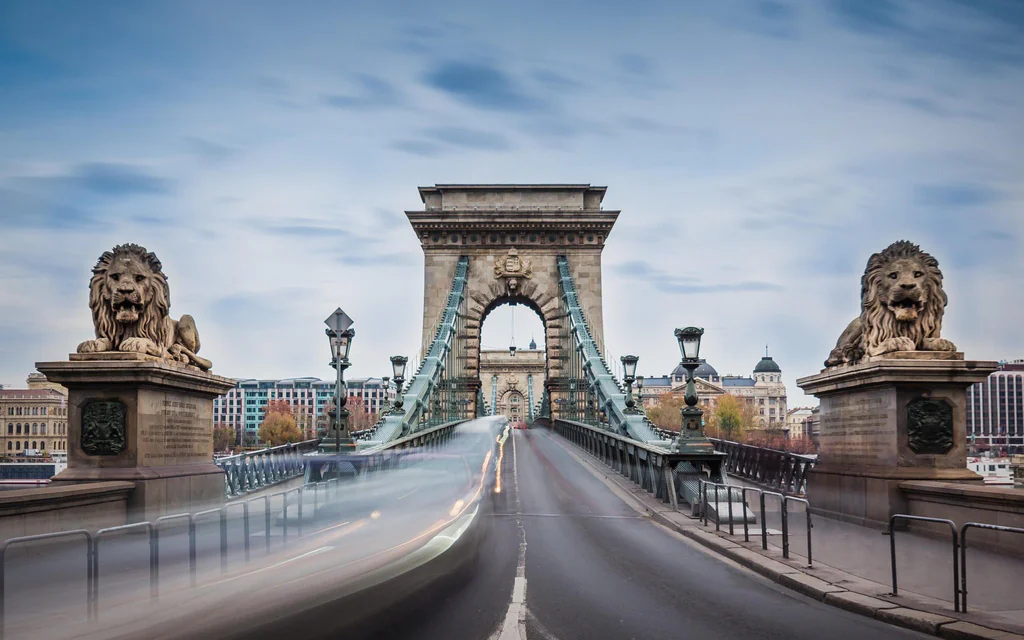
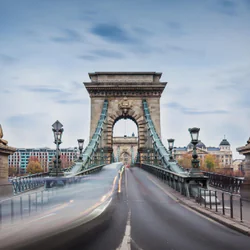
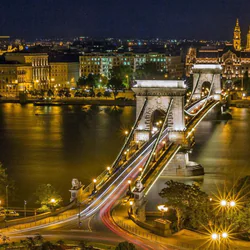
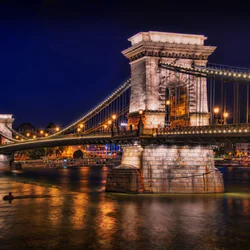
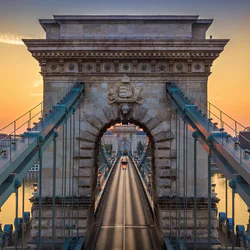
Széchenyi Chain Bridge
 Budapest, Széchenyi Lánchíd, 1051 Hungary
“The first structure to cross the Danube, built in the mid-1800s, is arguably the most striking of all the bridges in Budapest.”
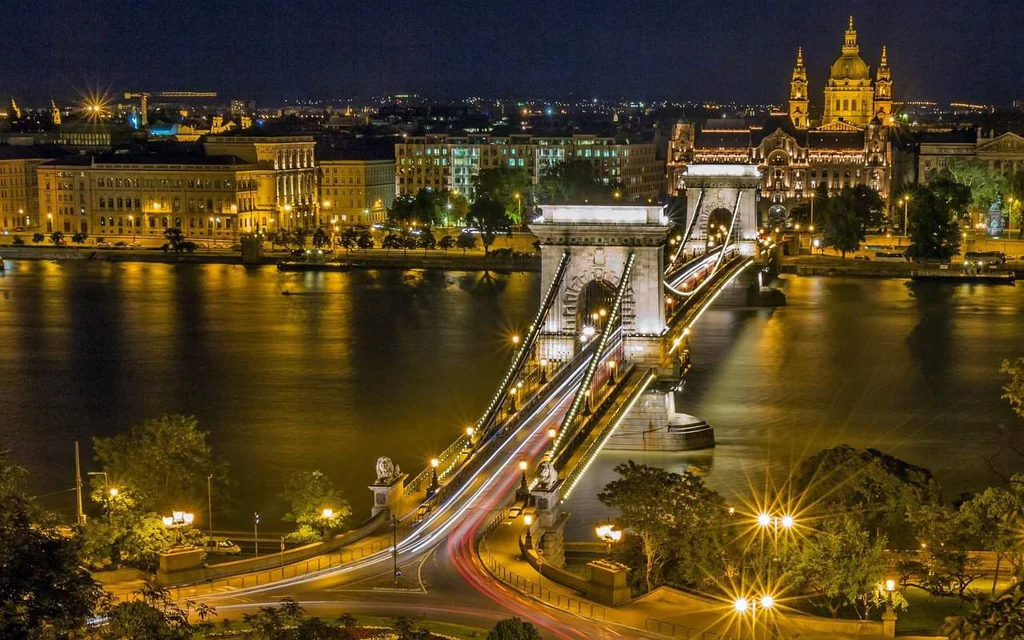
Széchenyi was the first chain bridge connecting Pest and Buda, and the second permanent bridge spanning the entire length of the Danube. This is one of the iconic works of Budapest, the most famous bridge of the Hungarian capital.
The construction of the bridge was proposed by Count István Széchenyi, one of the leading revered figures in 18th century Hungary. Construction was started in 1839 According to the plans of the British engineer, William Tierney Clark with the financial support of Baron György Sina, a Viennese financier (Austria). Construction was overseen by Scottish engineer, Adam Clark. The inauguration of the Széchenyi Chain Bridge took place on November 20, 1849.
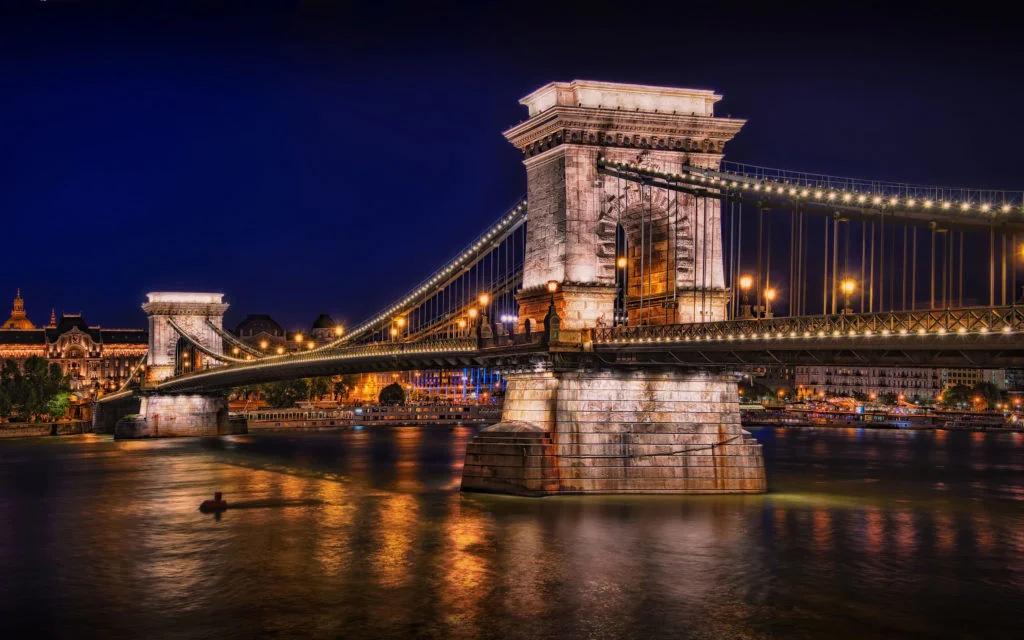
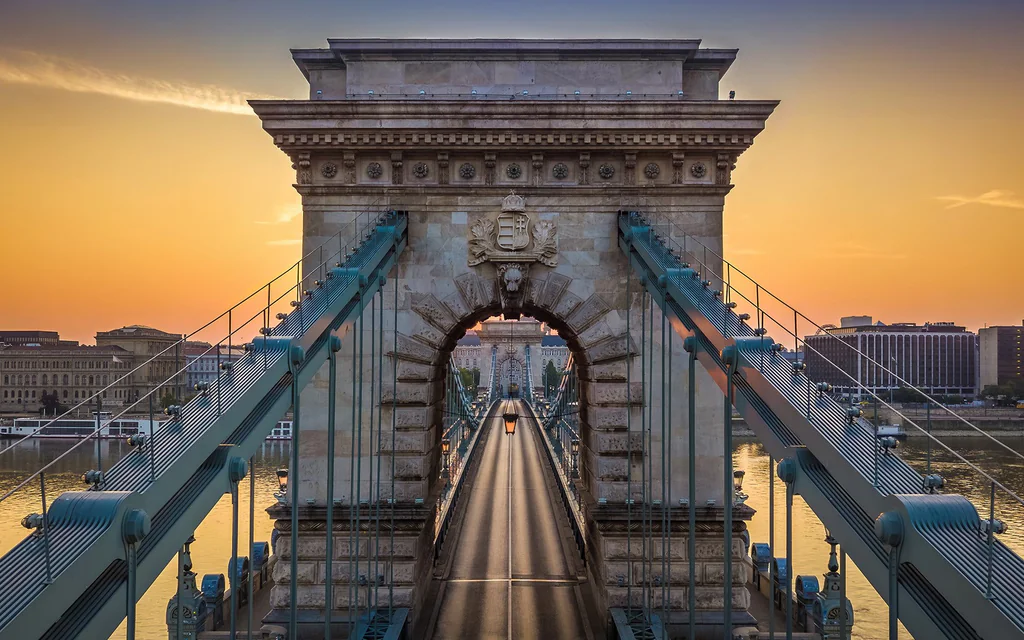
The iron chains, where the roadbed hangs, are held in place by two 48-meter-long riverbed posts in classical style. The name “Chain Bridge” comes from here. The links are made of iron plates several meters long, the parts of which are connected by large rivets that allow the chain to become a strong link. The chains were led through the top of the pillars, where they rested on large iron saddles. Between the two pillars, chains were hung low, outside the poles, leading to the riverbank where they went underground with slight cracks. Here, deep underground, visitors can find so-called chain-chambers, in which descending chain ends are anchored by giant iron blocks against the walls of the room.
The bridgehead columns are decorated with stone blocks in the shape of a lion's head and the Hungarian coat of arms with crowns and garlands. The stone lions located on both piers were carved by the sculptor János Marschalkó. At the end of the Buda, their rack also holds the coats of arms of the Széchenyi and Sina families cast by András Gál.
At the end of World War II, the retreating Germans blew up all of Budapest's bridges, among them the Széchenyi chain bridge on January 18, 1945. The bridge was almost completely destroyed, only its pillars remain. In the spring of 1947, rebuilding work began: the pylons were widened, the piers were widened, the self-built houses were demolished, a pedestrian subway was installed at the end of Buda. and the subway is completed side part of Pest. On November 20, 1949, exactly 100 years after its first inauguration, Budapest residents could finally celebrate the return of the city's most famous bridge.
The bridge's festive lighting was installed in 1937, during the visit of the King of Italy, Victor Emmanuel III and the Prime Minister of Austria, Schuschnigg. The current lighting system consists of two parts: the upper and lower parts of the poles are illuminated by reflectors, and a series of lamps running along the top links and at the edge of the sidewalk to emphasize the shape of the bridge.
Connecting Széchenyi Square in front of Gresham Palace to Adam Clark Square below Castle Hill Railway, the Széchenyi Chain Bridge is a symbol of bringing people together: from all walks of life, from the east and the west. of the city. Walking tours are the ideal opportunity to learn more about this famous monumental bridge.
Address: Széchenyi Lanchíd, 1051 Budapest