


See all results for ""

 Anytime
 Tiếng ViệtEnglish
 日本語
日本語 한국어
한국어 简体中文
简体中文 Français
 Deutsch
 Español
 Italiano
 Русский


 Login for Corporates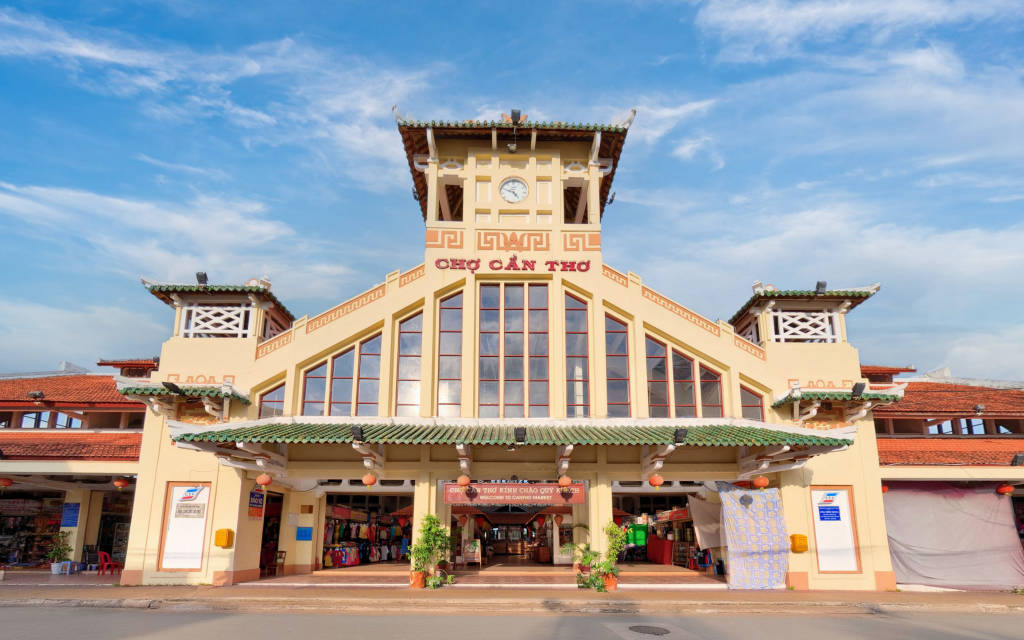
Can Tho Market
 Hai Ba Trung Street, Tan An Ward, Ninh Kieu District, Can Tho City, Vietnam
Can Tho Market, also known as Can Tho Ancient Market, located on Hai Ba Trung Street, Ninh Kieu District, Can Tho City, is not only a bustling market but also a cultural and historical symbol of the Mekong Delta. With its unique architecture and history of more than 100 years, Can Tho Market has witnessed the development and transformation of this city, and is also one of the most attractive tourist destinations in Can Tho.
Can Tho Market (also known as Can Tho ancient market) is located on Hai Ba Trung Street, Ninh Kieu District, in the city of Can Tho. It is not only a bustling marketplace but also a cultural and historical symbol of the Mekong Delta. With its unique architecture and over 100 years of history, Can Tho Market has witnessed the development and changes of this city, and it remains one of the most attractive tourist destinations in Can Tho.
History and Development
Can Tho Market has its origins during the French colonial period, when it was built around 1915 in Tan An village, under the Dinh Bao district. Prior to that, Can Tho was part of the Vinh Thanh region, which included Long Xuyen and Chau Doc. Under the Minh Mang reign, Chau Doc was renamed An Giang, while Can Tho became known as Phong Phu District. Can Tho Market quickly became a significant commercial center of the Mekong Delta, with various names such as Luc Tinh Market, Hang Duong Market, and later, Can Tho Market.
According to the "Monographie de la province de Can Tho" (1904), Can Tho Market was ranked as one of the top 10 largest markets in the province, strategically located along the Ba Thac River (now the Hau River). At that time, Can Tho produced 7.5 million bushels of rice annually, a third of which was consumed domestically, and the rest was exported. Can Tho Market became a busy trading hub, attracting not only local residents but also steamships from Saigon, connecting Can Tho with other southern provinces like Soc Trang, Chau Doc, and My Tho.
From Luc Tinh Market to Today’s Can Tho Market
Today, Can Tho Market is not only a commercial center but also a place where various cultures converge. Throughout the 20th century, the market has contained several renovations and refurbishments. Notably, in 2005, the market was repaired and restored by the city government, maintaining its traditional architectural style while incorporating modern improvements to meet the needs of visitors.
Currently, Can Tho Market is famous not only for consumer goods like fruits, seafood, and clothing but also for selling famous local specialties of the Mekong Delta. It has become an essential tourist destination in Can Tho, where visitors can explore the region's culture, customs, and cuisine.
Unique Architecture
The architecture of the market's main hall is one of the standout features that makes this market a special landmark. Covering an area of 1,700 square meters, the market is designed in a T-shape, with its front facing Hai Ba Trung Street. The structure mainly uses reinforced concrete, with a tiled roof, ensuring durability and solidity.
The market's roof is designed in the traditional "coincidental roof" style, with three overlapping vaulted layers that create a spacious and airy interior.
The center of the market features a large tower, decorated with a clock and motifs such as fireballs and dragon clouds, symbolizing a blend of the old and modern. On either side of the main tower are two smaller towers, creating a symmetrical and harmonious appearance. The market’s geometric decorations, stylized reliefs, and glazed tile canopy add elegance and luxury to the building.
The combination of classical architecture and the surrounding environment, including the bustling streets and green parks, has made Can Tho Market not only a commercial space but also an artistic masterpiece, attracting tourists for sightseeing and photography.
Can Tho Market – A Symbol of the City
Can Tho Market is recognized as a city-level historical and cultural relic, designated by the People's Committee of Can Tho City in 2012. It is not only a commercial hub but also a place that holds significant cultural and historical values for the city. The image of the market's main hall, with its three prominent towers, has become a symbol in the city's logo, representing the development and vitality of this land.
Can Tho Market preserves the traditional values of the Mekong Delta, where visitors can find unique souvenirs, enjoy local delicacies such as Vietnamese pancakes, crab noodle soup, and fish hotpot, while experiencing the lively atmosphere of a traditional market. It is not only a destination for locals but also attracts thousands of tourists from all over the world each year.
Restoration and Development
With more than a century of history, Can Tho Market has gone through many ups and downs. After experiencing deterioration, the market was restored in 2005. The restoration work revived the original shape and architecture of the market while upgrading services to better cater to visitors. The market's architecture has been preserved, perfectly blending its historical beauty with modern elements, acknowledging respect for the cultural heritage.
Today, Can Tho Market is not just a tourist attraction but also a cultural exchange hub, bridging the past and the present. The market serves as a community gathering place where locals and tourists can interact, discover new things, and preserve the unique cultural values of the Mekong Delta.
With over 100 years of history, Can Tho Market is not just a place for buying and selling goods, but an integral part of the cultural and historical landscape of Can Tho. Its unique architecture, vibrant atmosphere, and rich array of specialties have made it an appealing destination for tourists. Despite the many challenges it has faced, Can Tho Market remains a cultural symbol of the Mekong Delta, well-preserved and continuously developing.