


See all results for ""

 Anytime
 Tiếng ViệtEnglish
 한국어
한국어 日本語
日本語 简体中文
简体中文 Français
 Deutsch
 Español
 Italiano
 Русский


 Login for Corporates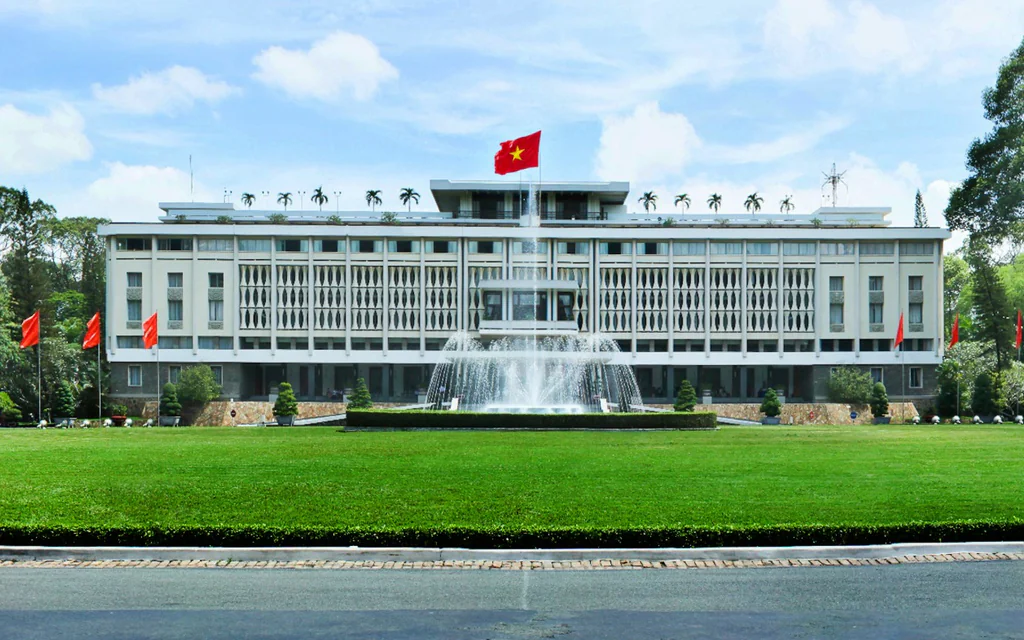
Independent Hall
 135 Đ. Nam Kỳ Khởi Nghĩa, Phường Bến Thành, Quận 1, Thành phố Hồ Chí Minh, Việt Nam
The Reunification Palace, also known as the Independence Palace, is listed as a historical relic, is the place that has witnessed the great changes of Ho Chi Minh City (formerly known as Saigon) and brought in its own charm. blend of Eastern and Western cultures.
After occupying the Luc Nam Ky provinces (Bien Hoa, Gia Dinh, Dinh Tuong, Vinh Long, An Giang, Ha Tien (1867), in 1868, the French government designed and built the mansion for the Governor of Cochinchina. in the center of Saigon.Once completed, it was called the Norodom Palace.
From its completion in 1867 until 1871, the palace was used by the Governor of Cochinchina, called the Governor's Palace of Cochinchina. From 1887 to 1945, many French Governor Generals used this mansion as a place to live and work, so the palace was called the Palace of the Governor General.
In March 1945, the Japanese fascists defeated France and monopolized Indochina, Norodom Palace became the workplace of the Japanese government in Vietnam. However, after the Japanese Empire was defeated in World War II in September 1945, Saigon fell into the hands of the French and Norodom Palace returned to become the working headquarters of the French High Commissioner in Indochina, a position roughly equivalent to that of Governor-General in the colonial era.
By the end of 1945, France withdrew from Vietnam. Norodom Palace was handed over to the representative of the Saigon government, at that time under the Vietnamese National Government at that time.
In 1955, Prime Minister Ngo Dinh Diem deposed Head of State Bao Dai and became President of the Republic of Vietnam. Ngo Dinh Diem decided to change the name of this palace to Independence Palace. Since then, the Independence Palace has become a symbol of the government as well as the residence and working place of the President of the Republic of Vietnam (so it is also known as the Presidential Palace). According to some beliefs about feng shui, the Palace is placed at the head of a dragon, so the palace is also called the Dragon Head Palace.
In 1962, the coup faction bombed the main left wing of the palace. Because it could not be restored, Ngo Dinh Diem razed and built a new mansion right on the old ground according to the design project of architect Ngo Viet Thu. He was the first Vietnamese to win the Khoi Nguyen Prize in the architecture category, and remains the only one to date. The work was interrupted by the assassination of Ngo Dinh Nhiem's family in November 1963. The new palace was inaugurated on October 31, 1966, the chairman of the ceremony was Nguyen Van Thieu, Chairman of the National Leadership Committee. From this day on, the newly built Independence Palace became the residence and working place of the President of the Republic of Vietnam. President Nguyen Van Thieu lived in this palace from October 1967 to April 21, 1975.
On April 8, 1975, the palace was once again bombed for the purpose of assassinating Nguyen Van Thieu, causing negligible damage.
On April 30, 1975, a convoy of tanks under the command of the Vietnam People's Army rammed the main gate and entered the palace. Liberation Army Lieutenant Bui Quang Than, company leader, commander of vehicle 843, lowered the flag of the Republic of Vietnam and raised the flag of the National Front for the Liberation of South Vietnam on the roof of the palace, ending the war. Vietnam.
Today, the Reunification Palace is open to welcome visitors from all over the world to visit and learn its history full of ups and downs. Inside the Palace, in addition to objects from the past that are still preserved and artifacts of national treasure, there are also displays of old articles and pictures recording the process of formation, construction, historical landmarks and events. The important event took place at the Independence Palace.
Architectural features
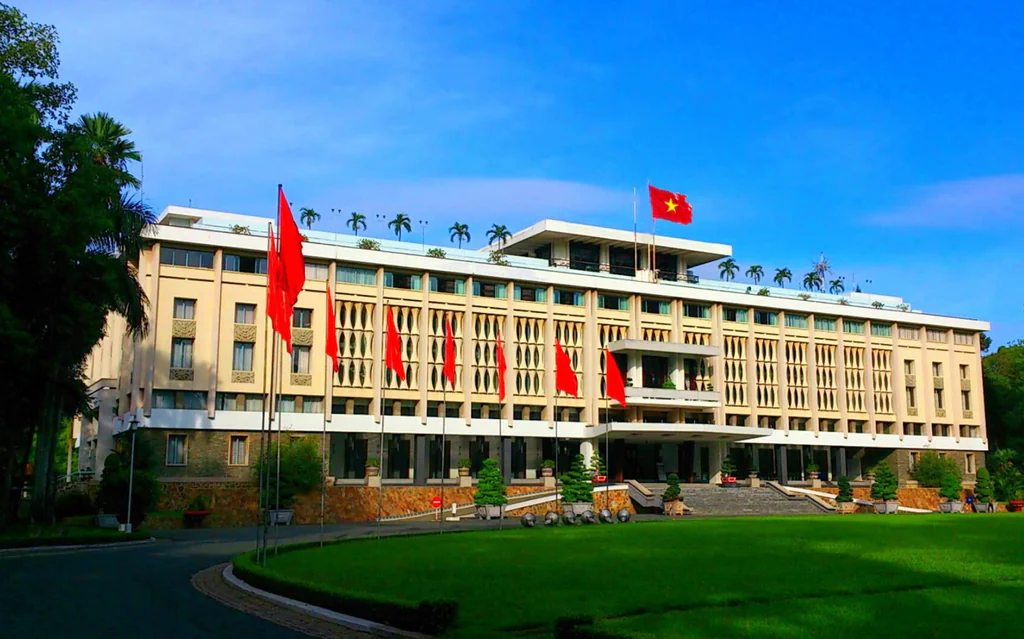
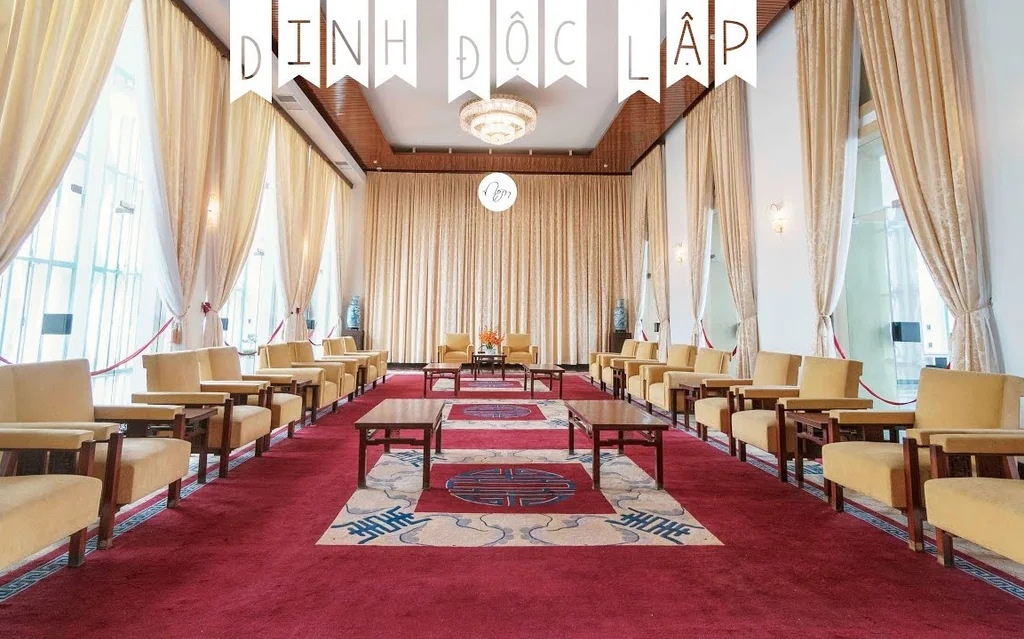
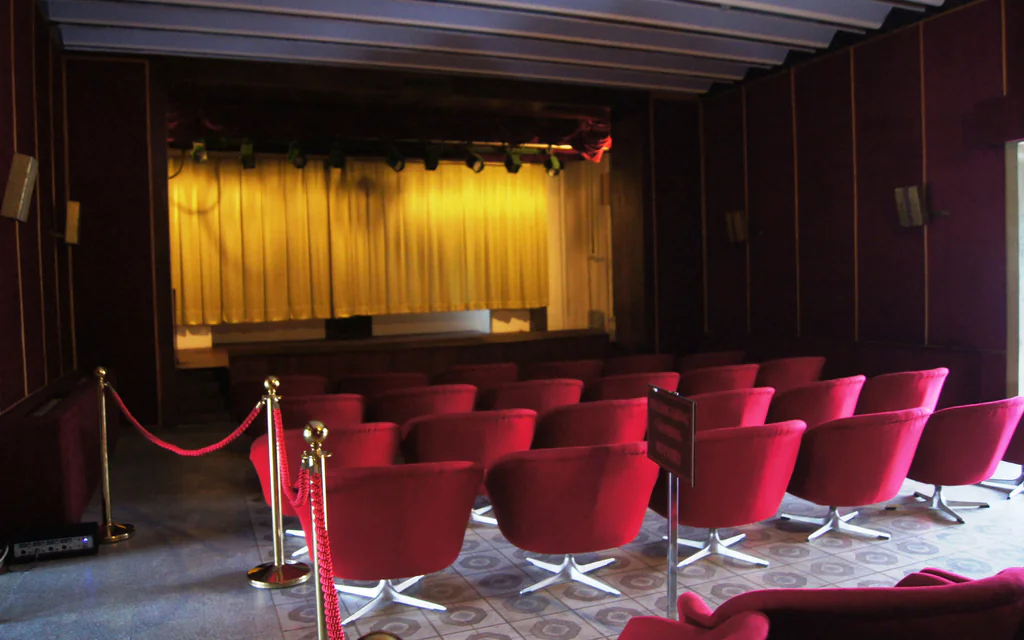
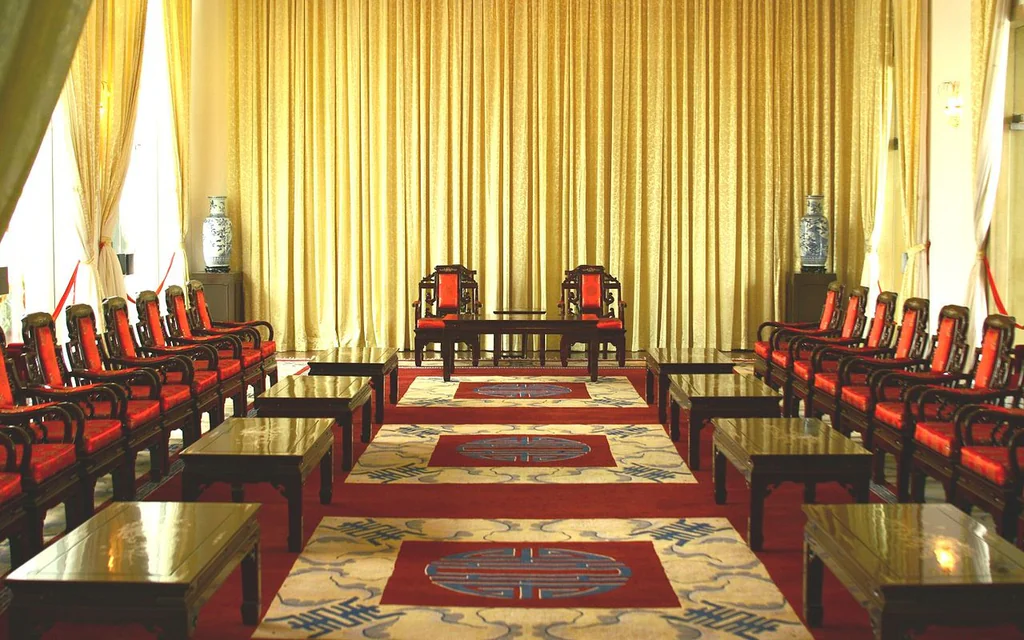
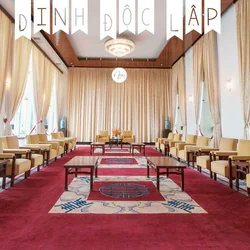
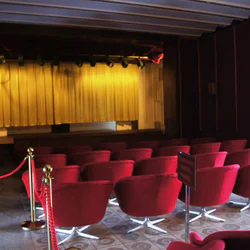
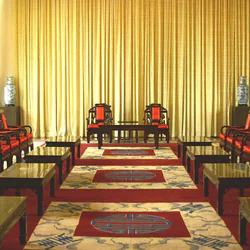
The palace has a height of 26m, built on an area of 4,500m², usable area of 20,000m², including 3 main floors, 1 terrace, 2 mezzanines, 1 ground floor, 2 basements and a terrace for aircraft helicopter landed. More than 100 rooms of the palace, depending on the purpose of use, are decorated in different styles, including staterooms, meeting rooms of the Cabinet Council, offices of the President and of the Vice President, room for submission of credentials, banquet room...
The unique feature in the architecture of this mansion is the harmonious combination of modern architectural art with traditional oriental architecture.
Architectural beauty is also shown through the elegant stone flower curtain on the second floor. The stone flower curtain is inspired by the gates of the Hue Imperial Palace, both enhancing the beauty of the Palace and being able to receive a lot of sunlight.
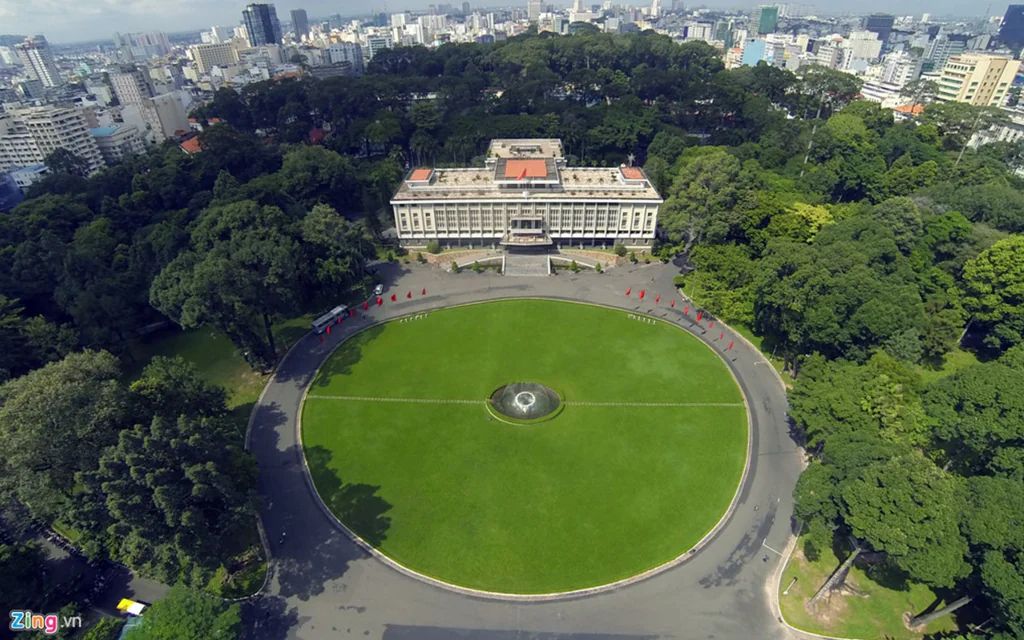
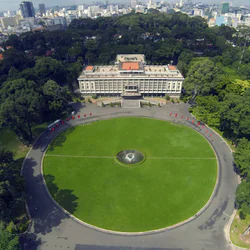
On the front yard of the Palace is an oval lawn, 102 meters in diameter. The green shape of the grass creates a soothing and refreshing feeling for guests as soon as they step through the gate. Running along the width of the yard is a semicircular lake. In the lake, there are lotus flowers and water lilies that evoke images of peaceful lakes in ancient temples and pagodas of Vietnam.
The left side of the Palace faces Nguyen Thi Minh Khai Street, there, there is an octagonal house, 4 meters in diameter, built on a high mound, with an ancient curved roof to make a place to relax and cool off. . Around the Palace, there are green lawns, ancient gardens, potted plants and four tennis courts behind the main building.
Business hours:
| Daily | 8:00 - 17:30 |
*Except New Year holidays and anniversaries.
**Last ticket sold at 16:00
Fare:
| Adults | 40,000 VND |
| Student | 20,000 VND |
| Children | 10,000 VND |
Tel: +84 28 3822 3652
Website: https://dinhdoclap.gov.vn/