


Xem tất cả kết quả cho ""

 Ngày bất kỳ
  Tiếng Việt
 English
 日本語
日本語 한국어
한국어 简体中文
简体中文 Français
 Deutsch
 Español
 Italiano
 Русский


 Đăng nhập cho Doanh nghiệp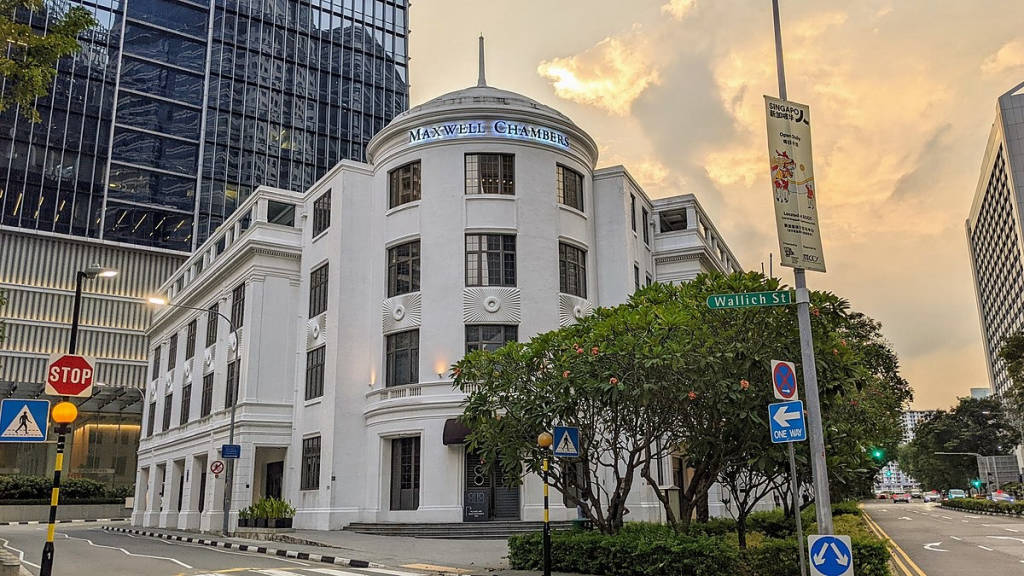
Custom House Building
 32 Maxwell Rd, #03 01, Singapore 069115
The building was designed by Frank Dorrington Ward, chief architect of the Public Works Department (PWD) from 1928 to 1939.
The Custom House Building, formerly located on Maxwell Road, has been the headquarters of the Customs and Excise Department (now Singapore Customs) since June. 1932 to August 1989. The building was designed by Frank Dorrington Ward, chief architect of the Public Works Department (PWD) from 1928 to 1939. The building was approved by the Urban Redevelopment Authority (PWD). URA) awarded conservation status in 2007. The Custom House was renamed Maxwell Chambers in 2010 and designated a historic site by the National Heritage Board (NHB) in the same year.
The four-story former Custom House was commissioned and built by PWD in 1932 at a cost of $313,000. It was originally built to house the Customs and Excise Department, one of Singapore's oldest tax collection and border protection agencies. Other occupants in the building are the Office of Film Censorship and the Maxwell Street Post Office. The Customs and Excise Department handles administrative functions such as issuing import and export permits and collecting revenues, and conducts special investigations. From the late 1940s to the 1970s, department officials used the Custom House as a base to crack down on the smuggling of contraband and drugs, as well as the illegal distillation of alcohol.
During the Japanese occupation of Singapore, the building became a hiding place for foreign customs officers and their families who fled escape from Malaya. It was also a shelter for Australian soldiers rescued after being attacked by the Japanese. Customs also played an important role in war relief funding efforts by collecting taxes on fireworks, cards, and rubber. Over the years, Custom House has seen many changes in the organization and name of the customs authority.
Custom House is designed around a courtyard surrounded by rooms with windows to let light and air in. This design worked well in Singapore's hot and humid climate before the days of air conditioning. Its main entrance includes a curved facade that demonstrates how a building can be designed and built around a street corner. Other notable design features include abstract sun-like motifs and steel-framed windows commonly found in 1930s architectural designs.
< span style="font-weight: 400;">Custom House was renamed to Maxwell Chambers after officially opening its doors as an integrated alternative dispute resolution complex in January 2010. Opening attended by government officials as well as experts and practitioners from the fields of international legal and dispute resolution. Billed as the world's first integrated alternative dispute resolution facility using state-of-the-art technology, the center has 14 fully equipped hearing rooms and 12 preparation rooms, and offers services translation, recording and secretarial.
Maxwell Chambers is one of five winners of the URA Architectural Heritage Award. 2012.