


See all results for ""

 Anytime
 Tiếng ViệtEnglish
 한국어
한국어 日本語
日本語 简体中文
简体中文 Français
 Deutsch
 Español
 Italiano
 Русский


 Login for Corporates

ALONG THE WHITE SAND BEACH
 Quãng Bình, Việt Nam
The image of the sandy area in the poem Mother Suot by To Huu is deeply ingrained in the minds of many generations whenever this land is mentioned. The sand slope starts from Nhat Le estuary, stretching endlessly, from Bao Ninh to Hai Ninh, everywhere is sand, bright yellow and burning...
Hoang Bui - VietnamAirlines
The image of the sandy area in the poem Mother Suot by To Huu is deeply ingrained in the minds of many generations whenever this land is mentioned. The sand slope starts from Nhat Le estuary, stretching endlessly, from Bao Ninh to Hai Ninh, everywhere is sand, bright yellow and burning...
But that was many years ago, and now the sandbank has changed a lot. From Bao Ninh to Hai Ninh today, it is no longer “golden sand on this dune, pink dust on that mile” anymore, but the sandbank has truly changed its appearance. The entire sandbank is full of vitality, youthful and dynamic with new constructions, spacious houses, bright lights in the house, in the yard, on the boat, on the sea… Everything is full of vitality, bustling with a positive rhythm with people actively moving to keep up with the new life.
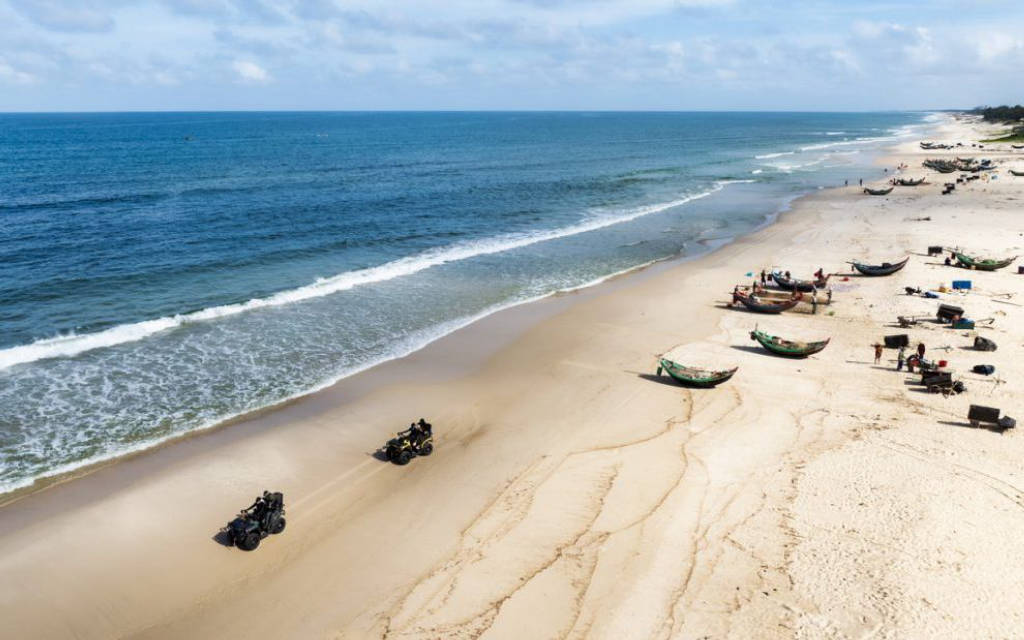
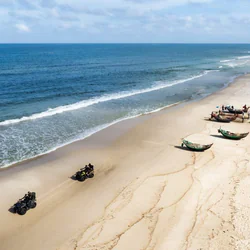
On a beautiful morning, the sun was like silver glittering on the sea surface. My group of friends and I decided to use ATV to visit the sand area in our own way. From Bao Ninh beach square, following thousands of waves, the ATV took us to Hai Ninh village. The salty sea breeze blew endlessly, making our hair messy. Along the sandbank, there was a wild plant, blooming with flowers shaped like sea urchins with thorns all around, people called it the spike flower. With the wind, the spike flowers rolled around as if racing with the convoy along the sandbank. A few crabs were bewildered, listening to the sound of the motorbikes, rushing quickly to the small holes in the sand. Rows of ancient casuarina trees with rough trunks swayed in the wind.
After driving for more than 30 minutes, small coastal hamlets began to appear. At the first turn, we followed the concrete road to Hai Ninh village. Originally a poor sand village, but the people knew how to "turn rocks and stones into cassava and rice". When the rainy season came, people competed to dig sand to grow crops. Strangely, the cassava and sweet potatoes grown on the sand had a unique nutty taste that could not be found anywhere else. The villagers recounted that in the past, sweet potatoes replaced rice, and squash was food. Mashing sweet potatoes into a bowl, pouring squash soup with sea crabs, and it has remained sweet until now.
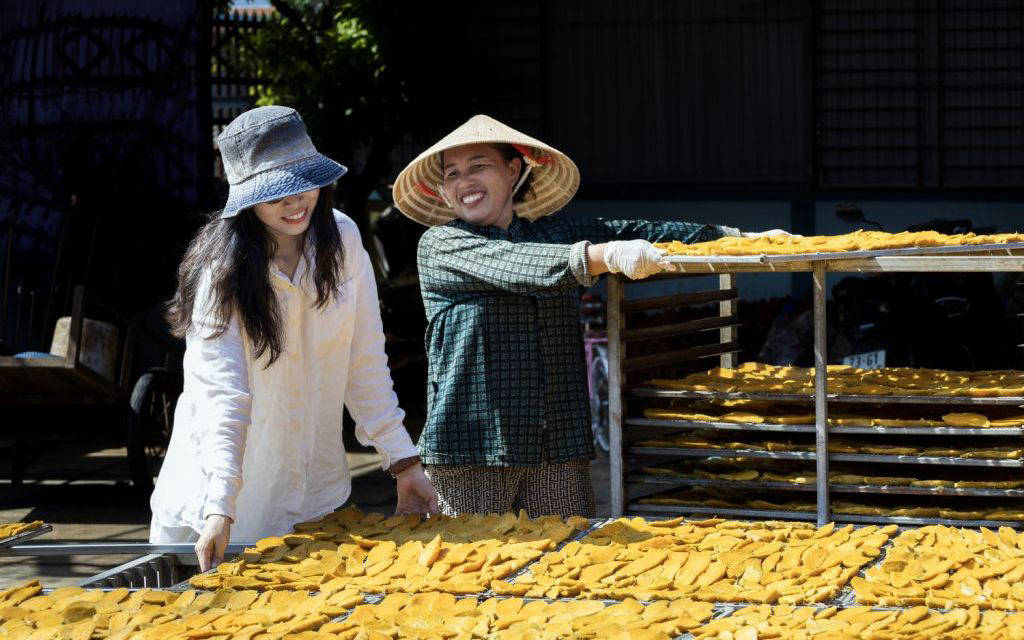
January two sweet potatoes - that proverb is a saying about the cuisine of the sand village, a historical mark of a time of famine. Nowadays, sweet potatoes of the sand village have become a rustic specialty used as gifts for tourists from near and far. Stopping at the largest sweet potato processing facility in the village, we were surprised by the urgent working atmosphere of the people. After chatting, I was told by the simple people about their job. After harvesting, sweet potatoes must be covered with cloth blankets for about 3-5 days to let them ferment, then washed, cooked, peeled, sliced and dried in the sun to be chewy and sweet. It sounds simple, but only when you sit and observe can you feel that the sweet and hygienic slices of sweet potatoes are certainly thanks to the meticulousness and sweat of the people who make them. Sweet potatoes are now beautifully packaged, following tourists to all regions. To meet market demand, many dried sweet potato processing facilities in Hai Ninh have invested in dryers, ensuring sweet potato processing even during periods when there is no sun.
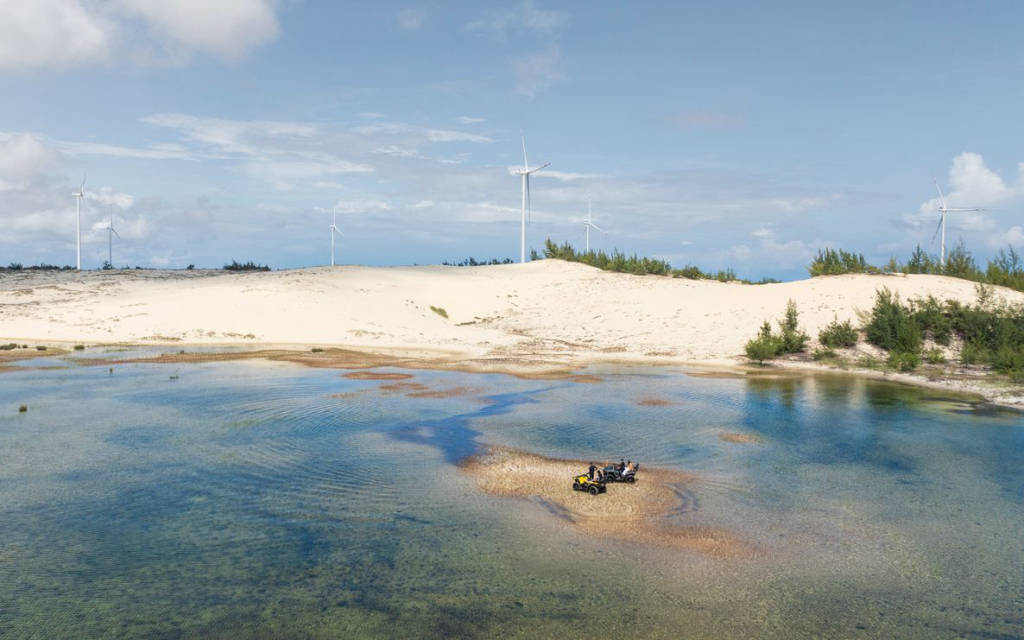
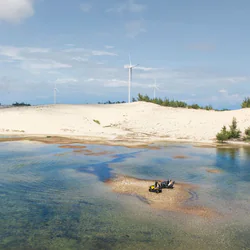
Hai Ninh village has changed a lot more than before, especially here has sprung up a whole "wind power field". Giant wind power poles are located between sand dunes and lakes, creating a poetic "mini desert", becoming a new sightseeing and check-in spot for young people. In the middle of the vast white sand space, the wind power poles reflect on the shimmering lake. After freely posing with the off-road vehicle to take pictures, we drove around the poles to admire. When the sun was at its zenith, the group stopped at a coastal restaurant. A light lunch with a bowl of squid noodles caught by the locals from the sea in front of the village. After finishing the meal, each person found a hammock to lie down and enjoy the cool sea breeze.
The whispering waves tell the story of the sea and people. The sea has always provided fresh seafood for coastal residents. The people of Hai Ninh are the same, living on the sand but not monopolizing one profession, many people in Hai Ninh also work as fishermen, living on the sea for generations. Along the village beach are countless boats lined up after a night of fishing, reaching the shore.
The off-road vehicle continued to take us back, the sound of the engine hitting the sound of the waves, blending with the melodious sound of the wind following the music of the casuarina forest blocking the sand along the edge of the sea. The sand seemed to cling to our clothes. A short trip but full of new experiences in the sandy area that made everyone satisfied.