


See all results for ""

 Anytime
 Tiếng ViệtEnglish
 한국어
한국어 日本語
日本語 简体中文
简体中文 Français
 Deutsch
 Español
 Italiano
 Русский


 Login for Corporates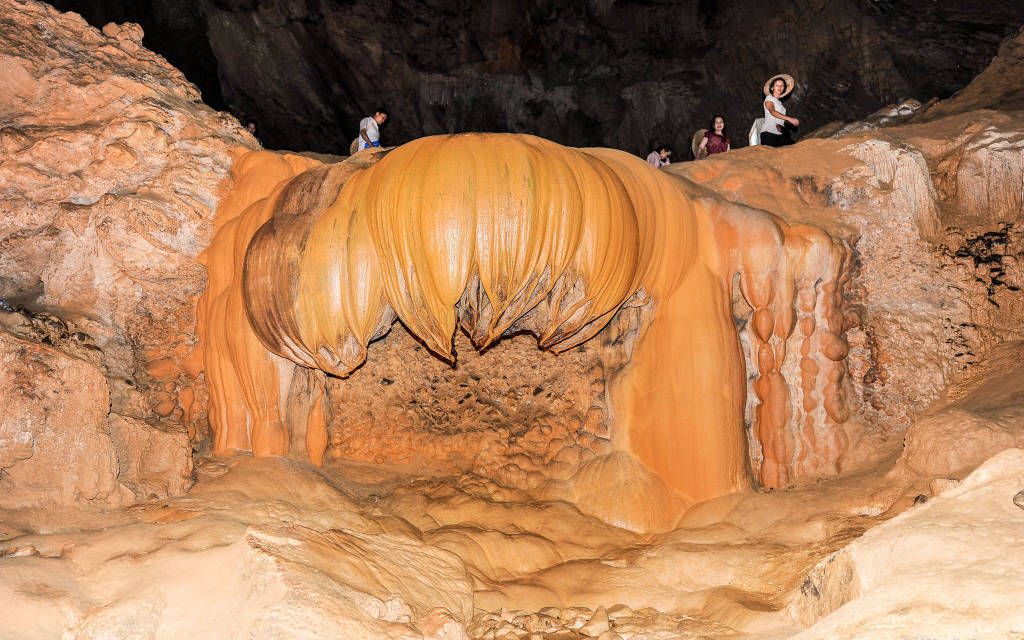
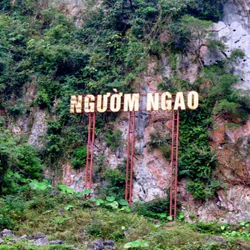
Nguom Ngao Cave
 Gun Hamlet, Dam Thuy Commune, Trung Khanh District
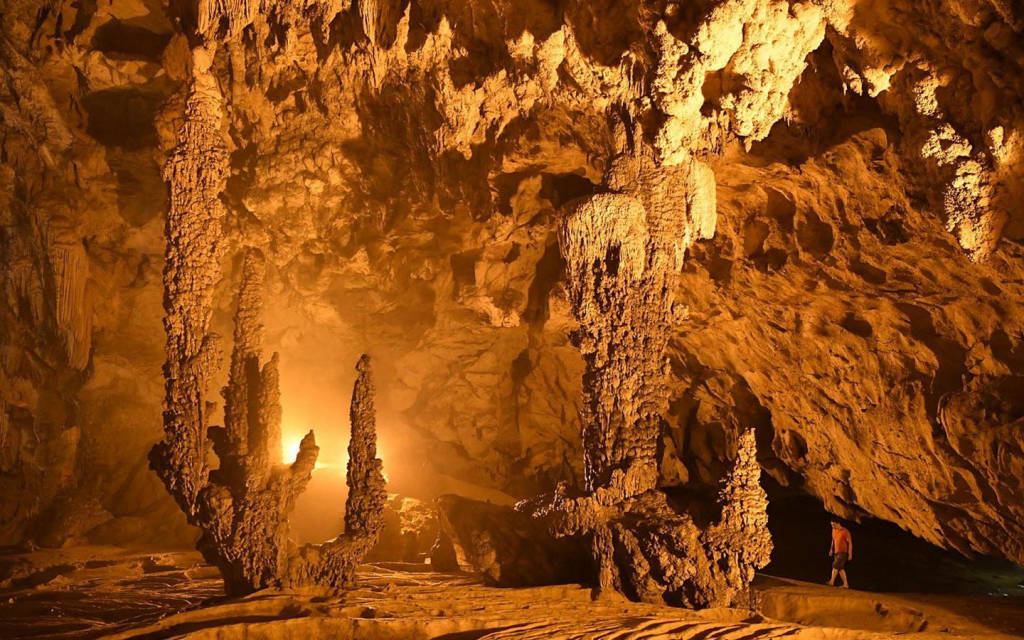
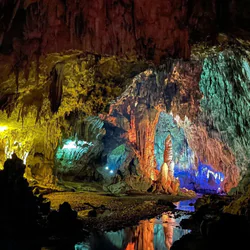
Discover Nguom Ngao Cave, a magnificent limestone cave featuring a dazzling system of golden stalactites and fascinating formations, often described as an underground palace.
1. Overview of Nguom Ngao Cave – A Masterpiece of Nature
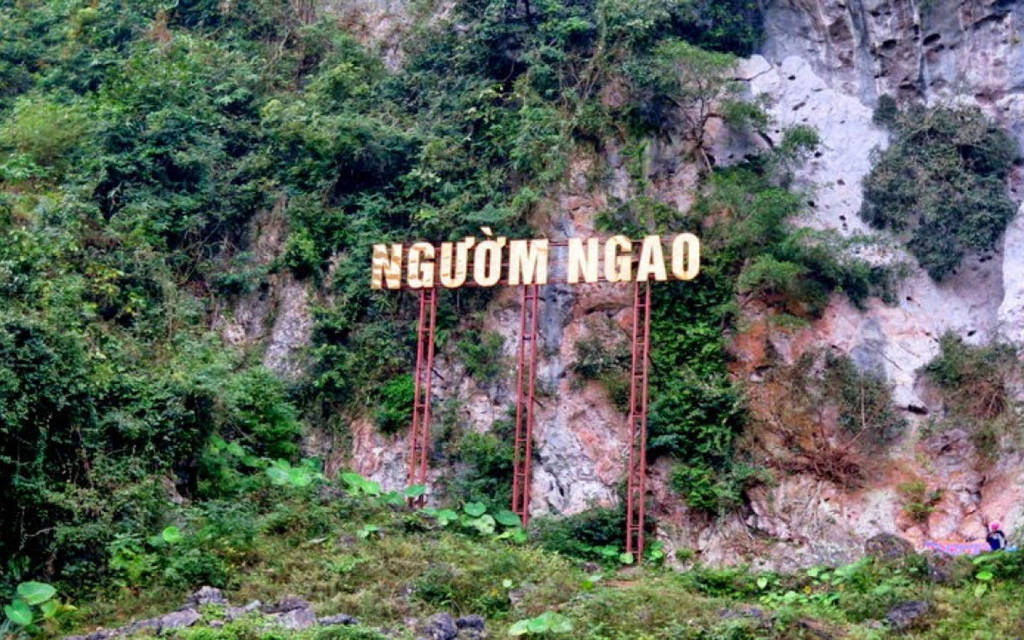
Located just about 3km from Ban Gioc Waterfall, Nguom Ngao Cave is a limestone cave formed approximately 300–400 million years ago. In the Tay ethnic language, “Nguom” means cave and “Ngao” means tiger; “Nguom Ngao” literally translates to Tiger Cave. This name is associated with local legends of fierce tigers once inhabiting the cave, or with the echoing sounds created by underground streams flowing within the rock walls, reminiscent of a tiger’s roar.
1.1. Decoding the Brilliant Golden Hue of the Stalactites
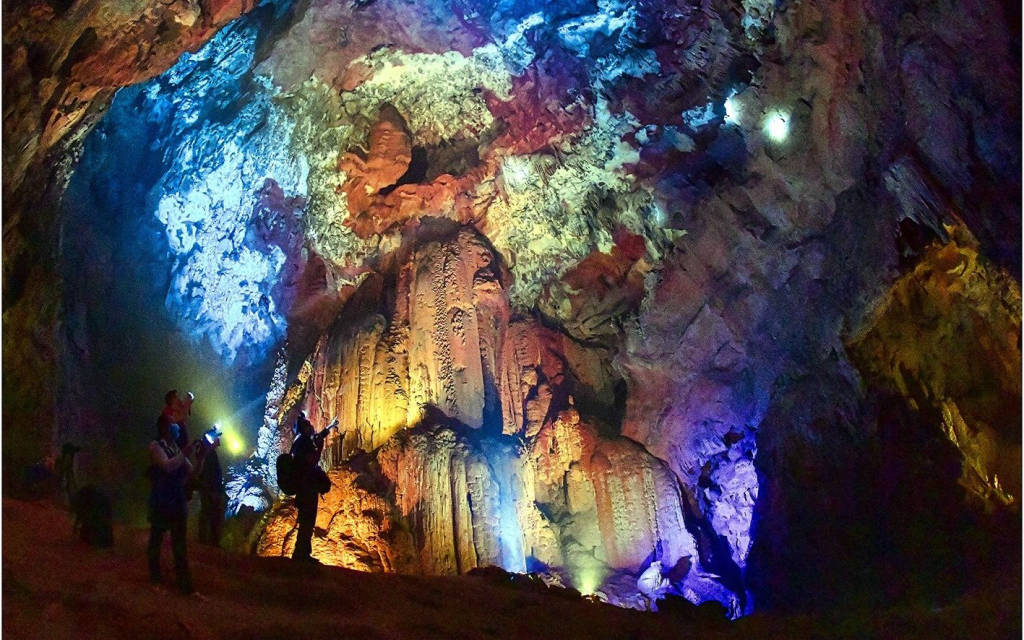
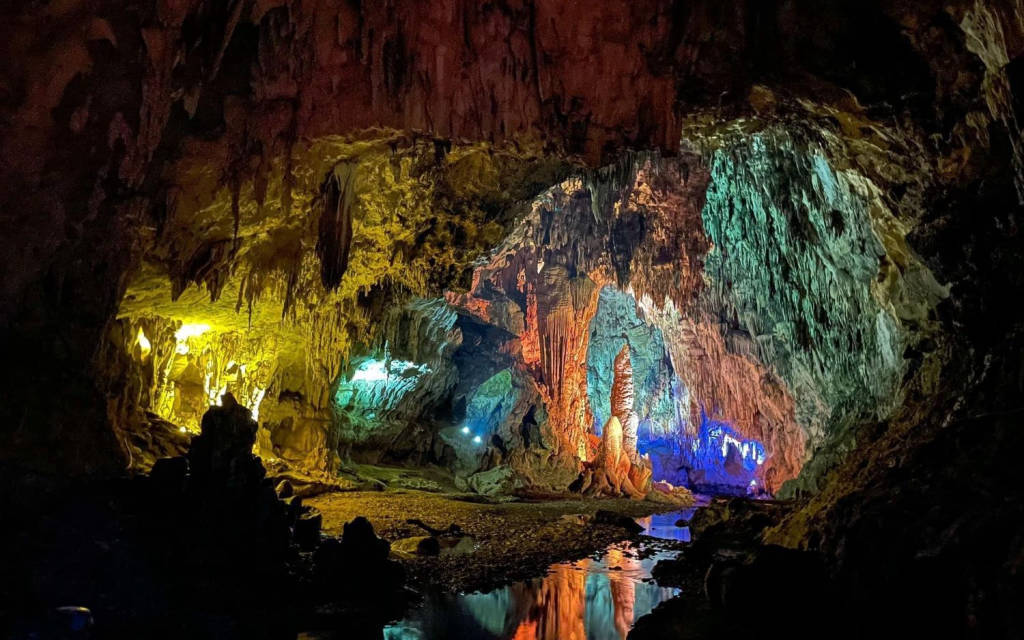
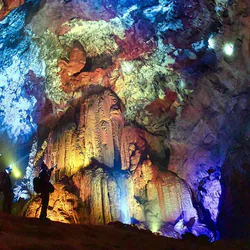
The most distinctive feature that sets Nguom Ngao apart from other caves in Vietnam is the coloration of its stalactite system. Most formations here display a lustrous golden or deep pink hue rather than the typical gray-white. According to geologists from the UNESCO Global Geopark Non Nuoc Cao Bang, this coloration results from underground water dissolving large amounts of iron oxide and unique minerals within the limestone layers of the Trung Khanh area. Over millions of years, as water drips and minerals crystallize, these elements create vivid layers of color, making the cave resemble a gold-plated palace illuminated by artificial lighting.
1.2. Cave Structure and Fascinating Natural Formations
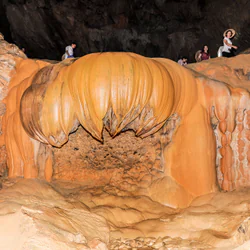
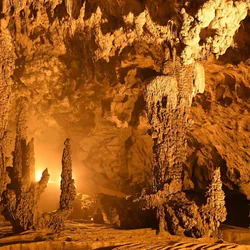
Nguom Ngao Cave has a surveyed total length of over 2,000m with three main entrances: Nguom Lom, Nguom Ngao, and Ban Thuon. The interior space is vast, featuring soaring ceilings and countless stalactites and stalagmites meticulously sculpted by nature. Visitors will easily encounter formations resembling elements of the natural and spiritual world, such as Buddha statues, mother-and-child figures, coral trees, ships, and most notably the “Inverted Lotus Platform,” considered one of the most exquisite symbols of this site.
2. Geographic Location and Travel Directions
The site is located in Gun Hamlet, Dam Thuy Commune, making it an ideal stop on journeys exploring Vietnam’s northern border region.
2.1. Coordinates and Route Guidance
From Cao Bang City, visitors travel approximately 90km along Provincial Road 206 toward Ban Gioc Waterfall. Upon reaching Dam Thuy Commune, signposts direct travelers to Nguom Ngao Cave. The access road winds through rustic Tay villages and towering limestone mountains, offering a peaceful and authentic Northeastern highland atmosphere.
2.2. Choosing a Visiting Route
Currently, the site offers two main touring routes. The traditional route is about 1km long along a paved walkway, suitable for visitors of all ages. The second option is the “cave trekking route” designed for adventure seekers, leading deep into the Ban Thuon branch to explore more pristine areas featuring underground streams that flow year-round.
3. Best Time to Visit and Practical Information
The cave maintains a stable temperature of 18–25°C throughout the year, offering a cool retreat in summer and a warm shelter in winter, making it suitable to visit at any time.
3.1. Seasonal Differences
During the rainy season (June to September), water dripping from rock crevices increases, and the sound of underground streams echoes through the cave, creating a vibrant atmosphere. In the dry season (October to May of the following year), the cave floor is drier, making it easier to move around and photograph the brilliantly illuminated stalactite formations.
3.2. Reference Ticket Prices
According to regulations of the Cao Bang Provincial Tourism Management Board and on-site practice, entrance fees are publicly listed to support conservation and maintenance efforts. Reference prices for the traditional route typically range from 30,000 VND to 50,000 VND depending on whether the visitor is an adult or a child. For adventure trekking routes that include guides and specialized equipment, fees are higher. These funds play a vital role in protecting the cave’s delicate ecosystem.
4. Tips for a Complete Nguom Ngao Experience
To ensure a safe and fulfilling journey, visitors should keep in mind a few practical tips when exploring the underground world.
4.1. Preparing Suitable Clothing and Equipment
As the cave floor is often damp or slippery due to dripping water, sturdy sports shoes or trekking footwear with good grip are recommended. Temperatures inside the cave are always cooler than outside, so bringing a light jacket helps prevent catching a cold. To capture sharp images of the stalactites, consider bringing a tripod or a smartphone with strong low-light photography capabilities, as the cave interior is deep and illuminated mainly by artistic lighting.
4.2. Remembering the Rules to Protect a Million-Year Treasure
The stalactite system inside the cave is extremely delicate and takes millions of years to form just one centimeter. Therefore, “do not touch the stalactites” is the most important rule, as sweat and bacteria from human hands can darken the formations or halt their growth. Leave only footprints and take away beautiful photographs—never break rocks or litter—so that Nguom Ngao remains a splendid natural masterpiece for generations to come.