


""에 대한 모든 결과 보기

 언제든지
언제든지 
 Tiếng Việt
 English한국어
 日本語
日本語 简体中文
简体中文 Français
 Deutsch
 Español
 Italiano
 Русский


 기업 로그인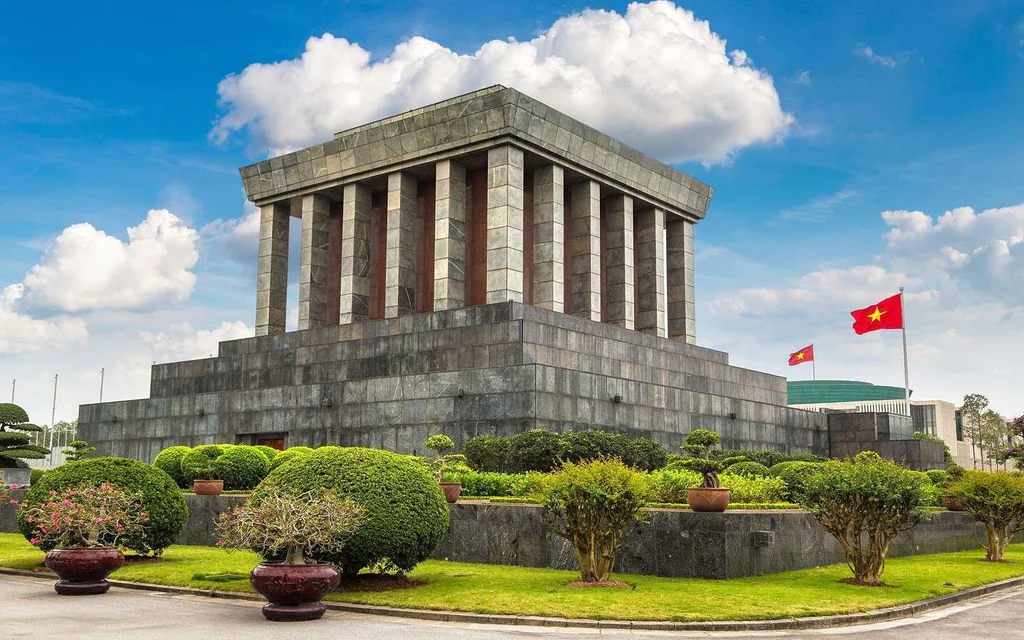
Ho Chi Minh Mausoleum
 Lăng Chủ tịch Hồ Chí Minh, Hùng Vương, Điện Biên, Ba Đình, Hanoi, Vietnam
President Ho Chi Minh, the beloved leader of Vietnam, passed away on September 2, 1969. To honor his memory, the Politburo decided to construct a mausoleum. Construction began on September 2, 1973, and was completed on August 29, 1975, at Ba Dinh Square, the very spot where Ho Chi Minh read the Declaration of Independence on September 2, 1945.
President Ho Chi Minh, the beloved leader of Vietnam, passed away on September 2, 1969. To honor his memory, the Politburo decided to construct a mausoleum. Construction began on September 2, 1973, and was completed on August 29, 1975, at Ba Dinh Square, the very spot where Ho Chi Minh read the Declaration of Independence on September 2, 1945. Designed with a "national and modern" theme, the mausoleum's architecture resembles a blooming lotus flower. Since opening, it has welcomed over 55 million visitors, including nearly 10 million international guests. The square in front of the mausoleum has been the site of numerous significant national events and cultural activities. Located on Hung Vuong Street, Ba Dinh Square is Vietnam's largest public square. The square features large grassy areas resembling traditional Vietnamese mats, separated by 1.4-meter-wide pathways. Before the August Revolution of 1945, this area was part of the Thang Long Imperial Citadel and was known as Pugininer Square. After the revolution, it was renamed Ba Dinh Square. On September 2, 1945, President Ho Chi Minh read the Declaration of Independence, proclaiming the birth of the Democratic Republic of Vietnam. Since 1954, Ba Dinh Square has been the venue for numerous historical events and major national commemorations. Located on Bac Son Street, opposite the Ho Chi Minh Mausoleum, the Monument to the Heroic Martyrs was built to honor those who sacrificed their lives for the country's independence. Construction began on April 7, 1993, and was completed on May 7, 1994, marking the 40th anniversary of the Dien Bien Phu victory. The monument, constructed with reinforced concrete, is designed to resemble a living roof with a stele-shaped gate and a wavy bronze stele, symbolizing the far-reaching contributions of the heroic martyrs. The front of the monument features a large ceremony area with three steps and a ramp for people with disabilities.