


 Tiếng Việt
 English
 한국어
한국어 日本語
日本語 简体中文
简体中文 Français
 Deutsch
 Español
 Italiano
 Русский


 Đăng nhập cho Doanh nghiệp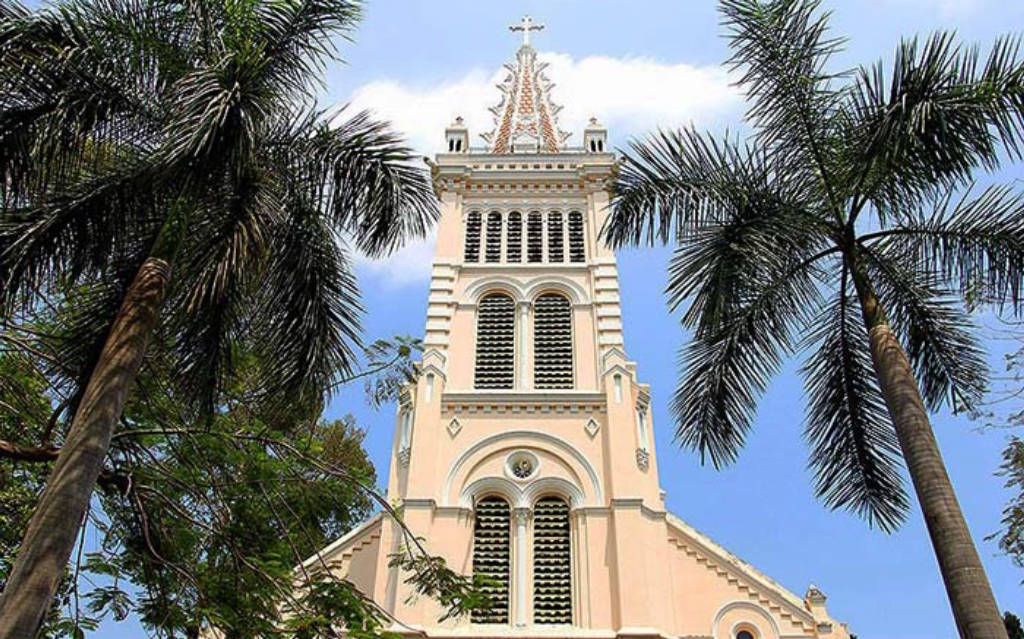
Nhà thờ Chợ Quán
 120 Đ. Trần Bình Trọng, Phường 2, Quận 5, Thành phố Hồ Chí Minh, Việt Nam
“Với lịch sử gần 300 năm, nhà thờ được xây dựng bởi người Pháp và đã bị phá huỷ ba lần. Sau nhiều lần tu sửa, nhà thờ Chợ Quán ngày này là một trong những nhà thờ lớn nhất của thành phố, với tầm nhìn đẹp từ tháp chuông”
Lịch sử của Giáo xứ Chợ Quán gắn liền với quá trình mở mang lãnh thổ của Nhà Nguyễn về phương Nam. Vào cuối thế kỷ 17 và đầu thế kỷ 18, nhiều giáo dân, đặc biệt là người miền Trung muốn lập nghiệp ở miền Nam hoặc tránh chiến tranh, xung đột, nạn đói kém đã di cư đến vùng đất này. Sau đó. các giáp dân này tụ họp lại với nhau ở một ngôi làng có tên là Xóm Bột, trong làng mở chợ với nhiều gian hàng nhằm phục vụ đời sống sinh hoạt của cư dân địa phương. Chợ có tên là Chợ Quán, sau này dùng để gọi các khu phố xung quanh.
Giáo xứ Chợ Quán chính thức được thành lập vào năm 1722. Vào thời điểm đó, nhiều mục sư sốt sắng đến đây tụ họp các tín hữu Thiên Chúa giáo, từ dòng Phanxicô đến các nhà truyền giáo Việt Nam. Cho đến năm 1725, giáo xứ có khoảng 300 giáo dân. Các nhà truyền giáo phải đối mặt với nhiều khó khăn khi truyền đạo do những mâu thuẫn xã hội và chính sách chống Thiên chúa giáo của chính quyền phong kiến lúc bấy giờ. Buổi đầu hình thành, Giáo xứ Chợ Quán phải chịu cảnh phân tán vào các năm 1727, 1733, 1862 và 1882, sau đó được quy tụ lại và phát triển cho đến nay.
Nhà nguyện đầu tiên của Giáo xứ Chợ Quán được xây dựng vào năm 1674 nhưng mãi đến năm 1723, Linh mục Emmanuel Quitaon đến giảng đạo và chuyển nhà nguyện thành nhà thờ cho giáo dân. Năm 1882 Linh mục Nicola Hamm bắt đầu xây dựng một nhà thờ mới. Công trình này kéo dài 14 năm, trải qua 6 đời linh mục và được hoàn thành vào năm 1896. Nhà thờ mới được khánh thành vào ngày 4 tháng Giêng âm lịch năm Bính Thân (1896). Đây cũng là công trình xây dựng nhà thờ cuối cùng mà chúng ta có thể thấy hiện nay. Để ghi nhớ công lao đóng góp xây dựng nhà thờ, sau khi qua đời, linh mục Nicola Hamm được an táng tại Nhà thờ Chợ Quán, bên cạnh bàn thờ Đức Mẹ.
Với tổng diện tích 16.922m2, công trình Giáo xứ Chợ Quán không chỉ bao gồm nhà thờ mà còn có nhiều công trình liên quan như trường tiểu học công lập, nhà tình thương, sân vườn nhiều cây xanh. Hiện nay Nhà thờ Chợ Quán có Phòng khám từ thiện do Hội Chữ thập đỏ Quận 5 quản lý. Ngoài ra, nơi đây còn có nơi sinh hoạt cộng đồng của người dân quanh vùng như chạy bộ, tập thể dục buổi sáng hay tận hưởng không khí trong lành ở công viên trước nhà thờ.
Công trình nhà thờ bao gồm gian giữa, gác chuông, nhà giáo lý 12 gian, phòng họp, hài cốt và phòng đọc sách. Tất cả đều được bố trí hài hòa, đẹp mắt mang lại cảm giác thư thái, dễ chịu cho các giáo dân cũng như du khách.
Kiến trúc của Nhà thờ Chợ Quán tiêu biểu cho lối kiến trúc Gothic có thể thấy ở bất kỳ công trình Công giáo nào trên toàn thế giới. Tuy nhiên, có nhiều nét độc đáo giúp Nhà thờ Chợ Quán khác biệt so với nhiều nhà thờ khác.
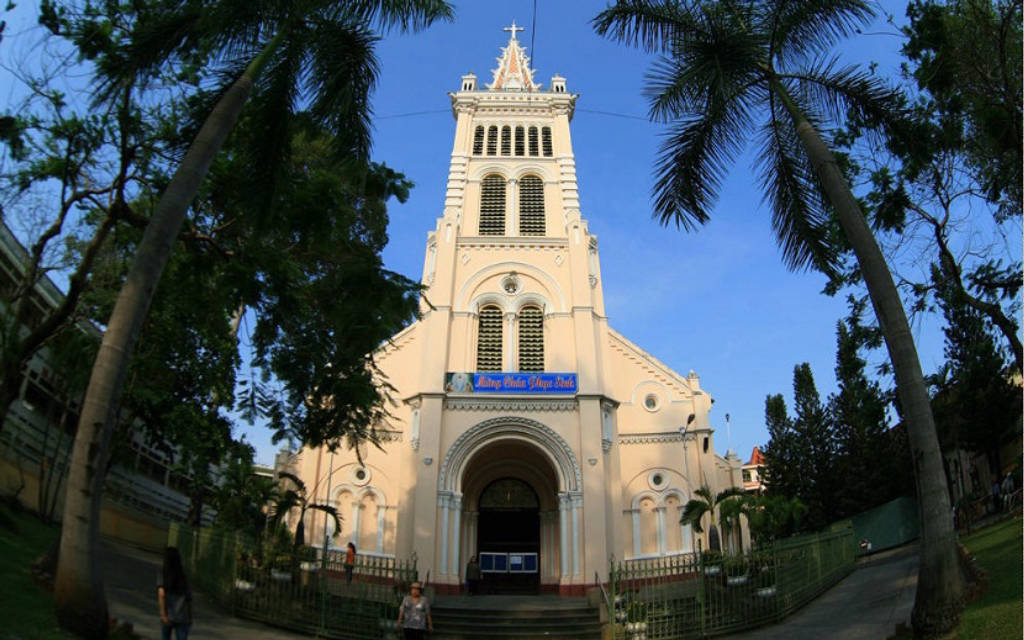
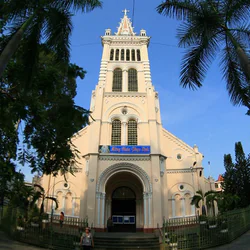
- Cổng Nhà thờ Chợ Quán là cổng hình mũi mác với những lưới sắt màu xanh đen, đây là đặc điểm dễ nhận biết nhất trong kiến trúc của một nhà thờ Công giáo. Trên vòm cổng có tên “Nhà thờ Giáo xứ Chợ Quán” màu vàng đồng, được viết bằng cả tiếng Anh và tiếng Việt.
- Mái ngói đỏ của nhà thờ được phủ rêu phong cổ kính tạo nên vẻ cổ điển cho toàn bộ công trình.
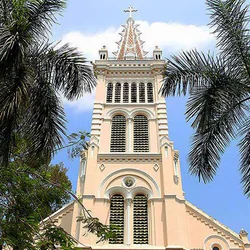
- Tháp chuông Nhà thờ Chợ Quán khá khác biệt so với những tháp chuông khác trong một công trình kiến trúc Công giáo. Nó bao gồm ba tầng, từ thấp đến cao là tầng kéo chuông, tầng gác chuông và tầng trên cùng. Trong tháp có năm quả chuông, hai quả chuông dùng cho ngày thường, hai quả chuông dùng trong những dịp quan trọng và một quả chuông dùng trong tang lễ. Chỉ vào những ngày lễ đặc biệt, cả năm tiếng chuông mới cùng nhau rung lên. Một điều thú vị khác về những chiếc chuông là năm chiếc chuông được vận chuyển từ Pháp sang bằng đường biển và di chuyển đến tháp với sự giúp đỡ của năm con voi.
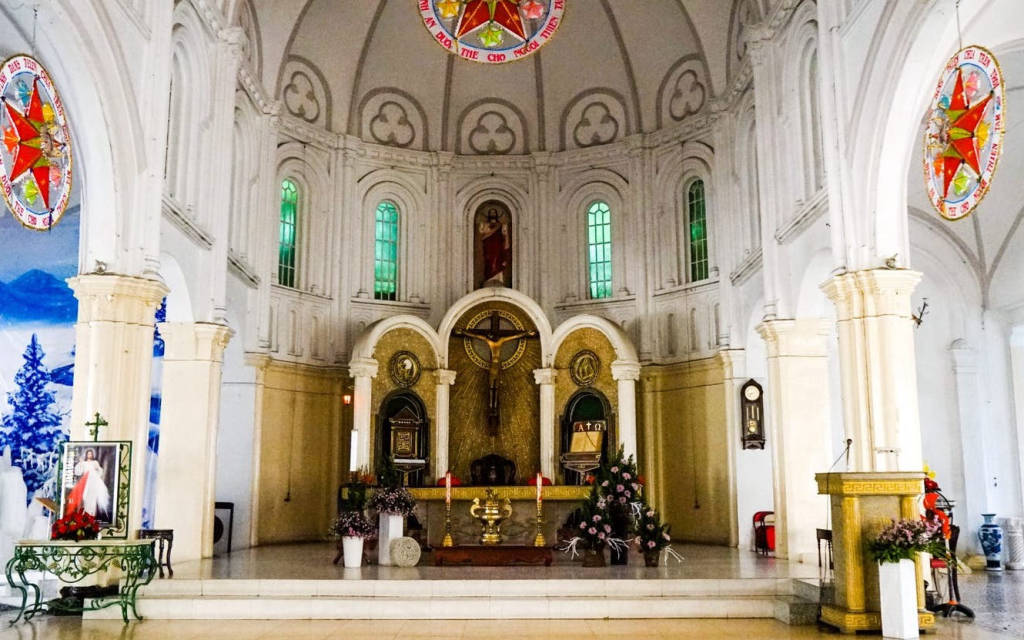
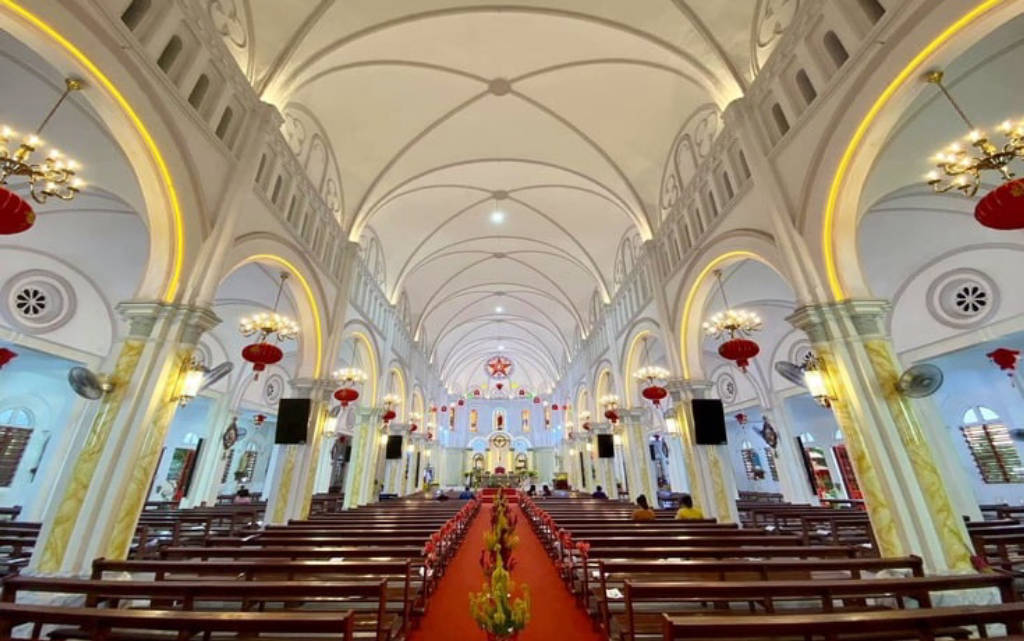
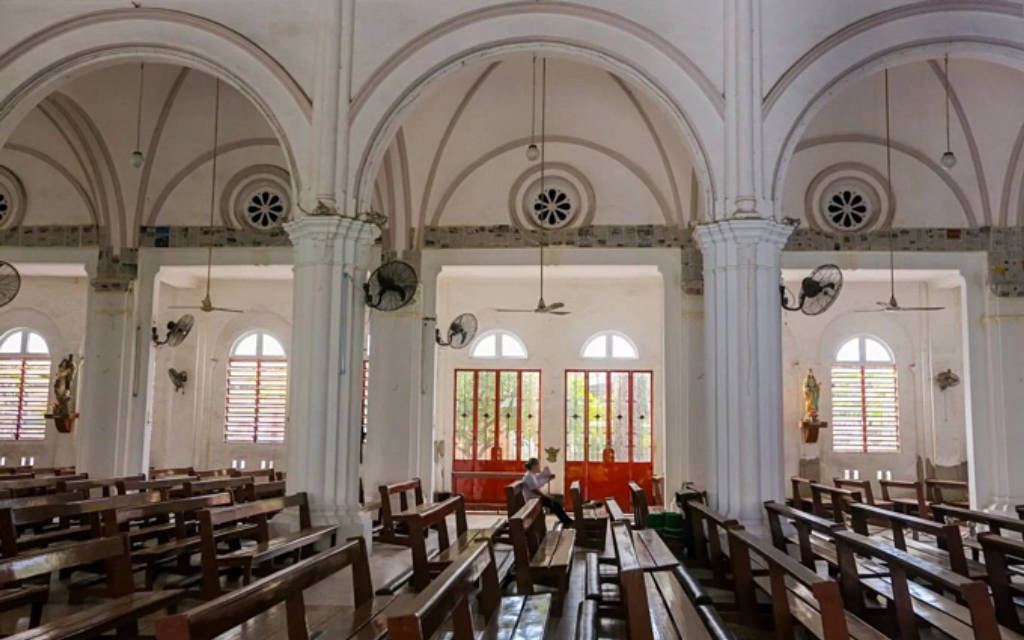
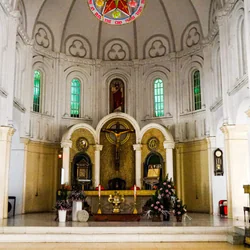
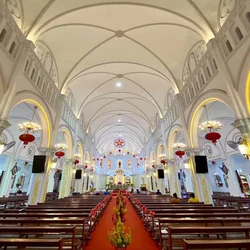
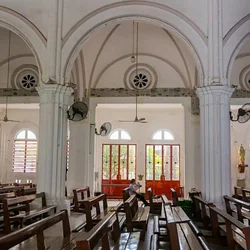
- Màu sắc bên trong Nhà thờ Chợ Quán là sự kết hợp giữa màu trắng của vòm trần, màu vàng tươi của cột và màu nâu của đồ nội thất. Cửa sổ nhà thờ Chợ Quán không phải là cửa sổ kính màu sặc sỡ có thể thấy ở hầu hết các nhà thờ Công giáo ở khu vực lân cận. Hai bên nhà thờ là những ô cửa kính với những trụ ngang giúp lấy ánh sáng tự nhiên vào bên trong nhiều nhất. Tất cả các chi tiết kết hợp hài hòa tạo nên vẻ đẹp trang nghiêm, lung linh cho Nhà thờ Chợ Quán.
Trải qua bao thăng trầm của lịch sử, Nhà thờ Chợ Quán vẫn giữ nguyên giá trị của một cộng đồng Công giáo. So với những nhà thờ khác, đây là nơi thích hợp hơn cho những ai muốn tận hưởng những giây phút yên bình giữa thành phố đông đúc.