


See all results for ""

 Anytime
 Tiếng ViệtEnglish
 한국어
한국어 日本語
日本語 简体中文
简体中文 Français
 Deutsch
 Español
 Italiano
 Русский


 Login for Corporates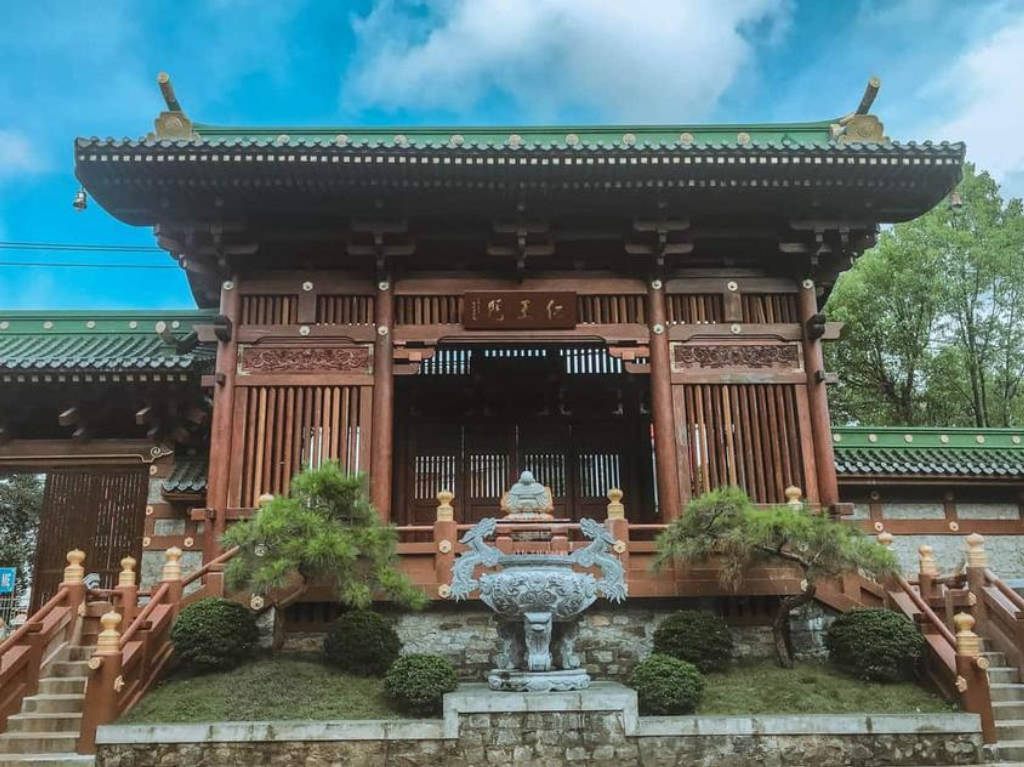


Minh Thanh Temple
 348 đường Nguyễn Viết Xuân, phường Hội Phú, Pleiku, tỉnh Gia Lai, Việt Nam
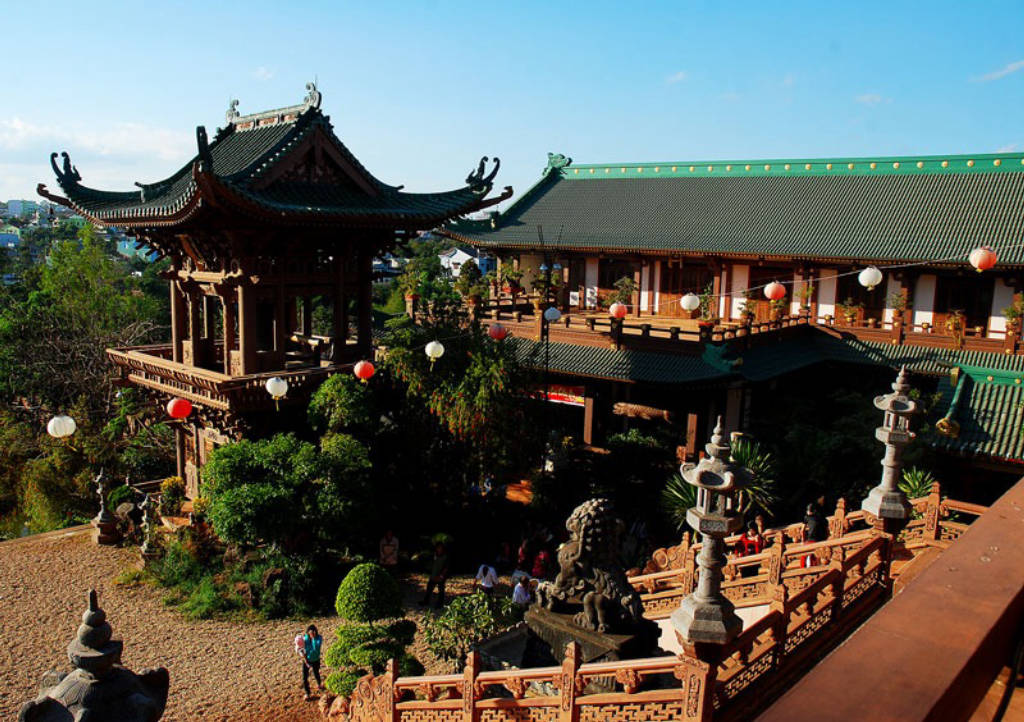
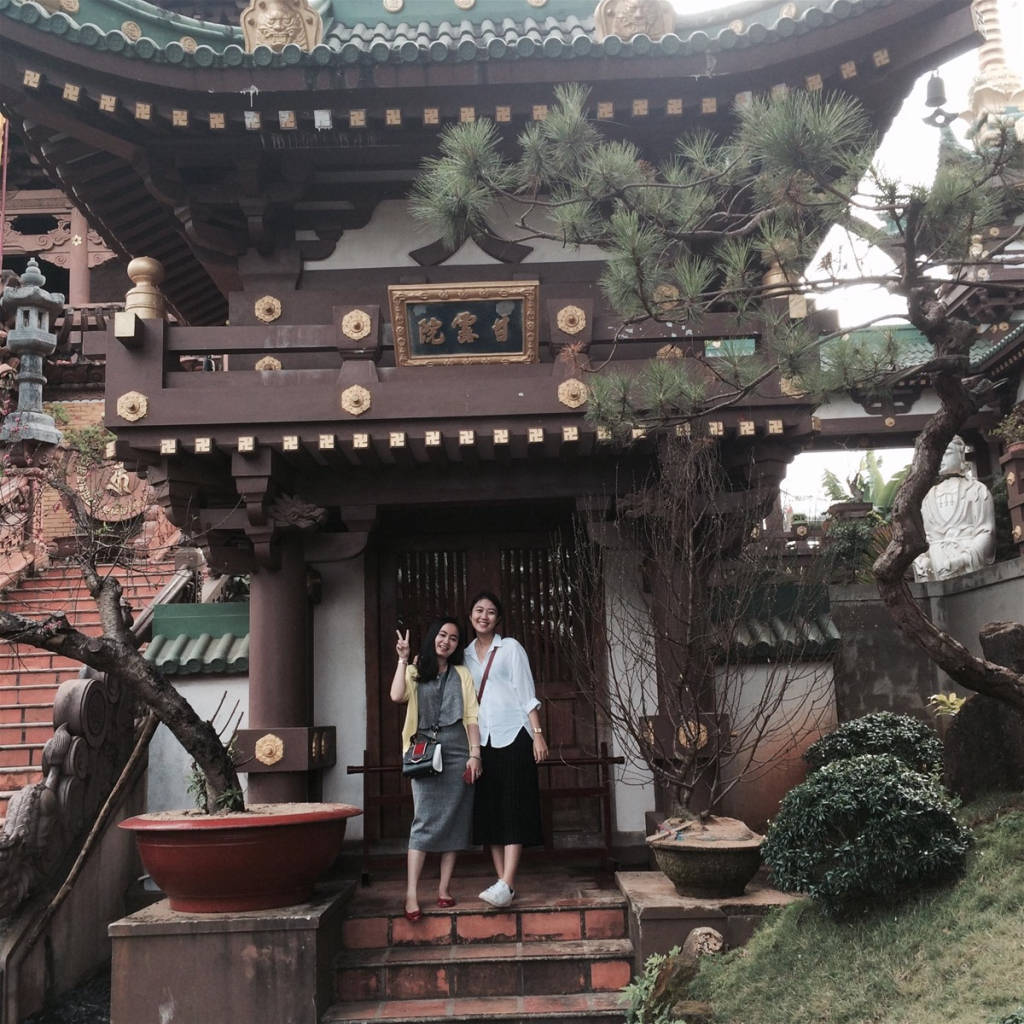
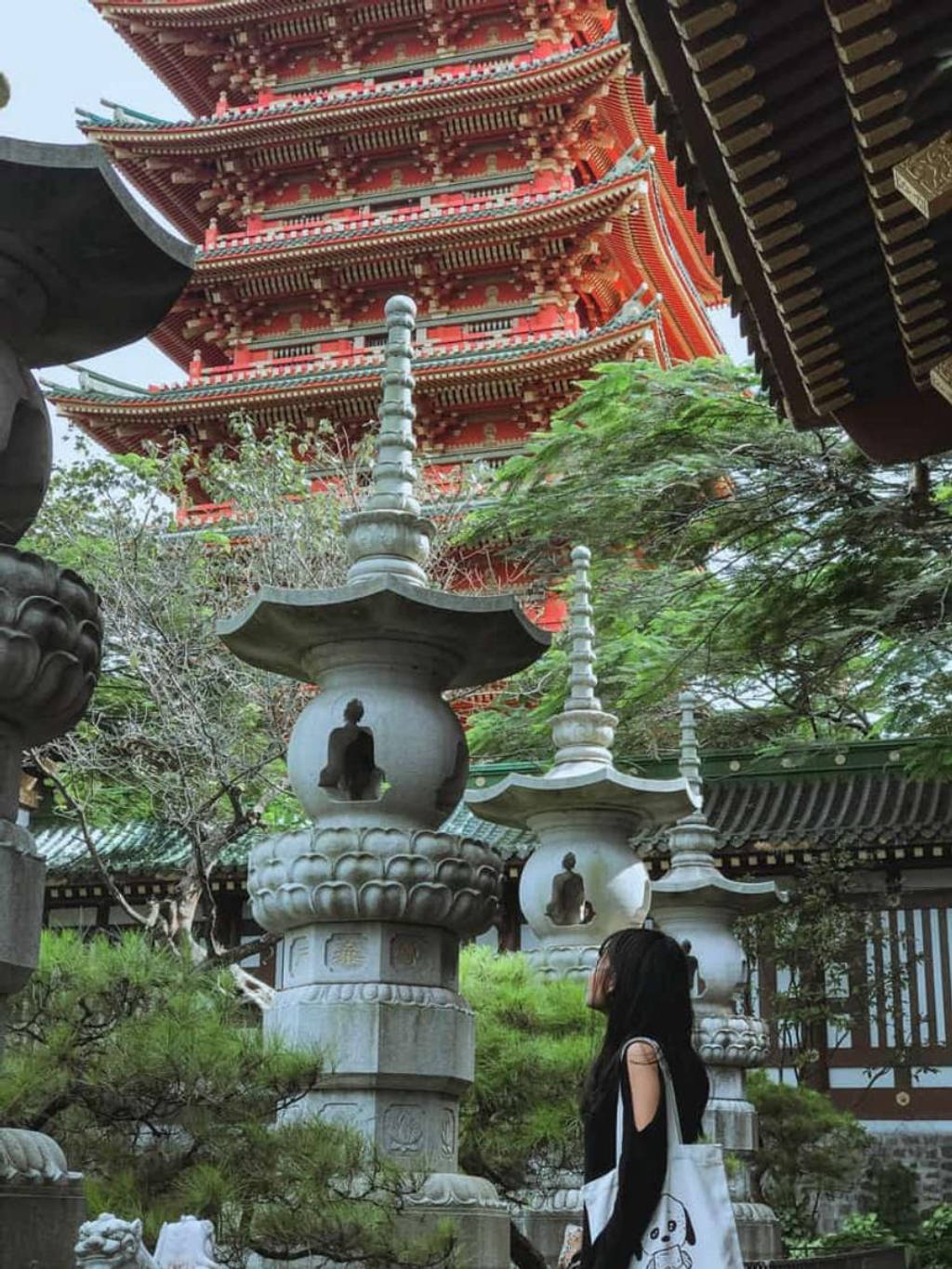
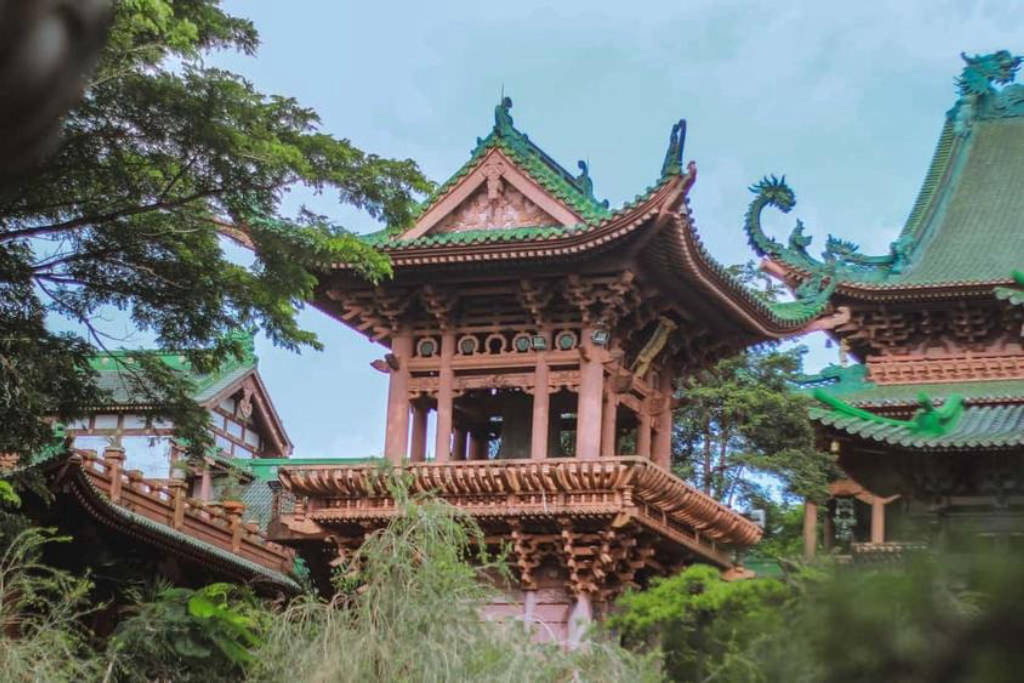
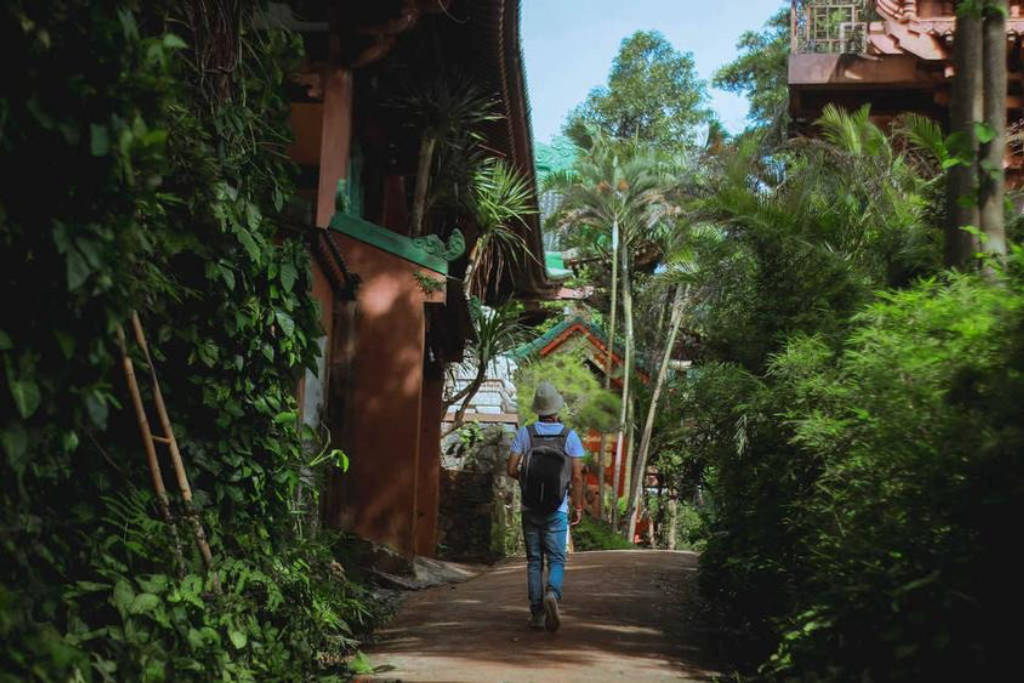
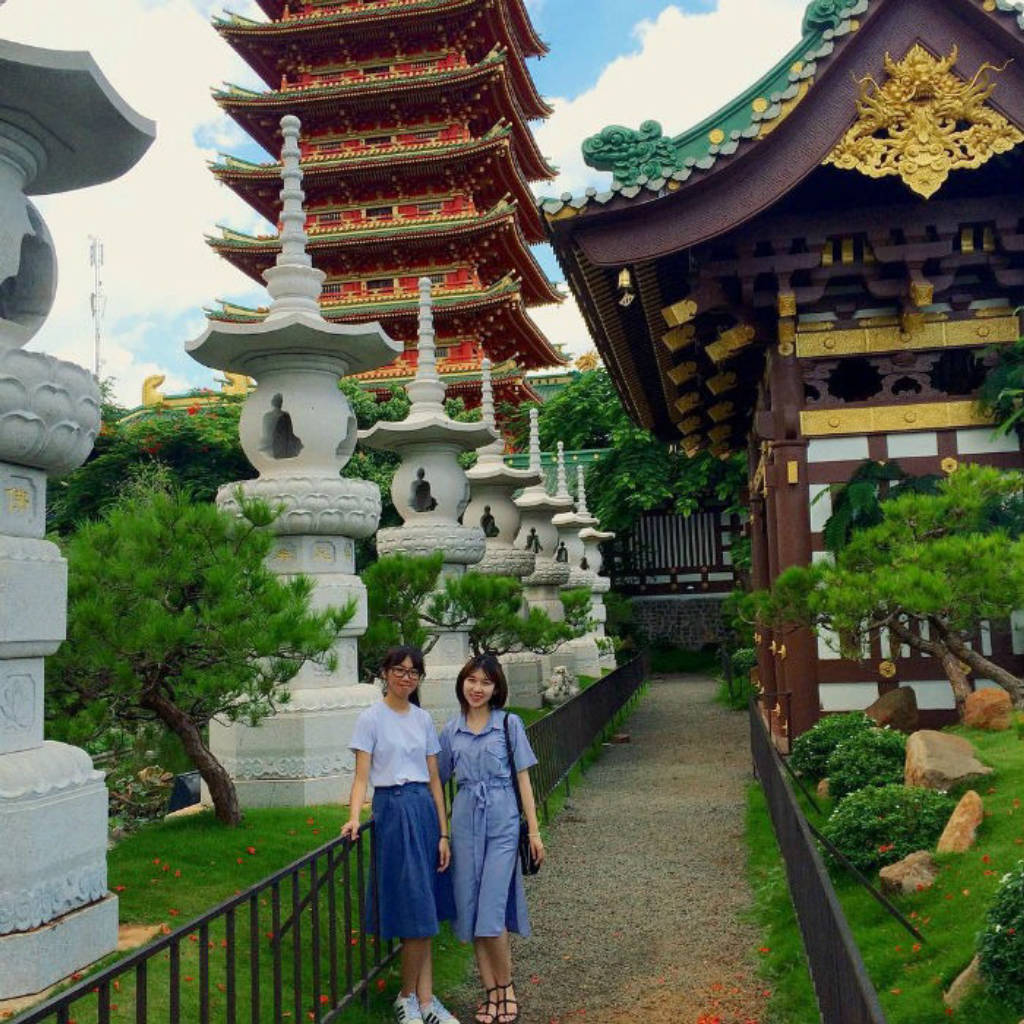
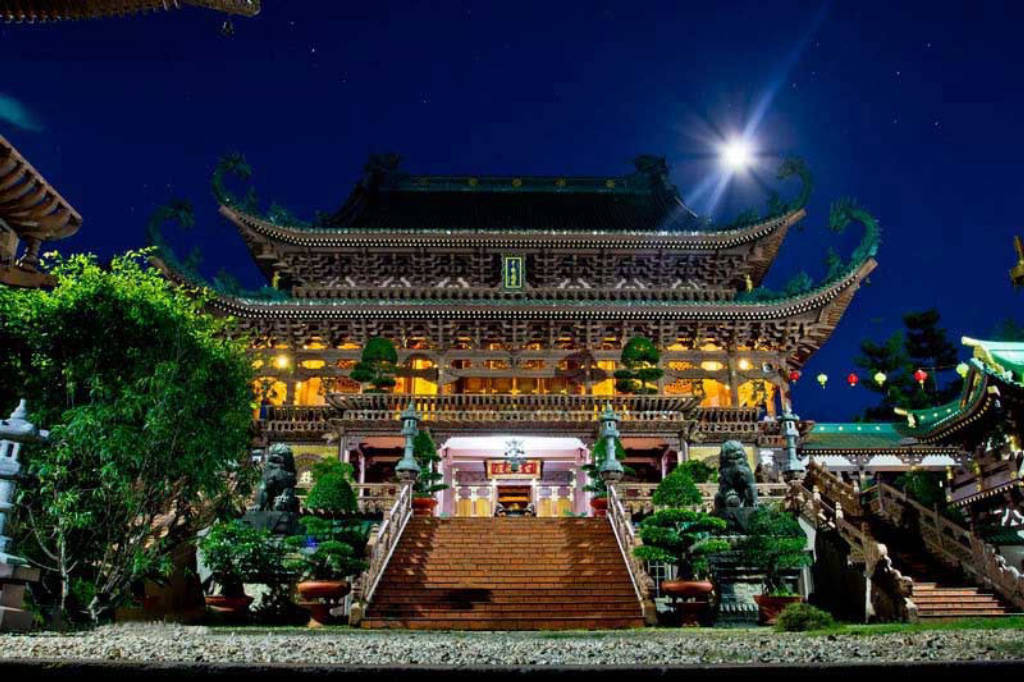
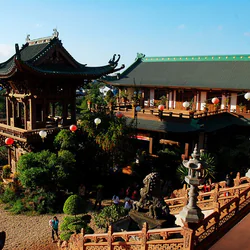
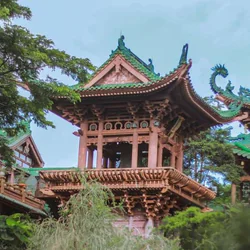
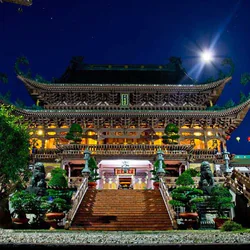
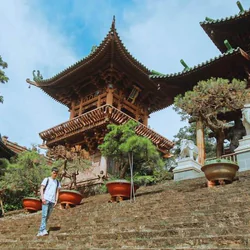
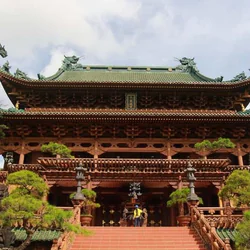
Minh Thanh Pagoda is located on a gentle hill in the heart of a mountain town, in Hoi Phu ward, about 2 km southwest of Pleiku city center. Minh Thanh Pagoda stands out with its unique architectural complex with a harmonious combination of Chinese and Japanese architecture.
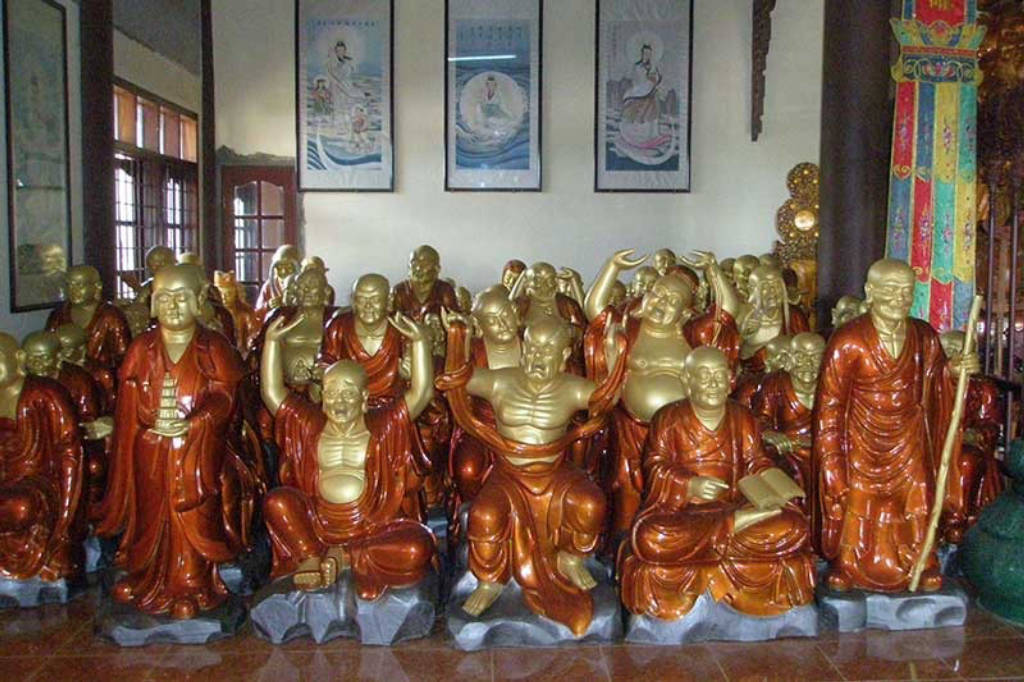
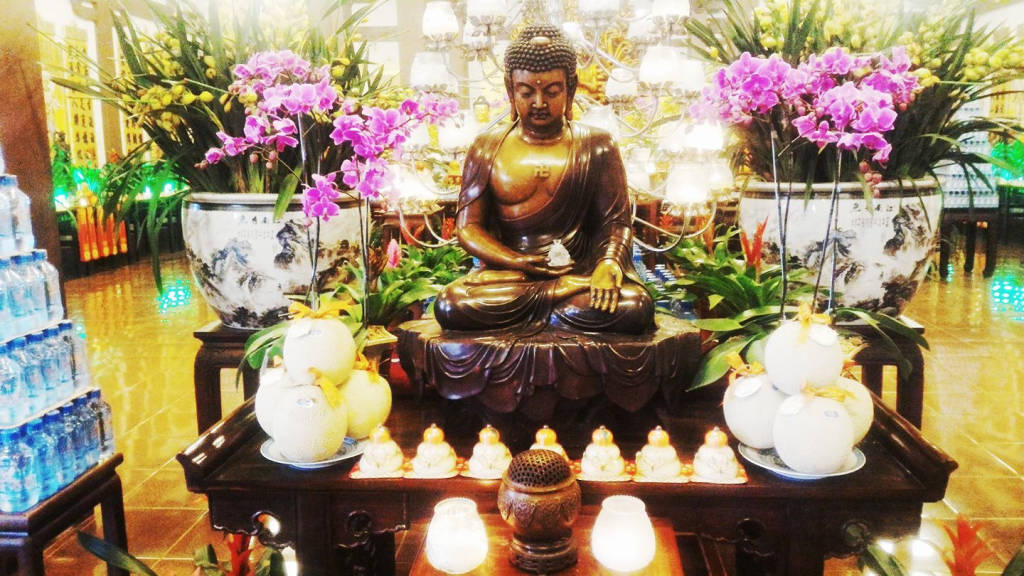
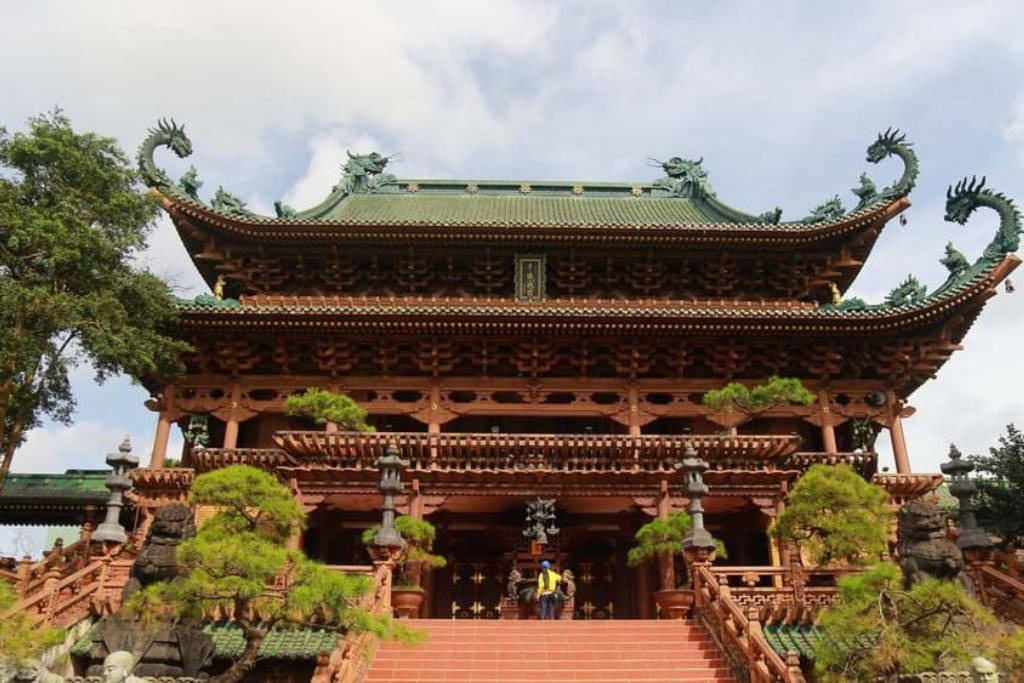
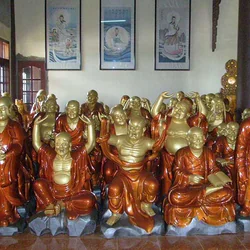
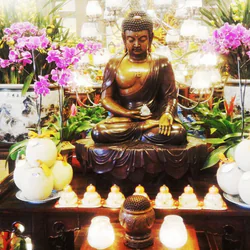
Minh Thanh Pagoda was built in 1964 by Most Venerable Thich Giac Dao to serve as a place of worship and incense offering for Buddhists in the region. Experiencing many ups and downs of history, many parts of the pagoda were damaged, in 1997 the pagoda was restored and built new. After a process of restoration and embellishment lasting more than 10 years, Minh Thanh Pagoda seems to have been put on a completely new shirt with its distinctive and unique oriental beauty influenced by Japanese, Chinese, and Taiwanese architecture. . The pagoda has a total area of about 20,000m2, the architecture of the temple is the convergence of the quintessence of Mahayana Buddhist thought and literature, built in a simple form of "mandala". It is a circle, symbolized as a lotus flower in full bloom, which is the basis of the tantric cosmology. Overall, the main hall of Minh Thanh pagoda has 2 floors, Dai Hung Buu Dien and Dai Bi Dien. The main hall of the pagoda has an area of up to thousands of square meters, 16m high, the ceiling is made of rare po mu wood. Located in the center of the main hall is the temple of Venerable Ti Lo Gia Na Buddha, 6 meters high and 16 tons in weight. The space of the main hall is also very harmoniously arranged, with four statues of Buddha with thousand hands and thousand eyes with a height of 8m, a width of 3.5m placed in 4 corners. Buddha statues are arranged against the wall with more than 3,000 statues. In particular, 18 Arhat statues are made entirely from jackfruit wood, each 1.3m high and weighing nearly 300 kg, all painted in gold harmoniously and beautifully. The architecture of the pagoda roof is used according to a do-construction structure, which is a structure made up of a set of wooden blocks and short beams that are cut so that when they overlap they will intertwine to form a block. unified. This is the architectural style commonly used in the Ly-Tran dynasties. The pagoda is considered a typical work for the reconstruction of the image of ancient architecture in Vietnam.
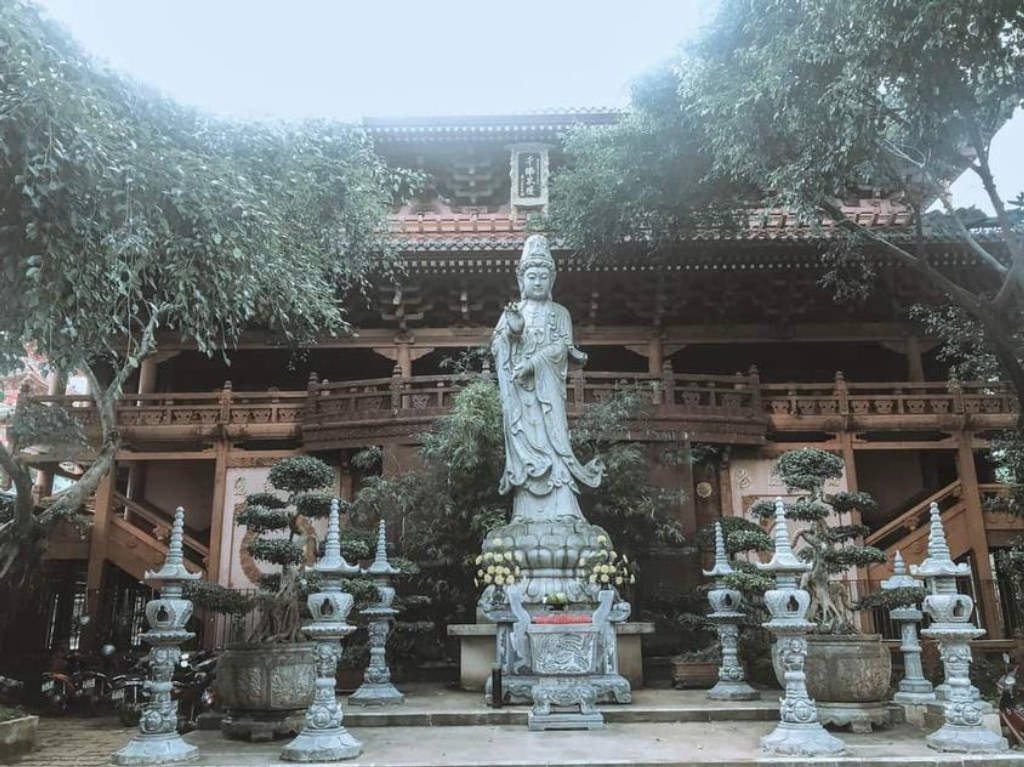
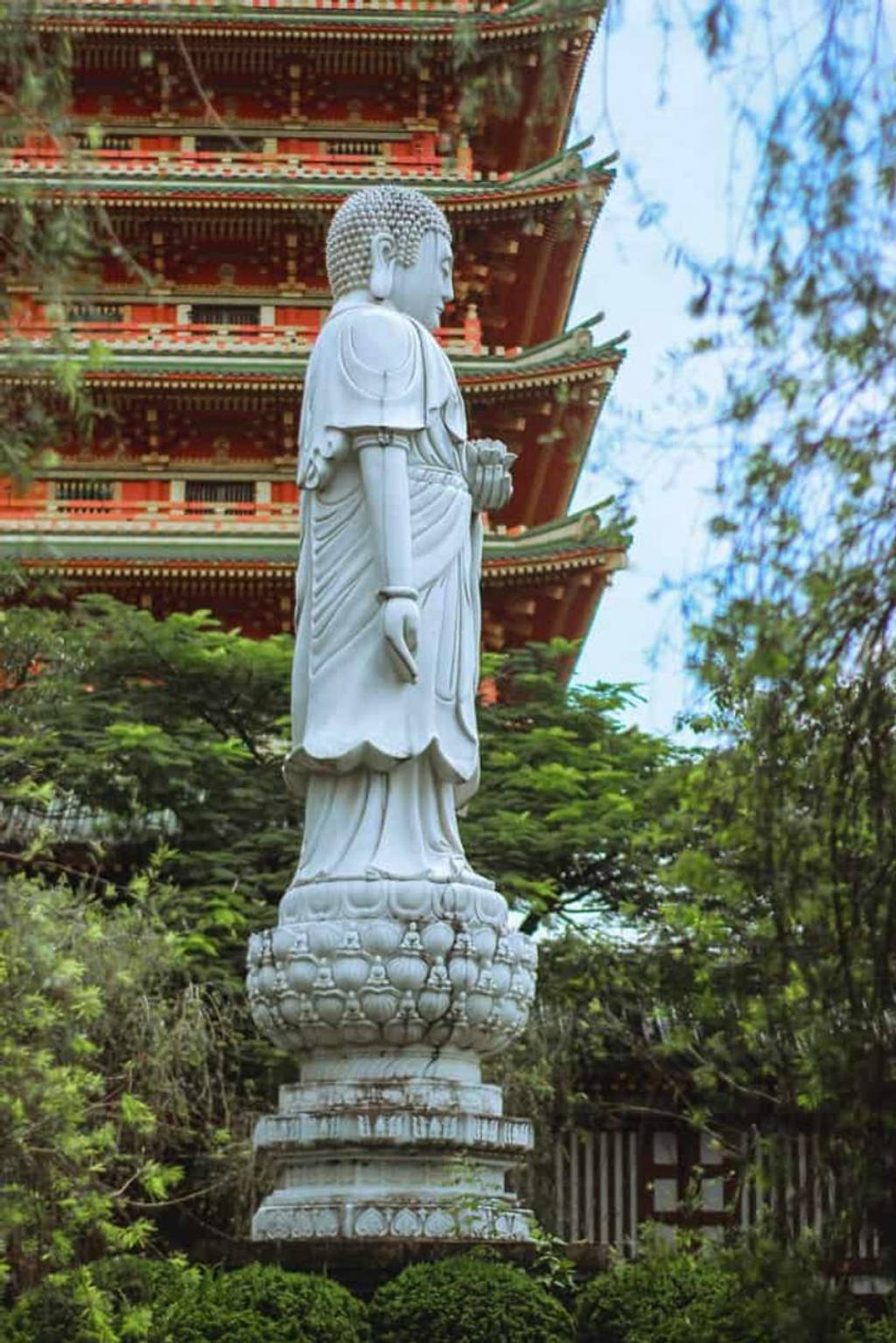
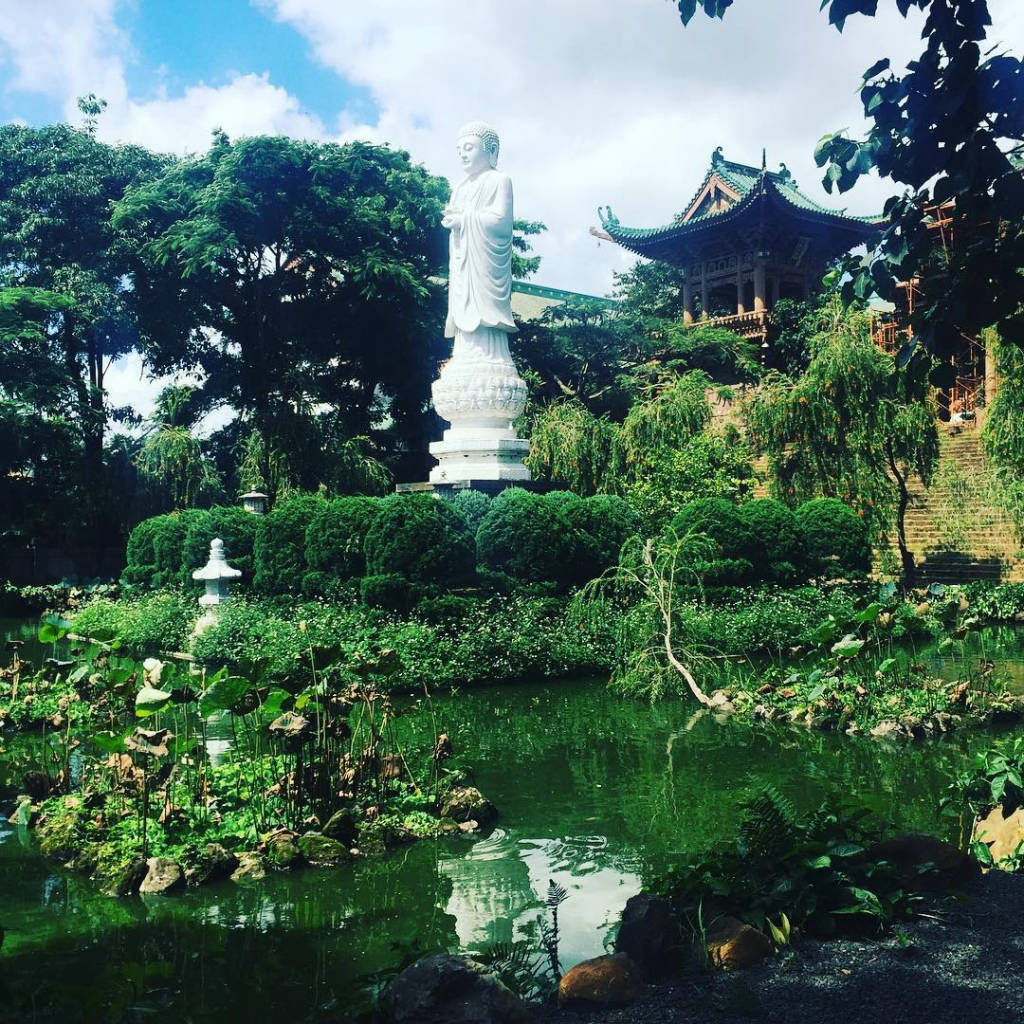
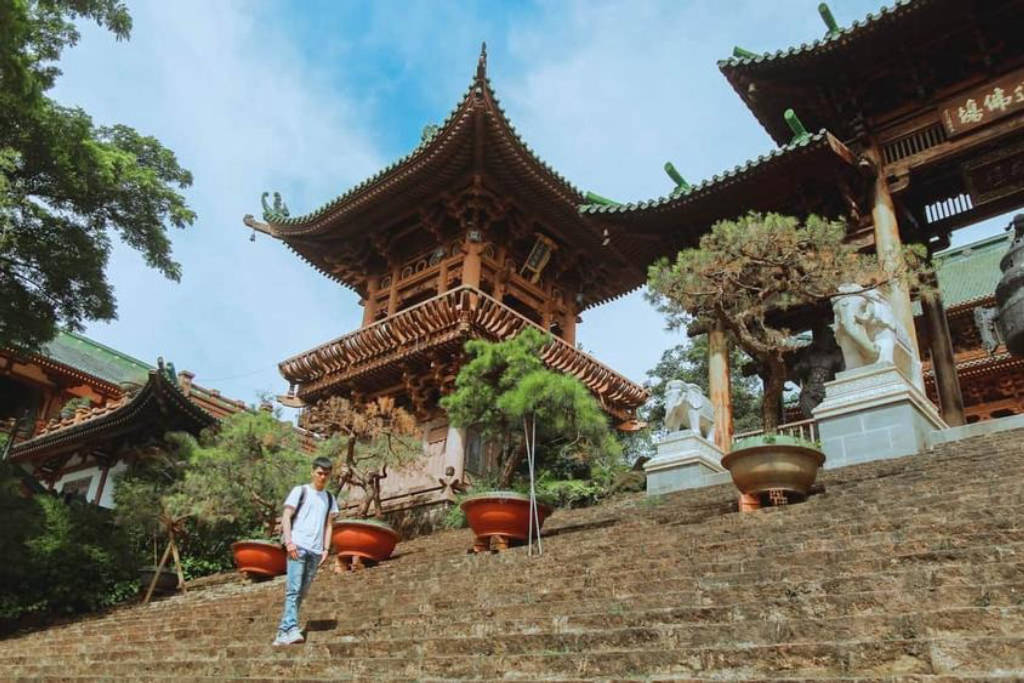
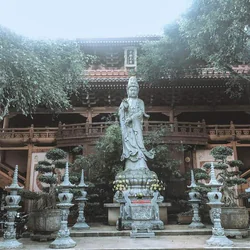
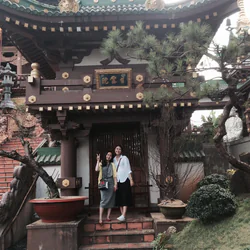
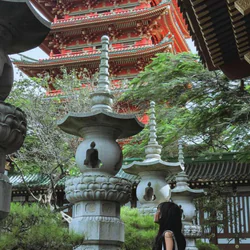
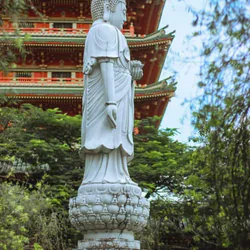
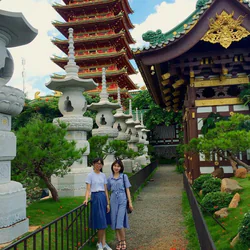
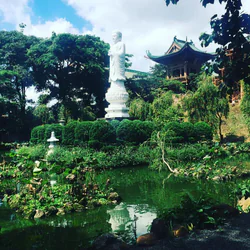
As soon as entering the gate of the pagoda, visitors will be impressed with the pagoda's door set made of wood with a height of 6m, a thickness of 4 inches, with carved lines embossed with images of the Four Great Heavenly Kings. delicate. Stepping inside the temple, visitors will immediately see the statue of Guanyin Buddha placed in the middle of the door and decorated with trees, stone pillars, unicorn statues symmetrically looking very harmonious. The way to the hall are large paintings written about the Buddha's commandments for Buddhists. In front of the main hall, located on the right and left sides, are two towers: bell tower and To Khai Son tower. Right in front of the temple yard, visitors will admire the stone statue of Di Da, 7.5 m high and weighing up to 40 tons, placed in the middle of Lien Tri lake with pink lotus all year round. In front of Lien Tri pond is a bronze incense burner up to 4 m high and weighing more than 4 tons, which is considered the largest bronze incense burner in Vietnam. Located on the left side of the pagoda is a 9-storey 70 m high Xa Loi stupa with a majestic pointed tower reaching up to the sky. Looking at it from afar, with the clear blue sky, sunlight reflecting the stupa appears as a symbol of majesty and reverence, making visitors think they are lost in a temple of the land. Japan Rising Sun.
Address: 348 Nguyen Viet Xuan Street, Hoi Phu Ward, Pleiku, Gia Lai Province, Vietnam.