


""에 대한 모든 결과 보기

 언제든지
언제든지 
 Tiếng Việt
 English한국어
 日本語
日本語 简体中文
简体中文 Français
 Deutsch
 Español
 Italiano
 Русский


 기업 로그인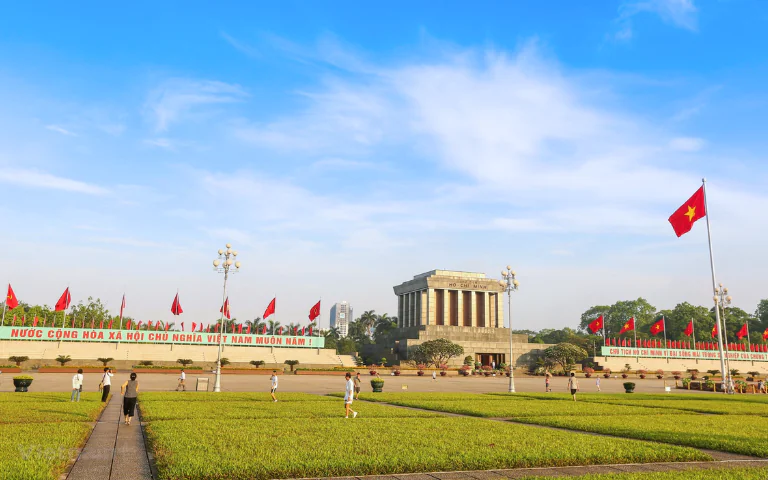
Ba Dinh Square
 Hung Vuong Street, Dien Bien Ward, Ba Dinh District, Hanoi, Vietnam
As the largest square in Vietnam, Ba Dinh Square is one of Hanoi's most important landmarks. It is closely associated with key moments in the nation's history and serves as the gateway to several of the capital's most iconic historical sites.
If there is one place in Hanoi that best allows visitors to feel the pulse of Vietnamese history, it is Ba Dinh Square. This is where President Ho Chi Minh read the Declaration of Independence on September 2, 1945, proclaiming to the world the birth of an independent and free Vietnam.
1. The Historic Heart of Hanoi
Located on Hung Vuong Street in Ba Dinh District, Ba Dinh Square serves as the vital political and historical center of the capital. With its vast and open layout, it is not just a stop on a Hanoi tour, but a place where visitors can truly feel a sense of national pride. Amidst the bustling city, the square maintains a grand and dignified presence, making it an essential destination for anyone seeking to understand the roots and identity of Vietnam.
2. Highlights of the Square
2.1. The Square and the Flag-Raising/Lowering Ceremonies
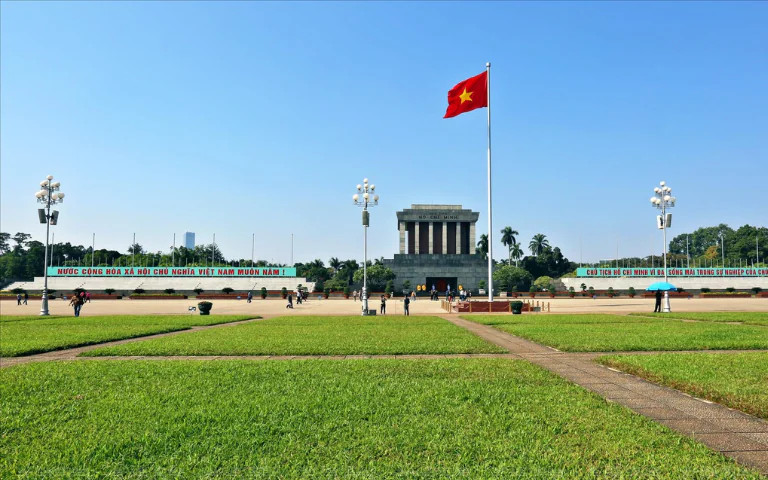
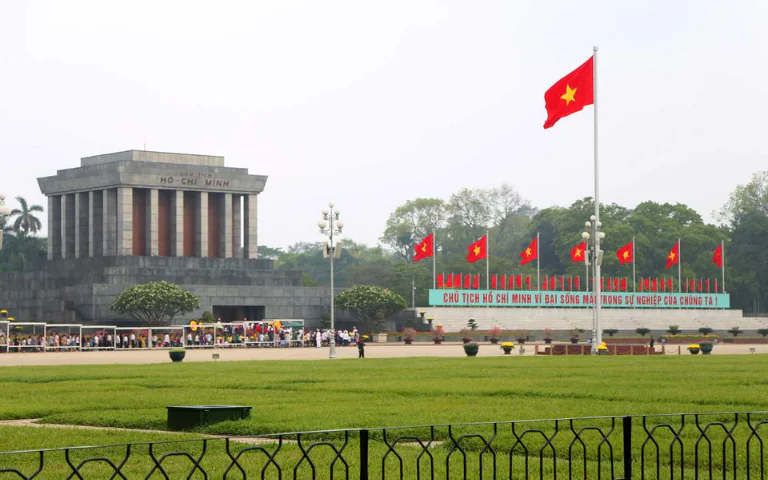
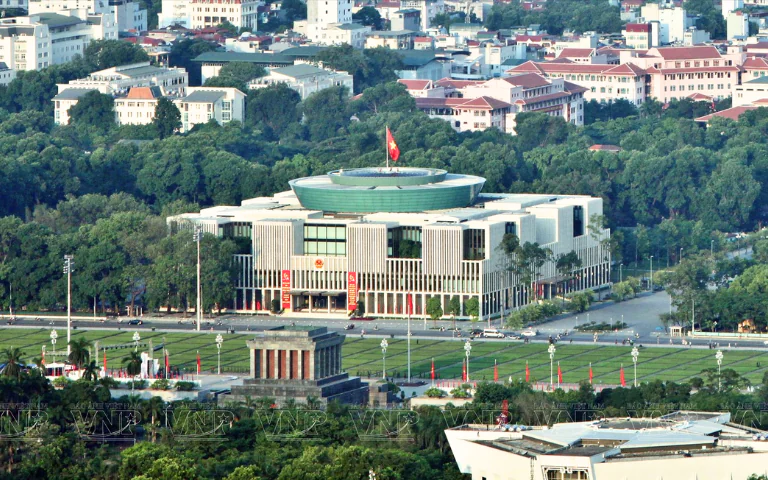
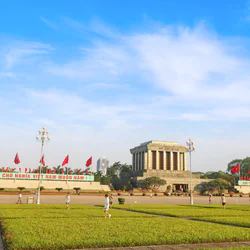
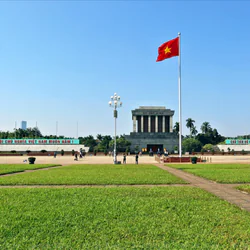
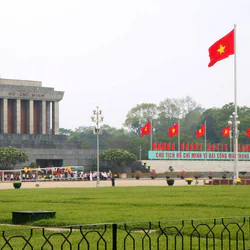
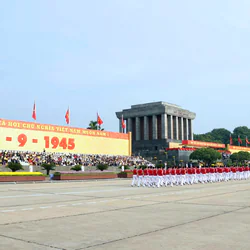
Stretching approximately 320 meters long and 100 meters wide, Ba Dinh Square is the largest square in Vietnam. Its perfectly aligned green lawns create an airy, solemn landscape that highlights its status as one of the country's most important landmarks.
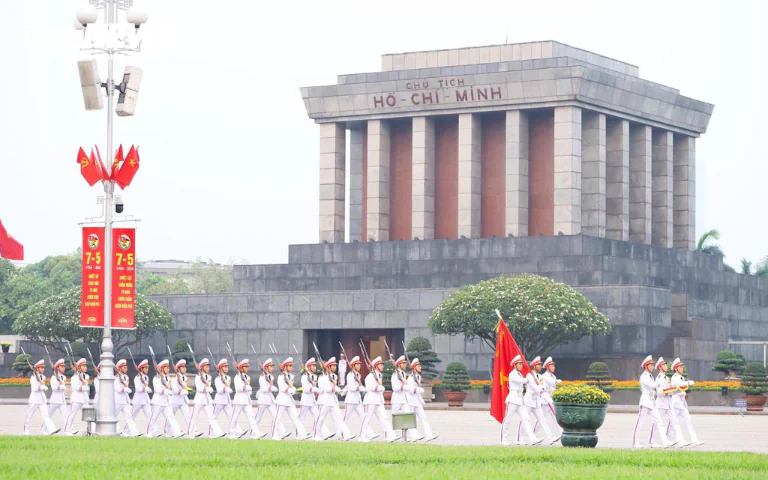
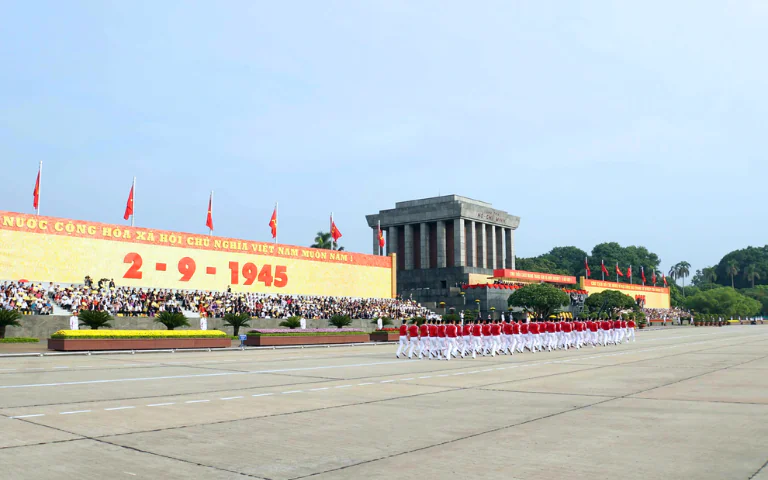
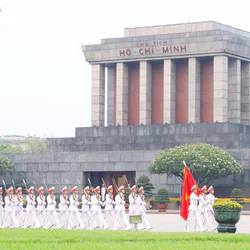
Every day, the morning flag-raising and evening flag-lowering ceremonies in front of President Ho Chi Minh's Mausoleum attract numerous locals and tourists. Performed by the honor guard in a formal atmosphere, these rituals have become a quintessential experience in the Ba Dinh area.
2.2. A Special Historical Complex
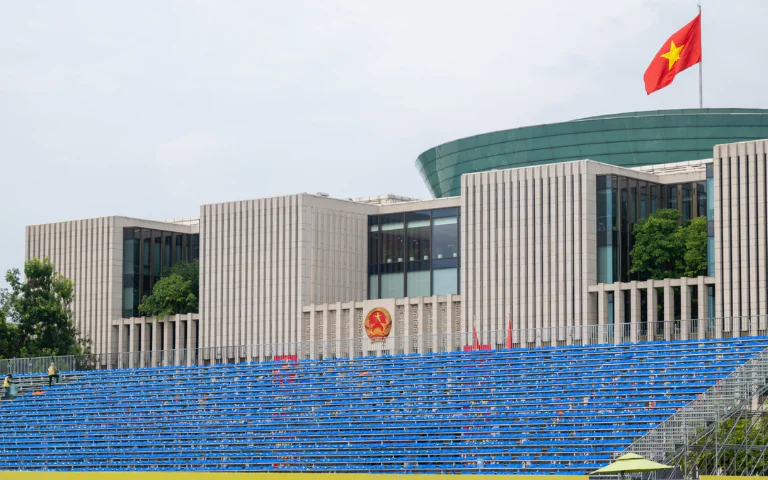
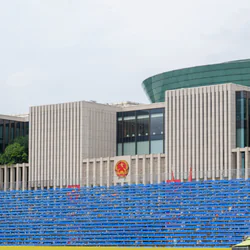
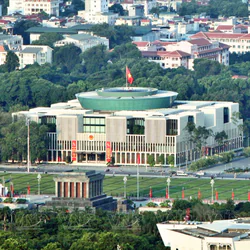
Surrounding the square is a cluster of significant historical and cultural sites, including President Ho Chi Minh's Mausoleum, the Presidential Palace Historical Site (featuring the stilt house and fish pond), the Ho Chi Minh Museum, and the Monument to Heroic Martyrs.
In just a single visit, travelers can explore many of Hanoi's most iconic landmarks. Due to this concentration of historical sites, Ba Dinh is considered one of the most culturally and historically significant destinations in the capital.
3. Historical Significance and Symbolic Value
On September 2, 1945, at Ba Dinh Square, President Ho Chi Minh read the Declaration of Independence before tens of thousands of people, proclaiming the birth of the Democratic Republic of Vietnam. This event solidified the square's status as a site of profound national importance.
The name "Ba Dinh" is derived from the late 19th-century Ba Dinh Uprising – a key movement in Vietnam's struggle for independence. Over the decades, the square has remained a central pillar in the nation's political and cultural life, serving as a lasting symbol of Vietnam's independence and patriotism.
4. Conclusion
With its unique position in Vietnamese history and the surrounding complex of famous monuments, Ba Dinh Square is one of Hanoi's most essential attractions. It is more than just a place to discover historical milestones; it is an opportunity for visitors to better understand the culture, people, and identity of this thousand-year-old capital.
Visitor Tips
• Ba Dinh Square is open from 05:00 to 22:00 daily, and admission is free.
• President Ho Chi Minh's Mausoleum and the Monument to Heroic Martyrs are open for visitation on Tuesdays, Wednesdays, Thursdays, Saturdays, and Sundays.
• Mausoleum visiting hours: 07:30 – 10:30 (summer) and 08:00 – 11:00 (winter).
• The Presidential Palace Historical Site is open from 07:30 – 11:00 and 13:30 – 16:00; closed on Mondays and Fridays.
• The Ho Chi Minh Museum is open from 08:00 – 11:30 and 14:00 – 16:30; closed every Monday.