


See all results for ""

 Anytime
 Tiếng ViệtEnglish
 한국어
한국어 日本語
日本語 简体中文
简体中文 Français
 Deutsch
 Español
 Italiano
 Русский


 Login for Corporates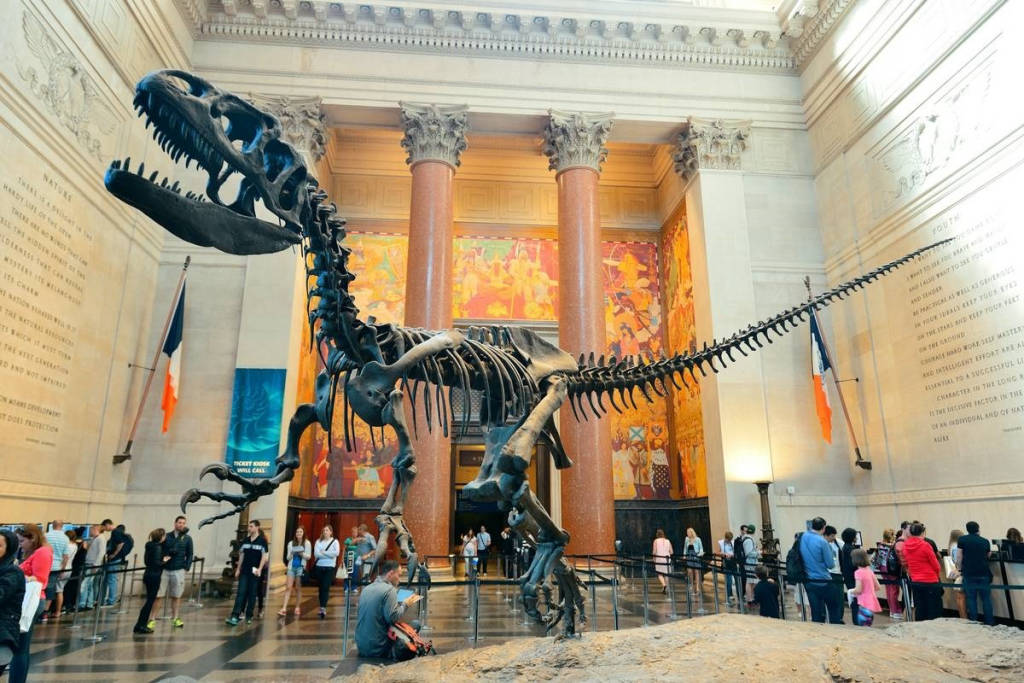
American Museum of Natural History
 200 Central Park West, New York, NY 10024, USA
Located on the Upper West Side of Manhattan, the American Museum of Natural History is one of the largest museums in the world with permanent displays of more than 34 million artifacts belonging to a variety of genres such as fossils, rocks and stones. precious, prehistoric tools, animals, fossils, etc.
Located on the Upper West Side of Manhattan, the American Museum of Natural History (AMNH) is one of the largest museums in the world, with a total of 26 interconnected buildings. consists of 45 permanent exhibition spaces with more than 34 million artifacts belonging to various genres such as fossils, gems, prehistoric tools, animals, fossils, etc. This is definitely a must-see. for visitors interested in learning about the history of aliens and other living things on earth through the billions of years of evolution since the earth was formed.
Officially operating since 1880, the museum's library holds over 450,000 different documents to date, with many of the rarest documents in the world dating back to the 15th century. Lesser known than its massive gallery and gallery, AMNH also has research labs and regularly organizes and sponsors more than 120 field trips with a team of over 225 graduate students. This museum with a total area of more than 190,000 square meters welcomes about 5 million visitors each year.
Founded on April 6, 1869, the American Museum of Natural History was the result of scientist Louis Agassiz at Harvard University successfully convincing John Thompson Hoffman (the governor of New York at the time) signed the decision to establish the museum. After operating out of its original Arsenal building in Central Park, AMNH was moved to the Upper West Side, now known to tourists and locals alike, in 1877. The main building of the museum. was built from 1874 to 1877 (and expanded until the 1930s) by two architects Calvert Vaux and J. Wrey Mould with a Gothic design.
Visitors will need an average of four to six hours to explore all areas of the museum, and here are the three most prominent galleries that visitors should refer to when visiting AMNH if there is not much time. Occupying the entire 4th floor of the museum, Theodore Roosevelt Memorial Hall is the most famous gallery for its huge collection of dinosaur fossils and extinct mammals. The most impressive and typical are the almost intact fossils of tyrannosaurs (Tyrannosaurus rex) and mammoths (Mammuthus).
Next, the Bernard and Anne Spitzer Hall of Human Origins is the only museum in the United States that displays in-depth and detail the history of human evolution with many world-famous artifacts such as a sample of " Peking Man", the 3.2-million-year-old "Lucy" fossil skeleton, and the 1.7-million-year-old "Turkana Boy". In addition, this place also displays copies of cliff paintings that are considered one of the first human paintings, recorded about 26,000 years ago.
Harry Frank Guggenheim is the third gallery visitors can refer to when coming to the American Museum of Natural History. It displays a world-renowned collection of rare gems and minerals such as the 536-carat Star of India sapphire, the 632-carat Patricia Emerald, and the monolith. Brazilian Princess (Topaz) weighs 270 kg.
Address: 200 Central Park West, New York, NY 10024, United States
Fares range from $23 for adults, $13 for children ages 3 to 12, $18 for students, and $18 for citizens over 60.