


See all results for ""

 Anytime
 Tiếng ViệtEnglish
 한국어
한국어 日本語
日本語 简体中文
简体中文 Français
 Deutsch
 Español
 Italiano
 Русский


 Login for Corporates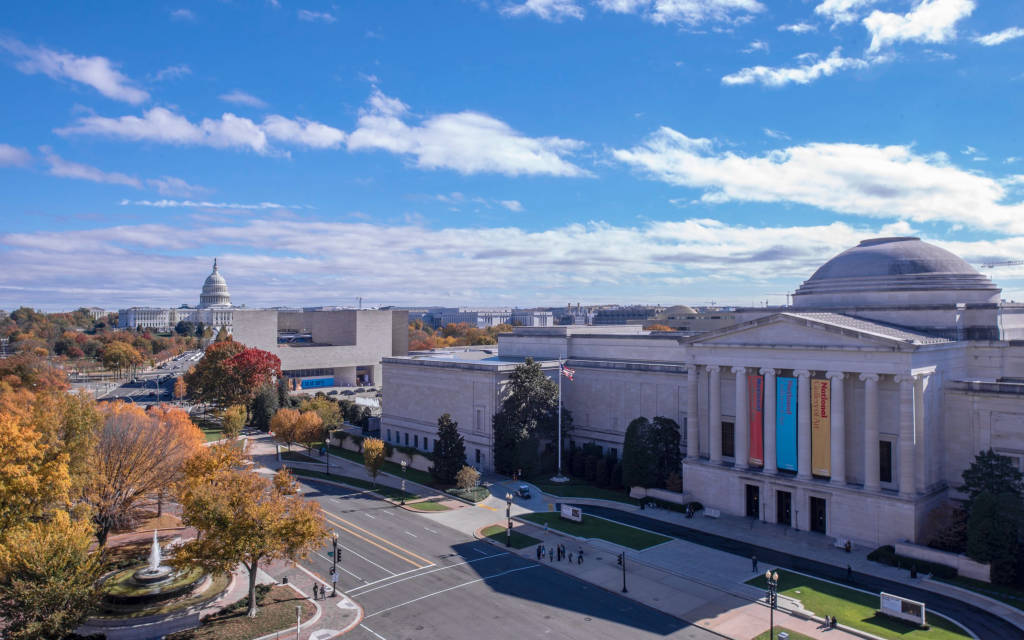
National Gallery of Art
 Constitution Ave. NW, Washington, DC 20565, Hoa Kỳ
The National Gallery of Art, an illustrious cultural institution on the National Mall in Washington, D.C., stands as a beacon of artistic excellence and a testament to the enduring power of creativity.
The National Gallery of Art, an illustrious cultural institution on the National Mall in Washington, D.C., stands as a beacon of artistic excellence and a testament to the enduring power of creativity. Comprising two main buildings—the West Building and the East Building—the museum's comprehensive collection spans the spectrum of art history, offering a remarkable journey through centuries of artistic achievement.
The West Building, a neoclassical masterpiece, houses an extensive collection of European art from the Middle Ages to the 19th century. Visitors can marvel at iconic works such as Leonardo da Vinci's "Ginevra de' Benci," Johannes Vermeer's "Girl with a Pearl Earring," and Rembrandt's "Self-Portrait." The East Building, designed by architect I. M. Pei, is a modernist marvel dedicated to contemporary and modern art, featuring works by artists like Jackson Pollock, Mark Rothko, and Pablo Picasso.
The museum's commitment to accessibility is noteworthy—admission is free, allowing a broad audience to experience the transformative power of art. The Sculpture Garden, an outdoor oasis adjacent to the West Building, adds to the museum's allure. This beautifully landscaped space features a variety of sculptures, providing a tranquil environment for reflection and appreciation.
Education is a key focus of the National Gallery of Art, with a range of programs, lectures, and special events designed to engage visitors of all ages. The museum serves as a dynamic center for learning and cultural enrichment, fostering a deeper understanding of art's role in shaping human history and expression.
In its role as a custodian of artistic legacy and a vibrant hub for contemporary creativity, the National Gallery of Art continues to inspire and captivate visitors, affirming the enduring significance of the visual arts in our shared cultural heritage.