


See all results for ""

 Anytime
 Tiếng ViệtEnglish
 한국어
한국어 日本語
日本語 简体中文
简体中文 Français
 Deutsch
 Español
 Italiano
 Русский


 Login for Corporates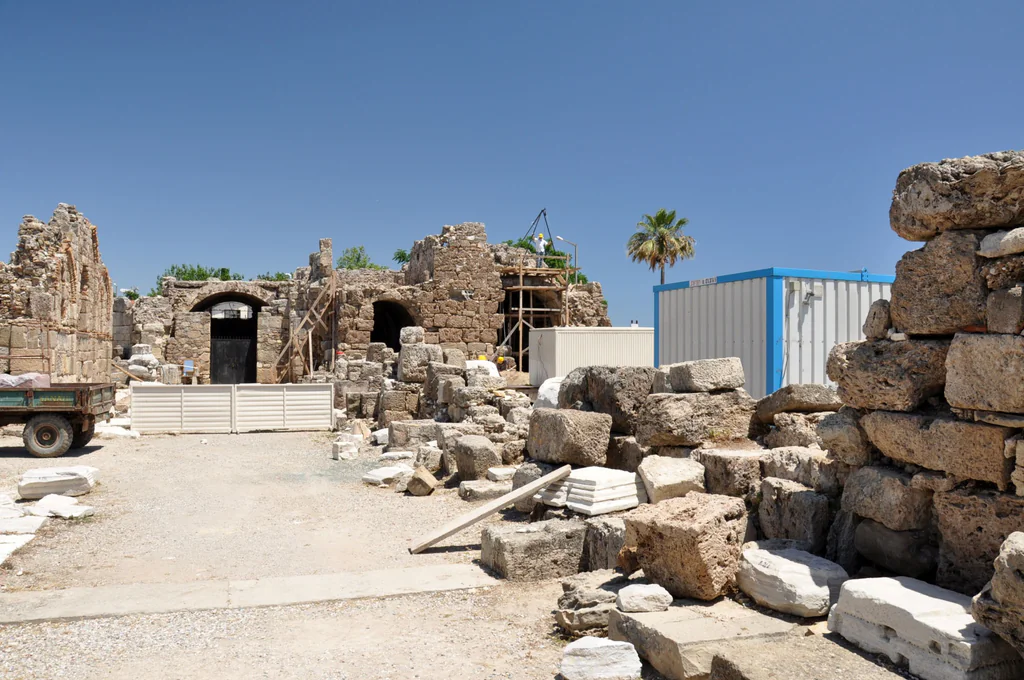
Ancient temples and Byzantine basilicas in Side
 Side, Manavgat 07330, Turkey
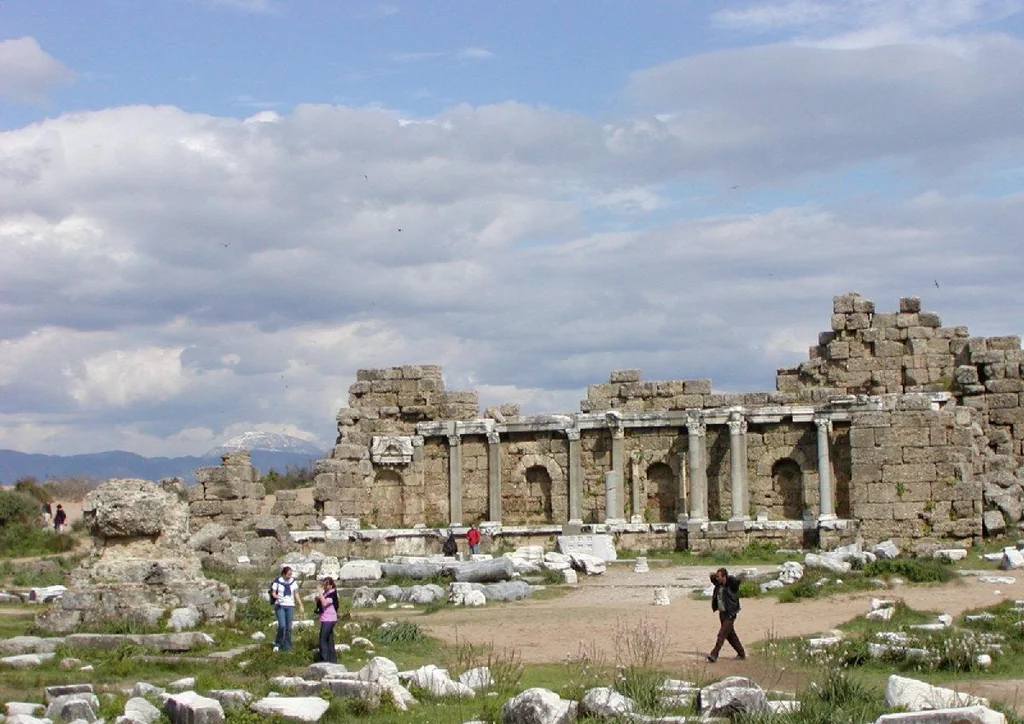
If asked, most tourists visiting Side point out that the temple of Apollo is a famous symbol of the city. Splendidly located on the tip of the peninsula where ancient settlements have flourished, this temple attracts crowds, especially at sunset when it looks its best. However, this is not the only temple that exists on Side, and in fact, visitors can still see the remains of not one but five temples here, not to mention the basilica of Co. Catholicism was ruined.
These are the temples dedicated to Apollo, the patron god of Side - Athena and Men, as well as the Byzantine basilica, located close together, on the seashore and very close to the Side harbor. The meager remains of the temple of Dionysus can be seen to the northwest of the Roman theatre. Finally, the latest addition to Side's collection of ancient temples is the recently rebuilt temple of Tyche, which stands proudly in the city's agora center.
Byzantine Basilica
Behind the temples of Apollo and Athena are clearly visible the ruins of a basilica from the 5th century AD. The church was built on the foundation of ancient temples, then abandoned for unknown reasons. The building has a nave, two aisles and an inner courtyard (skylight).
The area bounded by the basilica's atrium includes both the temples of Apollo and Athena, which gives an idea of how enormous the size of this Christian church was. In its nave, a smaller church built in the 8th or 9th century has been preserved to this day in fairly good condition.
Temple of Men
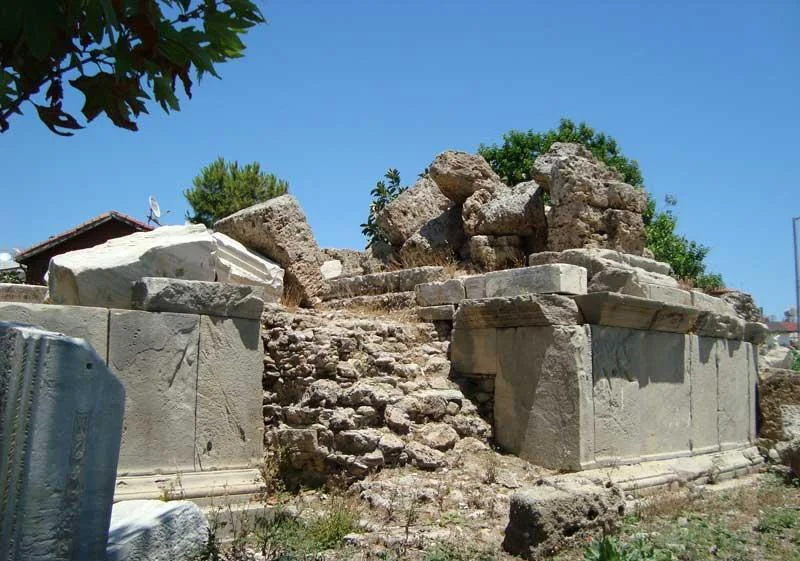
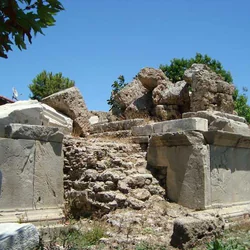
A temple dedicated to Men, an Anatolian god of the Moon, has a completely different character from the classical Greek temples of Apollo and Athena. It was a semicircular worship room (called a cell), in front of which there was a pedestal of the vestibule (vestibular) with columns. The ceremonial staircase leads to the interior of the temple. This temple dates back to the 3rd century AD.
Temple of Tyche
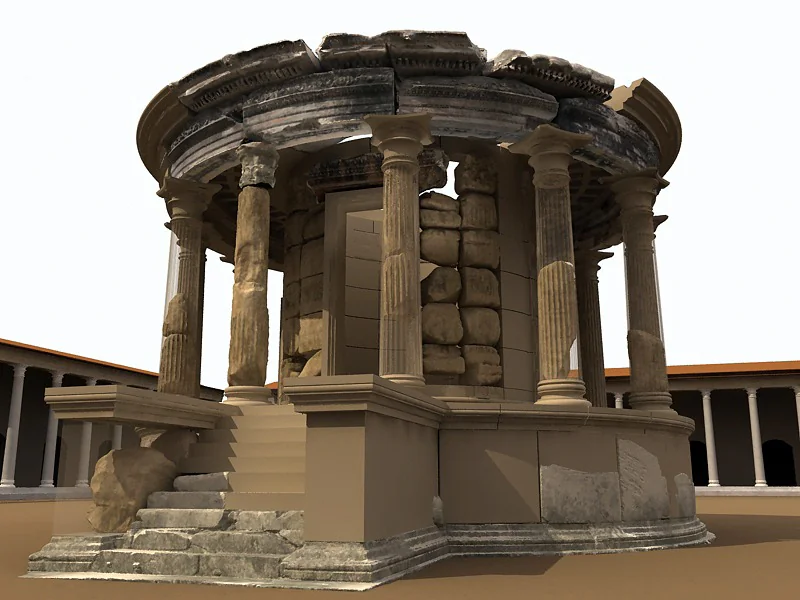
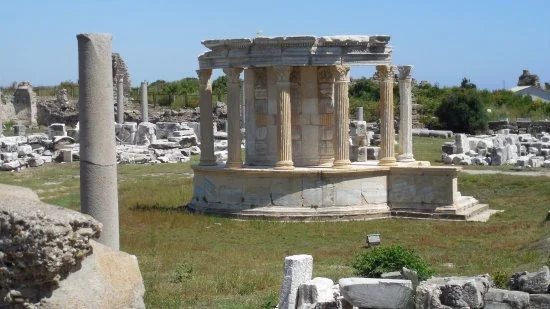
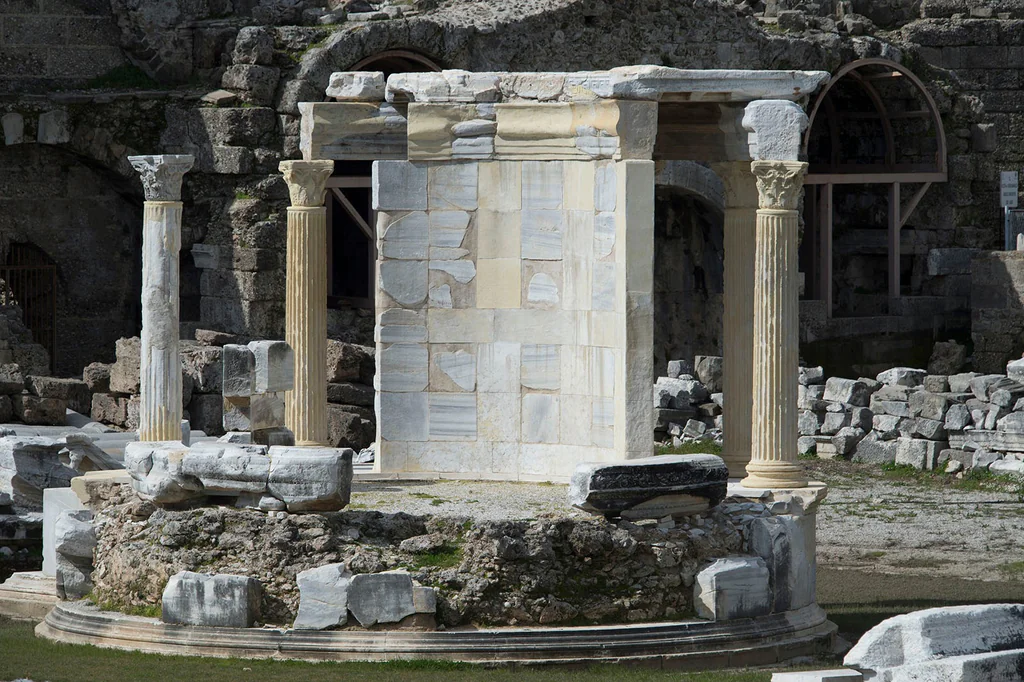
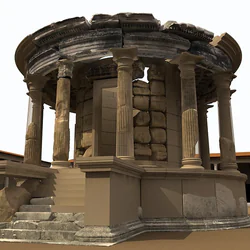
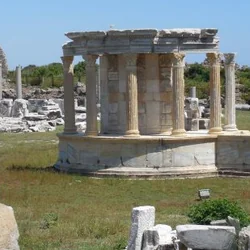
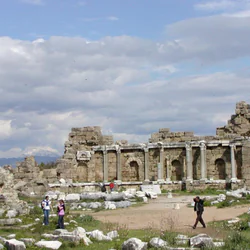
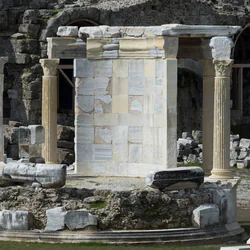
The Agora (Roman community area), located next to the Roman theater on Side, was in ancient times the commercial and cultural center of the city. At its center, archaeologists have found the ruins of a circular building identified as the temple of Tyche. This building was recently restored and is now a decoration and pride of Side.
The ruins of the building in the middle of Agora are, most likely, the ruins of the temple of Tyche, the Greek guardian goddess of fortune and the random but blinded fates, likened to Fortuna of the Greeks. Roman. Restoration of the building was carried out by Side's archeology mission manager, Professor Arif Müfid Mansel, who worked in the city from 1947-1966. His inference about the use of this particular building in the agora was based on the image of the temple of Tyche depicted on coins from Side.
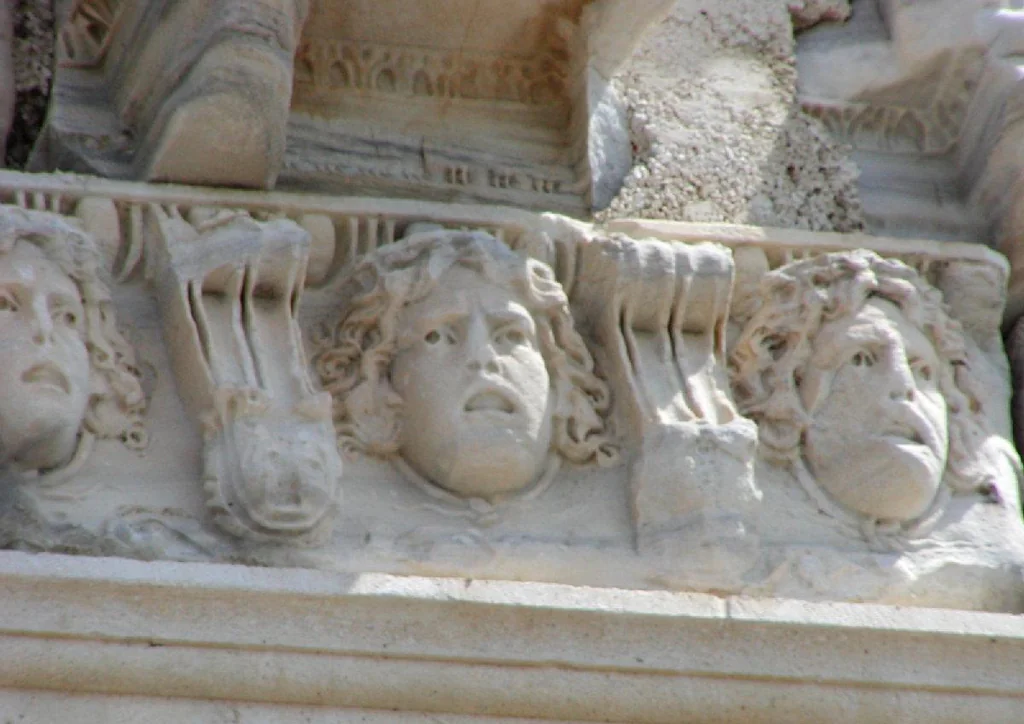
The Temple of Tyche was built, like the temple of agora, in the 2nd century AD. The word architectural design makes it associated with a tolos, i.e. a structure consisting of a circle surrounded by a row of columns. This colonnade originally consisted of 12 columns with Corinthian carvings on the top. The temple stands on an oval platform, and nine steps lead inside it. The total height of the structure is 15 meters (49 feet).
Until recently, the building was completely dilapidated, but in 2012 a decision was made to restore this temple. During the construction of the building, the original materials collected during archaeological excavations were used. The cost of the construction amounted to almost one million Turkish Liras, which was raised from donations from the Association of Historical Towns and Turkish businessman Inan Kıraç. The reconstruction was completed on May 17, 2013.
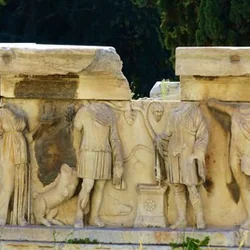
Temple of Dionysus
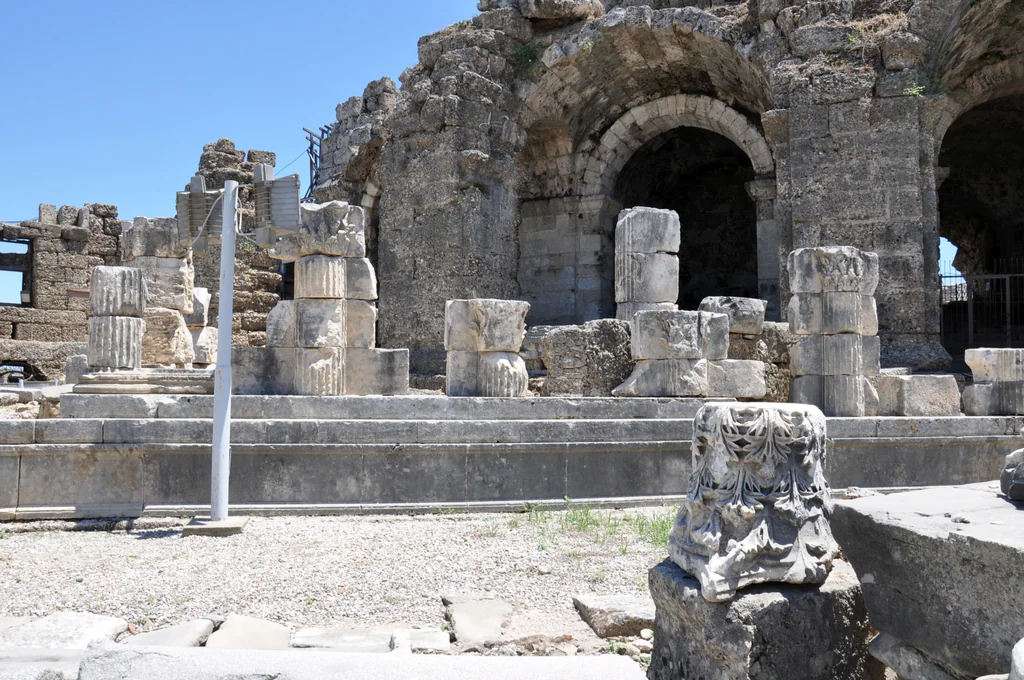
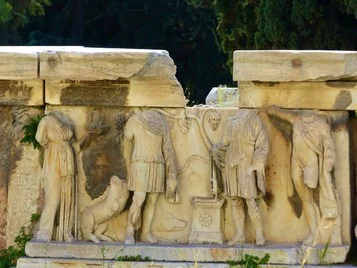
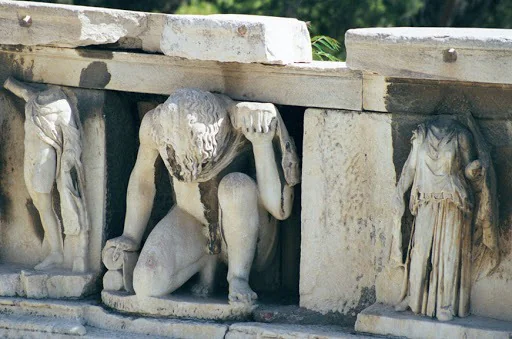
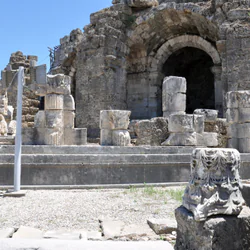
This temple is located very close to the Roman theater to the northwest, built on a high pedestal and six steps to the north lead to its main altar. Originally, there were four columns at the entrance of the temple.
The cell walls had a half-column projection so the temple plan was called pseudo-peripteros, a rare occurrence in Asia Minor. The architectural decoration of the building dates to the reign of Emperor Augustus - 1st century AD.
During the expansion and reconstruction of the theater in the 2nd century AD, the southwestern part of the temple of Dionysus was obscured by the column of the theater.
All Byzantine temples and basilicas are free and open day and night. The Temple of Dionysos and the Temple of Tyche cannot be approached and can only be viewed from a distance.
The best idea to see all the temples is an easy walk through the center of the historic Side. If you start at the Archaeological Museum, the first temple you'll see is the Tyche temple located directly across from its building, on the other side of Harbor Street (Liman Caddesi). The Temple of Dionysus was nearby, humbly beside the theater. Just go through the monumental gate and the Vespasian Monument and look to the left.
From the temple of Dionysus, you need to walk along Harbor Street down to the coast (600 meters or 650 meters), then turn left and walk another 150 meters (165 meters), the temple of Athena, Men and the basilica Early Christian streets are located nearby.