


""에 대한 모든 결과 보기

 언제든지
언제든지 
 Tiếng Việt
 English한국어
 日本語
日本語 简体中文
简体中文 Français
 Deutsch
 Español
 Italiano
 Русский


 기업 로그인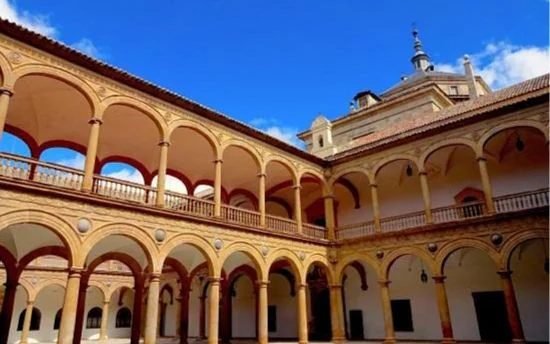
Hospital de Tavera
 C. Duque de Lerma, 2, 45003 Toledo, Tây Ban Nha
Nestled within the ancient city of Toledo, Spain, Tavera Hospital stands as a testament to the intersection of history, art, and philanthropy.
Nestled within the ancient city of Toledo, Spain, Tavera Hospital stands as a testament to the intersection of history, art, and philanthropy. Built in the 16th century, this architectural gem has weathered the sands of time, evolving from a charitable institution to a cultural landmark.
Commissioned by Cardinal Juan Pardo Tavera, the hospital was envisioned not only as a medical facility but also as a haven for the less fortunate. Its construction began in 1541 under the architectural guidance of Alonso de Covarrubias, a prominent figure of the Spanish Renaissance.
The façade of Tavera Hospital is a visual spectacle, adorned with intricate reliefs and decorative elements that reflect the prevailing artistic trends of the Renaissance. The grand entrance, marked by a majestic portal, invites visitors into a world where history and aesthetics converge.
Within the hospital's walls, a courtyard adorned with arches and galleries serves as a tranquil oasis, transporting visitors to a bygone era. The chapel, a highlight of the complex, showcases the artistic prowess of El Greco, the renowned Greek-Spanish painter. His masterpiece, "The Burial of the Count of Orgaz," adorns the chapel, contributing to the cultural richness of the hospital.
Tavera Hospital's evolution over the centuries has seen it transition from a charitable institution to a cultural space. Today, it houses the Tavera Museum, featuring a collection of art, furniture, and artifacts that provide insights into the hospital's storied past. The museum not only preserves the legacy of Cardinal Tavera but also offers a window into the socio-cultural dynamics of Toledo during the Renaissance.