


See all results for ""

 Anytime
 Tiếng ViệtEnglish
 日本語
日本語 한국어
한국어 简体中文
简体中文 Français
 Deutsch
 Español
 Italiano
 Русский


 Login for Corporates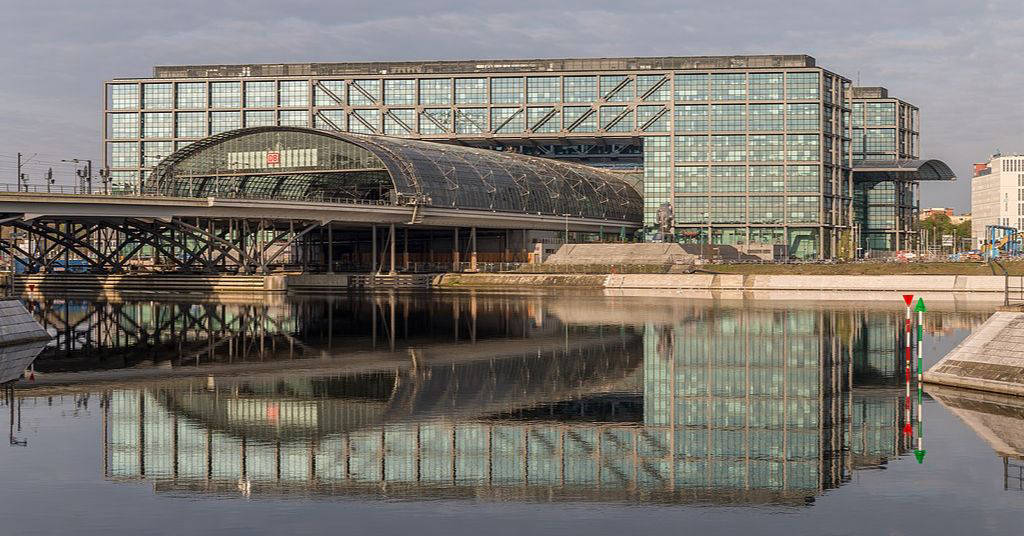
Central Station
 Hauptbahnhof, Europaplatz 1, 10557 Berlin, Germany
Hauptbahnhof or Lehrter Bahnhof (Lehrte Station) is Berlin's central station.
Berlin Hauptbahnhof, also known as Berlin's city center station, is the city's main station and one of the largest in Germany. It entered full capacity two days after its opening on 26 May 2006. The station is located on the site of the historic Lehrter Bahnhof and on the Berlin S-Bahn suburban railway. The station is operated by DB Station&Service, a subsidiary of Deutsche Bahn AG, and is classified as a Category 1 station. Other stations of comparable stature in Berlin include Berlin Gesundbrunnen, Berlin Südkreuz and Berlin Ostbahnhof.
The station is also known as Lehrter Bahnhof (Lehrte Station).
The station opened in 1871 as the terminus of the railway line connecting Berlin with Lehrte, near Hanover, which later became Germany's most important east-west mainline. In 1882, with the completion of the Stadtbahn (City Railway, Berlin's four-track central elevated railway, which carried both local and mainline service), just north of the station, a transit station The smaller Lehrter Stadtbahnhof was opened to provide connections with the new line. This station later became part of the Berlin S-Bahn. In 1884, after the closure of the nearby Hamburger Bahnhof (Hamburg Station), Lehrter Bahnhof became the terminus for trains to and from Hamburg.
After heavy damage during World War II, limited services to the main station were resumed, but were later suspended in 1951. In 1957, with rail lines to West Berlin under control East German control, Lehrter Bahnhof was heavily destroyed. In 1987 it was extensively renovated to celebrate the 750th anniversary of Berlin's founding. After German reunification, it was decided to improve Berlin's railway network by building a new north-south main line, to supplement the east-west Stadtbahn. The Lehrter Stadtbahnhof is considered the logical location for a new central station as it is today.