


See all results for ""

 Anytime
 Tiếng ViệtEnglish
 日本語
日本語 한국어
한국어 简体中文
简体中文 Français
 Deutsch
 Español
 Italiano
 Русский


 Login for Corporates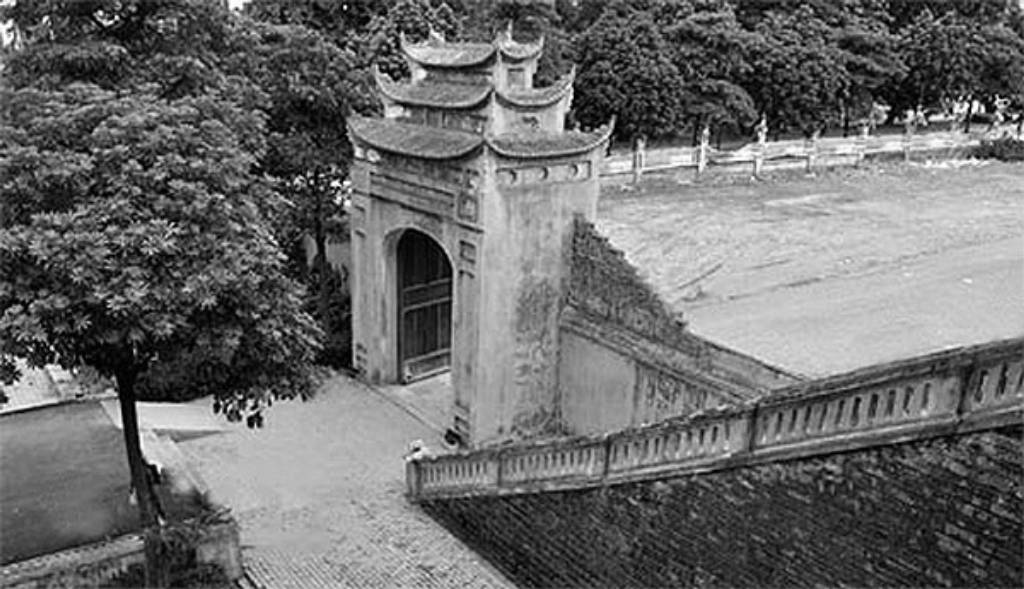
The rise and fall of Tong Binh Citadel before becoming Thang Long Capital
 Hanoi - Vietnam
Before becoming the "Eternal Capital" in 1010, when King Ly Cong Uan issued a decree to move the capital to Thang Long, Hanoi was a rich land, played an important role and was once chosen as the central city of the land. country.
During the reign of King Hung Vuong who founded the country (about the 6th-7th centuries BC), Hanoi belonged to the Ministry (administrative level equivalent to a province) Giao Chi, one of the 15 ministries of the State of Van Lang. Today's Ministry of Giao Chi includes Hanoi, Hung Yen, Nam Dinh and Ninh Binh. At that time, Hanoians gathered on the banks of the To Lich River. This place is called Bon Do or Long Do commune or To Lich village. This is the place where the "dragon rolls, tigers sit", later chosen by King Ly Cong Uan as the capital.
According to old documents, To Lich River flows through the village to Cai River (Red River). They built a bamboo bridge across the To Lich river and named it Giat bridge (around Cua Bac street now). Long Do commune at that time included some old hamlets such as Rung hamlet (Lam Ap), Gia La hamlet, Rung Nga hamlet (Nha Lam), Bai hamlet (Binh Sa), Trai Ca Tuoi hamlet (Tien Ngu).
The head of the commune, To Lich, is not rich but generous; They respect filial piety and often help others. Later, when To Lich died, the people of Long Do named him the god of the village and changed the name of Long Do to To Lich village. The temple of To Lich village or Long Do village was built on Nung mountain, opposite the Giat bridge, which is considered the sacred mountain of the region. Therefore, later on, folk still considered To Lich as the god of the mountain, the river god and also the god of Thang Long - Hanoi.
During the reign of King An Duong Vuong, the capital of our country was moved from Bach Hac (present-day Phu Tho) to Co Loa (in Soc Son, Hanoi now), To Lich village still retains its peaceful appearance. In 207, Trieu Da invaded our country. Because he despised the enemy, An Duong Vuong failed, starting the darkest chapter in the nation's history - the thousand years of Northern domination. To Lich village is no exception, also under the yoke of the Northern empire for thousands of years.
Under the Han domination, Hanoi belonged to Tay Vu and Phong Khe districts. By the Ngo and Tan domination, Hanoi belonged to Vu An district, Nam Dinh. During the reign of Emperor Hieu Vu of the Luu Tong Dynasty, Hanoi was upgraded to a district, that is, the capital of Tong Binh. Tong Binh district capital is divided into three districts: Nghia Hoai, Tuy Linh and Xuong Quoc. The following land was selected as the Imperial Citadel of Thang Long, along with Tu Liem and Hoai Duc districts (in present-day Nghia and Tuy Linh districts).
In 544, after Ly Bi revolted against the domination of the North, ie the Luong Dynasty, he became emperor, taking the title of Nam Viet Emperor (also known as Ly Nam De) built bamboo and wooden ramps. at the river mouth. This is the first time Hanoi built a rampart, becoming the political center of an independent country. Although the time of existence is not long, this is a heroic period of Thang Long - Hanoi in particular and Vietnam in general.
In 602, Ly Phat Tu, a descendant of Ly Nam De, surrendered to the Sui Dynasty. The Sui divided the country into three districts: Giao Chi (North), Cuu Chan (Thanh Hoa province) and Nhat Nam (Nghe Tinh) and set Tong Binh as the capital of the colonial government of Annam. The Imperial Citadel at that time became the headquarters of the Northern invaders in the Sui and Tang dynasties. However, during this time, the soldiers of the Sui and Tang dynasties stationed in Tong Binh were always in disarray. The people constantly rose up against the invading yoke such as the uprisings of Ly Tu Tien, Dinh Kien, and Mai Hac De (Mai Thuc Loan) which caused the colonial army to suffer much damage.
In 791, Phung Hung broke the yoke of the Northern army, liberated Tong Binh citadel and established the capital here, maintaining the peace for seven years because then he fell ill and died. People respect him as Bo Cai Dai Vuong. After Bo Cai Dai Vuong died, Tong Binh once again fell into the grip of the Northern feudal court.
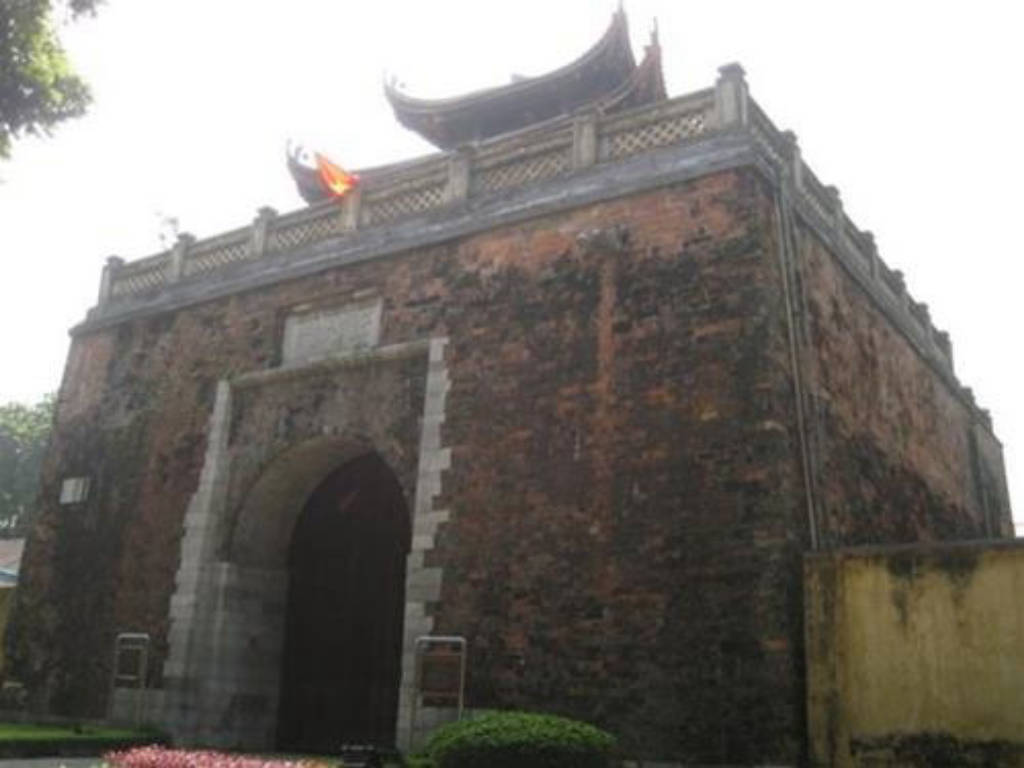
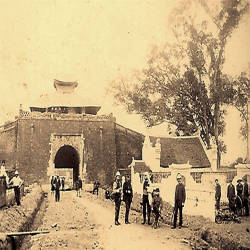
In 801, Admiral Bui Thaiý ordered his soldiers to repair Annam La Thanh citadel, dig trenches and build more ramparts. He combined Tu Thanh and La Thanh to form a citadel to increase strength against the uprisings of his subjects. During this period, La Thanh had a riverbank about 6.82 meters high. The city has three gates; On each gate, there is a gazebo. The East and West gates with three compartments are called "Three compartments Gate". The South Gate is the main entrance with five doors and a five-chambered gazebo. In the citadel there are 10 buildings, with 40 compartments to store weapons buildings on either side. At that time, it was a relatively palatial citadel. However, Bui Thai could not hold out for long; In 803, Bui Thai was defeated by the people's uprising under the leadership of Viet General Vuong Quy Nguyen and had to flee to the country.
Since 863, the Hanoi area has had two buildings. The first citadel is Giao Chau (also known as Giao Chi Citadel) which is the city of the colonial government. The circumference of this citadel is more than 6km; To Lich River in the north and Cai River (present-day Red River) in the east became natural trenches. This is called La Thanh citadel or Cuu Thanh (ancient city). Inside there is Tu Citadel with a circumference of 1.6 km. The second citadel is Kim Thanh, built in 825 under the rule of Ly Nguyen Hy.
In 866, Cao Bien, the next colonizer, Field Marshal Tong Binh, ordered the siege of Dai La citadel. In order to cut out the good soil layer and eliminate the invasion of our country, Cao Bien buried thousands of pounds of copper and iron to exorcise evil everywhere. But the magic tricks did not work, Cao Ben had to cry and say: “Oh! When will the South Kingdom push stop? Long stay here, I will suffer disaster! And to avoid disaster, Cao Ben sought to return to the North. After Cao Bien, Tang Con, Chu Toan Duc, and Doc Co Ton were assigned to guard Dai La, but all of them did not stay long in Tong Binh.
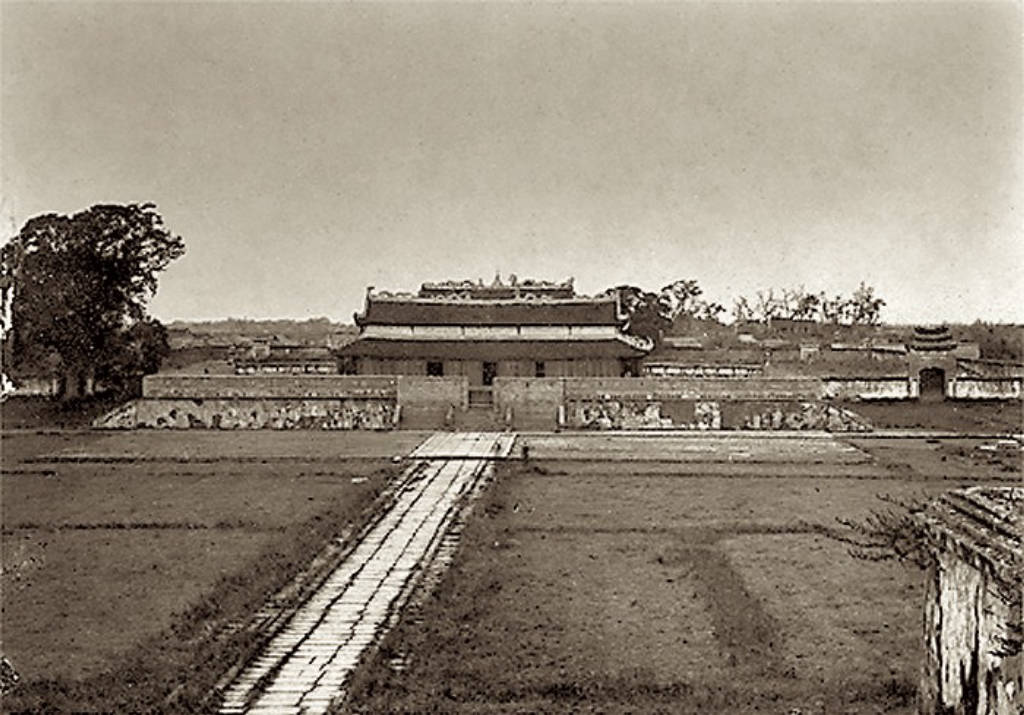
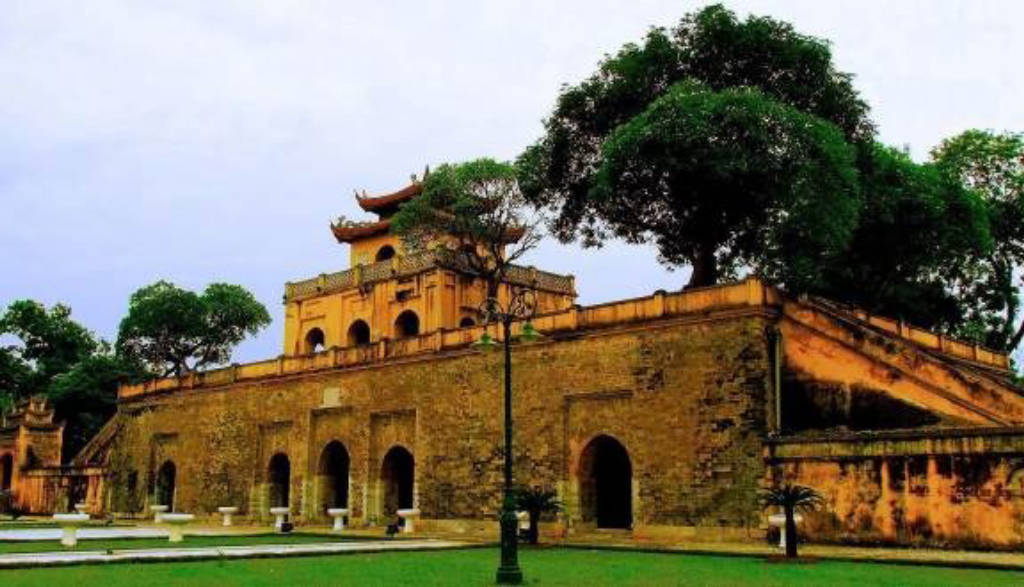
Under Cao Bien's reign over Tong Binh citadel, called Dai La citadel, Dai La citadel had two layers of walls. The outer wall is also a dam 6,337m long, 4.65m high with a foot of 5.3m wide. The inner wall is 5,947m long, 8.06m high, the footing is 7.75m wide; on each side of the four sides of the wall built a small wall 1.5m high. On the wall there are 55 watchtowers; five auxiliary gates built, 6 auxiliary gates with embankment walls; There are 34 roads and 3 moats around. The distance between the inner and outer walls is 50m. In the citadel, there were 5,000 houses for the Tang army to live in.
In 905, Khuc Thua Du rebelled to attack Dai La citadel, then drove the Tang army back to the country, claiming to be the Great General. He is famous for saying: "From now on, the South belongs to the citizens of the South". Khuc Thua Du, her son is Khuc Hao and her nephew is Khuc Thua My, set Dai La as the headquarters. In 930, Khuc Thua My was defeated by the Southern Han Dynasty. Dai La citadel was controlled by the enemy.
In 931, Duong Dinh Nghe rose to regain Dai La citadel. After six years in power, Duong Dinh Nghe was assassinated by Kieu Cong Tien, causing anger among the people. Before the mutiny of the world, Kieu Cong Tien called for help from the Southern Han Dynasty. Right after that, the Southern Han Dynasty sent troops to attack our country. Ngo Quyen, son-in-law of Duong Dinh Nghe, gathered soldiers and killed Kieu Cong Tien to take revenge. Then, he set up a battle against the iron stakes and destroyed the Southern Han army on the Bach Dang river. After a landslide victory on the Bach Dang River, Ngo Quyen ascended the throne, ushering in a long-term independence and sovereignty for our country.
The Ngo Dynasty reigned for 26 years, based its capital in Co Loa. Then, under the Dinh and Le dynasties, the capital was located in Hoa Lu (Ninh Binh), Dinh Bo Linh's hometown, where it was convenient for the defense of the country. Dai La citadel later became the capital of Tong Binh, no longer the center of the country.
Thus, except for the time when Ly Nam De declared himself an emperor equal to the emperor of China, until the Ngo dynasty, even though Vietnam had achieved independence many times, the leaders still only called themselves Commander-in-Chief. Despite being chosen as the location of headquarters many times, Dai La is not considered the capital because of that.