


See all results for ""

 Anytime
 Tiếng ViệtEnglish
 日本語
日本語 한국어
한국어 简体中文
简体中文 Français
 Deutsch
 Español
 Italiano
 Русский


 Login for Corporates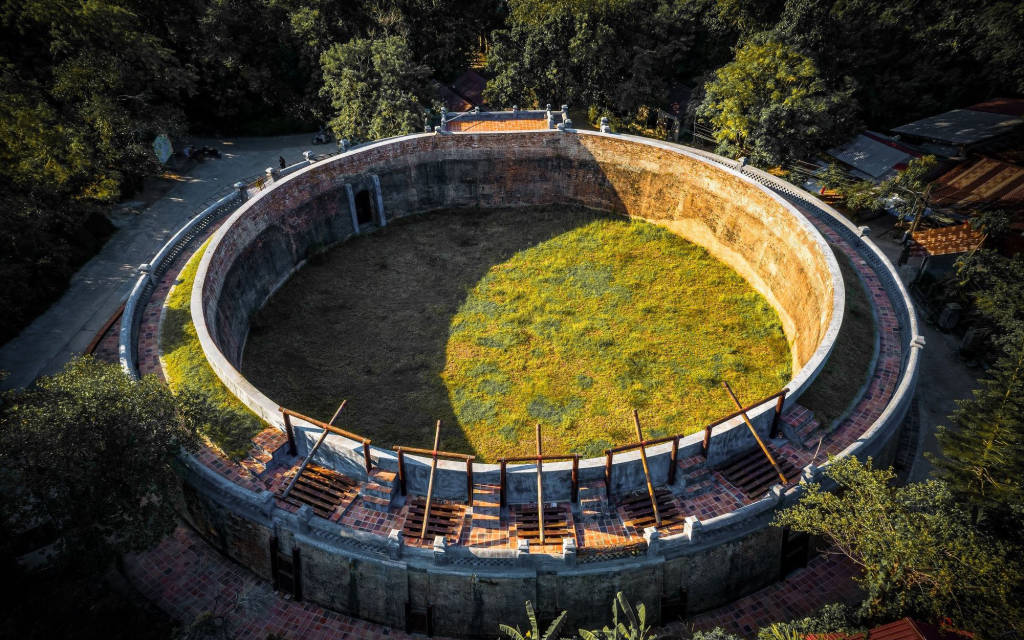
Ho Quyen
 373 Bui Thi Xuan, Duc Ward, Hue City, Thua Thien Hue
Ho Quyen, a relic within the Hue Imperial City complex, is located in Thuy Bieu, Hue. It is a unique arena where battles between elephants and tigers took place during the Nguyen Dynasty for ritual sacrifices and entertainment. This is an ideal destination for visitors to freely explore the fascinating history and culture of the ancient capital.
Ho Quyen is located in Thuy Bieu Ward, Hue City, Thua Thien Hue Province.This is an arena built during the Nguyen Dynasty, where fierce battles between elephants and tigers were organized for the entertainment of the emperor, royal court, and the public. Additionally, it served as a training ground for elephants to get accustomed to combat. Situated near Long Tho Hill, about 4 km from the Imperial City of Hue, Ho Quyen is a unique and rare historical site in the world.
Historical Formation
Ho Quyen Arena was constructed in 1830 during the reign of Emperor Minh Mang. Before its construction, battles between elephants and tigers were held on Da Vien Island on the Perfume River. Since 1750, these events had attracted significant attention from the emperor and the royal court. Due to dangerous incidents, Emperor Minh Mang decided to build a sturdy arena in Truong Da village, Nguyet Bieu village, to ensure safety.
Unique Architecture
Ho Quyen is an open-air arena with a circular structure. Built with bricks, stones, and high-quality lime mortar, the arena remains relatively intact to this day. It features two concentric circular walls, the inner wall standing at 5.90 meters and the outer wall at 4.75 meters, creating a thickness of 4 meters at the top and 5 meters at the base. The inner diameter is 44 meters, and the outer circumference is 140 meters.
The emperor's grandstand faces south and is built higher than the regular grandstands around the arena. In front of the emperor's grandstand, there is a dedicated stone staircase for the emperor and the royal court. The large archway for elephants to enter the arena is 1.90 meters wide and nearly 4 meters high, with two large wooden doors and stone hinges.
Organizing the Battles
The initial purpose of the battles between elephants and tigers was to train the elephants for combat, which later became a form of entertainment. On the day of the event, the arena was decorated with flags and ceremonial items. The emperor would often travel by dragon boat from Nghenh Luong Pavilion along the Perfume River to Long Tho pier, then take a palanquin to the arena. These battles were typically held once a year during the Nguyen Dynasty.
The last recorded battle at Ho Quyen took place in 1904 during the reign of Emperor Thanh Thai. This exciting and dramatic event was witnessed and described in detail by many. After each battle, tigers were usually trampled to death by elephants, as their claws and fangs were clipped before the fight.
Restoration
Since late 2019, the Hue Monuments Conservation Center has been restoring Ho Quyen, including the walls, staircases, and wooden pulley systems for the tiger cages. By early 2022, the restoration was largely complete, bringing Ho Quyen back to its original beauty.
Visiting Experience
When visiting Ho Quyen, tourists can explore the unique historical space of the ancient capital of Hue. This site is not only an architectural marvel but also a place rich in historical and cultural significance. Ho Quyen is an ideal destination for those who love to explore history and enjoy a personalized travel experience. Take your time to visit Ho Quyen and experience the unique historical values this arena offers.