


See all results for ""

 Anytime
 Tiếng ViệtEnglish
 한국어
한국어 日本語
日本語 简体中文
简体中文 Français
 Deutsch
 Español
 Italiano
 Русский


 Login for Corporates
MICE Tourism Management – A Guide to Professional Operations
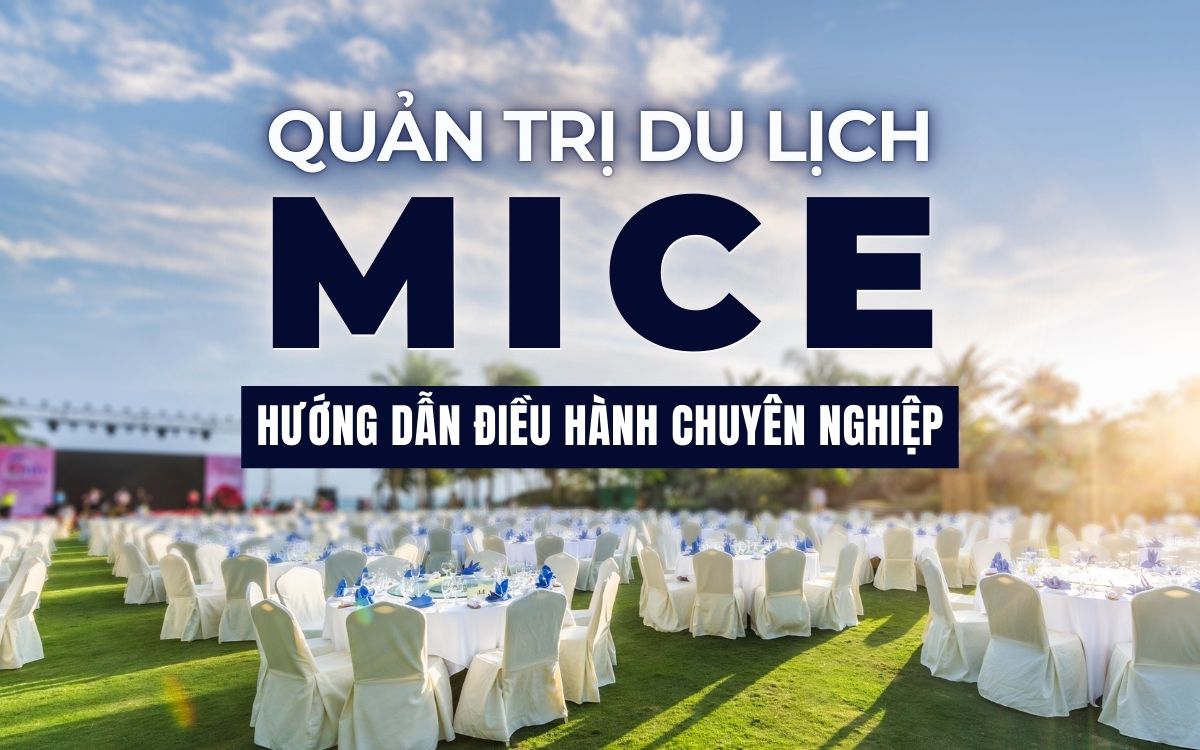
As Vietnam’s tourism industry continues to grow strongly, MICE tourism has emerged as a highly promising segment, offering significant economic value and demanding professionalism in every organizational stage. To succeed in this field, mastering knowledge of MICE tourism management and operational skills is crucial. This article provides a comprehensive overview—from concepts and career opportunities to detailed guidance on running MICE programs effectively.
1. What is MICE Tourism Management? Roles and Key Requirements
1.1. Concept of MICE Tourism Management
MICE tourism management is the process of planning, organizing, supervising, and coordinating all activities related to Meetings, Incentives, Conventions, and Exhibitions (MICE). This job is far more than arranging a simple trip—it is a complex service chain requiring seamless integration of travel, events, accommodation, and supporting services to meet the specific objectives of corporate clients.
1.2. Roles in MICE Operations
The MICE industry offers many job opportunities across various roles, each playing a vital part in program success:
MICE Sales Executive: Finding clients, consulting, and selling service packages.
MICE Operations Executive: Responsible for detailed planning and running MICE programs, from booking flights and hotels to arranging itineraries.
Event Coordinator: Directly managing and supervising activities within events or conferences.
MICE Project Manager: Overall responsibility for one or multiple MICE projects, from ideation to completion.
1.3. Tasks and Skills Required in MICE Management
To excel in MICE operations, professionals need a diverse set of skills and perform multiple tasks:
Tasks:
Researching and understanding client needs.
Designing programs and preparing detailed scenarios.
Budgeting and effective cost management.
Collaborating with suppliers (hotels, airlines, event agencies).
Supervising and handling issues during tours/events.
Skills:
Strong organizational and detailed planning skills.
Excellent communication and negotiation skills.
Ability to work under pressure and solve problems flexibly.
Creativity and attention to detail.
Foreign language ability (especially English) is a major advantage.
1.4. Importance of Event Coordination in MICE
Event coordination is the heart of MICE operations. Even a perfect plan can fail without proper coordination. A skilled coordinator ensures everything runs on schedule, suppliers work smoothly together, and unexpected issues are resolved promptly—delivering a seamless and satisfying experience for clients. This is what defines a truly professional MICE service.
2. Should You Pursue a Career in MICE Tourism Operations?
2.1. Career Opportunities in Professional MICE Services
The MICE market in Vietnam and globally is growing rapidly, supported by credible reports and statistics, creating a strong foundation for career development.
Globally, The Business Research Company reports that the MICE market size is expected to grow from USD 978.77 billion in 2024 to USD 1,063 billion in 2025, with a CAGR of 8.3%. This recovery and growth show strong worldwide demand for professional event and conference organization.
Following this trend, Vietnam is emerging as a leading MICE destination. According to data cited by the Institute for Tourism Development Research, MICE tourists to Vietnam in Q1/2024 increased by 35% compared to the same period in 2023. This segment recovered the fastest, accounting for about 60–70% of current visitors, demonstrating the market’s great appeal and potential.
This strong growth creates countless career opportunities at:
MICE-specialized travel companies.
Major hotels and resorts with convention centers.
Professional event management companies.
International convention and exhibition centers.
2.2. Income Levels and Work Environment
Income: MICE is considered a high-paying field compared to the general tourism industry. Entry-level employees can expect salaries from 10–15 million VND/month. For managers or experienced specialists, income can reach 40–50 million VND/month or higher, not including project-based bonuses.
Work Environment: The field is dynamic, creative, and full of challenges. You will travel to many places, meet many people, and rarely feel bored. However, it requires time flexibility, willingness to work overtime, and resilience under pressure—especially during peak seasons.
3. Types of MICE Programs Requiring Specialized Coordination
Each component of MICE has its own characteristics, requiring different approaches and coordination.
3.1. Meetings – Corporate Meetings in MICE
.jpg?updatedAt=1755687574599)
Organizing annual meetings for companies.
These are company meetings or partner gatherings. Coordination must ensure professionalism, punctuality, and well-prepared meeting rooms, AV equipment, and refreshments.
Key Note: Perfection in the smallest details is critical. Technical failures (e.g., projectors not working, faulty microphones) or schedule issues (e.g., delayed coffee breaks) can ruin professionalism. The coordinator must be the final checker and always have a backup plan for technical equipment.
3.2. Incentives – Reward Trips Requiring Strong Execution
.jpg?updatedAt=1755687574579)
Team building tours are commonly considered a popular form of incentive travel.
Often seen as team-building trips, incentive tours reward outstanding employees or partners. The core elements are unique experiences and premium services. Creativity in itineraries, bonding activities, and impressive gala dinners are essential.
Key Note: Emotions rule. The trip must feel like a personalized gift, not just a free holiday. Learn about company culture and participants’ preferences to create emotionally engaging activities. Surprises and uniqueness are highly valued.
3.3. Conventions – Large-Scale Conferences
.jpg?updatedAt=1755687574666)
Conferences are often organized on a large scale, with hundreds to thousands of participants
Conventions often involve hundreds to thousands of attendees. Coordinating such MICE events requires experience in complex logistics: delegate registration, transportation, multiple parallel sessions, and security.
Key Note: Logistics is the backbone. Even small errors (e.g., bottlenecks at registration, mis-scheduled transfers) can trigger chaos. Technology (event apps, QR code check-in) and clear staff assignments are crucial.
3.4. Events & Exhibitions – Flexible Coordination Required
These include product launches and trade fairs. Coordination requires flexible collaboration among organizers, exhibitors, contractors, and logistics providers. The goal is to create an attractive space that draws visitors and achieves communication and business goals.
Key Note: Coordination and commercial effectiveness matter most. The coordinator acts as a conductor balancing the needs of organizers, sponsors, exhibitors, contractors, and visitors. Crisis communication and fire safety plans are also vital.
4. How to Run MICE Programs Effectively
Delivering professional MICE services requires a well-structured, scientific process.
4.1. Define Objectives and Analyze Client Needs
The first and most important step is listening and understanding. Clarify with clients:
What are the objectives (reward, training, product promotion)?
Who are the participants?
What is the estimated budget?
Any special service, catering, or activity requirements?
4.2. Create a Coordination Plan and Assign Suitable Staff
Based on collected information, build a detailed plan (timeline, task checklist) for each stage. Clearly assign responsibilities across the team—from sales and operations staff to on-site coordinators—ensuring no tasks are overlooked.
4.3. Control Budget, Risks, and Program Timeline
Budget: Track all expenses closely, compare with the approved budget, and optimize costs without reducing quality.
Risks: Anticipate potential risks (bad weather, schedule changes, technical failures) and prepare contingency plans (Plan B).
Timeline: Regularly check progress against the plan to keep everything on track and adjust when necessary.
4.4. Evaluate and Optimize MICE Operations
After the program ends, collect client and team feedback. Hold a review session to analyze successes and areas for improvement. This serves as a valuable foundation to optimize processes and enhance service quality for future MICE programs.
New Posts