


See all results for ""

 Anytime
 Tiếng ViệtEnglish
 한국어
한국어 日本語
日本語 简体中文
简体中文 Français
 Deutsch
 Español
 Italiano
 Русский


 Login for Corporates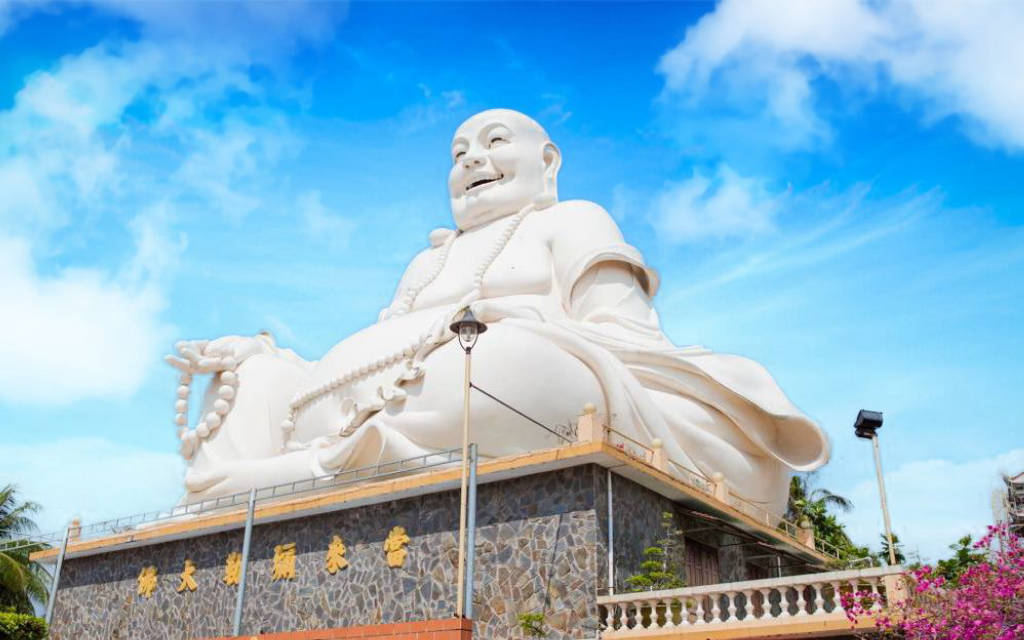
Vinh Trang Pagoda
 Nguyen Trung Truc Street, My An Hamlet, My Phong Commune, My Tho City, Tien Giang Province, Vietnam
Vinh Trang Pagoda is a famous pagoda in the South, located on Nguyen Trung Truc Street, My An Hamlet, My Phong Commune, My Tho City, Tien Giang Province, Vietnam. This is one of the attractive destinations for tourists when coming to the West, not only because of its architectural beauty but also because of its historical and cultural value. The pagoda was recognized as a national monument in 1984.
Vinh Trang Pagoda is one of the most famous pagodas in Tien Giang, located in the Mekong Delta region. Situated on Nguyen Trung Truc Street, in My Phong Commune, My Tho City, the pagoda attracts visitors not only for its unique architecture but also for its deep historical and cultural significance. Built in the 19th century, it is an essential stop on any journey to the Mekong Delta, especially for those interested in exploring the blend of Eastern and Western architectural styles and delving into the rich local culture and history. The pagoda was recognized as a national cultural heritage site in 1984, offering visitors an opportunity to explore its valuable spiritual heritage.
1. History of Vinh Trang Pagoda
Vinh Trang Pagoda was constructed at the beginning of the 19th century by Bui Cong Dat. In 1849, Venerable Thich Hue Dang took over and renovated the pagoda, renaming it Vinh Trang, which symbolizes endurance and development. In 1907, under the direction of Venerable Chanh Hau, the pagoda underwent major renovations, featuring a distinctive blend of Western architectural styles, particularly French, Roman, Thai, Khmer, and Cham influences, while still retaining traditional Vietnamese architectural beauty. In 1984, Vinh Trang Pagoda was officially recognized as a national cultural monument, becoming a famous pilgrimage and tourism destination in the Mekong Delta.
2. Architecture and Interior Design
Vinh Trang Pagoda spans an area of 14,000 m², constructed in the shape of the word "National", with four main sections: the Front Hall, the Main Hall, the Ancestor Hall, and the Back Hall. The pagoda's architecture is a harmonious fusion of Eastern and Western styles. Notably, the pagoda features sculptures, landscape paintings, a collection of 18 Arhat statues, and 19th-century wooden and bronze artworks. The pagoda houses over 60 Buddha statues made from various materials including bronze, wood, cement, and clay. The three large bronze Buddha statues — Amitabha, Avalokitesvara (Quan Am), and Thich Chi — are priceless cultural treasures. Additionally, the Great Bell (Phap Bao Bell), cast in 1854, is a fine example of ancient bell-casting craftsmanship.
3. Notable Features in the Pagoda Ground
In addition to its architectural beauty, Vinh Trang Pagoda also boasts several remarkable features within its grounds:
- Tam Quan Gate: The pagoda has two unique Tam Quan gates, built in 1932, made from broken porcelain pieces pieced together to create a charming, ancient look.
- Large Buddha Statues: The 32-meter-long statue of the Buddha entering Nirvana (Sakyamuni) and the 20-meter-tall statue of the Laughing Buddha (Di Lac) are major highlights of the pagoda, attracting visitors to admire the solemn and majestic beauty of Buddhist culture.
4. Notable Abbots
Over the years, Vinh Trang Pagoda has been under the leadership of many abbots, each of whom made significant contributions to preserving and developing the pagoda. Notable abbots like Thich Hue Dang, Minh De, Quang An, and Le Ngoc Xuyen played key roles in the construction and upgrading of the pagoda, transforming it into a famous pilgrimage and tourist destinations. Their efforts have made the pagoda not just a place of worship, but also an attractive cultural site for tourists who wish to learn about its history and significance.
5. How to Get to Vinh Trang Pagoda
Vinh Trang Pagoda is about 70 km from Ho Chi Minh City. To get there, you can travel by motorbike or bus. From Ho Chi Minh City, take the Trung Luong Expressway to My Tho City, and then follow local roads like Nguyen Trung Truc and Nguyen Trai to reach the pagoda. The travel time is approximately 1.5 hours by motorbike and 2.5 hours by bus.
6. Conclusion
Vinh Trang Pagoda is an ideal destination for those who love exploring the Mekong Delta, learning about its history, culture, and architecture. The site offers a peaceful, serene atmosphere, providing an opportunity for visitors to explore Buddhist beliefs and the beauty of southern Vietnam. If you're looking for a destination that combines spiritual tourism with cultural exploration, don't miss Vinh Trang Pagoda. This trip will undoubtedly offer you memorable experiences.