


 Tiếng ViệtEnglish
 한국어
한국어 日本語
日本語 简体中文
简体中文 Français
 Deutsch
 Español
 Italiano
 Русский


 Login for Corporates
Origins & Meaning of the “Lì Xì” Tradition in Vietnamese Tet Culture
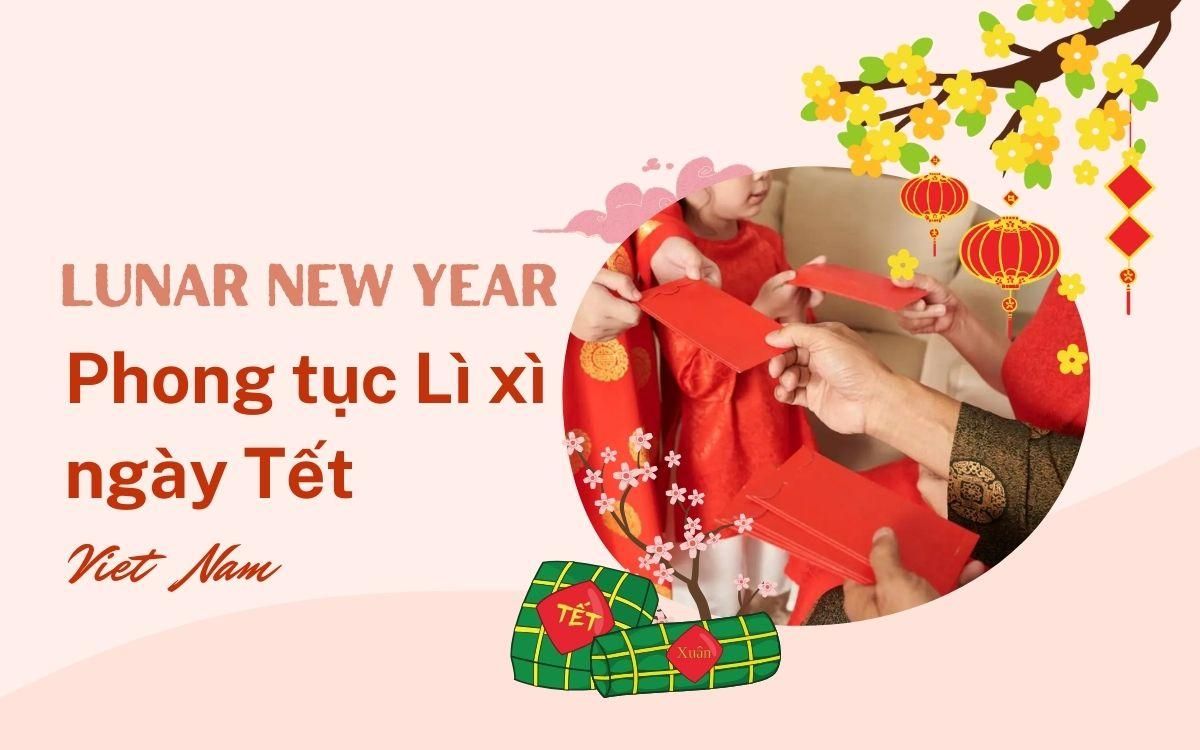
The “lì xì” custom is one of the most iconic symbols of Vietnam’s Lunar New Year (Tết Nguyên Đán), carrying joy, good fortune, and hope for the year ahead. Those little red envelopes hold not only lucky money but also heartfelt wishes for peace, health, and happiness. Over time, this tradition has become a bridge between generations, strengthening family bonds and spreading festive cheer within the community.
This article will take you on a journey to explore the origins, meanings, and regional variations of the “lì xì” tradition, while also looking at how it has evolved in modern life—revealing the deep cultural value that this custom continues to hold.
1. Introduction to the “Lì Xì” Custom during Tet

Red Envelopes in Vietnam’s Tet Festival
1.1. The “Lì Xì” Tradition in Vietnamese Culture
For Vietnamese people, Lunar New Year (Tết Nguyên Đán) – the first day of the lunar calendar – is like a symphony of memories, traditions, and joyful reunions. Amidst the golden apricot blossoms, pink peach flowers, the sound of fireworks, and the smiles of reunion, the red envelopes (“lì xì”) appear like little flames carrying faith and hope.
Inside each envelope are crisp new bills, symbolic in value – not meant for material worth but rather as wishes for luck and prosperity. Adults usually give “lì xì” to children, grandparents give to their grandchildren, and in return, children can also give “lì xì” to the elderly as a sign of respect and blessing. When the envelope is handed over, greetings such as “Peace and Prosperity,” “May all your wishes come true,” or “Happy New Year” become bridges that connect generations, making Tet even more joyful and heartwarming.
1.2. Why the “Lì Xì” Custom Became a Cherished Tradition
“Lì xì” is not just about the money itself, but a way to convey blessings of luck, health, and happiness to loved ones. This spiritual value has allowed the custom to endure across generations, becoming a cultural hallmark of Vietnamese Tet where family bonds are strengthened and joy spreads throughout households and communities.
2. Origins of the “Lì Xì” Tradition

Origins of the Tet Red Envelope Tradition
2.1. Legends and Folktales
According to folklore, on New Year’s Eve, evil spirits would appear to disturb children. To protect them, parents placed coins wrapped in red cloth under their pillows. The light from the coins was believed to ward off evil and bring peace. Over time, this practice evolved into giving money in red envelopes – a gesture of both protection and blessing for the year ahead.
2.2. Chinese Influence and Vietnamese Adaptation
The custom of giving red envelopes originated in Chinese culture as the “hongbao.” When it was introduced to Vietnam, it was localized and blended with Vietnamese beliefs, customs, and styles of blessing. While Chinese culture often emphasized the material value of the money, Vietnamese people placed greater importance on its symbolic meaning – the joy, blessings, and sharing spirit it represents.
2.3. Symbolism of Red Envelopes
In East Asian culture, red symbolizes good fortune and happiness, while coins and money signify wealth and prosperity. Combined in the red envelope, they embody faith and hope. Like small flames, these red packets brighten the Tet atmosphere, drive away misfortune, and transmit positive energy. They also remind younger generations about sharing, family affection, and community joy.
3. The Meaning of the “Lì Xì” Tradition

Red Envelopes in Tet and the Meanings Behind Them
3.1. A Wish for Luck, Health, and Prosperity
A red envelope during Tet is not just a small gift, but a heartfelt blessing: wishing children academic success, adults good health, smooth careers, and abundant wealth. Receiving one brings joy and excitement in the early days of the year, while giving one sparks happiness, love, and the hope of a prosperous year ahead.
3.2. Strengthening Family and Social Bonds
Within families, grandparents and parents give “lì xì” to bless and connect with their children and grandchildren. Conversely, children may give envelopes to their elders as a sign of filial piety. In society, “lì xì” is exchanged among friends, colleagues, and even in workplaces, fostering friendliness, joy, and stronger community ties.
3.3. Positive Impact on Younger Generations
For children, “lì xì” is one of the most exciting parts of Tet, offering motivation and joy for the new year. Through the custom, they learn values of gratitude, sharing, and respect for elders. Beyond the money itself, “lì xì” teaches humanistic lessons about cherishing family and community.
4. Regional Variations of the “Lì Xì” Custom in Vietnam

Unique New Year’s Wishes When Receiving Red Envelopes
4.1. Northern Vietnam: Formality and Respect
In the North, rituals are carried out with formality and elegance. Adults carefully prepare new envelopes with new bills, accompanied by formal greetings. Children receiving “lì xì” must bow politely and greet elders properly. The Northern style emphasizes tradition, order, and family hierarchy.
4.2. Central Vietnam: Simplicity and Warm Affection
In the Central region, the custom is more modest. Envelopes may be simple and the amount modest, but the greetings are sincere and heartfelt. Children often give “lì xì” back to their parents or grandparents as a token of gratitude. This makes Tet celebrations deeply infused with warm family affection.
4.3. Southern Vietnam: Cheerful and Lively Exchanges
In the South, giving “lì xì” is full of cheer and laughter. The greetings are often playful and humorous: “Eat well and grow fast,” “Wishing you wealth,” “Study hard and succeed.” Red envelopes are not only given to children but also exchanged among friends and colleagues, creating a lively, vibrant, and generous Tet atmosphere unique to the South.
5. The Evolution of “Lì Xì” in Modern Life
5.1. From Paper Envelopes to Digital “Lì Xì”
With technology’s rise, the custom has extended beyond traditional red envelopes. Vietnamese people now embrace digital “lì xì” via e-wallets, banking apps, and social platforms.

Red Envelope Feature on ZaloPay
For instance, on ZaloPay, users can send “lì xì” directly in group chats, splitting amounts equally or randomly, with e-greetings and virtual cards. On MoMo, users can design personalized envelopes with AI, choose lucky numbers like 68,686 or 99,999 VND, and send them instantly. Even many banks now integrate red-envelope-style features into their apps, blending convenience with festive spirit.

MoMo offers diverse styles of “lì xì”: random lucky draws, fun quizzes, and QR code scanning…
Still, in many families, the practice of giving physical envelopes persists, treasured as a cultural symbol that encapsulates the warmth and togetherness of traditional Tet.
5.2. Preserving the Cultural Essence
Although its form may evolve, the essence of “lì xì” remains unchanged: conveying blessings, joy, and hope at the start of the year. It is a timeless cultural tradition, connecting the past, present, and future in the spiritual life of Vietnamese people.
Conclusion
The “lì xì” custom is not only a beautiful Tet tradition but also a story of faith, family, and sharing. Each red envelope carries hope, joy, and blessings for a fresh start. Across generations, the custom has endured – adapting yet never losing its spiritual value. “Lì xì” thus acts as a bridge between past and present, between family and community, making every spring more meaningful and full of warmth.
New Posts