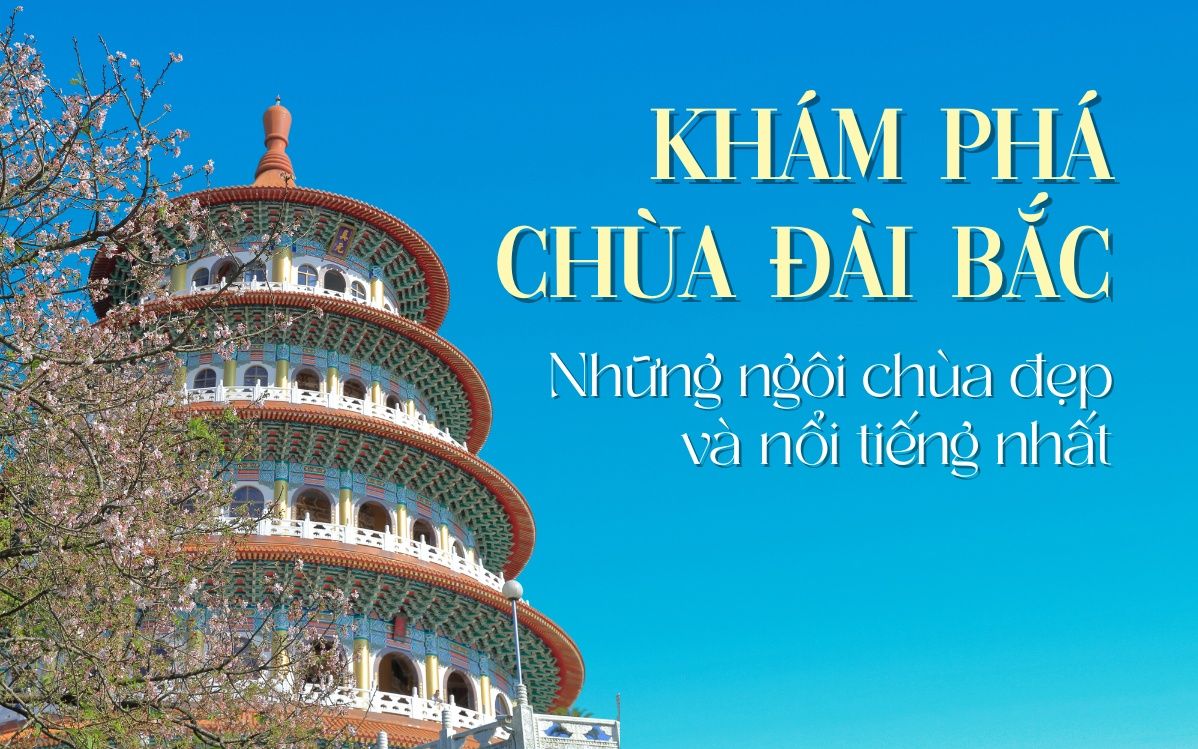
1. Introduction to the Temple Culture of Taipei
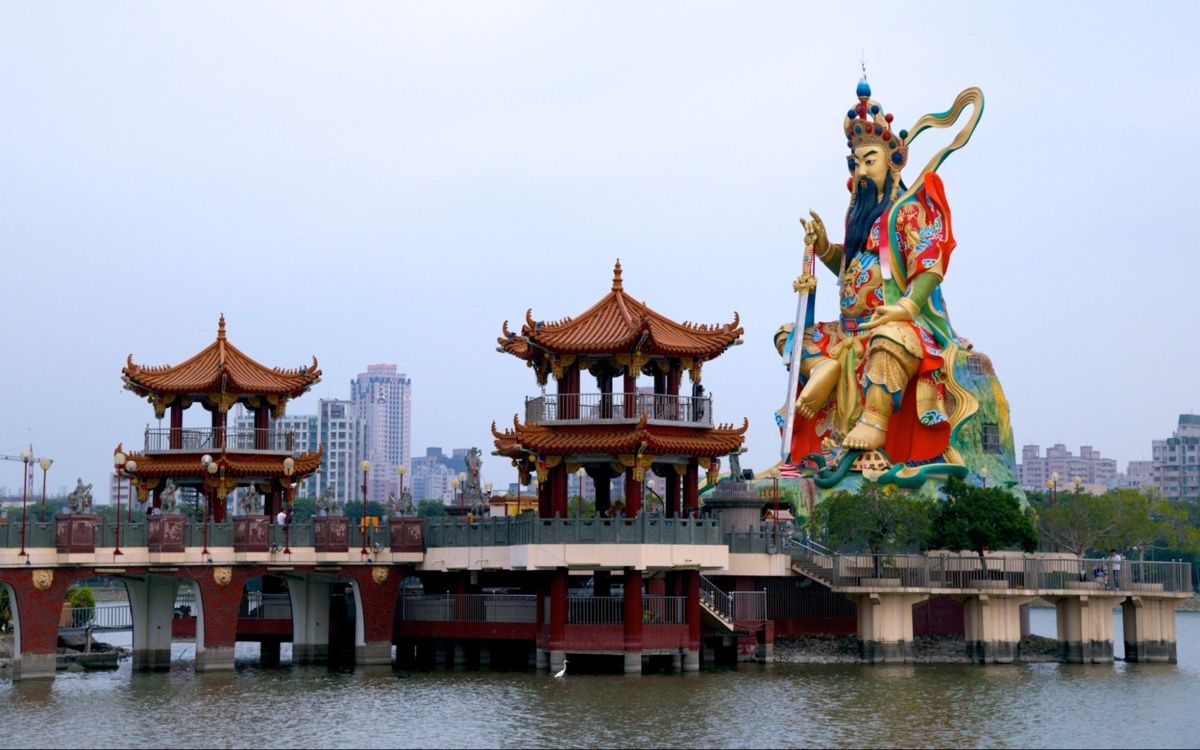
Taipei’s temples boast awe-inspiring architecture that leaves visitors in admiration.
Taipei is not only attractive for its lively modern lifestyle but is also known as a land of temples and shrines that carry deep cultural and spiritual value. Amid the bustling rhythm of life, visitors can easily come across sacred temples in Taipei filled with incense and traditional architecture. Here, Buddhism, Taoism, and Confucianism coexist, creating a rich spiritual space that reflects the daily lives and beliefs of the local people. The beautiful temples of Taipei are not just places of worship and prayer, but also cultural and artistic landmarks that attract large numbers of visitors. With many famous Taipei temples tied to history and folk festivals, this city has become an ideal destination for those seeking peace, good fortune, and a deeper understanding of Taiwanese culture.
2. Famous Sacred Temples in Taipei
2.1. Wuji Tianyuan Temple (Wuji Tianyuan Temple)
Wuji Tianyuan Temple is a grand complex that integrates Taoist deities with elements of Buddhism and Taiwanese folk beliefs. The name “Wuji Tianyuan” is inspired by Taoist philosophy, referring to the boundless nature of the universe.
The temple is famous as a “cherry blossom paradise,” attracting large numbers of visitors every spring. The cherry blossom season typically lasts from late February to mid-March, or from late January to late February depending on the variety of flowers.
Address: No. 36, Section 3, Beixin Road, Shuiyuanli, Tamsui District, New Taipei City, Taiwan.
Opening hours: 6:00 AM – 10:00 PM daily.
How to get there: Take the Red Line MRT to Tamsui Station, then transfer to bus 875 and get off at Tianyuan Temple. The recommended visiting time is around 2–3 hours.
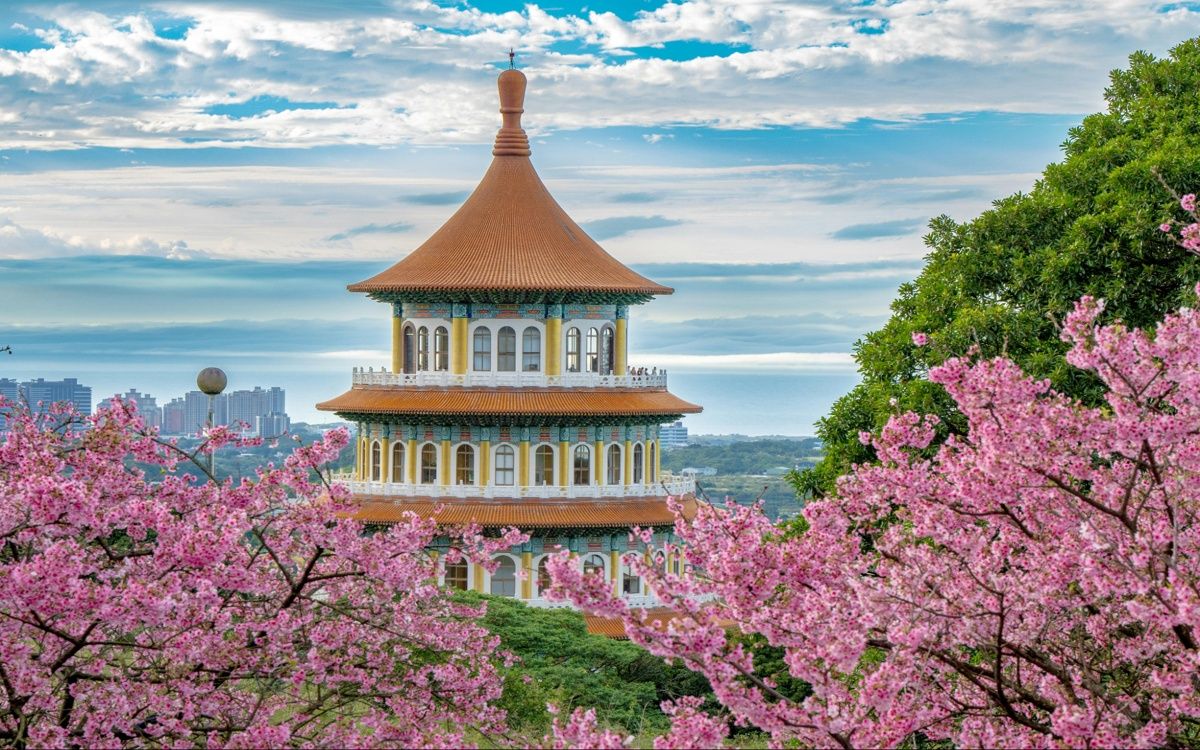
Tianyuan Temple amidst blooming cherry blossoms
2.2. Mengjia Longshan Temple (龍山寺)
Among the most sacred temples in Taipei, Mengjia Longshan Temple is considered a spiritual icon. Built in 1738, it serves not only as a Buddhist temple but also houses deities from Chinese folk religion, reflecting Taiwan’s characteristic religious diversity. Many visitors regard it as one of the top temples in Taipei for good luck, praying here for health, career success, and lasting relationships.
It has curved tile roofs, intricate carvings, and a solemn yet welcoming atmosphere.
Address: No. 211, Guangzhou Street, Wanhua District, Taipei
Opening hours: 6:00 AM – 10:00 PM daily
How to get there: Take the MRT Blue Line to Mengjia Longshan Temple Station, Exit 1, and you’ll arrive directly at the gate. Several bus routes also pass through the area, and it’s within walking distance of Huaxi Night Market.
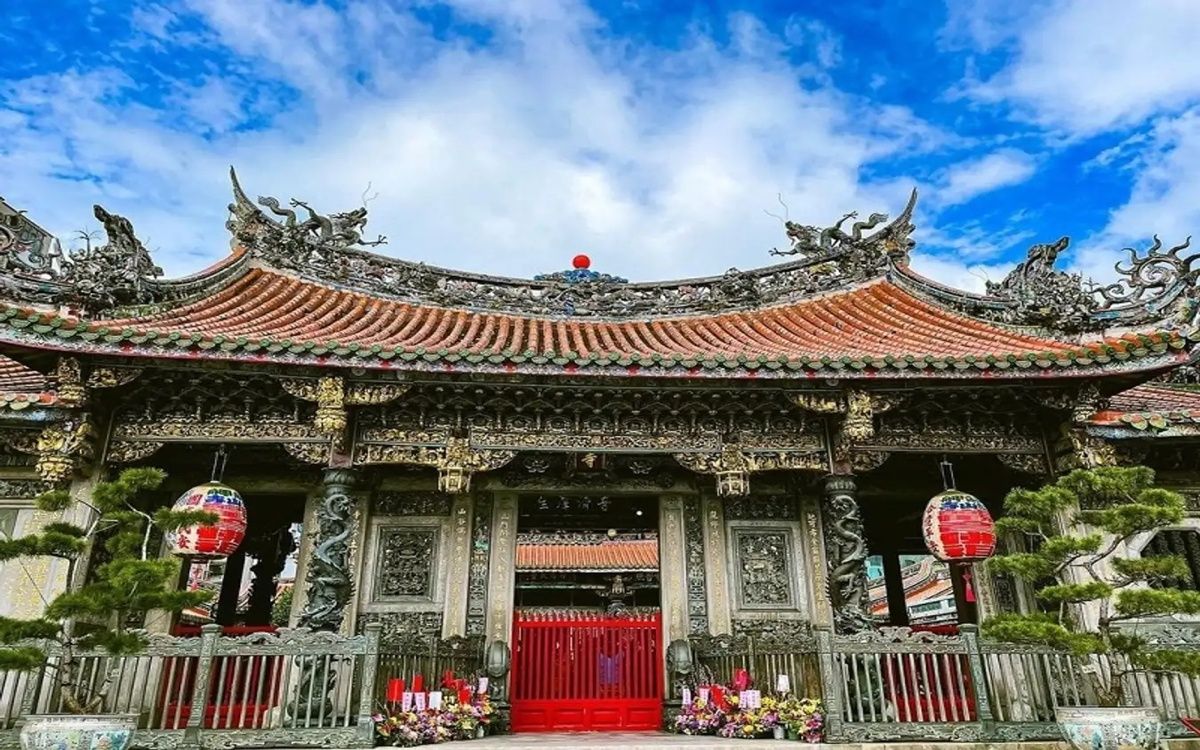
One of the most sacred temples in Taipei, a place to pray for peace and find serenity.
2.3. Dalongdong Baoan Temple (保安宮)
Dalongdong Baoan Temple, which received the UNESCO Asia-Pacific Heritage Award for its outstanding preservation. Built in the 18th century, it is dedicated to Baosheng Dadi, the God of Medicine, making it a popular place for locals to pray for health and family well-being.
Baoan Temple is often regarded as one of the most beautiful temples in Taipei, thanks to its ornate architecture featuring ceramic decorations, wood carvings, and artistic murals. During its annual temple festival, the site becomes a vibrant center of cultural activities, drawing both worshippers and tourists alike.
Address: No. 61, Hami Street, Datong District, Taipei
Opening hours: 6:30 AM – 9:30 PM daily
How to get there: Take the MRT Red Line to Yuanshan Station (Exit 2) and walk about 10 minutes. Buses 304 and 255 also stop nearby.
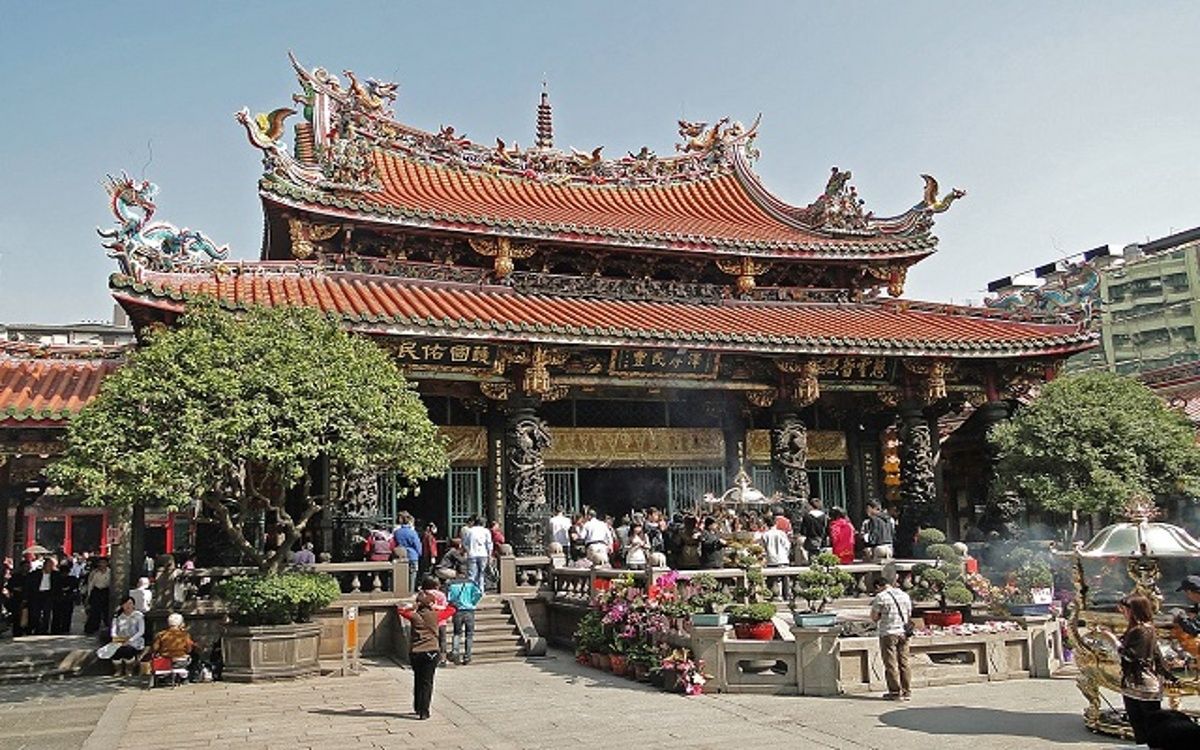
A UNESCO World Heritage site, one of the most beautiful temples in Taipei with traditional architecture.
2.4. Xingtian Temple (行天宮)
Among the sacred temples in Taipei, Xingtian Temple stands out for its solemn atmosphere and unique customs. Built in 1967 to honor Guan Yu (Lord Guan) – a symbol of loyalty, integrity, and protection for merchants – this temple is especially known for its simplicity. Unlike many other temples, it prohibits the burning of paper offerings or meat sacrifices, encouraging a more pure form of worship.
Widely visited as a temple in Taipei for good luck, Xingtian Temple is particularly famous for its free “fortune cleansing” ritual, where volunteers help visitors symbolically remove bad luck.
Address: No. 109, Minquan East Road, Zhongshan District, Taipei
Opening hours: 4:00 AM – 10:30 PM daily
How to get there: Take the MRT Orange Line to Xingtian Temple Station, Exit 3, and walk about 2 minutes. Buses 5, 49, 214, and 266 also stop nearby.
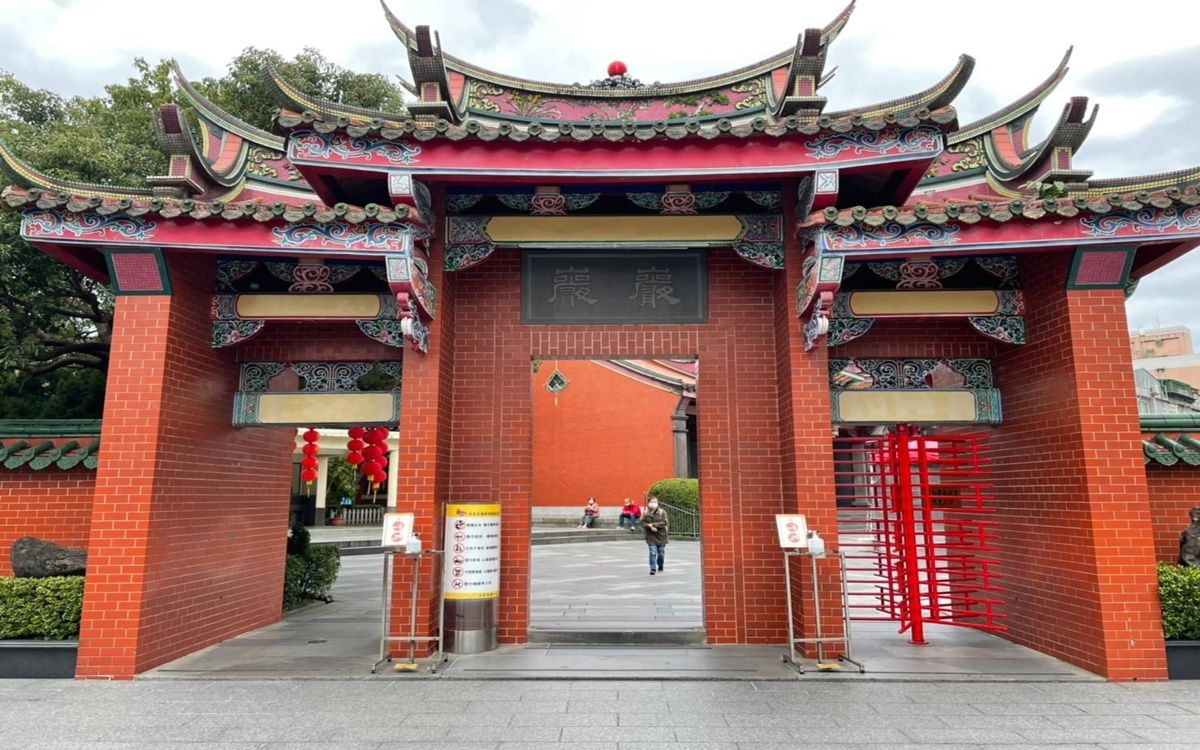
A famous spiritual site where Taipei locals pray for luck, success, and prosperity.
2.5. Taipei Confucius Temple (孔子廟)
Different from most temples in Taipei rooted in Buddhism or Taoism, the Taipei Confucius Temple honors the great philosopher and educator Confucius. Built in 1879, the temple features elegant, understated architecture focused on solemnity rather than grandeur.
Often described as a beautiful temple in Taipei, it offers a serene environment shaded by trees and adorned with calligraphy plaques and reliefs rich in educational meaning. Every year on September 28, a grand ceremony commemorating Confucius’ birthday is held, attracting scholars, students, and tourists. While not a typical temple for good luck, it is often visited by those seeking blessings for academic success and wisdom.
Address: No. 275, Dalong Street, Datong District, Taipei
Opening hours: 8:30 AM – 9:00 PM (Tuesday to Sunday, closed Mondays)
How to get there: Take the MRT Red Line to Yuanshan Station (Exit 2) and walk about 8 minutes. Buses 41, 290, and 542 also stop nearby.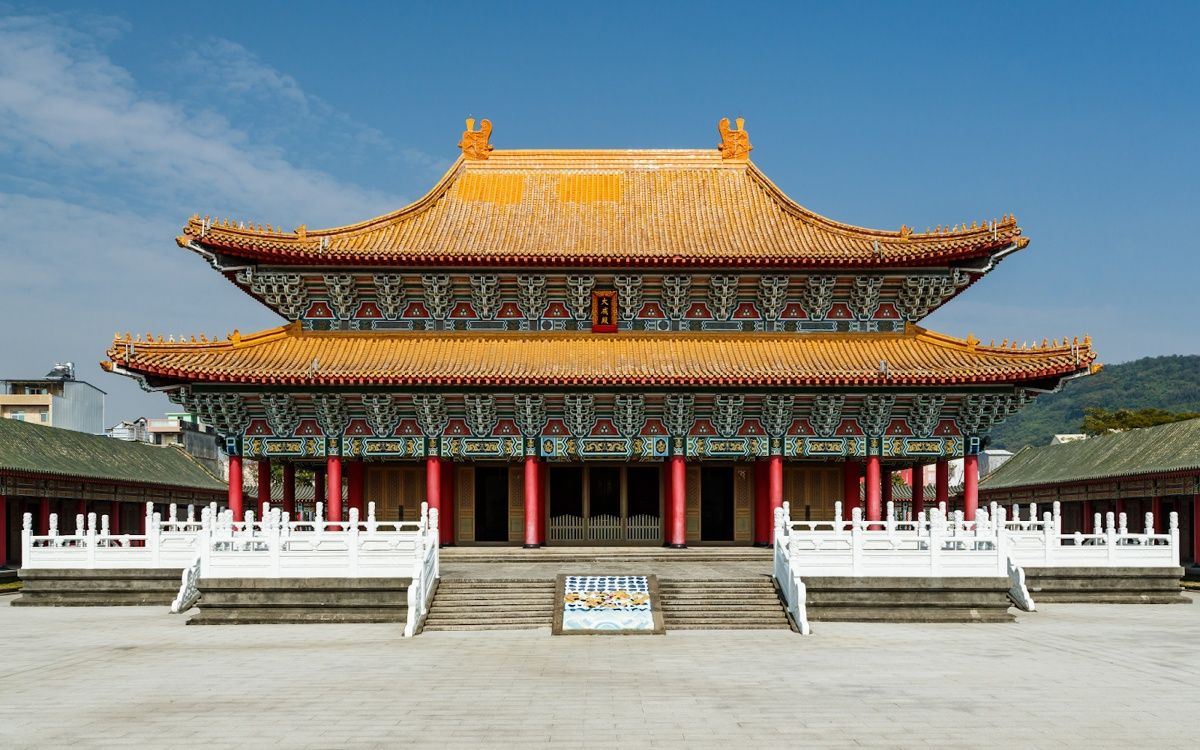
Honoring the great sage, this temple reflects Taipei’s deep cultural and educational heritage.
2.6. Qingshan Temple (青山宮)
Qingshan Temple reflects deep-rooted folk beliefs. Built in the 19th century to honor Qingshan King – a deity believed to protect people from disease and disasters – it remains an important cultural and spiritual hub in the Wanhua District.
Qingshan Temple is especially lively during the annual Qingshan King Festival in November, featuring lion dances, parades, and traditional music. With its ancient architecture, curved roofs, and intricate carvings, it is recognized as one of the beautiful temples in Taipei, offering a spiritual yet festive experience.
Address: No. 218, Guiyang Street, Wanhua District, Taipei
Opening hours: 6:00 AM – 10:00 PM daily
How to get there: Take the MRT Blue or Green Line to Ximen Station and walk about 10–12 minutes. Buses 234, 265, and 310 also stop nearby.
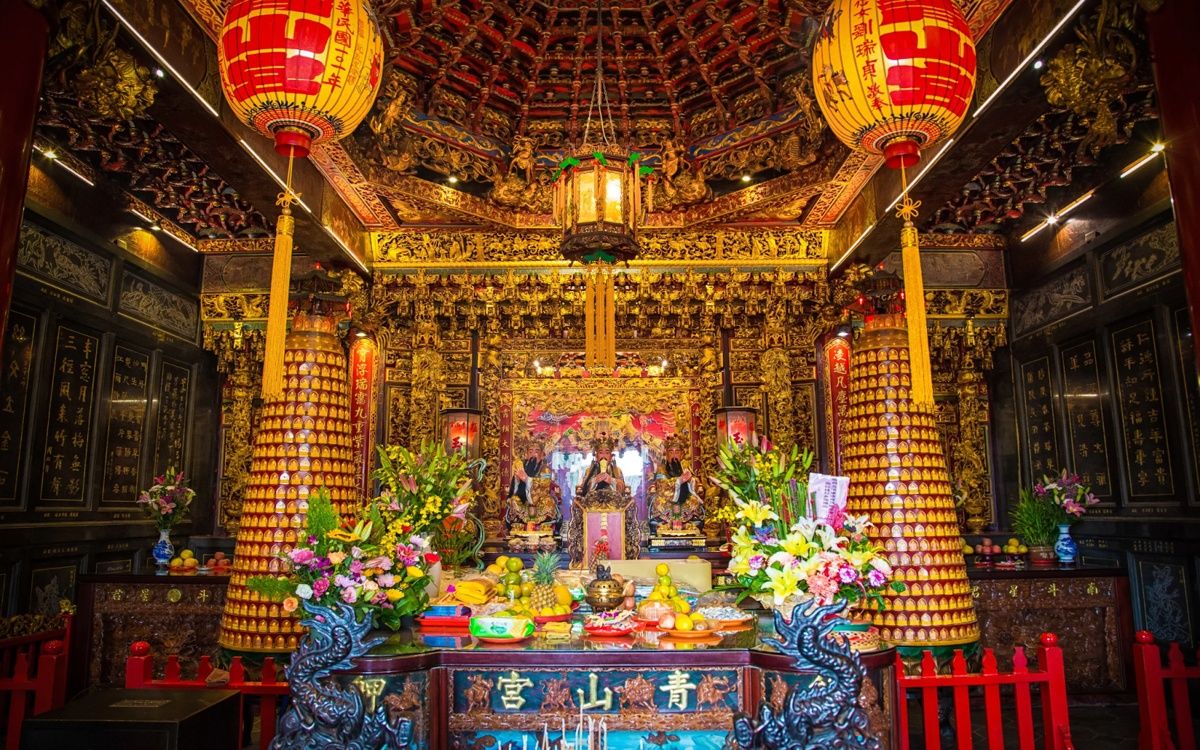
A renowned temple in Taipei, famous for its vibrant festivals and traditional atmosphere.
2.7. Tianhou Temple (天后宮)
Located in the bustling Ximending district, Tianhou Temple is closely tied to the lives of fishermen and merchants. Dedicated to Mazu, the Goddess of the Sea, it has been a spiritual center since the 18th century.
Though relatively small in size, it is considered a sacred temple in Taipei, where many people come to pray for safety and prosperity. Its ornate carvings, dragon and phoenix motifs, and traditional rooflines make it one of the beautiful temples in Taipei, easily accessible during a walk through Ximending.
Address: No. 51, Chengdu Road, Wanhua District, Taipei
Opening hours: 6:00 AM – 10:00 PM daily
How to get there: Take the MRT Blue or Green Line to Ximen Station (Exit 6) and walk 5 minutes. Buses 231, 635, and 637 also stop nearby.
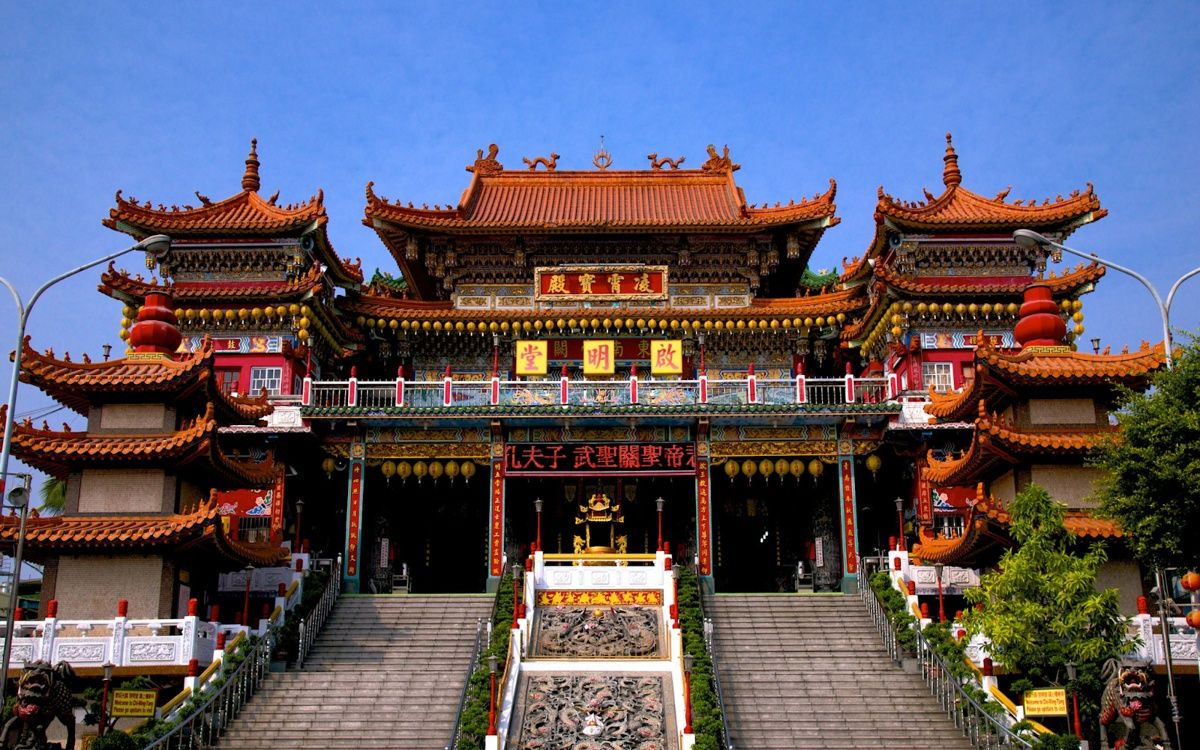
Dedicated to the sea goddess Mazu, a sacred cultural spot in Taipei’s historic district.
2.8. Songshan Ciyou Temple (松山慈祐宮)
Located next to Raohe Night Market, Songshan Ciyou Temple is built in 1753 and dedicated to Mazu.
It is considered a sacred temple in Taipei where people pray for peace, wealth, and good fortune.
The temple is known for its grand architecture, dragon-and-phoenix carvings, and golden pillars. At night, the glowing temple blends perfectly with the lively Raohe Night Market, creating an enchanting atmosphere. It’s an ideal stop for those wanting to explore both spirituality and local street food culture.
Address: No. 761, Bade Road, Songshan District, Taipei
Opening hours: 6:00 AM – 10:00 PM daily
How to get there: Take the MRT Green Line to Songshan Station (Exit 5) and walk about 3 minutes. Buses 276, 306, and 604 also stop nearby.
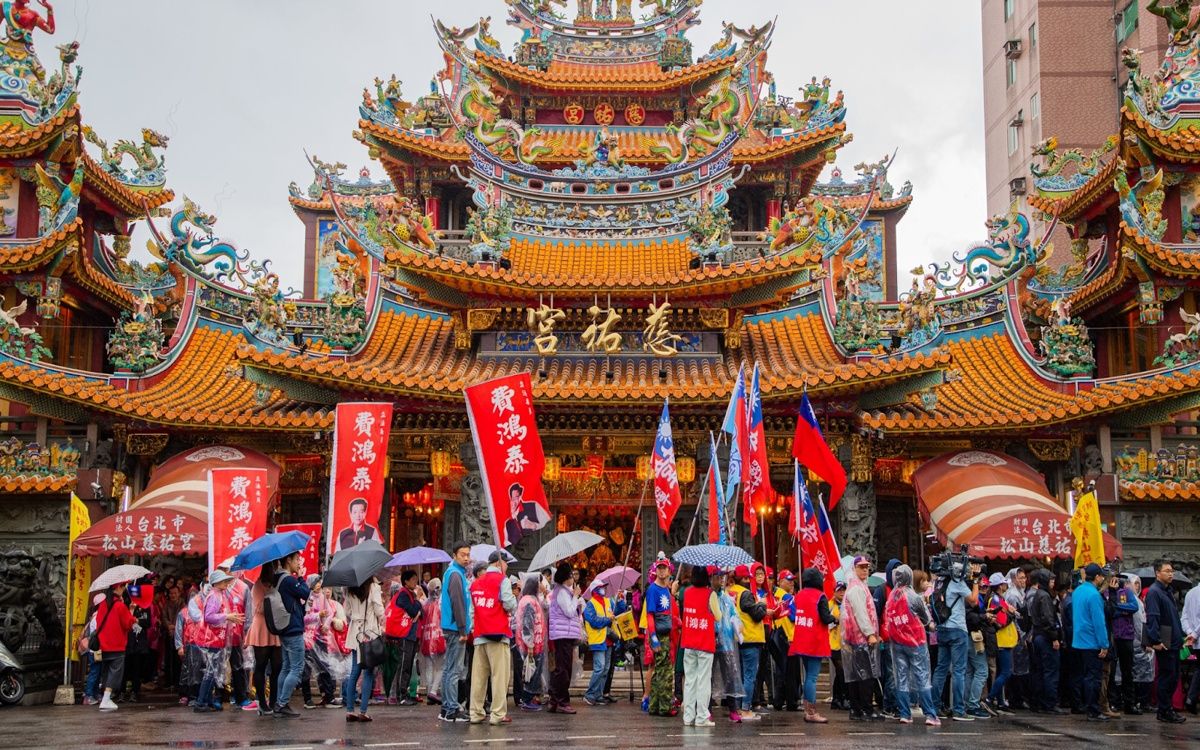
A stunning temple in Taipei, glowing beautifully at night next to Raohe Night Market.
3. The Spiritual and Cultural Significance of Taipei Temples
The temples of Taipei are not just sacred places of worship but also vivid reflections of local spiritual life, customs, and traditions. Each famous Taipei temple is linked to specific beliefs – from Buddhism and Guanyin to Guan Gong and Mazu, the sea goddess venerated by fishermen. This diversity gives Taipei its unique spiritual identity.
Beyond faith, Taipei temples also stand as masterpieces of traditional Chinese architecture. The sweeping roofs, intricate carvings, guardian statues, and elaborate reliefs transform these temples into some of the most beautiful shrines in Taipei, attracting visitors worldwide.
For many locals, visiting temples in Taipei for good luck is a cherished custom, especially during Lunar New Year, before exams, when opening a business, or to pray for love. Such practices not only reflect spiritual devotion but also provide inner peace and reassurance.
Thus, exploring the sacred temples of Taipei is not just sightseeing, but also a cultural journey into the enduring spiritual values of Taiwan’s people.
4. Tips for Visiting Temples in Taipei
4.1 Etiquette and Behavior
Dress modestly; avoid overly revealing outfits.
Walk softly, speak quietly, and respect the solemn atmosphere.
When lighting incense at temples in Taipei for good luck, use an odd number (1, 3, or 5 sticks) and follow the designated path.
Some famous Taipei temples offer fortune sticks (kau cim); trying it can be a fun cultural experience.
4.2 Best Time to Visit
Early morning or late afternoon offers the most peaceful atmosphere.
Major festivals such as Lunar New Year, Lantern Festival, and Ghost Festival are vibrant but crowded.
4.3 Transportation
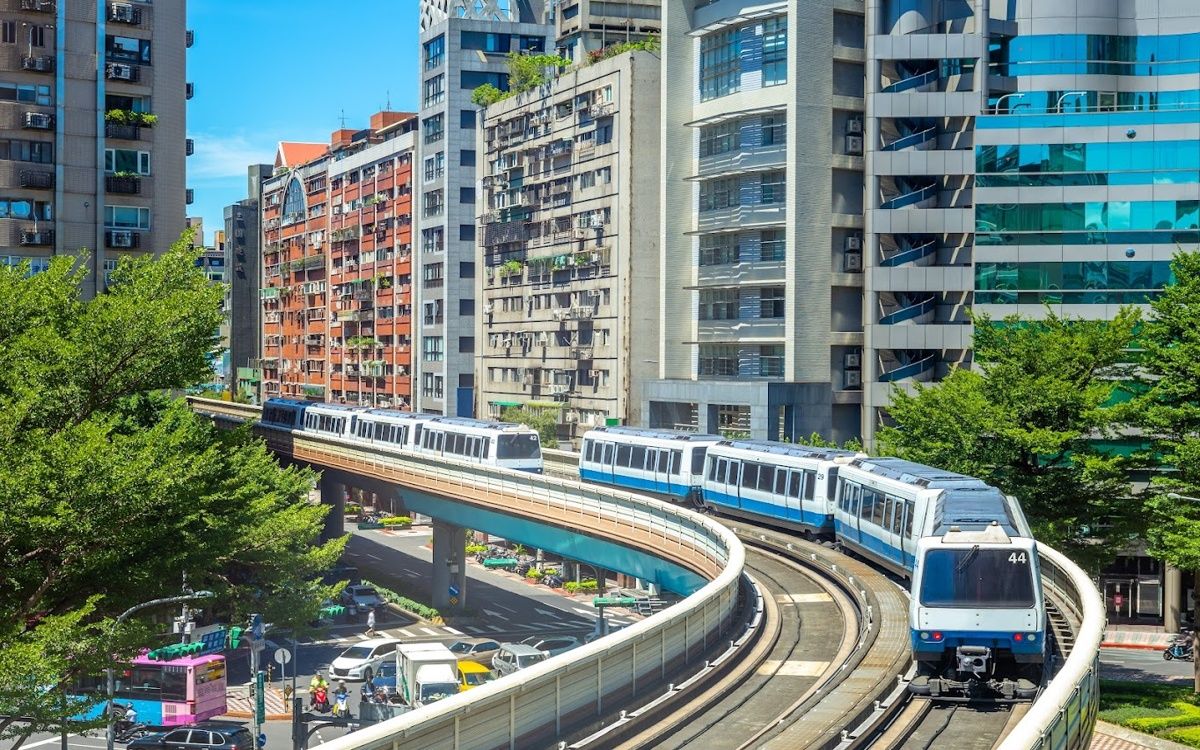
Taipei MRT: fast, modern, and easy for city travel
4.4 Additional Tips
Bring small change for donations or offerings
Always check signs before taking photos, as some areas may restrict photography.
Carry an umbrella or light jacket, as Taipei weather can change quickly.
FAQs – 10 Most Common Questions When Visiting Temples in Taipei
1. What time do temples in Taipei open?
Lungshan Temple is open from 6:00 AM to around 9:00–10:00 PM
2. Is there an entrance fee to visit temples in Taipei?
No. Most temples in Taipei are free of charge, visitors can make voluntary donations.
3. What is the appropriate dress code when visiting temples in Taipei?
Dress modestly and respectfully. Avoid wearing shorts, tank tops, or revealing clothing.
4. Is photography allowed inside temples in Taipei?
Most temples allow photography, but certain main worship halls may have “no photo” signs. Always respect the temple’s rules.
5. Can foreigners light incense and pray in temples?
Yes. International visitors are welcome to join locals in lighting incense and praying for peace and good fortune.
6. Who are the deities worshipped in famous temples in Taipei?
Each temple has its own tradition: Lungshan Temple worships Guanyin (the Goddess of Mercy), Xingtian Temple worships Guan Gong (the God of War), Songshan Ciyou Temple worships Mazu (the Sea Goddess), and the Taipei Confucius Temple honors Confucius.
7. Can I draw fortune sticks or practice divination at temples in Taipei?
Yes. Some famous temples like Lungshan Temple and Xingtian Temple offer fortune stick (kau cim) services for visitors.
8. What is the best time to visit temples in Taipei?
Early morning for a peaceful atmosphere, or in the evening when temples are beautifully illuminated—especially Songshan Ciyou Temple near Raohe Night Market.
9. Is it convenient to get to temples in Taipei?
Yes, very convenient. Most famous temples in Taipei are located near MRT stations, just a short walk away.
10. Which temples should I visit in Taipei to pray for luck and prosperity?
You can visit Lungshan Temple to pray for peace, Xingtian Temple for career success, and Songshan Ciyou Temple for wealth and business prosperity.
 Tiếng Việt
 English
 한국어
한국어 日本語
日本語 简体中文
简体中文 Français
 Deutsch
 Español
 Italiano
 Русский


 Login for Corporates