


See all results for ""

 Anytime
 Tiếng ViệtEnglish
 日本語
日本語 한국어
한국어 简体中文
简体中文 Français
 Deutsch
 Español
 Italiano
 Русский


 Login for Corporates
15 seafood specialities worth travelling for (part 2)
Discover coastal ingredients, dishes and experiences around the world that will inspire your next culinary adventure.
6. Matjessalat, Germany
The brined fish base for matjessalat began not in Germany but the Netherlands, in the closing years of the 14th century. A Dutchman was the first to preserve fresh ‘virgin’ or young herring in brine — the name matjes comes from the Dutch word for maidens. The following six centuries saw matjes gild entire cities through trade, birth festivals and even feature on coats of arms — what’s more, they’ve since become a north German staple.
These young herrings are caught from early to mid-summer in the North Sea, just before their breeding season begins, and are prized for their high oil content. They work wonderfully well in this German salad with the tart, vinegary flavours of apple, pickles, beetroot and the soured creaminess of creme fraiche or yoghurt.
Unlike most fish preparations, the pancreas, and occasionally the liver, are left inside the herring, as their enzymes develop the flavour and help make the already soft flesh more tender. Matjes are found throughout the Baltic, Nordic and Low Countries under a wealth of names and with variations in the marinade; some contain cider, sugar, bay, mace, onion, wine or even tea.
Where to try it: Der Kleine Heinrich Gasthaus, in the Schleswig-Holstein town of Glückstadt, serves several traditional matjessalat dishes.

Matjessalat
7. Chilli Crab, Singapore
The crammed lanes of Singapore’s hawker stalls are frequently laced with the intoxicating smell of seafood — chief among them, the spicy scent of chilli crab. Arguably the country’s best-loved dish, it had a nebulous — occasionally contentious — beginning.
Many say the dish began life in Malaysia, but Singaporeans understandably disagree, citing a clear origin story for the modern-day tomato-based dish. In the 1950s, Cher Yam Tian’s husband, who loved catching mud crabs on the beach, asked her to do something different with the day’s haul. The resulting tomato and chilli concoction was so good they began selling it from a seafront street cart, taking Singapore by storm.
Over the years, chefs have introduced their own elements, with sambal or lemon, egg or vinegar added to an unctuous spiced sauce that’s both savoury and sweet. Served shell-on and slathered in sauce, chilli crab is impossible to eat with any dignity. The only way to approach it is with hands, mallets, bread buns and myriad serviettes at the ready, but the silky, sumptuous reward is worth it.
Where to try it: Though Cher Yam Tian died last year, her son Roland Lim is honouring her dish at his Michelin-recommended restaurant, Roland, which still uses her secret recipe.
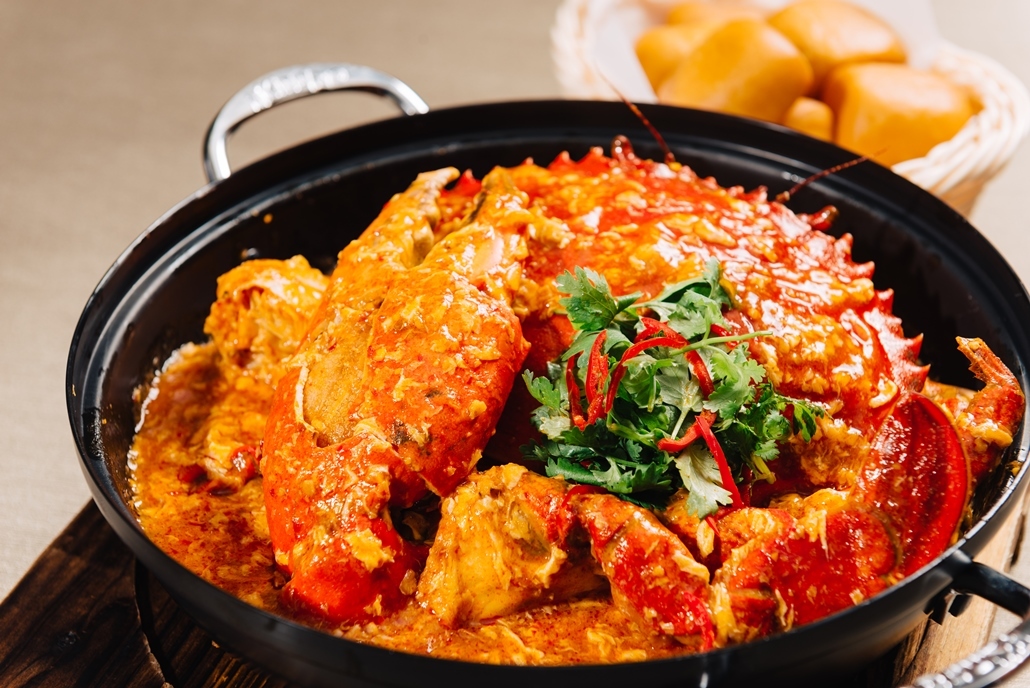
Chili crab
8. Bacalhau, Portugal
Portugal’s enduring love of bacalhau (dried salted cod) dates back to the Age of Discoveries, when the country’s 15th-century explorers sailed out into a world largely unmapped. Sardines are abundant in the waters around Portugal, but don’t lend themselves well to being salted. Cod, however, does — and with the discovery of vast reserves of the fish around the distant shores of Newfoundland in 1497, bacalhau became the seafarer’s staple diet.
Today, Portugal consumes 20% of the world’s cod, and according to legend, it has anywhere between 365 and 1,001 dishes using bacalhau. Cod’s dense, flaky, versatile flesh becomes concentrated in drying, the perfect ingredient to stand up to dishes like bacalhau com natas (baked cod with cream), egg and olive casserole, and arroz de bacalhau (cod with rice).
Cod shares the Portuguese piscatorial crown with sardines — a beautifully meaty, umami-filled fish found the length of Portugal’s coast. Versatile and affordable, sardines are commonly grilled, canned or served in abundance as a sardinhada feast. In fact, if they weren’t seasonal, they may well have beaten cod to national dish status.
Where to try it: In Lisbon, you can explore a remarkable array of bacalhau dishes at D’Bacalhau restaurant, while Can The Can showcases sardines and Portugal’s masterly art of canning fish.

Bacalhau is synonymous with Portuguese cuisine
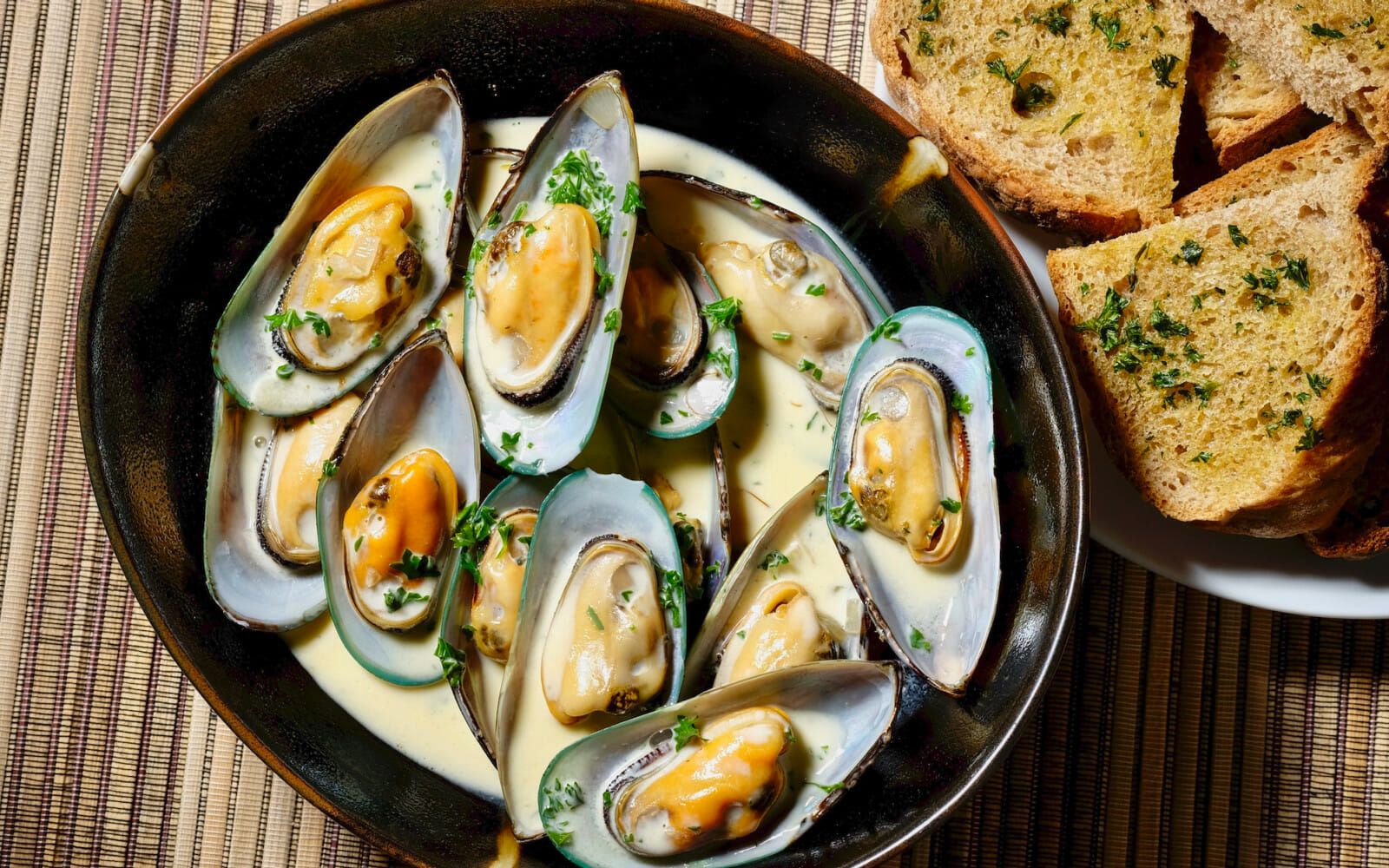
9. Green-lipped mussels, New Zealand
Named for their shells’ myrtle-green border, these mussels are native to New Zealand’s coastline. They’ve been industrially farmed since the 1960s, after overfishing destroyed wild mussel stocks, but have been part of Māori culture for centuries. Known as ‘kūtai’ in Māori, the bivalves are such an important, traditional food source, they’re considered a ‘taonga’ (a valued treasure) — and Mātauranga Māori (traditional Māori knowledge) has informed scientific restoration of mussel beds in the North Island’s Ōhiwa harbour.
Some believe the endemic mussels have anti-inflammatory health benefits, a link supposedly made when comparing arthritis prevalence in coastal Māori communities to people living inland. Their naturally occurring levels of omega-3 and vitamin B12 also mean they’re often made into supplements.
But the most enjoyable way to ingest green-lipped mussels, by far, is to eat them. They thrive along New Zealand’s intertidal and coastal zones, where the clean, phytoplankton-rich seas create a juicy meat that’s tender and salty with a touch of sweetness. And farming them means that natural ocean populations aren’t depleted, keeping the industry sustainable.
Green-lipped mussels steamed with wine and garlic
Where to eat them: Tuck into green-lipped mussels at The Mussel Pot in Havelock, the so-called ‘mussel capital of the world’, in the South Island’s Marlborough Sounds.
10. Fried seafood, Symi
In Greece’s sunlit Dodecanese island group, scattered off the west coast of Turkey, sits Symi. This small island with a long, strong history of seafaring and seafood was once known for its shipbuilding and sea sponge industries; today, the sponges are all but gone and the new marine mainstay is shrimp.
Known as Simiako garidaki, the tiny, vibrantly red prawns that live in the waters around Symi are the island’s speciality. They’re flavourful enough that they’re usually served simply — pan-fried until crisp, usually in olive oil, and seasoned with only a dash of salt and pepper — but occasionally you’ll find chefs branching out by tossing them in flour before frying or adding garlic or a squeeze of lemon.
The prawns are so small, soft and delicate that they’re eaten whole, in the shell, the heads and tails offering a delightfully deep hit of sweetened sea and salt and adding a crunch to the bite.
These prized prawns aren’t Symi’s only culinary draw, however — the island does a roaring trade in all manner of fried seafood, including silky soft calamari, lightly fried anchovies, crispy whitebait and succulently juicy cod fritters, often flavoured with just a touch of fresh lemon.

At St.Dogmaels local producers' market, Mandy of Cadigan Bay Fish sells sewin every Tuesday morning when it's in season. PHOTOGRAPH BY JAMES BOWDEN
Where to try it: Most of the island’s local tavernas serve fried seafood, including the ever-popular Taverna Haris in Gialos.
(Continue)
According to: Nation Geographic
New Posts