


See all results for ""

 Anytime
 Tiếng ViệtEnglish
 한국어
한국어 日本語
日本語 简体中文
简体中文 Français
 Deutsch
 Español
 Italiano
 Русский


 Login for Corporates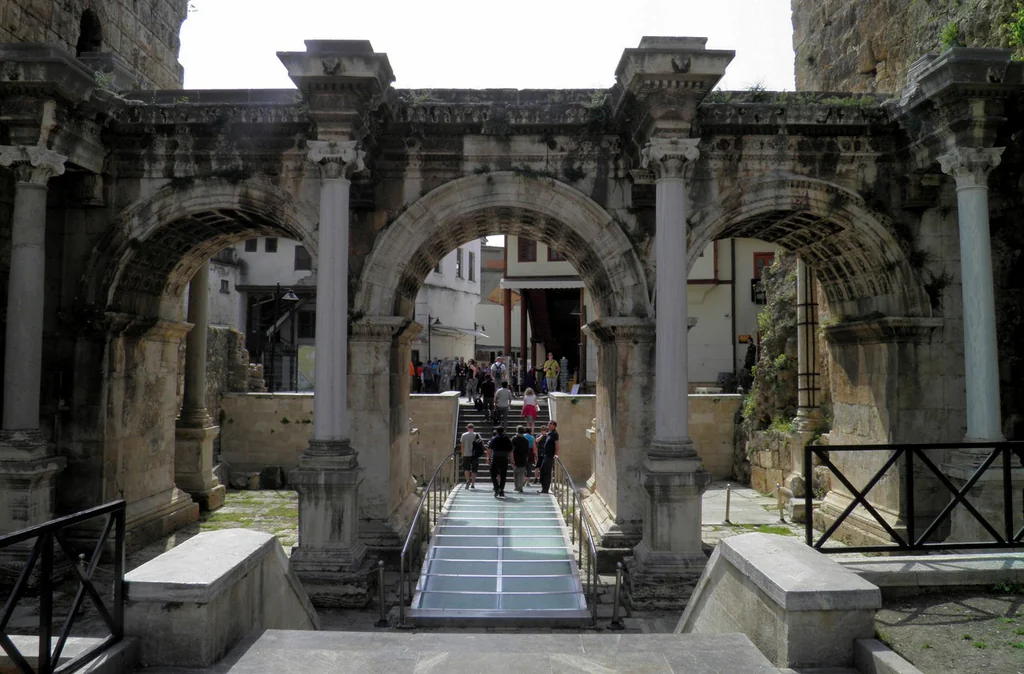
Hadrian's Gate
 Barbaros, 07100 Muratpaşa/Antalya, Turkey
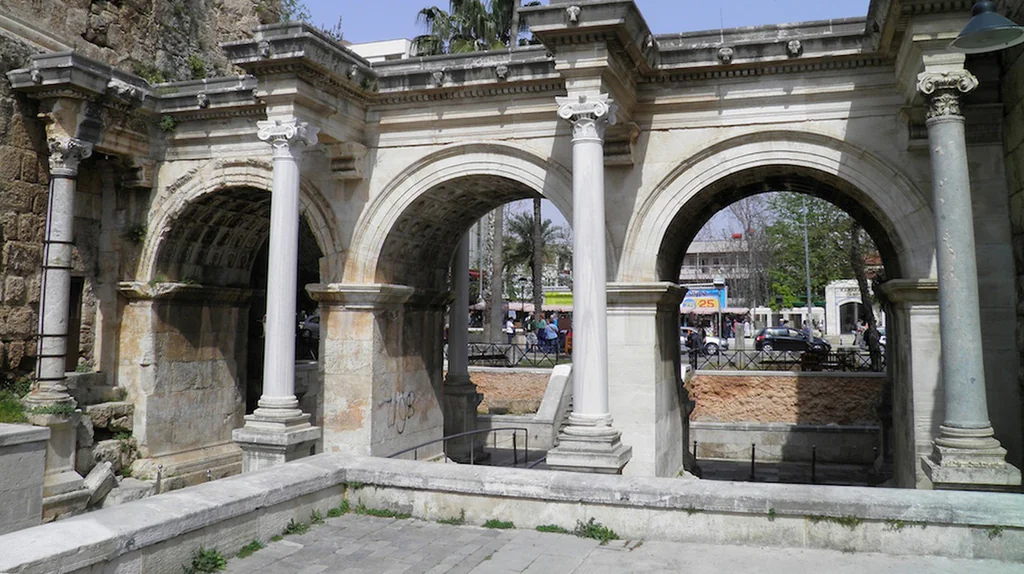
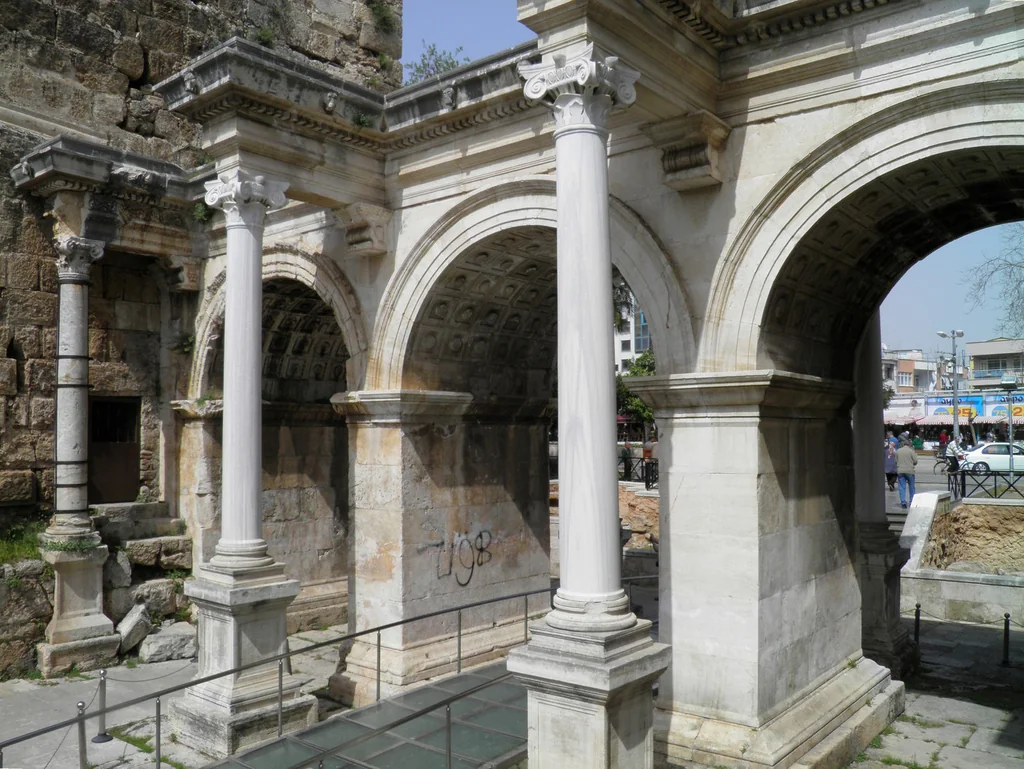
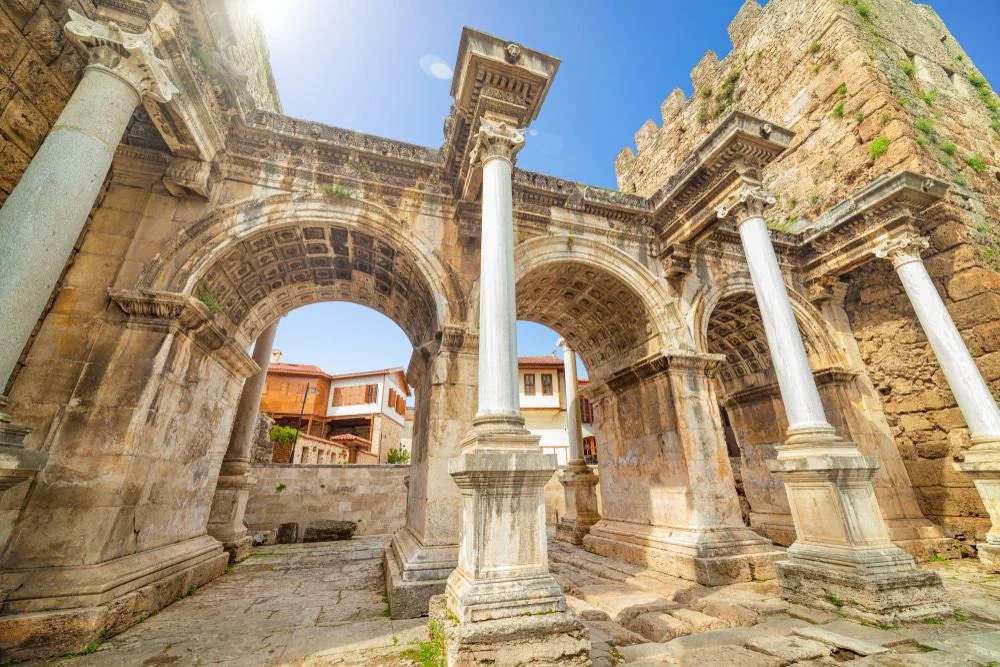
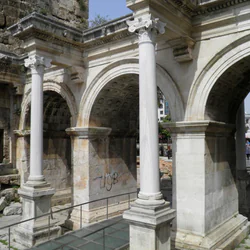
Located right on Atatürk Avenue in the center of Antalya, Hadrian's Gate is a beautiful historical ruin dating back to AD 130. Built to commemorate Emperor Hadrian's visit, Hadrian's Gate has survived the ravages of time and man.
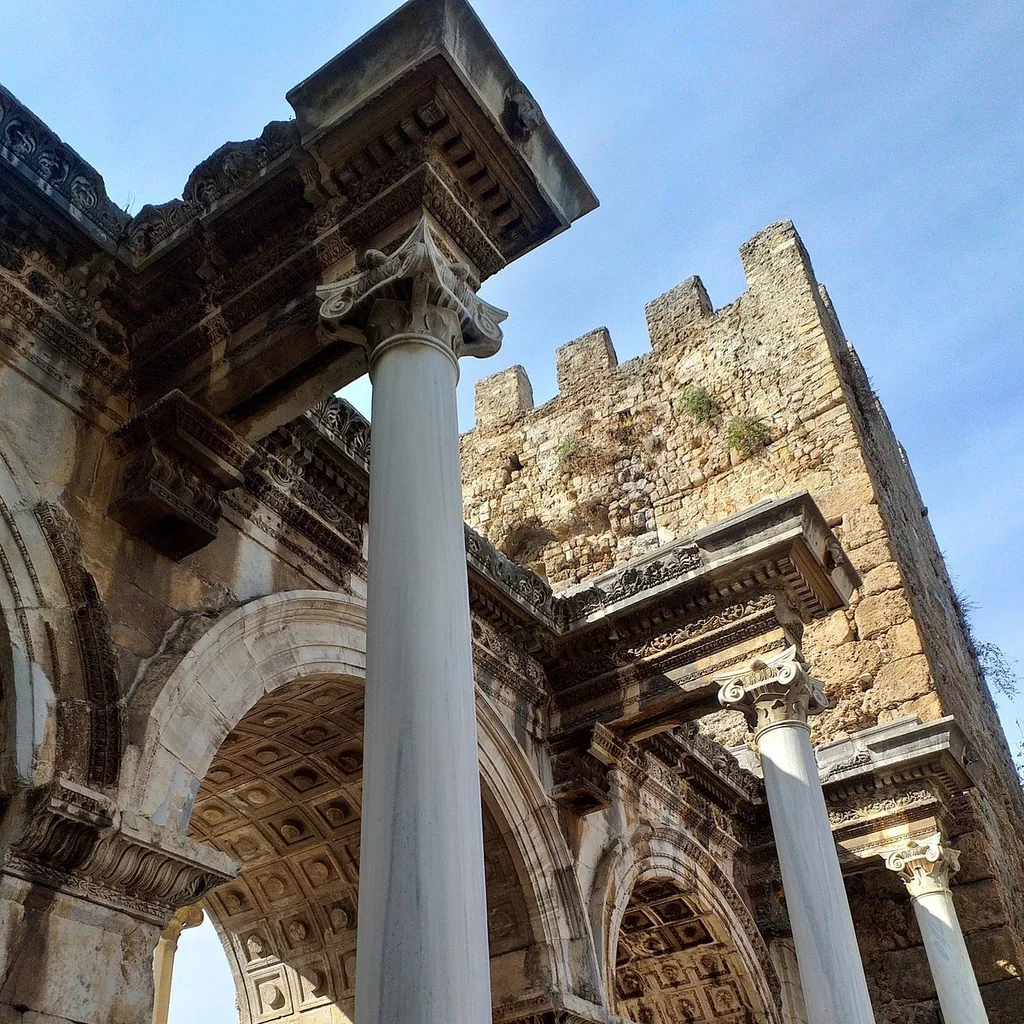
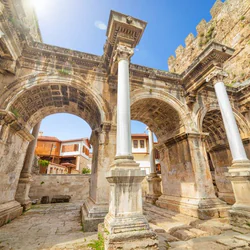
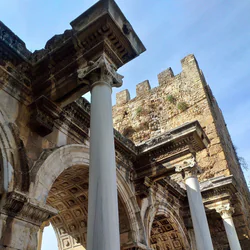
As you wander around Antalya, you can't help but walk past one of the city's most important historical attractions, Hadrian's Gate. The gate, dating from AD 130, was originally built to commemorate the visit of the Roman Emperor Hadrian to Attaleia (which was the old name for Antalya). Not surprisingly, this monument is also one of the main entrances to Kaleiçi, the city's beautiful historic quarter. Called Hadriyanüs Kapısı in Turkish, the gate was part of the outer walls of the city and became an important gateway upon its completion. Regarding the architectural chronology of the gate, the two towers standing on either side were built from different time periods. While the south tower, built independently of the gate, dates to Roman times, the north tower is associated with the Seljuk king Alaeddin Keykubat I, who reigned in the first half of the 13th century AD, with an inscription matching Arabic letters. Visitors may notice that the south tower, also known as the Julia Sancta Tower, is quite different from the others and is marked with a stone inscription, proving the date of its ancient construction.
A typical Roman triumph, Hadrian's Gate has three arches of the same size and is approximately 8 meters (26.2 feet) tall from the pavement to the top of the gate. At the front and rear of the gate can be seen the beautifully decorated facades with four columns made of white marble, except for the pillars which are granite. The city wall atop the triumphal arch is also quite eye-catching and extends to both sides with a height of 1.28 meters (4.2 feet), including a bas-relief decorated with floral motifs and an ornate fresco featuring a lion's head and countless other figures. Last but certainly not least, the barrel arches that rest over the arches are also pretty much decorated with caissons that each have their own floral and rose motifs. Discovered in 1817 by the British-Irish hydrologist, Rear Admiral Sir Francis Beaufort, the gate became part of his published diary recounting his travels along the south coast of Little ASIAN. In this particular description, Beaufort describes the portal as being taller, but it must have been much destroyed in the 19th century as there are no other records after that time of a triumphal restoration.
It was not until the 1950s that the exposure and renovation of Hadrian's Gate took place. After the renovation, Hadrian's public surprised the public because it really is a beautiful monument. Today it is one of the most important attractions in Antalya, the starting point to the interesting historic houses, restaurants and shops in the old town of the city. After Hadrian's Gate, which takes about 10 minutes on foot, guests can enjoy stunning views of the city and sea, or enjoy a cold lemonade at one of the shaded cafes. This is definitely a most unforgettable experience while in Antalya in the summer.