


See all results for ""

 Anytime
 Tiếng ViệtEnglish
 한국어
한국어 日本語
日本語 简体中文
简体中文 Français
 Deutsch
 Español
 Italiano
 Русский


 Login for Corporates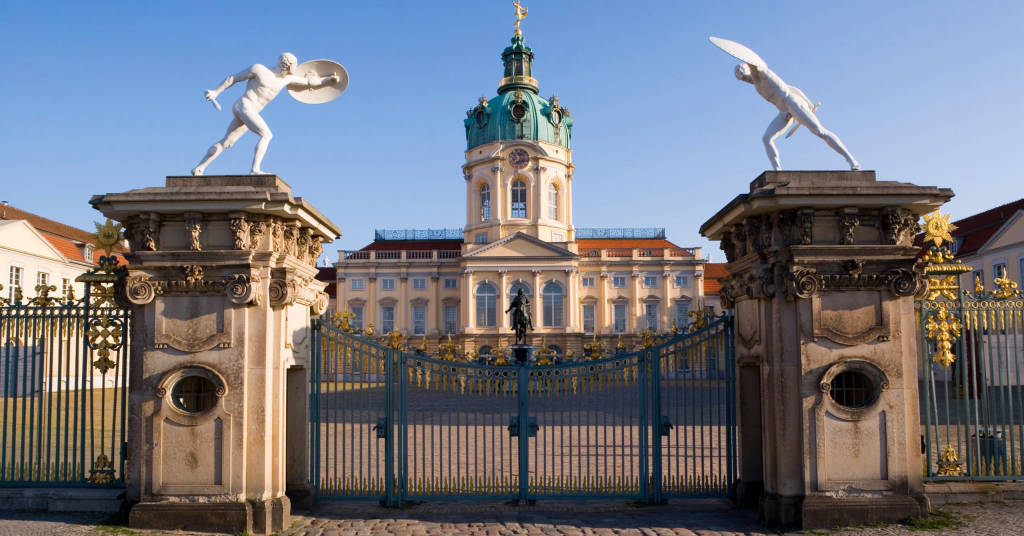
Charlottenburg Palace
 Spandauer Damm 10, 14059 Berlin, Đức
Charlottenburg Palace is a historic building located in the Charlottenburg neighborhood of Berlin, Germany. It was originally built as a summer residence for Sophie Charlotte, wife of King Friedrich I of Prussia, in the late 17th century.
Charlottenburg Palace is a historic building located in the Charlottenburg neighborhood of Berlin, Germany. It was originally built as a summer residence for Sophie Charlotte, wife of King Friedrich I of Prussia, in the late 17th century. The palace was designed by architect Johann Arnold Nering and completed in 1699.
Throughout its history, the palace has undergone many expansions and renovations. In the 18th century, the palace was partially enlarged with distinctive rococo designs, designed by Friedrich II.
In the 19th century, the palace was expanded again under the direction of Karl Friedrich Schinkel, a prominent architect of the time.
Charlottenburg Palace is considered one of the most important examples of Baroque architecture in Germany and is a popular tourist attraction in Berlin. The palace is open to the public and visitors can tour many of the palace's rooms, including the royal apartments, porcelain rooms, and the palace's chapel. The palace also houses an impressive collection of 18th-century art, including works by Rembrandt, Van Dyck and Rubens.
The palace gardens are also a tourist attraction, such as the main palace garden, the Belvedere garden and the flower garden.
Charlottenburg Palace has played an important role in German history and has been used as a royal residence for centuries. It served as the main residence of the Prussian royal family until the end of World War II, when it was heavily damaged by bombs. After the war, the palace was rebuilt and restored to its former glory and reopened to the public in 1957.